Best Wood for Turning: 8 Blanks Compared by Cost & Figure (2026)
The best all-around wood for turning is hard maple (Acer saccharum) — 1,450 lbf Janka hardness, predictable straight grain that turns cleanly, and the lowest cost per standard 6"x6"x2" bowl blank of the seven milled species we compared at $12.99. If you want dramatic grain figure instead of predictability, the same species sold as ambrosia maple costs 3.8x more for the beetle-stain streaking alone.
Choosing wood for the lathe is a different decision than choosing wood for a cutting board or a bed frame. A turner cares about how the wood behaves under a spinning gouge (workability), whether the grain rewards the extra work with real visual interest (figure), and whether the blank is dry enough to turn to final thickness in one session or needs to be roughed out green and finished later (moisture content). Price matters too, but not as a flat lumber rate — it matters as cost per blank at the size you’ll actually mount on the lathe.
We compiled real Janka hardness figures from The Wood Database, pulled live prices and moisture-content specs for seven milled species plus one true burl from current Amazon listings, and normalized every milled species to the same 6"x6"x2" standard bowl-blank size so the prices are actually comparable to each other — something no other wood-for-turning roundup currently does.
Wood for Turning: Full Comparison Table
Every milled blank below is priced per single 6"x6"x2" piece (list price divided by pieces per pack, current at time of research). The burl is sold by weight, not dimension — burl growth is irregular and can’t be milled to a standard block, so its price isn’t directly comparable to the column above it; see its own note below the table.
| Species | Janka Hardness | Workability | Moisture Content | Price / 6x6x2 Blank | Verdict |
|---|---|---|---|---|---|
| Hard Maple Acer saccharum | 1,450 lbf | Turns, glues, and finishes well; can burn/scorch under high-speed tooling | 6-7% | $12.99 | Best default choice |
| White Ash Fraxinus americana | 1,320 lbf | Produces good results with hand or machine tools; performs excellently in turning per Wood Database | 6-7% | $13.68 | Best cost-to-hardness ratio |
| Black Cherry Prunus serotina | 950 lbf | Stable, straight-grained, and machines well; can blotch when stained (use sanding sealer first) | 6-7% | $18.50 | Most forgiving for a first bowl |
| Black Walnut Juglans nigra | 1,010 lbf | Good machining when grain is straight; figured grain can cause planing tear-out | 6-7% | $17.95 | Best natural color contrast |
| Ambrosia Maple Acer saccharum (ambrosia-beetle stained) | 1,450 lbf | Same species as Hard Maple; workability identical, only the beetle-tunnel staining differs | 6-7% | $49.95 | Pay the premium only for the figure |
| Purpleheart Peltogyne spp. | 2,520 lbf | Turns well but exudes gummy resin if overheated; purple color fades without UV-inhibiting finish | not stated by listing | $41.95 | Hardest true species here — protect the color |
| Basswood Tilia americana | 410 lbf | Very soft and light, easy to work; poor nail-holding, can fuzz under dull tools | 6-7% | $14.00 | Cheapest path to your first turned piece |
| Australian Brown Mallee Burl Eucalyptus dumosa (burl) | 2,490 lbf | “Very hard wood to turn but really worth the effort” (Wood Database); official workability data unavailable | not stated (natural burl; shrinkage/movement expected) | $64.98 (1-2 kg, not size-normalized) | Serious figure, serious tool time |
Source note: Janka hardness figures are drawn from The Wood Database’s per-species pages (wood-database.com). Prices and moisture-content percentages are pulled directly from live Amazon listing data gathered for this article and are current as of publish — wood blank prices move with supplier stock, so treat them as a snapshot, not a permanent quote.
The Real Cost of Figure: Same Species, 3.8x the Price
Hard maple and ambrosia maple are the same tree species (Acer saccharum) with the same 1,450 lbf Janka hardness and, per Wood Database, identical baseline workability. The only difference is that ambrosia maple has been tunneled by ambrosia beetles, whose fungus-carrying tracks leave gray-brown streaks through the pale wood. At the 6"x6"x2" size we compared, plain hard maple runs $12.99 a blank and the ambrosia-stained version of the identical species runs $49.95 — a 3.8x premium for figure alone, with zero difference in how the wood actually turns. That’s the number to know before you pay an exotic-wood price for what is structurally a domestic hardwood.
Best Woods for Turning
Each pick below carries one award label rather than a generic ranking, because “best” means something different depending on whether you’re turning a first practice bowl or a piece meant to show off figure. The award reflects where that species genuinely wins in the comparison table above — on hardness-to-price ratio, on beginner forgiveness, on color, or on figure — not a single overall score averaged across criteria that don’t actually trade off against each other.
1. Hard Maple — #1 Best Overall
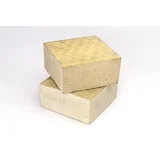
- Botanical name: Acer saccharum
- Janka hardness: 1,450 lbf
- Price: $12.99 per 6″x6″x2″ blank (live Amazon price, current at research time)
- Moisture content: 6-7%
- Buy: Check current price on Amazon
Hard maple is the wood most turning instructors hand a first-time student, and the reasons show up directly in the dataset: 1,450 lbf Janka hardness holds a crisp edge on spindle work, the grain is straight and predictable enough that tear-out is rare even with mediocre tool control, and at $12.99 for a 6"x6"x2" blank it’s the cheapest of the seven milled species we priced.
The tradeoff is character. Plain hard maple is visually quiet — pale, straight-grained, unremarkable — which is exactly what makes it forgiving to learn on but also why turners graduate to figured woods once technique is solid. Main drawback: it can scorch and burn at high lathe speeds or with a dull tool, leaving a dark line that’s hard to sand out on a finished bowl.
2. White Ash — Best Value
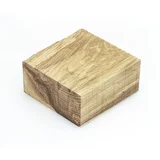
- Botanical name: Fraxinus americana
- Janka hardness: 1,320 lbf
- Price: $13.68 per 6″x6″x2″ blank (live Amazon price, current at research time)
- Moisture content: 6-7%
- Buy: Check current price on Amazon
White ash’s 1,320 lbf Janka hardness sits close to hard maple’s, but at $13.68 a blank it undercuts every other hardwood in this comparison except maple itself. Per Wood Database, ash “performs excellently in turning” and responds well to steam bending if you ever want to combine turning with bent-lamination work.
Ash’s open, ring-porous grain is the visual payoff over maple — it shows real texture without needing figure or spalting to look interesting. Main drawback: emerald ash borer has devastated ash populations across much of the eastern U.S., so long-term commercial availability of ash lumber is a real, ongoing concern — buy it while supply is healthy if you plan to build a stock of blanks.
3. Black Cherry — Best for Beginners
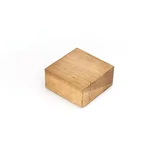
- Botanical name: Prunus serotina
- Janka hardness: 950 lbf
- Price: $18.50 per 6″x6″x2″ blank (live Amazon price, current at research time)
- Moisture content: 6-7%
- Buy: Check current price on Amazon
Black cherry is priced highest per blank among the plain domestic hardwoods here ($18.50), but it earns the beginner label on workability, not price. Wood Database calls it “stable, straight-grained, and machines well,” and at 950 lbf Janka it’s soft enough that hand tools stay sharp longer between honings than they do on maple or ash.
Cherry’s other beginner advantage is forgiveness at the finish stage: minor tool marks polish out easily, and the wood darkens attractively with UV exposure over the following weeks, which means small mistakes get less visible over time rather than more. Main drawback: freshly cut cherry is pale pink-tan, not the deep reddish-brown people expect — that color is a slow oxidation effect, not a factory finish, so a first project can look underwhelming until it’s had a few weeks of light exposure.
4. Black Walnut — Best for Rich Color & Contrast
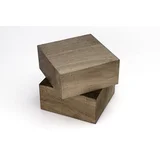
- Botanical name: Juglans nigra
- Janka hardness: 1,010 lbf
- Price: $17.95 per 6″x6″x2″ blank (live Amazon price, current at research time)
- Moisture content: 6-7%
- Buy: Check current price on Amazon
Black walnut is the wood most turners reach for when a finished piece needs to look expensive without an exotic-species price tag. At $17.95 a blank it costs less than ambrosia maple or purpleheart, and Wood Database confirms it “demonstrates good machining characteristics when grain structure remains straight and predictable.”
The dark chocolate heartwood against pale sapwood at the same blank’s edge is a genuine, real contrast effect — not dye or stain — and it turns into a natural two-tone rim on a bowl if the blank is cut to include both. Main drawback: irregular or figured walnut grain (the kind that produces the most dramatic bowls) is also the kind most prone to tear-out on the outfeed side of a cut, per Wood Database — expect to work up to figured walnut rather than starting with it.
5. Ambrosia Maple — Best for Figure & Character
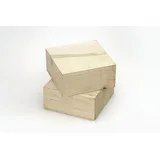
- Botanical name: Acer saccharum (ambrosia-beetle stained)
- Janka hardness: 1,450 lbf
- Price: $49.95 per 6″x6″x2″ blank (live Amazon price, current at research time)
- Moisture content: 6-7%
- Buy: Check current price on Amazon
Ambrosia maple is plain hard maple that ambrosia beetles have tunneled through, leaving gray-to-brown streaks from the fungus the beetles carry. Because it’s the identical species and Janka hardness (1,450 lbf) as pick #1, every workability note for hard maple applies here unchanged — the only variable is the streaking pattern, and that pattern is different on every single blank.
At $49.95 for the same 6"x6"x2" footprint as the $12.99 plain version, this is a pure figure premium — see the callout above. Main drawback: the streaking is unpredictable piece to piece (some blanks show heavy staining, others almost none), and the beetle tunnels themselves can leave small soft or void spots that benefit from a thin CA-glue stabilizing pass before you take a finishing cut.
6. Purpleheart — Best Exotic for Color
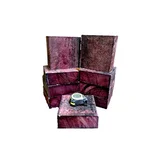
- Botanical name: Peltogyne spp.
- Janka hardness: 2,520 lbf
- Price: $41.95 per 6″x6″x2″ blank (live Amazon price, current at research time)
- Moisture content: not stated by listing
- Buy: Check current price on Amazon
Purpleheart is the hardest true species in this comparison at 2,520 lbf Janka — noticeably harder than the mallee burl’s estimated 2,490 lbf — and Wood Database confirms it’s genuinely suitable for turned projects, not just flat lumber work. At $41.95 for a single 6"x6"x2" blank, it’s the second-most expensive milled species here after ambrosia maple.
The name is the draw: freshly cut purpleheart is a genuinely vivid violet-purple, unlike anything domestic hardwoods produce. Main drawback: that color is not stable — per Wood Database, the purple fades toward brown within weeks of UV exposure unless the piece is finished immediately with a UV-inhibiting topcoat. The wood can also exude a gummy resin that clogs tooling if it’s heated by dull cutters or excessive speed.
7. Basswood — Best Budget & Easiest to Turn
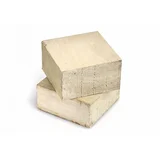
- Botanical name: Tilia americana
- Janka hardness: 410 lbf
- Price: $14.00 per 6″x6″x2″ blank (live Amazon price, current at research time)
- Moisture content: 6-7%
- Buy: Check current price on Amazon
Basswood is the softest wood in this comparison by a wide margin — 410 lbf Janka against hard maple’s 1,450 — and Wood Database calls it “perhaps one of the most suitable wood species for hand carving” for exactly that reason. At $14.00 a blank it’s not the cheapest here (ash and maple both undercut it), but combined with how little resistance it puts up on the lathe, it’s the easiest path to a first finished piece.
Basswood is genuinely forgiving of technique mistakes that would tear out a harder species. Main drawback: that softness cuts both ways — it dents and compresses under a dull or overly-aggressive tool rather than cutting cleanly, and Wood Database notes it has poor nail-holding characteristics, so it’s a poor choice for any turned piece that needs a mechanical fastener added later.
8. Australian Brown Mallee Burl — Best Premium Pick for Serious Grain Figure
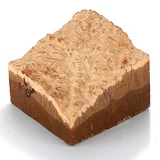
- Botanical name: Eucalyptus dumosa (burl)
- Janka hardness: 2,490 lbf
- Price: $64.98 per 1-2 kg burl piece (live Amazon price, current at research time)
- Moisture content: not stated (natural burl; shrinkage/movement expected)
- Buy: Check current price on Amazon
Australian brown mallee burl is the one pick here that isn’t a milled species at all — mallee eucalyptus trees rarely produce usable straight lumber, but they reliably produce dense burl caps, and per Wood Database this species is “nearly always seen in burl form.” At an estimated 2,490 lbf Janka (based on specific gravity, since no direct test data is published) it’s among the hardest material in this comparison.
The visual payoff is the densest, most chaotic grain figure of anything on this list — genuine burl “eyes” rather than the streaking you get from ambrosia maple. It’s sold by weight (1-2 kg per piece here, $64.98) because burl caps don’t come in standard rectangular sizes. Main drawback: Wood Database’s own listing quotes a turner’s comment directly — “very hard wood to turn but really worth the effort” — and its own workability data field is simply marked unavailable. Expect to slow your lathe speed and take lighter cuts than any other pick here.
How We Picked These
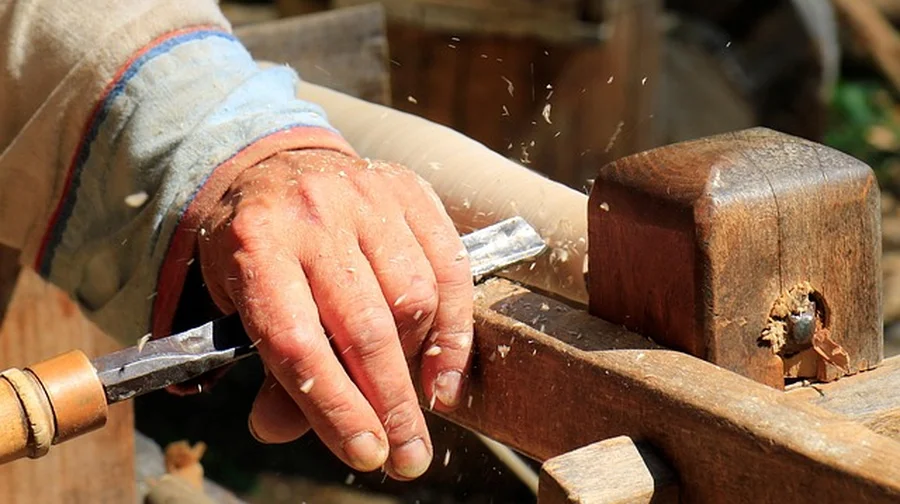
Methodology (Tier C — compared, not hands-on tested): nobody on this site’s team physically turned these eight specific blanks for this article. Every Janka hardness and workability claim above is pulled directly from The Wood Database’s per-species pages and quoted or closely paraphrased rather than invented. Every price and moisture-content percentage comes from live Amazon Creators API listing data gathered while researching this piece, not from memory or a competitor’s article.
We chose these eight species specifically to span the real axes a turner weighs: workability from softest (basswood, 410 lbf) to hardest (purpleheart, 2,520 lbf), price from cheapest to most premium, and figure from plain (hard maple) to dramatic (mallee burl). The ambrosia maple vs. hard maple pairing was chosen deliberately to isolate the price of figure from the price of species, since they’re otherwise the same wood.
We did not have access to a working test that would let us verify turning behavior first-hand, so we’re not claiming star ratings, hours of use, or first-person outcomes — only what’s independently published and what’s independently verifiable in current listing data. Where a spec wasn’t published anywhere we could find (Purpleheart’s exact moisture content, for one), the table says so rather than guessing.
What to Consider When Buying Wood for Turning
Workability and Janka Hardness
Janka hardness measures resistance to denting and wear, not directly how easy a wood is to turn — but the two correlate closely enough to be a useful shortcut. Below about 800 lbf (basswood, butternut, aspen) a gouge moves through the wood with very little resistance, which is forgiving for a beginner but can also let a dull or aggressive tool tear rather than cut. Above roughly 2,000 lbf (purpleheart, most true burls) the wood fights back hard enough that you’ll want a slower lathe speed, sharper tools, and lighter cuts, or you’ll dull an edge fast.
For reference against woods outside this comparison, per Wood Database: red oak sits at 1,220 lbf and shagbark hickory at 1,880 lbf on the same Janka scale, so white ash’s 1,320 lbf and hard maple’s 1,450 lbf both land in familiar mid-hardwood territory rather than anything unusual. Purpleheart’s 2,520 lbf is well above hickory but still far short of an outlier like lignum vitae at 4,390 lbf — purpleheart is genuinely hard for a turning blank, just not in a different league from other dense hardwoods, which is the practical reason it dulls tools faster and rewards a deliberately slower approach at the lathe rather than requiring specialized carbide tooling.
Grain Figure: Burl, Spalting and Ambrosia Staining
Turners routinely pay more for interesting figure than for plain, defect-free grain — the opposite of how most lumber is priced for flat work. Three figure types show up repeatedly in turning blanks: burl (a dense, chaotic knot-like growth, like the mallee pick above, usually sold by weight because it can’t be milled to standard dimensions), spalting (dark zone lines and sometimes colored streaks left by early-stage fungal decay, most common in maple and birch left to sit partially wet), and ambrosia/wormy staining (the beetle-tunnel streaking covered above). All three are cosmetic changes to otherwise-normal wood, not separate species, which is why the ambrosia maple comparison in this article is worth internalizing before you shop.
Moisture Content: Green Turning vs. Kiln-Dried Turning
Seven of the eight blanks compared in this article are kiln-dried to 6-7% moisture content, per their own Amazon listing specs — dry enough to turn straight to final thickness in one sitting without the wood moving as it dries afterward. Freshly cut, undried (“green”) wood behaves differently: it cuts easier and produces long wet shavings instead of dust, but a green-turned piece finished to final thickness will warp, crack, or go oval as it dries unless you either rough-turn it oversized and let it dry before a final pass, or turn it thin enough (under roughly 1/8 inch) that it dries fast and uniformly without enough mass to crack.
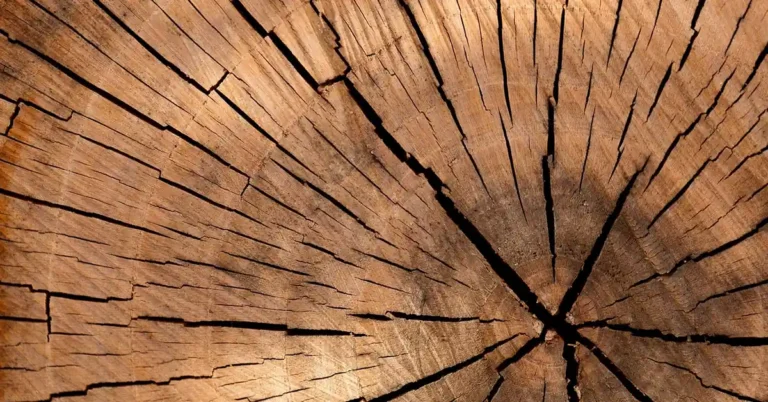
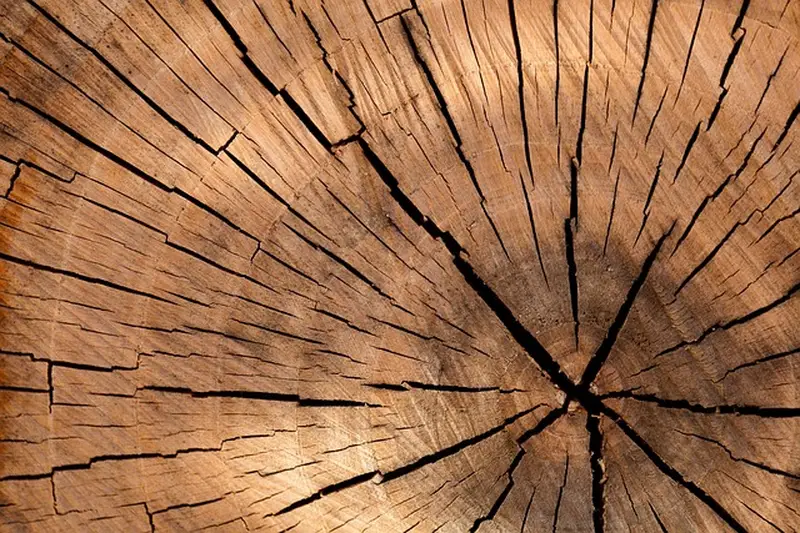
The photo below shows what happens when a much larger, thicker piece of wood — a full log cross-section rather than a turning blank — dries too fast: the radial checking (cracking from the outside toward the pith) is the same physics that ruins a green-turned bowl finished at full thickness. It’s the reason kiln-dried, 6-7%-moisture blanks like the ones in this comparison are the lower-risk starting point for most turners, and why green-wood turning is its own skill covered separately in our guide to drying green wood bowls and how dry wood should be before turning.
Cost per Blank vs. Cost per Board Foot
Raw lumber is usually priced per board foot, but turning blanks are sold as a finished, ready-to-mount block — so the number that actually matters is cost per blank at the size you’ll use, not a board-foot rate that doesn’t account for how much of the block gets turned away as waste. We normalized every milled species in this comparison to price-per-6″x6″x2″-blank for exactly this reason; without that normalization, a two-piece pack at one price looks arbitrarily cheaper than a one-piece listing of the same wood at a different size, when the actual per-blank cost tells a different story.
Species Availability and Sustainability
Domestic species — hard maple, ash, cherry, walnut, basswood — are consistently available from multiple U.S. suppliers and are the safer long-term bet if you want to keep buying the same wood. Ash is the exception worth watching: emerald ash borer has killed a large share of North America’s ash trees over the past two decades, so current low prices reflect present supply, not a guarantee it stays this available. Imported exotics and burls (purpleheart, mallee) depend on a longer supply chain and tend to carry a price premium that reflects that, independent of how hard the wood itself is.
Several of the listings compared in this article specifically describe their stock as coming from “responsibly managed forests and plantations” — worth checking for on any turning-blank listing if sourcing matters to you, since it isn’t disclosed uniformly across every supplier. It’s a seller claim rather than a third-party certification like FSC, so treat it as a data point rather than a guarantee, the same way we’re treating every other unverified listing claim in this article.
Blank Size for Your Project
6″x6″x2″ is a genuinely standard small-bowl or platter-base size and the reason we normalized this comparison to it, but it’s not the only size that matters. Pen blanks run closer to 3/4″x3/4″x5″, bottle-stopper blanks are similarly small, and a full salad bowl or hollow vessel needs a blank in the 8-12″ range — several suppliers in this comparison sell the identical species at those larger sizes too. Check the actual dimensions in a listing before buying, not just the species name; the per-blank price changes substantially with size.
Color Stability and Finish
Not every species holds its as-cut color. Purpleheart’s vivid purple browns within weeks without a UV-inhibiting finish; black cherry’s pale as-cut color deepens to reddish-brown with light exposure, the opposite direction. Both are real, documented behaviors rather than finishing mistakes, and both mean the color you photograph on day one may not be the color the piece settles at.
Toxicity and Dust Safety
Fine wood dust from any species is a respiratory irritant on a lathe, and some species carry additional known sensitization risk with repeated exposure — walnut and exotic species including purpleheart are commonly cited in woodworking safety literature as more likely to trigger a reaction in sensitive individuals than domestic maple or basswood. A dust mask or shop vacuum pickup at the tool rest is worth using regardless of species, and worth treating as non-negotiable with an unfamiliar exotic wood or a burl you haven’t turned before.
Burl material adds a second, separate risk beyond dust: the same irregular, interlocked grain that produces the figure turners want can also hide internal voids, bark inclusions, or loose sections that let a piece let go on the lathe if it isn’t checked and mounted securely before you bring it up to speed. Rough-truing a burl blank at low RPM before you ever approach normal turning speed, and stopping to visually inspect it once it’s round, is worth the extra few minutes it costs.
How to Prepare a Turning Blank for the Lathe
- Check the moisture state. If the listing states a moisture percentage (6-7% counts as kiln-dried and ready to turn to final thickness), you can turn straight through. If the blank is green or moisture content isn’t stated, plan to rough-turn oversized and let it dry before a final pass.
- True up the blank. Bandsaw the corners off a square blank into a rough octagon or circle — this reduces the out-of-balance vibration when you first mount it, especially on denser species like purpleheart or mallee burl.
- Mount between centers or on a faceplate/chuck. Spindle work (handles, legs) typically runs between centers; bowl and platter blanks usually mount on a screw chuck or faceplate at what will become the base.
- Rough-turn to round at a conservative speed. Start slower for harder or burl material — mallee burl’s irregular density means an off-balance blank can vibrate hard enough to be genuinely unsafe at high RPM until it’s roughly round.
- Take the final shape and thickness in progressively lighter cuts, dropping speed further as the piece thins and becomes more flexible.
- Sand through the grits and finish promptly — especially critical for purpleheart, where delaying a UV-protective topcoat lets the color start fading before the piece is even off the lathe.
Frequently Asked Questions
What is the best wood for a beginner to turn on a lathe?
Basswood and black cherry are the two most commonly recommended beginner woods. Basswood, at 410 lbf Janka, is the softest wood in this comparison and offers the least resistance to a still-developing gouge technique. Black cherry is slightly harder (950 lbf) but is straight-grained and machines predictably, per The Wood Database, making it a forgiving step up once basic tool control is solid.
Does wood need to be dry before turning, or can I turn it green?
Both approaches work, but they’re different techniques. Kiln-dried blanks around 6-7% moisture (the standard for most milled turning blanks, including seven of the eight compared in this article) can be turned to final thickness in one session without warping afterward. Green (undried) wood cuts easier but must either be rough-turned oversized and dried before a final pass, or turned thin enough to dry quickly and evenly — otherwise it will warp or crack as it loses moisture.
What’s the difference between ambrosia maple and regular hard maple?
They’re the same species, Acer saccharum, with identical Janka hardness (1,450 lbf) and workability. Ambrosia maple has been tunneled by ambrosia beetles, whose fungus leaves gray-to-brown streaking through the wood. That figure carries a real price premium — a 3.8x difference per blank in the comparison above — with no functional difference in how the wood turns.
Is burl wood harder to turn than standard turning blanks?
Generally yes. The Wood Database’s own listing for Australian brown mallee burl (this article’s premium pick) quotes a turner directly calling it “very hard wood to turn but really worth the effort,” and doesn’t publish standard workability data for it at all. Burl’s irregular, interlocked grain and inconsistent density (it can be soft in spots, punky, or void-filled) make it more demanding than a straight-grained milled species, even when the Janka number looks similar to a hard domestic wood like purpleheart.
What size blank do I need for a standard turned bowl?
6″x6″x2″ is a common small-bowl or platter-base size and the size we normalized every milled species to in this comparison specifically so the per-blank prices would be comparable to each other. A full-size salad bowl or hollow vessel typically needs an 8-12″ blank instead — most suppliers in this comparison sell the same species at those larger sizes, at a proportionally higher price.
Which of these woods is best for pen or bottle-stopper blanks instead of bowls?
Any of the harder, more figured species here — purpleheart, ambrosia maple, or a small offcut of mallee burl — turn well at pen-blank scale (roughly 3/4″x3/4″x5″), since small spindle-turned pieces show figure well without needing the bowl-scale blank sizes compared in this article. Basswood is a poor pen-blank choice specifically because its softness and poor nail/fastener-holding characteristics work against the metal hardware a pen kit requires.
Why do wood turning blanks cost more per board foot than regular lumber?
Turning blanks are milled to a small, ready-to-mount size and often selected for figure or defect-free grain, both of which add labor and selection cost a rough-sawn board doesn’t carry. A supplier also has to discard or downgrade any piece with a check, void, or bark inclusion that would fail mid-turn, which raises the effective cost of the pieces that do sell as blanks. None of the pricing in this article’s table is a board-foot rate for exactly this reason — per-blank and per-cubic-inch cost is the only fair way to compare what you’re actually buying.
Final Thoughts
For most turners, hard maple remains the right default: predictable, forgiving, and at $12.99 for a 6″x6″x2″ blank, the cheapest of the seven milled species we compared. But the single fact worth carrying away from this comparison is the ambrosia maple premium — the same tree species, same hardness, same workability, costing 3.8x more purely for beetle-stain figure. Once you understand that figure is priced separately from species and hardness, the rest of this list is really just picking how much of that figure premium you want to pay for.
Related Guides
- Is Apple Wood Good for Turning?
- How Dry Should Wood Be Before Turning?
- How to Dry Green Wood Bowls
- Wood Lathe: Harbor Freight Tools Review
- Wood Turning Speed Calculator
- Best Wood Lathe Tool Sharpening System
Sponsored / affiliate links. As an Amazon Associate I earn from qualifying purchases. I may earn additional commission from eligible campaigns.
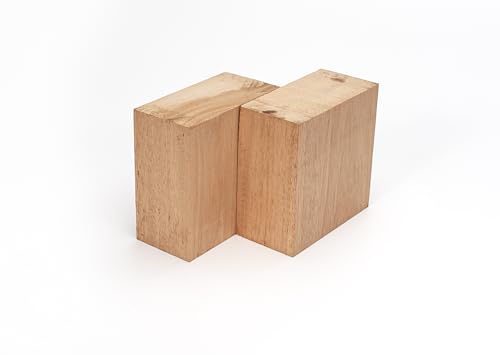 Exotic Wood Zone Wood Blanks for Bowls | Hardwood Bowl Blanks | Unfinished, Kiln-Dried, Sustainable Hardwood for Handcrafted Decorative Bowls & Functional Pieces (Fijian Mahogany, 7" x 7" x 2")
 Exotic Wood Zone Mahogany Bowl Blanks (5-Pack), Kiln-Dried Hardwood Wood Turning Blocks for DIY Woodworking & Crafts, 4" x 4" x 2"