Are All Wax Rings The Same Size? Here’S The Truth
A wax ring is a simple but very important part. It creates a watertight seal. This seal stops water and waste from leaking out.
It sits between your toilet or sink and the pipe in your floor or counter. When you tighten the bolts or mounts, the wax squishes out. This fills any gaps.
It keeps your bathroom or kitchen dry and clean. Without a good seal, you risk water damage and nasty smells.
These rings are usually made of a dense paraffin wax. Sometimes they have plastic or rubber things get interesting.
My Wax Ring Mishap: A Leaky Lesson Learned


I remember one time, quite a few years back, I was helping a friend install a new toilet. We were on a tight budget and time. I’d done this before, or so I thought.
We bought what we thought was a standard wax ring. It looked fine. We put the toilet in place, tightened everything down, and flushed.
Water started seeping out around the base almost immediately. My stomach dropped. I felt that familiar rush of panic.
We had clearly missed something. We had to pull the whole toilet up again. We found the ring hadn’t sealed right.
It was a simple mistake, but it cost us time and a bit more mess. That day taught me a valuable lesson: not all wax rings are equal, and using the wrong one can cause real headaches. It was a messy, smelly lesson.
Key Takeaways on Wax Ring Function
Purpose: To create a waterproof and airtight seal.
Location: Between the fixture (toilet/sink) and the drain pipe.
How it works: Wax compresses to fill gaps when the fixture is secured.
Importance: Prevents leaks, water damage, and sewer gas odors.
The Different Types of Wax Rings
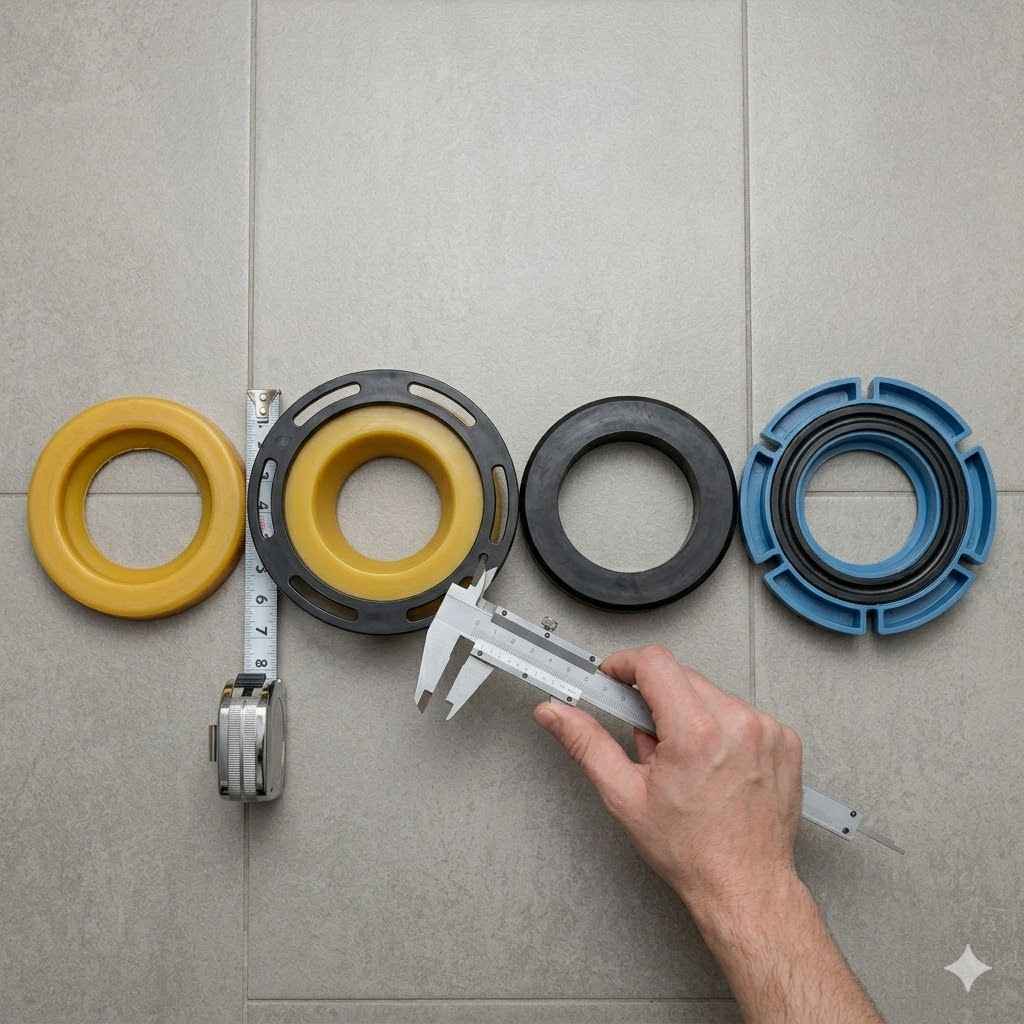
You might think wax is just wax. But there are variations. These differences matter a lot for getting a good seal.
Let’s break down the main types you’ll encounter.
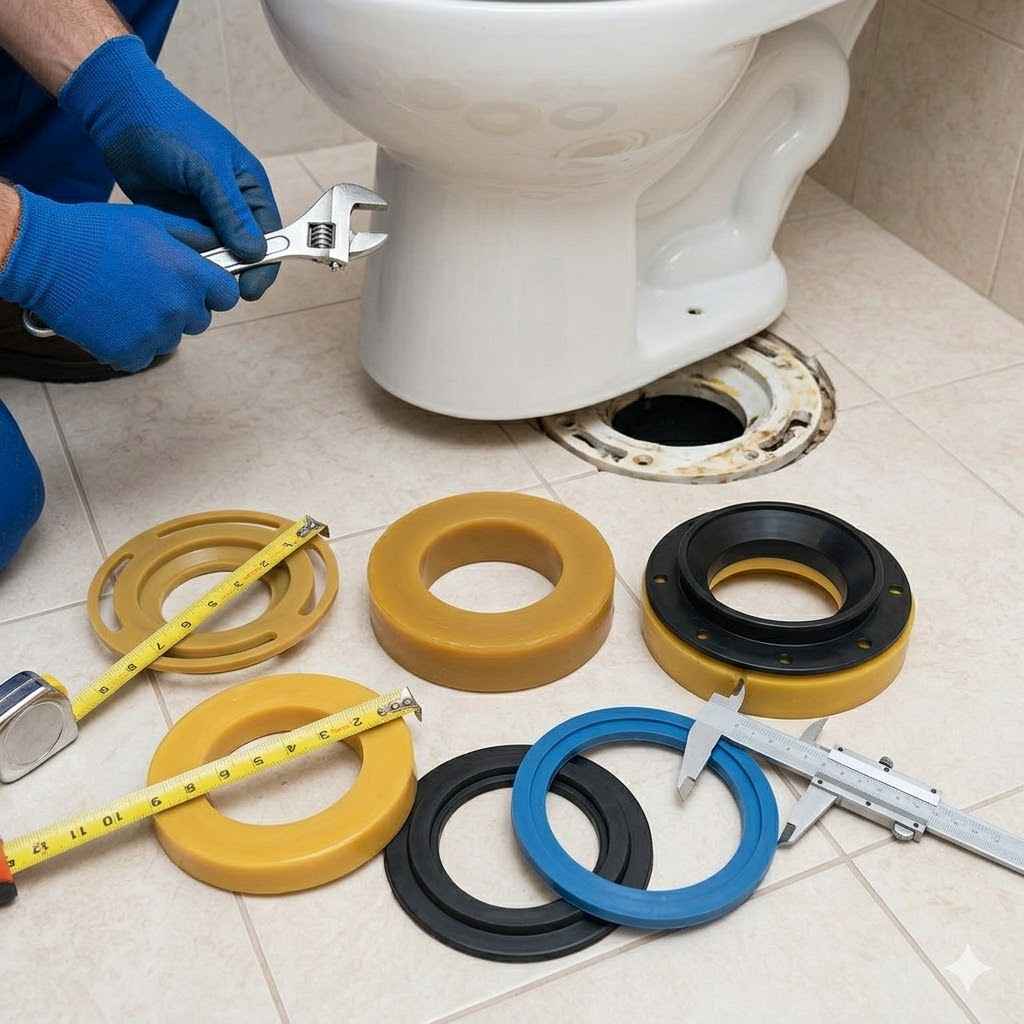
Standard Wax Rings
These are your most basic wax rings. They are often just a solid ring of wax. They work well for most standard toilets.
They sit flush with the floor. They don’t have any extra features. They are usually the cheapest option.
For a typical toilet and a level floor, they do the job fine. But they have their limits.
Wax Rings with Horns
Some wax rings have what’s called a “horn.” This is a plastic piece that sticks down from the ring. It’s designed to fit into the drainpipe opening. The horn helps guide the wax into the pipe.
It also helps create a better seal for waste. It adds an extra layer of protection against leaks and sewer gases. These are great for many standard toilets too.
They offer a bit more security.
Extra-Thick Wax Rings
These are just what they sound like. They are thicker than standard rings. This extra thickness is very helpful.
It’s useful for toilets that sit higher off the floor. This can happen with uneven floors or thicker floor materials. The extra wax can compress more.
This allows it to create a good seal even with more space. They can also help with slightly wobbly toilets. They provide a bit more cushion.
Flanged Wax Rings
Some toilets have a built-in flange. This is a ring on the bottom of the toilet itself. It helps the toilet sit more securely.
Flanged wax rings have a wider base. This matches the flange on the toilet. They offer a broader surface area for sealing.
These are designed for toilets with that specific mounting feature. Using the wrong ring here won’t work well.
Wax-Free Rings
These are a newer option. They aren’t made of wax. They are often made of rubber or foam.
They use a flexible material to create the seal. Some people prefer these. They are less messy to install.
They can be repositioned if needed. They also don’t dry out or crack over time like wax can. However, their sealing power can vary.
Some plumbers swear by them. Others stick with traditional wax. They are an interesting alternative.
Wax Ring Types at a Glance
- Standard: Basic wax ring for most toilets.
- With Horn: Has a plastic guide for better pipe seal.
- Extra-Thick: More wax for taller fixtures or uneven floors.
- Flanged: Wider base for toilets with a specific flange.
- Wax-Free: Uses rubber or foam for a seal; less messy.
The Critical Factor: Toilet Flange Height
This is where many DIYers get tripped up. It’s not just about the ring itself. It’s about how the ring interacts with the toilet and the floor.
The toilet flange is the crucial piece. This is the fitting that connects your toilet to the drainpipe in your floor.
The flange needs to be at the right height. Ideally, the top of the flange should be level with your finished floor. Or, it should be just slightly above it.
This creates a smooth surface for the wax ring to compress against. When you set the toilet down, the wax needs room to spread and seal.
What happens if the flange is too low? If the flange is below the floor level, your toilet won’t seal properly. The wax ring won’t have enough to grip. It can’t compress correctly.
This often leads to leaks. You might see water around the base of the toilet. You might also smell sewer gases.
The toilet might even feel wobbly.
What happens if the flange is too high? If the flange sticks up too far, it can also cause problems. The toilet might not sit level. This can stress the porcelain.
It can also prevent the wax from compressing enough. You might need a thicker wax ring to compensate. Or, you might need to adjust the flange height.
This is why choosing the right wax ring is so important. If your flange is a bit low, an extra-thick ring can help. If it’s perfectly level, a standard ring might be fine.
Understanding your flange height is key to picking the right seal.
Flange Height Guide
Ideal: Top of flange is level with or slightly above finished floor.
Too Low: Flange is below floor level. Leads to poor seal, leaks, and smells.
Too High: Flange is significantly above floor level. Can cause uneven seating and stress on toilet.
Common Mistakes with Wax Rings
Beyond just picking the wrong type, people make other errors. These can lead to failure. They can cause headaches down the line.
Not Using Enough Wax
Sometimes, people try to save a little money. They might try to reuse an old wax ring. Or they might buy a very thin one thinking it’s enough.
This is a bad idea. Wax rings are designed to be used once. They compress and deform.
Reusing them means you don’t have a fresh, full seal. A thin ring might not have enough material to fill the gap properly.
Damaging the Ring Before Installation
Wax is soft. It can get damaged easily. If you drop the ring, it can crack or bend.
If you handle it too much, your body heat can soften it unevenly. This can lead to a poor seal. Be gentle when opening the package and placing the ring.
Keep it in its original packaging until you are ready to use it.
Improper Toilet Seating
Once the wax ring is in place, the toilet must be set down carefully. It needs to be centered over the flange. Then, push it straight down.
Don’t twist or rock the toilet too much. This can break the seal you just created. Once it’s seated, tighten the bolts evenly.
Don’t overtighten, as this can crack the porcelain. But do make sure it’s snug and secure.
Ignoring Other Issues
A leaky toilet might not always be the wax ring’s fault. Sometimes the toilet itself is cracked. Or the tank bolts might be loose.
The flange itself could be broken. Always inspect the entire setup before assuming the wax ring is the sole problem. A new wax ring won’t fix a cracked toilet bowl.
Common Wax Ring Installation Errors
- Reusing old wax rings.
- Dropping or mishandling the new wax ring.
- Twisting or rocking the toilet during installation.
- Overtightening the mounting bolts.
- Not checking for other underlying issues (cracks, loose bolts).
Real-World Scenarios Where Ring Size Matters
Let’s look at some specific situations. These show why you can’t just grab any wax ring.
Scenario 1: The Uneven Bathroom Floor
You live in an older house. The bathroom floor isn’t perfectly flat. Maybe there’s a slight slope.
Or maybe the subfloor has settled unevenly. When you go to install a new toilet, you notice the toilet rocks a little. You can’t get it to sit perfectly.
A standard wax ring might not have enough thickness to fill the gaps created by the unevenness. This can lead to leaks. In this case, an extra-thick wax ring is your best bet.
It has more material to compress and adapt to the floor’s contours. This helps create a solid seal.
Scenario 2: The Old, Slightly Damaged Flange
You’re replacing an old toilet. The flange in the floor looks okay, but it’s not perfect. Maybe there’s a small chip or a bit of corrosion.
Or maybe it’s just a little worn down from years of use. A standard wax ring might not be enough to bridge that gap or imperfection. The wax might squeeze out in odd places.
Or it might not create a full seal. A wax ring with a horn can be helpful here. The horn guides the wax.
It helps fill the damaged area better. It also provides a more directed seal into the pipe opening.
Scenario 3: The High-End, Heavy Toilet
You’ve invested in a substantial, comfort-height toilet. These toilets are often heavier. They have a thicker base.
Sometimes, the base of the toilet might sit slightly higher than a standard toilet. This can be due to its design. Or it could be because of the specific floor material.
A standard wax ring might be too thin to create a proper seal for this heavier, taller fixture. You need a ring that can handle more compression. An extra-thick or even a specialized heavy-duty wax ring would be more appropriate.
It ensures a secure and leak-free connection for the substantial weight and height.
Scenario 4: The Specialty Sink Installation
While most commonly discussed with toilets, wax rings are also used for some sink drain installations. Vanity sinks, especially older ones or certain styles, might use a wax seal. If the sink’s drainpipe connection isn’t perfectly aligned with the wall pipe, a standard wax ring might not seal correctly.
The angle or slight gap could be an issue. Here, a flexible wax-free seal might be more forgiving. Or, if using wax, a ring designed for sinks, which might have a slightly different shape or thickness, is necessary.
The goal is still a watertight seal, but the geometry is different from a toilet.
Choosing the Right Ring: Scenario Focus
Scenario: Uneven Bathroom Floor
Best Choice: Extra-Thick Wax Ring
Reason: More wax to compress and fill floor gaps.
Scenario: Old or Damaged Flange
Best Choice: Wax Ring with Horn
Reason: Horn guides wax and helps seal pipe opening better.
Scenario: Heavy or Tall Toilet
Best Choice: Extra-Thick or Heavy-Duty Wax Ring
Reason: Provides needed compression and support for larger fixtures.
When Is a Wax Ring “The Right Size”?
The term “size” for a wax ring is a bit tricky. It’s not like a t-shirt where there’s a small, medium, or large. Instead, it’s about the thickness and type of wax ring.
The “size” that matters most is how well it can create a seal given your specific installation conditions.
A wax ring is the “right size” if:
- It can be compressed evenly by the weight of the fixture.
- It fills all the gaps between the fixture and the drainpipe.
- It prevents water from leaking out.
- It stops sewer gases from entering your home.
- The fixture sits securely and doesn’t wobble.
So, are all wax rings the same size? No. They vary in thickness and features.
These variations are designed to handle different installation heights and conditions. The standard wax ring is for standard conditions. Anything outside of that might need a specialized ring.
Factors Influencing Your Wax Ring Choice
When you’re standing in the plumbing aisle, what should you consider?
1. Toilet Flange Height Relative to Floor
This is the most critical factor. Measure it if you can. Most standard rings work when the flange is flush or slightly above the floor.
If it’s significantly below, you need thickness. If it’s very high, you might also need thickness or a specific fitting.
2. Condition of the Flange
Is it clean and smooth? Or is it chipped, corroded, or damaged? A damaged flange often benefits from a ring with a horn.
The horn can help direct the wax into the damaged areas.
3. Type of Fixture
While most people think of toilets, sinks can also use wax seals. Ensure you’re getting a ring designed for the specific fixture. Toilet wax rings are generally thicker and wider than sink wax rings.
4. Floor Material
Thick tile, linoleum, or even old subflooring can create unevenness. This might require a more forgiving wax ring. Extra-thick options often work best here.
5. Personal Preference (Wax vs. Wax-Free)
Some people strongly prefer wax-free seals. They are less messy and can be repositioned. If you’re uncomfortable with wax, explore these options.
Just ensure the wax-free seal you choose is rated for your specific application (toilet or sink).
Wax Ring Selection Checklist
- Flange Height: Measure and compare to floor level.
- Flange Condition: Check for chips, corrosion, or damage.
- Fixture Type: Toilet, sink, or other fixture?
- Floor Type: Consider unevenness and material.
- Installer Comfort: Do you prefer wax or wax-free?
What Does This Mean for You?
When it comes to wax rings, “same size” is misleading. The performance of a wax ring depends on its thickness and features, not just its diameter. Using the wrong type can lead to leaks, water damage, and persistent odors.
This can be expensive to fix.
When it’s normal to need a specific size:
- Your toilet flange sits below the floor line.
- Your floor is significantly uneven.
- You are installing a taller, heavier toilet.
- The existing flange is slightly damaged.
When to worry:
- You see water around the base of your toilet after installation.
- You smell sewer gas constantly.
- Your toilet feels wobbly or unstable.
- You installed a standard ring and notice issues.
Simple checks you can do:
- Gently push on the top of the toilet tank. Does it rock excessively?
- Look for any signs of moisture or stains around the toilet base.
- Gently sniff around the base for any unusual odors.
If you encounter any of these signs, it’s likely your wax ring isn’t doing its job. It might be the wrong type for your installation.
Quick Tips for a Better Seal
Getting that perfect seal is the goal. Here are a few extra pointers:
- Clean the flange: Before you place any ring, make sure the flange is clean and free of old wax or debris.
- Use a mirror: When seating the toilet, use a small mirror to check the alignment over the flange.
- Don’t rush: Take your time. Rushing leads to mistakes.
- Have extra rings handy: It’s not a bad idea to have a standard and an extra-thick ring on hand. This way, you can decide on the spot which one is best.
- Consider a waxless seal for tricky spots: If you’re dealing with very uneven surfaces or are just not confident with wax, a waxless seal is a great alternative.
Frequently Asked Questions About Wax Rings
Are all toilet wax rings the same diameter?
Most standard toilet wax rings are similar in diameter. They are designed to fit over a standard 3-inch or 4-inch toilet flange. The key difference is not usually the diameter, but the thickness and whether it has a horn or other features.
Can I reuse a wax ring?
No, you should never reuse a wax ring. Once compressed, it loses its sealing ability. A new wax ring is inexpensive and essential for a proper seal.
Reusing one will likely lead to leaks.
How thick should a wax ring be?
Standard wax rings are about 1/4 inch thick. Extra-thick rings can be 1/2 inch or more. The thickness needed depends on the height of your toilet flange compared to your finished floor.
If the flange is below the floor, you’ll need a thicker ring.
What is a toilet flange horn for?
The horn is a plastic extension on some wax rings. It fits into the toilet drainpipe opening. Its purpose is to guide waste into the pipe and help create a more secure seal against sewer gases.
When should I use a wax-free toilet seal instead of wax?
Wax-free seals are a good option if you want a less messy installation, if the toilet needs to be repositioned multiple times, or if you are concerned about wax drying out or cracking over time. They can also be very effective on slightly uneven surfaces.
How do I know if my toilet wax ring has failed?
Signs of a failed wax ring include water pooling around the base of the toilet, a persistent sewer gas smell, or a toilet that feels wobbly. These indicate that the seal is no longer watertight or airtight.
Conclusion: The Right Ring for the Right Job
So, to answer the big question: no, not all wax rings are the same size in terms of their effectiveness. While diameters might be similar, their thickness and features vary greatly. Choosing the right one is key to a leak-free, odor-free bathroom.
Always check your flange height and condition before heading to the store. A little attention now saves a lot of trouble later.
Sponsored / affiliate links. As an Amazon Associate I earn from qualifying purchases. I may earn additional commission from eligible campaigns.