1/2 Inch Plywood 4×8 Price (2026): Cost Per Sq Ft by Grade
A 4×8 sheet of 1/2 inch plywood is labeled 15/32 inch thick, and grade moves its price more than thickness does: Lowe’s listed 15/32 inch rated sheathing at $32.26 on August 26, 2026, or $1.01 per square foot. Home Depot and Menards block our price checks, so this guide gives dated numbers where we have them, the per-square-foot math for any tag, grades, uses, and where to save.
1/2 Inch Plywood 4×8 Sheet Price in 2026
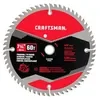 |
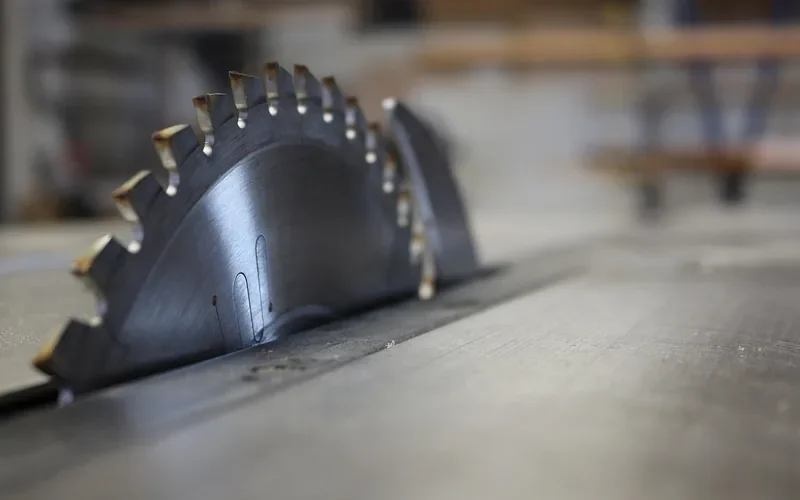
Best Plywood Blade Pick CRAFTSMAN 7-1/4 Inch 60T Finishing/Plywood Saw Blade (CMAS272560), $16.74 The cheapest way to buy plywood is whole sheets, and the cheapest way to get small pieces is to cut them yourself. A 60-tooth finishing blade is made for that job and sold for plywood.
As an Amazon Associate we earn from qualifying purchases. Price checked October 5, 2026. |
A 4×8 sheet covers 32 square feet, so the shelf price divided by 32 is your cost per square foot. The only dated big-box prices we could read are from the Lowe’s snapshot on our Lowe’s 4×8 plywood price guide, taken from Lowe’s.com on August 26, 2026. The rows below are the ones closest to 1/2 inch.
| Panel at Lowe’s (Aug 26, 2026) | Size | Price | Per sq ft |
|---|---|---|---|
| Rated sanded plywood sheathing | 15/32 in, 4×8 | $32.26 | $1.01 |
| AC sanded plywood subfloor | 15/32 in, 4×8 | $76.81 | $2.40 |
| Douglas fir sheathing (thinner) | 11/32 in, 4×8 | $25.73 | $0.80 |
| CDX plywood sheathing (thicker) | 23/32 in, 4×8 | $46.57 | $1.46 |
| Birch sanded plywood, cut-down panel | 1/2 in, 2×4 half sheet | $48.82 | $6.10 |
Two things stand out. First, two sheets of the same 15/32 inch thickness differ by $44.55 ($76.81 minus $32.26) because one is sanded AC grade and the other is rated sheathing. Second, the birch half sheet costs $6.10 per square foot, about six times the sheathing, so buying small pieces is where 1/2 inch plywood gets expensive. Lowe’s.com blocks automated requests, so treat these as a dated snapshot and confirm in the store or app.
We tried to read the Home Depot and Menards plywood pages on October 5, 2026. Home Depot returned an Access Denied error and Menards.com returned a 403 error, so this page lists no Home Depot or Menards sheet prices. Our Home Depot plywood price guide explains the same limit and gives a per-square-foot ladder you can use with any tag.
Price Per Square Foot: How to Judge Any Tag
Prices change by store, region, and week, but the arithmetic does not. Divide the tag by 32, then multiply by the square feet you need. The table shows what a range of 4×8 tags works out to, plus the cost of five sheets, which covers a 12×12 foot floor (144 square feet, 4.5 sheets rounded up).
| Tag price (4×8 sheet) | Cost per sq ft (price / 32) | Five sheets (144 sq ft floor) |
|---|---|---|
| $25 | $0.78 | $125 |
| $30 | $0.94 | $150 |
| $35 | $1.09 | $175 |
| $40 | $1.25 | $200 |
| $50 | $1.56 | $250 |
| $60 | $1.88 | $300 |
| $75 | $2.34 | $375 |
Use the same division on cut-down panels: a 2×4 foot piece is 8 square feet, so a $48.82 tag is $6.10 per square foot, and four of them equal one full sheet at $195.28. When a project needs several small pieces, a full sheet cut at home almost always beats buying precut panels. If you want to run your own numbers, our plywood price per square foot calculator does the division for you.
Grades and Bond Types: Why Two 1/2 Inch Sheets Cost Different Amounts
APA, the engineered wood trade association, grades each face veneer from A to D. According to APA’s plywood page, A has the highest appearance quality with minimal repairs, B allows limited inconspicuous repairs, C is the minimum for Exterior plywood, and D is limited to panels for applications protected from long-term weather exposure. A sheet marked AC has a sanded A face and a C back; CDX has C and D faces.
- A face: the smooth surface worth paying for on painted or clear-finished work.
- B face: small neat repairs, a cheaper step down for visible surfaces.
- C and D faces: knots and patches are allowed, which is fine behind a wall or under a floor.
CDX Is Not an Exterior Panel
The X in CDX is often read as exterior, but APA puts CDX in the Exposure 1 bond class. Exposure 1 panels use the same adhesives as Exterior panels and resist moisture during construction, but they are not meant for long-term weather exposure. APA reserves Exterior for panels built to handle repeated wetting and drying. Use CDX for sheathing that will be covered quickly, and pay for Exterior-rated panels when the face will stay outside.
What 1/2 Inch Plywood Is Good For
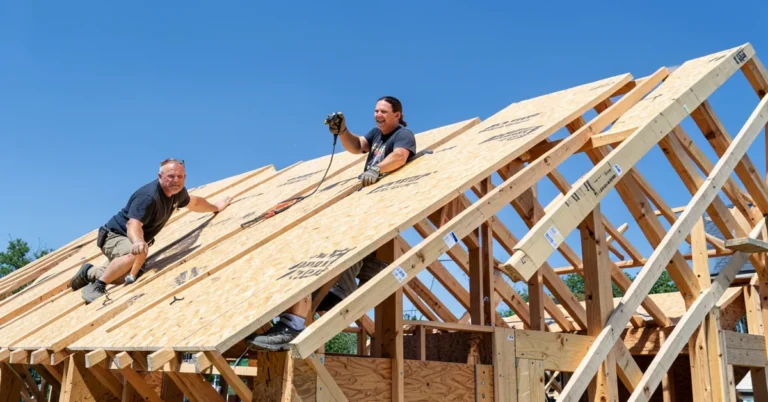
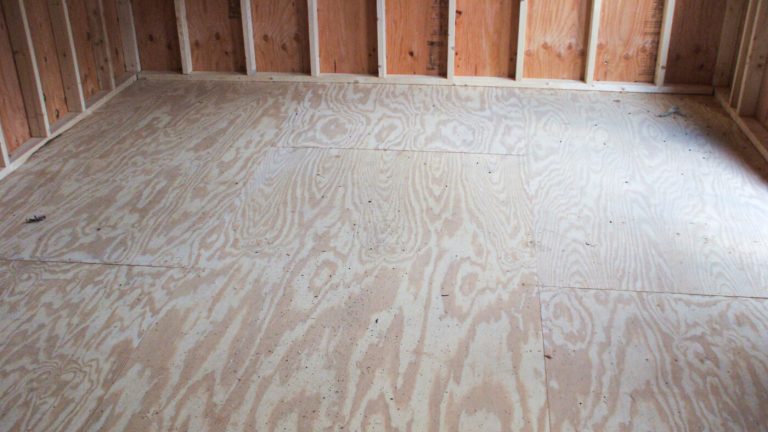
Because 15/32 inch rated sheathing is a structural panel, it works for wall sheathing, roof sheathing over wide supports, and subfloor over closely spaced joists. It is also a common choice for cabinet backs, shed walls, and utility shelves, where the face grade matters less than the price. For visible furniture, choose a sanded A or B face and expect to pay several times the sheathing price per square foot.
The Real Thickness: 15/32 Inch, Not 1/2
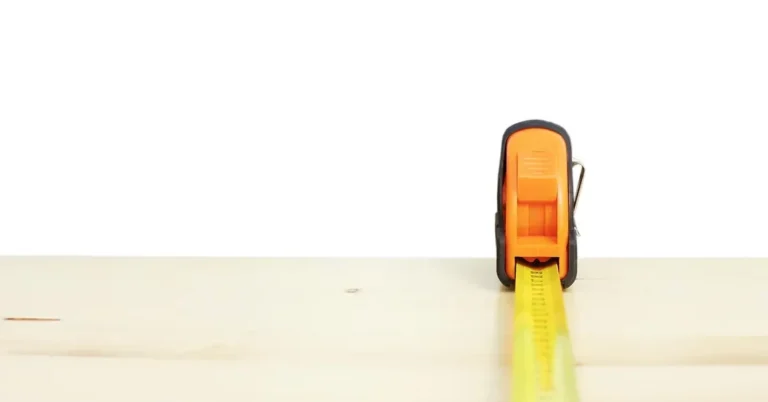
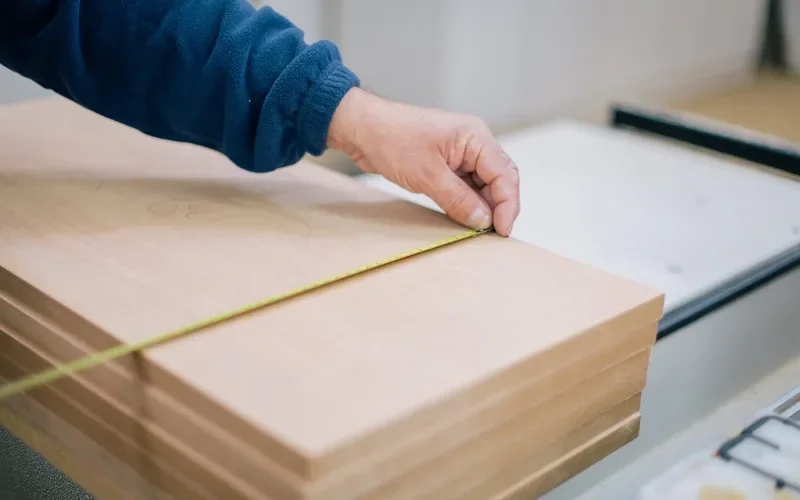
Lowe’s labels its nominal 1/2 inch sheathing 15/32 inch, which is 0.469 inch. That is 1/32 inch (0.031 inch) under half an inch, enough to leave a loose fit in a dado cut with a 1/2 inch bit. Measure with calipers before you cut joinery, and see our plywood size and thickness chart for every nominal and actual pair.
Myth: 1/2 Inch Plywood Is Too Thin for a Subfloor
It depends on joist spacing. APA span ratings use two numbers: the first is the maximum support spacing for roof sheathing and the second is the maximum for subflooring. A 32/16 panel, the usual 15/32 inch sheet, can span supports up to 32 inches on a roof and up to 16 inches under a floor. Our plywood subfloor thickness guide lists the same pairing and notes that rated sheathing needs a separate underlayment under finished flooring.
| Joist spacing | Rated Sheathing panel | Thickness |
|---|---|---|
| 16 in on center | 32/16 | 15/32 in |
| 19.2 in on center | 40/20 | 19/32 in |
| 24 in on center | 48/24 | 23/32 in |
So 1/2 inch plywood is a legitimate subfloor over joists 16 inches apart, but it is the wrong choice once spacing grows to 19.2 or 24 inches. Always confirm with your local code before you rely on a panel structurally.
📊 A 32/16 span rating means 32 inches between supports on a roof and 16 inches under a floor. Source: APA, 2026
Where to Buy 1/2 Inch Plywood and How to Pay Less
- Compare cost per square foot, not the tag. A sheet that looks $5 cheaper may be a lower grade or a different thickness.
- Check the thickness label. Some sheets are labeled 15/32 and others 1/2 inch or 7/16 inch OSB, and they are not interchangeable.
- Buy full sheets when you can. The Lowe’s snapshot shows a cut-down birch panel at about six times the sheathing cost per square foot.
- Call a local lumber yard. Yards often carry grades the big-box stores do not, and they do not always list prices online.
- Inspect each sheet. Sight down the length for warp, check the edges for plies separating, and leave sheets with large voids on the stack.
For more places to look, see our guide on where to buy cheap plywood.
How Many Sheets Do You Need and What They Cost
Divide your area by 32 and round up. Using the August 26, 2026 Lowe’s price of $32.26 for 15/32 inch rated sheathing, here is the material cost before tax and before any waste.
| Project | Area | Sheets | Cost at $32.26 |
|---|---|---|---|
| 8×10 ft shed roof deck (flat, no overhang) | 80 sq ft | 3 | $96.78 |
| 12×12 ft subfloor over 16 in joists | 144 sq ft | 5 | $161.30 |
| Closet shelves: eight 24×24 in panels | 32 sq ft | 1 | $32.26 |
A single 4×8 sheet gives exactly eight 24×24 inch panels, but each saw cut removes a strip of wood, so measure for the blade width and leave a little slack in your layout.
Frequently Asked Questions
How much is a 4×8 sheet of 1/2 inch plywood?
The only dated price we could read is Lowe’s: $32.26 for a 15/32 inch rated sanded sheathing sheet and $76.81 for 15/32 inch AC sanded subfloor, both checked on August 26, 2026. Home Depot and Menards pages were blocked on October 5, 2026, so confirm those prices in store or in the app. Divide any tag by 32 to get the cost per square foot.
Is 1/2 inch plywood really 1/2 inch thick?
No. Sheets sold as 1/2 inch plywood are typically labeled 15/32 inch, which is 0.469 inch. The difference is 1/32 inch. It matters when you cut a dado or fit a panel into a groove sized for a true 1/2 inch, so measure with calipers first.
Can you use 1/2 inch plywood for a subfloor?
Yes, over joists spaced up to 16 inches on center. APA span rating 32/16 allows 16 inches under a floor, and rated sheathing needs a separate underlayment beneath finished flooring. For 19.2 inch or 24 inch spacing you need a thicker panel, such as 19/32 or 23/32 inch.
Is CDX plywood exterior grade?
No. CDX is classed by APA as Exposure 1, which resists moisture during construction but is not meant for long-term weather exposure. Panels rated Exterior are built to handle repeated wetting and drying.
Why does a half sheet cost so much more per square foot?
Cut-down panels are priced for convenience and often use a sanded hardwood face. At Lowe’s on August 26, 2026, a 2×4 foot birch half sheet was $48.82, or $6.10 per square foot, versus $1.01 per square foot for a full sheet of 15/32 inch sheathing.
Bottom Line
A sheet of 1/2 inch plywood is really 15/32 inch, and its price depends on grade and cut size far more than on the thickness label. Divide the tag by 32, buy full sheets, match the grade to what will be seen, and confirm local prices before you drive out, because the only big-box numbers we could verify are the dated Lowe’s snapshot above.
Sponsored / affiliate links. As an Amazon Associate I earn from qualifying purchases. I may earn additional commission from eligible campaigns.