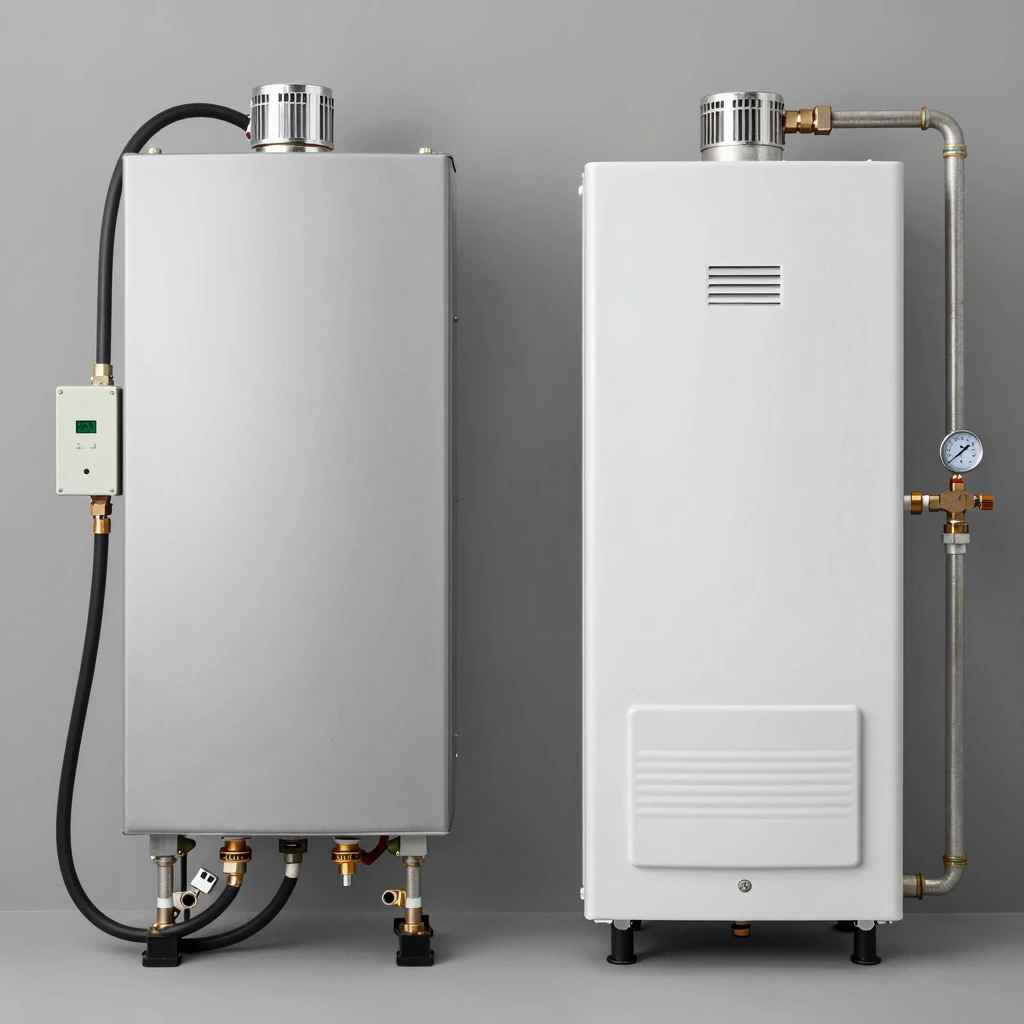
Are Boilers Electric Or Gas? Key Differences Fully Explained
It’s a question many homeowners wrestle with when they first look at their heating system. You hear terms like “boiler” and “furnace” thrown around. You know you need heat, but what powers it?
Are boilers electric or gas? Understanding this is key to keeping your home warm and your bills in check. Let’s break it down.
Boilers can be either electric or gas-powered. The type of fuel a boiler uses significantly impacts its efficiency, cost of operation, and installation requirements. Most residential boilers in the U.S. run on natural gas, propane, or oil, while electric boilers are less common for whole-home heating due to higher energy costs.
What Exactly Is a Boiler?
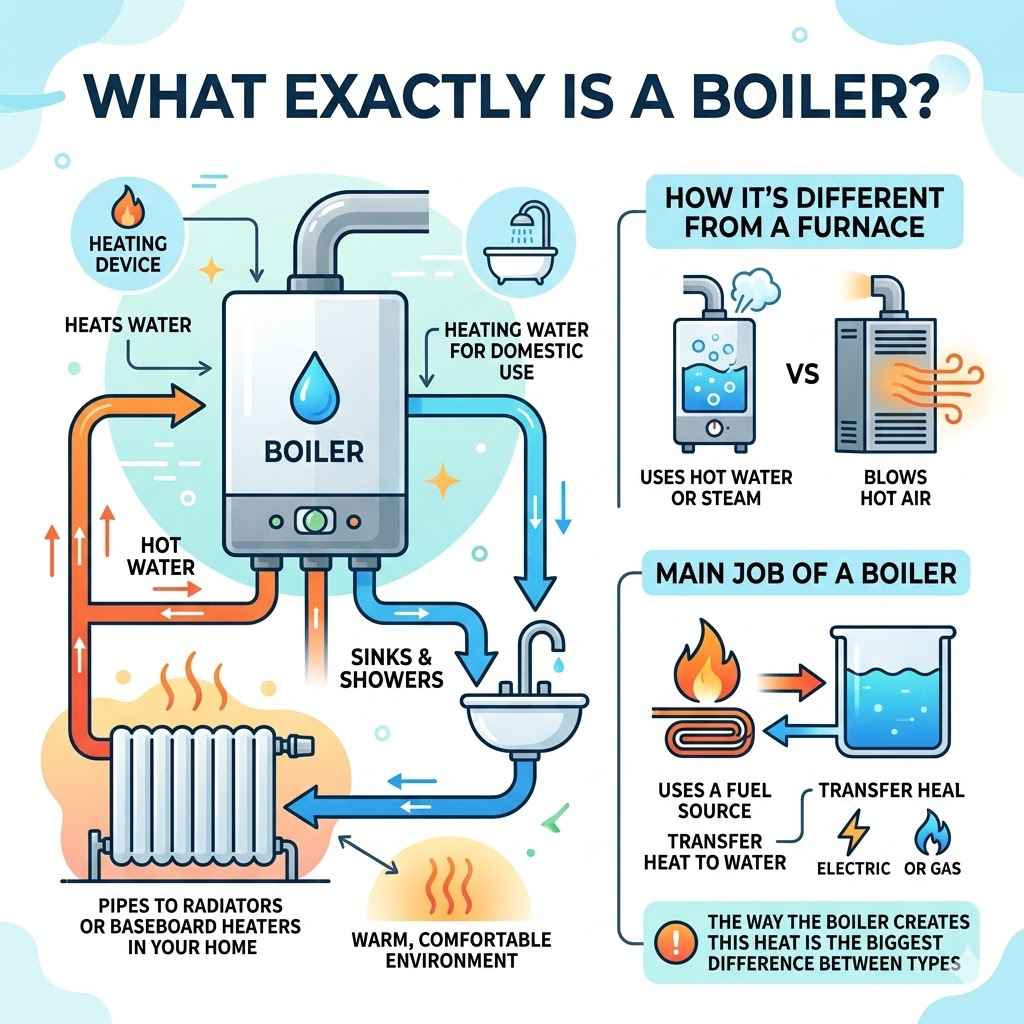
At its heart, a boiler is a heating device. It heats water. Then, this hot water circulates through pipes to radiators or baseboard heaters in your home.
It can also heat water for your sinks and showers. This system provides a warm, comfortable environment. It’s different from a furnace.
A furnace blows hot air. A boiler uses hot water or steam.
The main job of a boiler is to transfer heat to water. It does this using a fuel source. This fuel source is where the “electric or gas” question comes in.
The way the boiler creates this heat is the biggest difference between types.
The Two Main Fuel Types: Gas vs. Electric
When we talk about boilers, we are mostly talking about how they get their power. The two main players are natural gas (or propane/oil) and electricity. Each has its own way of working and its own set of pros and cons for your home.
Think about your kitchen stove. Some use gas, and some use electricity. It’s a similar idea for your home’s main heat source.
The fuel type affects everything from installation to how much you pay each month.
Gas-Powered Boilers: The Common Choice
In many American homes, especially those in areas with access to natural gas lines, gas boilers are the standard. They are very popular for a reason. They tend to be quite efficient and cost-effective to run.
A gas boiler uses natural gas, propane, or heating oil as its fuel. It burns this fuel in a combustion chamber. This burning process creates a lot of heat.
This heat then warms the water that flows through the boiler’s heat exchanger.
The water gets very hot. It then travels through pipes to your radiators. The radiators release the heat into your rooms.
A pump helps move the water around. Once the water has cooled after releasing its heat, it cycles back to the boiler to be heated again.
These systems need a flue or vent. This vent carries away the exhaust gases from burning the fuel. Safety is very important with gas boilers.
Proper installation and maintenance are crucial.
Electric Boilers: A Different Approach
Electric boilers, on the other hand, use electricity to heat the water. They don’t burn anything. Instead, they use electric resistance heating elements, much like those found in an electric kettle or a toaster.
When electricity flows through these elements, they get very hot. This heat is then transferred directly to the water in the boiler. There’s no combustion.
This means there are no exhaust gases. This is a big advantage in terms of emissions and installation complexity.
Because there’s no burning, electric boilers don’t need a chimney or a vent pipe. They can be installed in more places. They are also often smaller and quieter than gas boilers.
However, the main drawback of electric boilers is the cost of electricity. In most parts of the U.S., electricity is more expensive per unit of heat than natural gas. This can lead to higher heating bills, especially in colder climates.
Gas vs. Electric Boiler: Quick Snapshot
Gas Boiler:
- Uses natural gas, propane, or oil.
- Burns fuel for heat.
- Requires a vent or flue.
- Lower operating costs (often).
- Common in many homes.
Electric Boiler:
- Uses electricity.
- Uses resistance heating elements.
- No vent needed.
- Higher operating costs (often).
- Simpler installation.
How Does a Boiler Actually Work?
Let’s dive a bit deeper into the mechanics. It’s not magic; it’s clever engineering. Understanding the cycle helps explain why one type might be better for you.
Whether gas or electric, the core process is the same: heat water and move it. The difference is how that heat is generated.
The Heat Exchanger: The Heart of the System
In both types of boilers, the heat exchanger is a crucial component. This is where the heat from the fuel source is transferred to the water. It’s a series of pipes or channels designed for maximum heat transfer.
For a gas boiler, hot gases from the combustion chamber pass through or around the heat exchanger. These gases transfer their warmth to the metal, which then heats the water flowing through it.
For an electric boiler, the electric heating elements are usually immersed directly in the water or are part of the heat exchanger structure. As they heat up, they transfer that heat directly to the water.
Circulation: Getting the Heat Where It Needs to Go
Once the water is heated, it needs to get to your radiators. This is where the circulation system comes in. Most modern boilers use a circulator pump.
This pump is like a small, powerful fan for water. It pushes the hot water out of the boiler and into the network of pipes that lead to your home’s heating zones. These zones might be individual rooms or groups of rooms.
As the hot water flows through the radiators, it gives off its heat to the air in the room. The water then cools down. The cooler water flows back to the boiler through a separate set of pipes.
This creates a continuous loop.
Control Systems: Keeping Things Just Right
Boilers have control systems to manage the heating process. A thermostat in your home tells the boiler when to turn on and off. When the room temperature drops below your set point, the thermostat signals the boiler to start heating.
Modern boilers also have safety controls. These monitor pressure, temperature, and proper operation. They shut the system down if anything is unsafe.
Some boilers are “combi” boilers. This means they can heat your home and also provide hot water for your taps. They have an extra internal system for this.
My Own Boiler Scare: When Things Go Wrong
I remember one brutal winter a few years back. My old gas boiler started making this odd, gurgling sound. It was late on a Sunday night.
The house was already starting to feel chilly. Panic set in.
I’d heard the occasional creak or pop before, but this was different. It sounded like a clogged drain mixed with a distant car engine sputtering. I checked the thermostat – still set to 70 degrees.
The radiators were cold. My wife and kids were already bundled up in blankets.
My first thought was, “Is it electric or gas? Does it even matter right now?” I nervously went down to the basement where the boiler sat. It was a hulking, grey metal box.
I’d always ignored it, trusting it to just work. Now, its silence felt ominous.
I started searching online frantically, my phone screen barely visible in the dim basement light. I found forums filled with people describing similar noises. Some said it was air in the system.
Others warned of imminent failure. I felt completely out of my depth.
The sheer anxiety of facing a cold house, especially with a family, was intense. I realized then how much we rely on these unseen systems. I didn’t understand the mechanics at all.
I just knew it was broken. Thankfully, a quick search for “emergency boiler repair near me” brought up a local company that could come out first thing Monday morning. It turned out to be a simple air bleed, but the experience taught me a lot about being proactive with home systems.
Real-World Context: Where Boilers Are Used
Boilers are most common in older homes and in regions that experience very cold winters. They provide a steady, comfortable heat that many people prefer over forced air.
Climate and Geography
In the Northern U.S. and Canada, where winters are harsh, boilers are a popular choice. They are excellent at delivering consistent warmth.
This is especially true for older homes that might not be well-insulated.
Areas with access to natural gas lines often see more gas boilers. If natural gas isn’t available, propane or oil boilers are used. In some specific, smaller applications, electric boilers might be chosen, but less so for primary whole-home heat.
Home Styles and Age
Older homes often came with boiler systems. These systems are built to last, and many are still running decades later. If you own a historic home, you might have radiators and a boiler.
Newer homes are more likely to use forced-air furnaces. However, some custom builds or homes prioritizing radiant heat might still opt for a boiler. They offer a different kind of comfort – a gentle, even warmth without drafts.
The Difference in Installation
Installing a gas boiler involves connecting it to a gas line and a venting system. This requires a qualified professional. The venting is critical for safely removing combustion byproducts.
Installing an electric boiler is generally simpler. It just needs a proper electrical connection. There’s no need for gas lines or vents.
This can make them a good option for certain situations, like additions or homes where running gas lines is difficult or impossible.
Boiler Installation Considerations
- Gas Boiler: Requires gas line, venting, skilled installation.
- Electric Boiler: Requires electrical hookup, simpler installation, no venting.
- Location: Boilers often reside in basements or utility rooms.
- Space: Gas boilers can be larger due to combustion components.
What This Means for You: Choosing Your System
So, are boilers electric or gas? They can be both. The real question is which one is right for your home.
This decision hinges on several factors. Cost, availability of fuel, and your home’s setup all play a role.
Fuel Availability and Cost
The most significant factor for many is the cost and availability of fuel. Natural gas is usually the cheapest option per unit of heat. If you have natural gas lines, a gas boiler often makes the most sense for running costs.
If natural gas isn’t an option, you might consider propane or oil. These can be more expensive than natural gas but are still often cheaper than electricity for whole-house heating.
Electricity is convenient, but its cost can be prohibitive for primary heating in cold climates. Electric boilers are more often used for supplemental heat or in smaller spaces where their installation benefits outweigh the higher running costs.
Efficiency Ratings
Boilers are rated for efficiency using AFUE (Annual Fuel Utilization Efficiency). This tells you how much of the fuel consumed is converted into usable heat.
Modern gas boilers can be very efficient, with high-efficiency condensing boilers reaching AFUE ratings of 90% or higher. This means less than 10% of the fuel is wasted.
Electric boilers are technically 100% efficient at the point of use. All the electricity they consume is converted into heat. However, this doesn’t account for the energy lost in generating and transmitting that electricity.
So, while they are efficient in their operation, the overall energy picture can be different.
Efficiency at a Glance
Gas Boilers:
- AFUE ratings vary, but modern units are 85-98%.
- Efficiency depends on fuel combustion.
Electric Boilers:
- Around 100% efficient at the point of use.
- Overall energy efficiency depends on electricity generation.
Environmental Impact
Gas boilers, by burning fossil fuels, do produce greenhouse gases and other emissions. However, modern units are much cleaner than older models. When running on natural gas, they are generally considered a more environmentally friendly option than oil or propane.
Electric boilers produce no direct emissions at your home. However, the environmental impact depends on how the electricity is generated. If your electricity comes from renewable sources like solar or wind, then an electric boiler can be a very green choice.
Maintenance Needs
Both types of boilers require maintenance. Gas boilers need annual checks. This is to ensure safe operation and optimal efficiency.
The combustion system, burners, and vents need to be inspected.
Electric boilers have fewer moving parts and no combustion to worry about. This can mean less frequent maintenance. However, heating elements can eventually wear out and need replacement.
Regular checks are still recommended to catch any issues early.
Quick Fixes and Tips for Boiler Owners
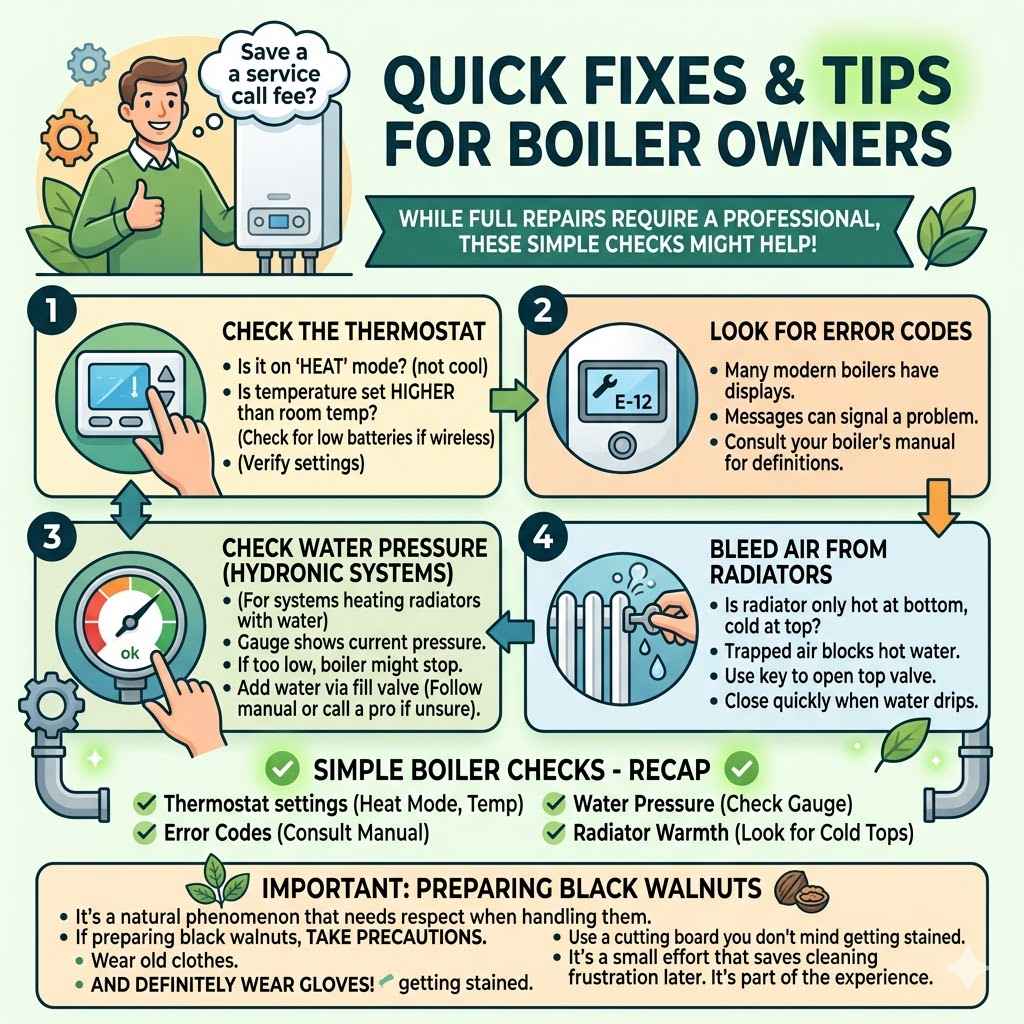
While a full repair requires a professional, a few simple checks can sometimes help. And knowing these can save you a service call fee.
Check the Thermostat
It sounds simple, but make sure your thermostat is set correctly. Is it on the right mode (heat, not cool)? Is the temperature set higher than the current room temperature?
Look for Error Codes
Many modern boilers have a small digital display. This display might show an error code if something is wrong. Check your boiler’s manual to see what these codes mean.
Check Water Pressure (for Hydronic Systems)
If your boiler heats water for radiators (hydronic system), it needs to maintain a certain water pressure. There’s usually a gauge on the boiler. If it’s too low, the boiler might not work.
You might be able to add water using a fill valve, but follow your manual or call a pro if unsure.
Bleed Air from Radiators
If a radiator is only hot at the bottom and cold at the top, it likely has air trapped inside. You can use a radiator key to carefully open the small valve at the top. Let the air escape until water starts to drip, then close it quickly.
Simple Boiler Checks
Thermostat: Verify settings (heat mode, temperature).
Error Codes: Consult manual for display messages.
Water Pressure: Check gauge on hydronic systems.
Radiator Warmth: Cold tops may mean air needs bleeding.
Frequently Asked Questions About Boilers
Are all boilers either electric or gas?
While electric and gas are the most common power sources for boilers, some systems might use oil or propane as fuel. These operate similarly to natural gas boilers by burning fuel to heat water.
Which is cheaper to run, an electric or gas boiler?
In most regions of the U.S., gas boilers are cheaper to run than electric boilers. This is because natural gas is typically less expensive per unit of heat energy compared to electricity.
Can I convert my gas boiler to electric?
While technically possible, converting a gas boiler to electric is often not practical or cost-effective. It typically involves replacing the entire unit rather than just modifying the fuel source.
Do electric boilers work well in very cold climates?
Electric boilers can provide heat in very cold climates, but their operating cost can become very high. If electricity prices are high, running an electric boiler all winter might be expensive.
What is a condensing boiler?
A condensing boiler is a type of high-efficiency gas boiler. It captures extra heat from the exhaust gases that would normally be lost through the vent. This makes them much more efficient than older boiler models.
How often should a boiler be serviced?
Most experts recommend an annual service for gas boilers to ensure safety and efficiency. Electric boilers may require less frequent professional attention, but regular visual checks are still a good idea.
Final Thoughts on Boiler Power
So, to recap, boilers can indeed be powered by electricity or gas. The choice between them impacts your home’s comfort, your energy bills, and installation needs. Gas boilers are common and often more affordable to run.
Electric boilers offer simpler installation but can cost more to operate.
Understanding your current system and its fuel source is the first step. This knowledge helps you make informed decisions about maintenance and future upgrades. Always consult with a qualified HVAC professional for specific advice on your home.