Are All Round Toilet Seats The Same Size? Find Out Here
It’s a small detail, isn’t it? The toilet seat. Most of the time, we don’t give it a second thought.
But then, one day, you need to
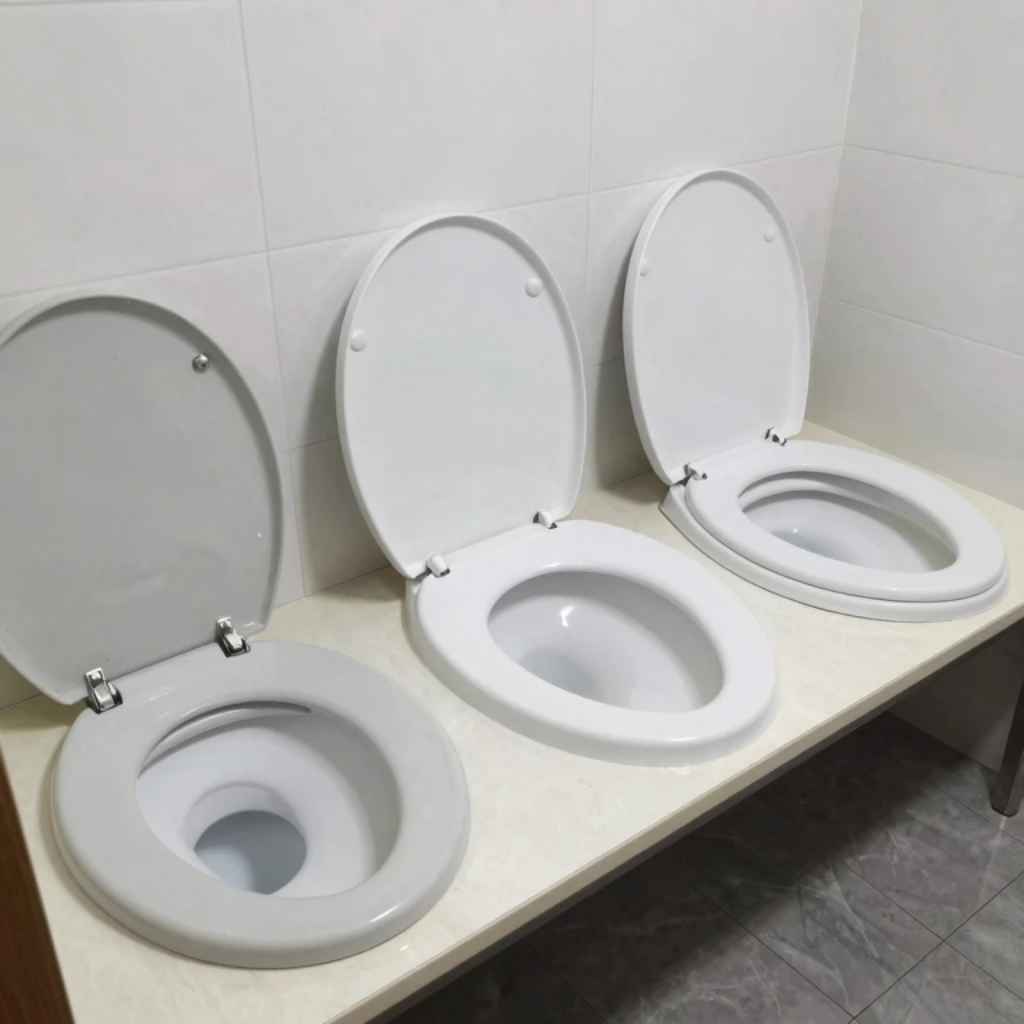
While many “round” toilet seats look similar, they are not all the same size. Key measurements like the distance from the bolt spread to the front of the bowl, and the width of the bowl itself, vary. Elongated seats are distinctly longer than round ones. Getting the right fit ensures comfort, stability, and a proper seal.
Understanding Toilet Seat Shapes and Sizes
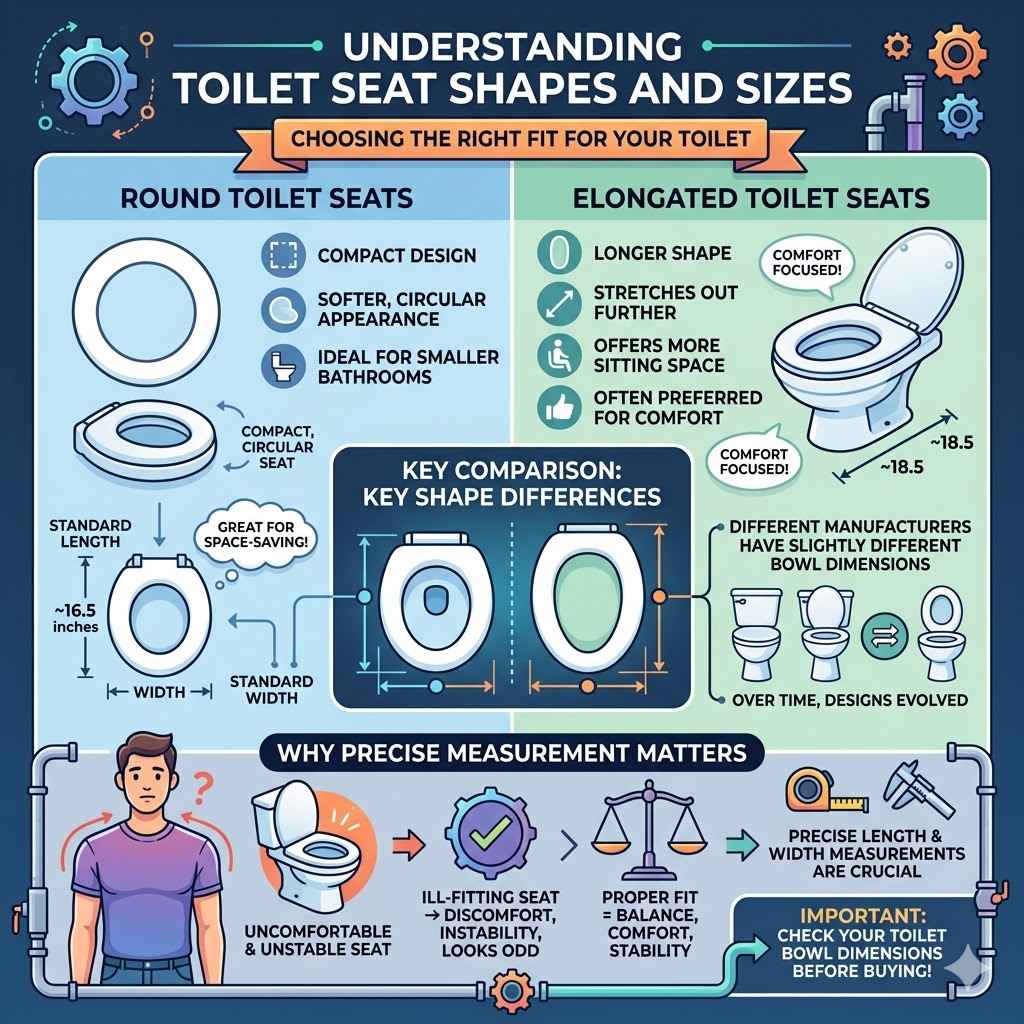
When you go to buy a new toilet seat, you’ll notice two main shapes. There’s the “round” shape and the “elongated” shape. This is the first big clue that not all seats are identical.
The names themselves tell you a lot. Elongated seats are, as the name suggests, longer. They stretch out further.
Round seats are more compact. They tend to have a softer, more circular appearance when viewed from above.
But it’s not just about the overall shape. Even within the “round” category, there can be subtle differences. These differences matter a lot when it comes to getting a good fit.
Imagine trying to put on a shirt that’s almost the right size, but a little too tight in the shoulders. It’s uncomfortable and doesn’t look right. A toilet seat is similar.
A seat that’s just a bit too small or too big won’t be comfortable or stable. It can even look a little odd.
So, why the variation? It comes down to the toilets themselves. Different toilet manufacturers have, over time, designed their bowls with slightly different dimensions.
It’s not usually a dramatic difference, but it’s enough. These variations are most noticeable in the length and width of the bowl. And the seat needs to match the bowl it’s going on.
Why Aren’t All Round Toilet Seats Identical?
The main reason all round toilet seats aren’t the same size is simple: toilet bowl dimensions vary. Think about it like buying shoes. Even though most adult feet are a certain size range, there are still different widths and lengths.
Toilet bowls are similar. While there are standard shapes, the exact measurements can differ between brands and even between different models from the same brand.
The biggest distinction most people notice is between a round toilet bowl and an elongated toilet bowl. An elongated bowl is typically about 1.5 to 2 inches longer than a round bowl. This extra length is at the front of the bowl.
So, if you’re trying to fit a round seat on an elongated bowl, or vice versa, it’s not going to work well. The seat will hang off the front or back, or it won’t cover the bowl properly.
But even within the “round” category, there can be minor differences. For instance, the width of the bowl might vary slightly. Or the distance from the hinge bolts to the very front edge of the bowl could be a hair different.
These small changes mean that a seat designed for one round toilet might not sit perfectly on another round toilet. It’s these subtle variations that lead to the confusion when you’re trying to buy a replacement.
Common Toilet Seat Shapes in U.S. Homes
Round Seats:
- Shorter and more compact.
- Best for smaller bathrooms.
- Easier to maneuver around in tight spaces.
- Generally measure about 16.5 inches from the bolt holes to the front rim.
Elongated Seats:
- Longer and more oval-shaped.
- Offer more seating surface and comfort for adults.
- Typically found in larger bathrooms.
- Generally measure about 18.5 inches from the bolt holes to the front rim.
My Own Seat-Shopping Nightmare
I remember when we bought our first house. It was an older place, full of charm. And, as you might guess, a few quirks.
One of those quirks was a toilet in one of the bathrooms that had a seat that was, shall we say, “well-loved.” It was cracked and wobbly. Time for a replacement! Easy, right?
I went online, saw “round toilet seat,” clicked “add to cart,” and waited for it to arrive.
When it did, I eagerly opened the box. It looked like a toilet seat. It was round.
Perfect. I took off the old one, lined up the new one, and started attaching the bolts. That’s when I noticed something was off.
The seat seemed a little too short. It didn’t quite cover the edges of the porcelain bowl. And when I sat on it, it felt a bit precarious.
It wasn’t centered quite right. I felt a pang of annoyance. I’d measured it, or so I thought!
Turns out, I’d measured the bowl itself, not the seat. And this particular toilet bowl, while round, was a bit wider than the standard I had in mind. The new seat just didn’t hug the bowl properly.
It was a small thing, but it made the whole toilet feel less sturdy and a lot less comfortable. That’s when I learned that “round” isn’t always “exactly the same round.”
The Key Measurements You Need to Know
Okay, so we know they aren’t all the same. How do you make sure you get the right one? It all comes down to a few simple measurements.
Don’t worry, you don’t need a degree in engineering. You just need a tape measure. This is where knowing the difference between your current bowl and what you want is key.
The two most important measurements are the distance between the bolt holes and the distance from the bolt holes to the front of the bowl. Let’s break that down. First, look at where the seat attaches to the toilet bowl.
You’ll see two bolts, usually covered by small caps. Measure the distance from the center of one bolt hole to the center of the other. This is your bolt spread.
For most round toilets in the U.S., this measurement is pretty standard, usually around 5.5 inches.
Next, and this is the crucial one for determining round vs. elongated, you need to measure from the center of the bolt holes to the very front edge of the toilet bowl. Do this measurement along the centerline of the bowl.
For a standard round toilet seat to fit correctly, this measurement should be about 16.5 inches. If you measure about 18.5 inches, you likely have an elongated toilet bowl, and you’ll need an elongated seat.
There’s also the width of the bowl. Measure across the widest part of the bowl, usually a few inches in front of the bolt holes. This gives you an idea of how wide the seat needs to be to cover the bowl completely.
While bolt spread and length are the primary ways to distinguish between round and elongated, width ensures the seat covers the bowl evenly.
Quick Guide to Measuring Your Toilet Bowl
Step 1: Find the Bolt Holes
Locate the two mounting bolts that attach the current seat to the bowl. They are usually under small plastic caps.
Step 2: Measure Bolt Spread
Measure the distance from the center of one bolt hole to the center of the other. (Typically 5.5 inches for round toilets.)
Step 3: Measure to the Front
Measure the distance from the center of one bolt hole straight out to the front edge of the toilet bowl. (Around 16.5 inches for round.)
Step 4: Measure Width (Optional but helpful)
Measure across the widest part of the bowl, usually a few inches in front of the bolt holes.
Common Scenarios and What They Mean
Let’s talk about what you might find in your home or when looking at different toilets. Understanding these common scenarios can help you pinpoint exactly what you need.
Scenario 1: The “Standard” Round Toilet. This is what most people think of. You measure your bolt spread (around 5.5 inches) and your length from bolts to front (around 16.5 inches). You’re in luck!
Most “round” toilet seats sold in the U.S. are designed for these dimensions. You have a lot of options here, from basic plastic to comfort-padded seats.
Scenario 2: The “Compact” Round Toilet. Sometimes, older homes or certain manufacturers might have slightly smaller round bowls. Your measurements might show a bolt spread of 5.5 inches, but the length to the front might be closer to 15.5 or 16 inches. In this case, you’re looking for a “compact round” toilet seat.
These are less common but do exist. They are designed to fit these smaller, round bowls more snugly.
Scenario 3: The “Wide” Round Toilet. Less common, but possible, is a round toilet bowl that is a bit wider than average. Your bolt spread might still be around 5.5 inches, but the width across the bowl could be more than the standard 14 inches. If the seat you’re looking at feels too narrow or doesn’t cover the bowl evenly, this might be the reason.
For width, most round seats are about 14 inches across, but check product descriptions for wider options if you suspect this.
Scenario 4: The Elongated Toilet. This isn’t a round toilet, but it’s important to know the difference. If your measurement from the bolt holes to the front of the bowl is closer to 18.5 inches, you have an elongated bowl. You absolutely need an elongated toilet seat.
Trying to put a round seat on an elongated bowl will look wrong and feel uncomfortable. It won’t provide adequate coverage.
It’s also worth noting that some very old or imported toilets might have slightly different measurement standards. However, for the vast majority of homes in the United States, focusing on the 5.5-inch bolt spread and the 16.5-inch length for round bowls is your best bet.
Round vs. Elongated: Key Differences
Shape:
- Round: More circular, compact.
- Elongated: More oval, extended front.
Length (Bolt to Front):
- Round: Approximately 16.5 inches.
- Elongated: Approximately 18.5 inches.
Best Use:
- Round: Smaller bathrooms, water closets.
- Elongated: Larger bathrooms, for increased comfort.
What Happens If You Get the Wrong Size?
So, what’s the big deal if you pick a seat that’s just a little bit off? It might seem like a minor inconvenience, but the wrong size seat can cause several problems. And honestly, it just makes using the toilet less pleasant.
First, there’s the comfort issue. If the seat is too short, your legs might hang over the front of the bowl. This isn’t comfortable for long.
If it’s too wide or too narrow, it might not sit right on the bowl, creating pressure points. You want the seat to feel stable and supportive.
Then there’s the stability problem. A seat that doesn’t fit the contour of the bowl properly can shift and wobble when you sit on it. This feels unsafe.
It can also put extra stress on the mounting bolts, potentially loosening them over time or even damaging the porcelain bowl if it’s severe.
Aesthetically, a misfitting seat just looks wrong. It can make an otherwise clean bathroom look a bit messy or neglected. If the seat hangs too far over the front or back, or if it doesn’t cover the rim of the bowl completely, it’s a visual cue that something isn’t quite right.
Finally, for some people, a properly fitting seat is important for hygiene. If the seat doesn’t create a good seal with the bowl, there’s a higher chance of drips or splashes going over the edge. And, as we mentioned, a wobbly seat can make cleaning around it more difficult.
Modern Innovations in Toilet Seats
The world of toilet seats isn’t just about basic plastic and hinges anymore. While the core need is still a comfortable and functional lid, manufacturers have introduced many features. Many of these innovations are designed to make installation easier, improve hygiene, or add comfort.
And some of these advancements can even help with the fitting process.
One popular feature is the quick-release mechanism. These seats have special hinges that allow you to easily detach the seat from the bowl with the push of a button or lever. This makes cleaning incredibly simple.
You can lift the seat off entirely and get into all those hard-to-reach nooks and crannies around the hinges and the bowl itself. Many quick-release seats are still designed to fit standard round or elongated bowls, but the ease of cleaning is a major benefit.
Then there are soft-close hinges. You know that annoying slam of a toilet seat that can echo through the house in the quiet of the night? Soft-close hinges prevent that.
They have a built-in damper that gently lowers the seat and lid until they meet the bowl. This adds a touch of luxury and also prevents wear and tear on both the seat and the toilet bowl.
You’ll also find seats with built-in bidet functions. These are becoming increasingly popular as people look for more hygienic and eco-friendly alternatives. Some are simple washing functions, while others offer heated seats, warm water, and even air dryers.
These are typically designed to fit standard round or elongated bowls, but their bulk might affect the overall look or feel in very small bathrooms.
For those who struggle with night-time navigation, some seats come with integrated LED night lights. These provide a soft glow that’s enough to see by without turning on a bright overhead light. Again, these are usually available for both round and elongated bowls.
When looking at these modern seats, always double-check the specifications. While many are designed to fit standard dimensions, confirming the bolt spread and length measurements against the product details is still the smartest way to ensure a perfect fit, regardless of the fancy features.
Modern Toilet Seat Features to Consider
Quick Release: For easy cleaning. Simply detach the seat.
Soft Close: Prevents slamming, adds quiet and durability.
Bidet Functionality: Integrated washing features for enhanced hygiene.
Night Lights: Built-in LED lights for safe nighttime use.
Heated Seats: For added comfort, especially in cooler climates.
How to Choose the Right Round Seat
You’ve measured. You know you need a round seat. Now, how do you pick the right round seat from the many options available?
It’s about more than just the shape. It’s about your needs and preferences.
First, re-check your measurements. Make sure you’re confident about the 16.5-inch length (or whatever your measurement showed) and the 5.5-inch bolt spread. Look at the product descriptions carefully.
They should list these dimensions. If they don’t, it’s a red flag. Look for a seat that clearly states it’s for a “standard round” toilet.
Next, consider the material. Most affordable seats are made of molded plastic. They are durable and easy to clean.
For a bit more comfort, you can find padded vinyl seats. These are softer but can sometimes be harder to clean thoroughly and may wear out faster. High-end options might include solid wood or composite materials, offering a more luxurious feel and look.
Think about features. Do you want soft-close hinges? Quick-release for cleaning?
Maybe a night light? These features add to the cost but can significantly improve your bathroom experience. For most people, soft-close is a popular upgrade that’s worth the small extra expense.
What about color? White is the most common and classic choice. It blends with most bathroom decor.
However, you can also find seats in black, beige, or even patterned designs if you want to make a statement.
Finally, read reviews. Other buyers can offer valuable insights. Look for comments about fit, durability, and ease of installation.
If many people mention that a particular seat fits their “standard round” toilet perfectly, that’s a good sign. Conversely, if multiple reviews say a seat is too short or too long, steer clear.
Remember, investing a few extra dollars for a seat that fits perfectly and has the features you want will make a big difference in your daily comfort and satisfaction. It’s a small part of your bathroom, but it’s one you interact with multiple times a day.
When Is “Round” Not Just “Round”?
This is the crux of the confusion for many people. While the term “round” suggests uniformity, it often overlooks the nuances of toilet bowl design. Think of it like “medium” sized shirts.
Most are similar, but some brands run a little smaller, and others a little bigger.
The term “round” in toilet seats and bowls refers to the general shape and, crucially, the approximate length from the bolt holes to the front of the bowl. A standard round bowl is designed to accommodate a seat that is around 16.5 inches long in that measurement. This provides a comfortable seating area that doesn’t extend too far past the user’s legs but still offers a good seating surface.
However, toilet manufacturers have historically produced bowls with slight variations. This could be due to design choices, changes in manufacturing processes over time, or efforts to differentiate their products. So, while the overall appearance might be round, the precise contour and dimensions can differ.
This is why a seat that looks like it should fit might feel a bit off when installed.
The most significant deviation that people might mistakenly think is a “variation of round” is actually the elongated bowl. An elongated bowl is significantly longer, measuring about 18.5 inches from the bolt holes to the front. It’s not a “bigger round” bowl; it’s a different shape altogether.
Elongated bowls were introduced to provide more comfort and seating space, especially for adults. If you try to put a round seat on an elongated bowl, it will look awkward, and the seating surface will be insufficient.
So, when “round” isn’t just “round,” it usually means one of a few things:
- You have a toilet with slightly different dimensions than the “standard” round, perhaps a bit shorter or wider.
- You might actually have an elongated bowl and are mistaking its shape for a very large round one.
- The seat you are looking at is simply not designed to fit the specific contours of your toilet bowl, even if both are technically “round.”
The key takeaway is to always rely on your measurements rather than just the shape label. The tape measure is your most reliable tool.
My Experience with a “Designer” Round Seat
A few years back, I decided to upgrade the toilet seat in my main bathroom. It was a perfectly functional white plastic seat, but I wanted something a bit nicer. I found a “designer” round toilet seat online.
It looked sleek and modern, with a nice matte finish and soft-close hinges. The product description said it was for “standard round toilets.” Great, I thought. It arrived, and it was beautiful.
The material felt substantial, and the hinges were smooth.
When I went to install it, though, I ran into the same issue I’d had years before. The bolt spread was correct, but the seat itself seemed to taper a little differently than my existing bowl. It sat a bit too far forward, leaving a small gap at the back where the seat met the tank.
When I sat down, it felt okay, but it didn’t hug the bowl quite as perfectly as the old, basic seat had. It was about 95% there, but that 5% was noticeable to me. It felt a little less stable, and visually, I could see the slight misalignment.
It taught me that even with descriptive terms like “designer” or “standard,” the specific contours of the toilet bowl are king. Sometimes, the simplest, most basic seats are designed to fit the widest range of standard bowls because they have a less aggressive contour. For my next replacement, I went back to a very basic, well-reviewed model after taking precise measurements again.
Tips for Measuring and Buying
To make your toilet seat shopping experience as smooth as possible, here are some practical tips. These come from experience and a desire to avoid repeated trips to the store or frustrating online returns.
1. Measure Twice, Buy Once: I cannot stress this enough. Grab your tape measure.
Don’t guess. Don’t rely on memory. Measure the bolt spread and the length from the bolt holes to the front of the bowl.
If you’re unsure if you have a round or elongated bowl, do both measurements. If the length is around 16.5 inches, you need a round seat. If it’s around 18.5 inches, you need an elongated seat.
2. Know Your Bolt Spread: While 5.5 inches is standard for round, double-check. It’s rare for it to be different, but better safe than sorry.
This measurement is critical for the seat to align correctly with the bowl.
3. Take Photos: Before you remove your old seat, take a few pictures of it installed on the toilet. This can be helpful if you need to compare shapes or ask for advice in a store.
You can also photograph your measurements to refer back to.
4. Check Product Specifications Carefully: When looking online, don’t just read the title. Scroll down to the product details or specifications section.
This is where manufacturers will list the dimensions. They should specify if the seat is for a round or elongated bowl and provide the key measurements.
5. Read Reviews for Fit Information: Look for customer reviews that specifically mention how well the seat fit their toilet. People often share their experiences with whether a seat was too short, too long, or fit just right on their “round” toilet.
6. Consider the “Standard” Definition: In the U.S., a standard round toilet seat is designed for bowls with approximately a 16.5-inch length from bolt holes to the front. If your measurements align closely with this, you have a good chance of a standard round seat fitting.
7. Don’t Be Afraid of Basic Models: Sometimes, the simplest, most basic toilet seats are designed with the most universal fit for their shape category. They might lack fancy features, but they get the job done comfortably and securely.
8. Return Policy: If buying online, always check the return policy for toilet seats. Some retailers have specific policies due to hygiene reasons.
Make sure you can return it if it truly doesn’t fit after all your careful measuring.
Your Pre-Purchase Checklist
1. Measured bowl length? (Approx. 16.5″ for round)
2. Measured bolt spread? (Approx. 5.5″ for round)
3. Confirmed seat shape needed? (Round)
4. Checked product specs for dimensions?
5. Read reviews on fit?
When to Seek Professional Help
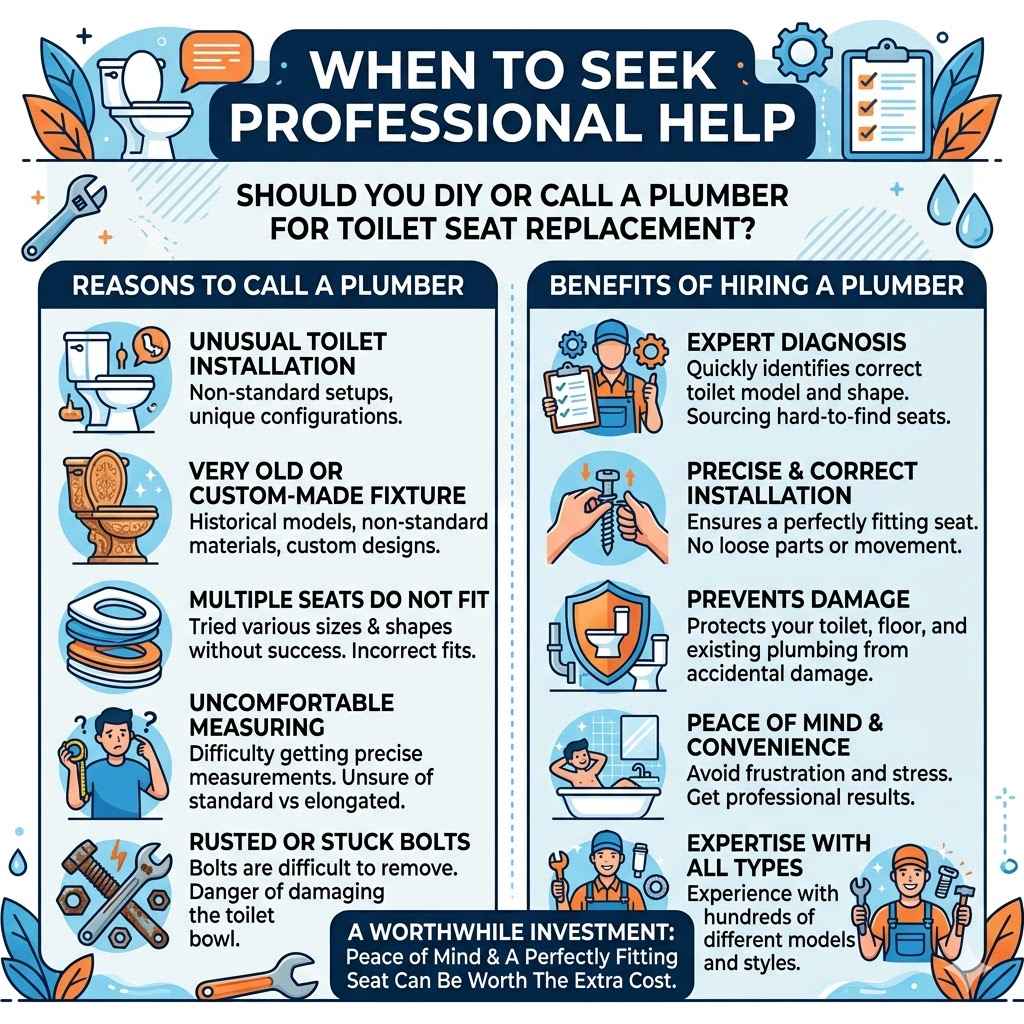
For most people, replacing a toilet seat is a DIY job that doesn’t require much fuss. However, there are times when it might be wise to call in a professional plumber. If you’re dealing with an unusual toilet installation, a very old or custom-made fixture, or if you’ve tried multiple seats and none seem to fit, a plumber can help.
A plumber has likely seen hundreds of different toilet models and shapes. They can often identify what type of bowl you have and recommend the correct seat size or even source a seat for you. They can also ensure that the installation is done correctly, preventing any potential damage to your toilet or plumbing.
If you’re uncomfortable with measuring, or if the bolts on your existing seat are rusted or difficult to remove, a plumber can handle that too. While it will cost more than doing it yourself, peace of mind and a perfectly fitting seat can be well worth the investment, especially if you’re struggling.
Frequently Asked Questions About Round Toilet Seats
Are all round toilet seats the same width?
No, not all round toilet seats are the exact same width, although they are typically close. The standard width for a round toilet seat is about 14 inches across the widest part. However, there can be slight variations between manufacturers and models.
It’s always best to measure the widest part of your toilet bowl to ensure a good fit, especially if your bowl seems unusually wide or narrow.
How do I know if I have a standard round toilet bowl?
A standard round toilet bowl in the U.S. typically measures about 16.5 inches from the center of the bolt holes to the front edge of the bowl. The bolt spread (distance between the two bolt holes) is usually around 5.5 inches.
If your measurements are close to these, you likely have a standard round bowl. Elongated bowls will measure about 18.5 inches in length.
Can I put an elongated toilet seat on a round toilet?
No, you should not put an elongated toilet seat on a round toilet. The elongated seat is designed to be longer and will likely hang off the front or back of a round bowl, leaving a gap and looking mismatched. You need to match the seat shape to the bowl shape for a proper fit and comfortable seating experience.
What happens if my round toilet seat is slightly too small?
If your round toilet seat is slightly too small, it may not cover the entire rim of the toilet bowl, leaving some of the porcelain exposed. This can look unsightly and may also lead to a less stable seating surface. You might feel like the seat is not positioned quite right or that it’s too restrictive.
It’s better to have a seat that fully covers the bowl.
Are there special round seats for smaller bathrooms?
Yes, some manufacturers offer “compact round” toilet seats. These are designed for smaller round toilet bowls, which are sometimes found in older homes or very small bathrooms. They have slightly shorter dimensions than standard round seats.
Always measure your bowl to confirm if you need a standard or compact size.
Where can I buy a round toilet seat that fits?
You can buy round toilet seats at most home improvement stores (like Home Depot or Lowe’s), large retailers (like Walmart or Target), and online marketplaces (like Amazon or Wayfair). When shopping, always pay close attention to the product description and specifications, and compare them to your measurements of the toilet bowl.
Conclusion
So, while the term “round” suggests a standard shape, it’s clear that not all round toilet seats are the same size. The differences, though sometimes small, are important for comfort, stability, and appearance. Always measure your toilet bowl carefully before you buy a new seat.
Knowing the distance between your bolt holes and from the holes to the front of the bowl will guide you to the perfect fit. With a little attention to detail, you can easily find a round toilet seat that makes your bathroom both functional and comfortable.