Are All Woodwind Instruments Made Of Wood? Surprising Truth
You might think woodwind instruments are all about wood. It makes sense, right? The name itself points to it.
But if you’ve ever looked closely at a saxophone or a flute, you might start to wonder. Are they really all made of wood? This question pops up a lot, and the answer is more interesting than you might guess.
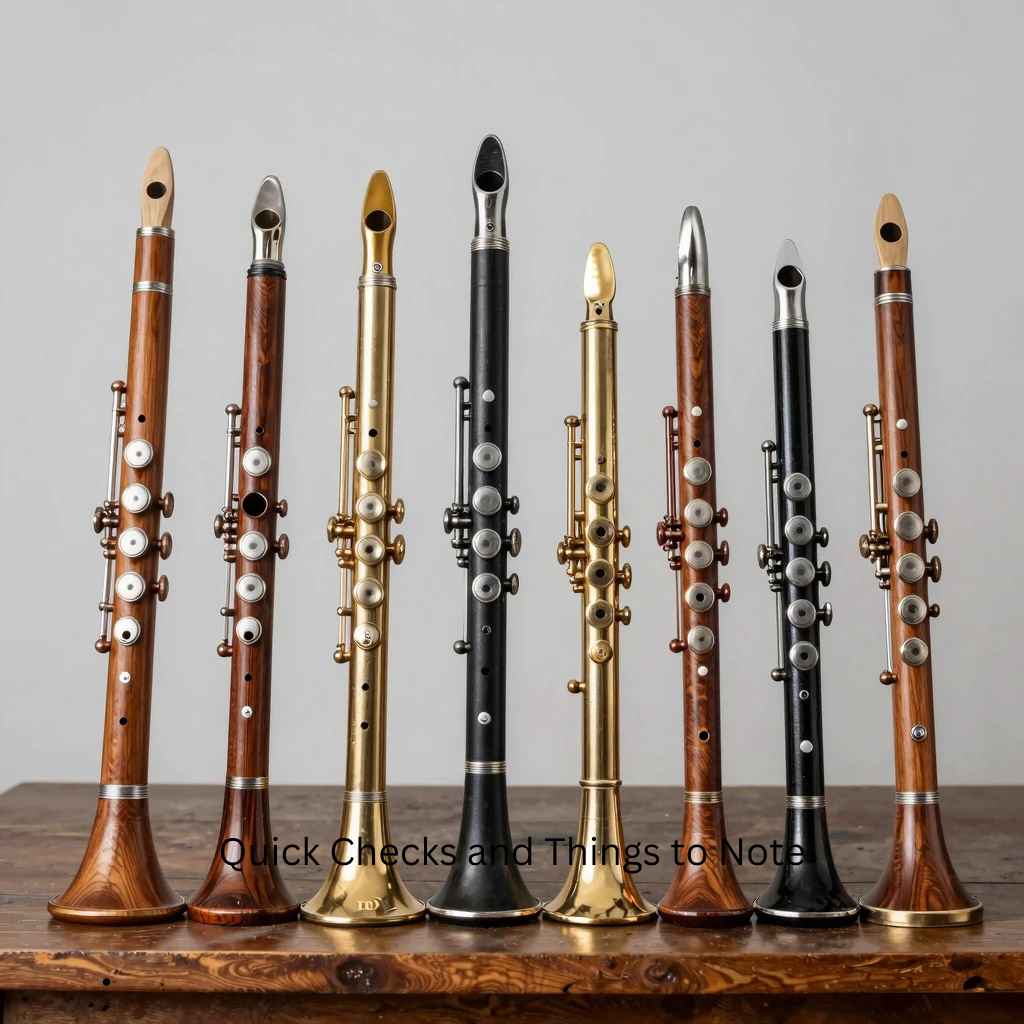
The surprising truth is that not all woodwind instruments are made of wood. While many traditional woodwinds rely heavily on wood, modern designs and even some historical instruments use a variety of materials like metal, plastic, and even glass. The term “woodwind” refers more to how the sound is produced than the material composition.
The History and How Sound is Made
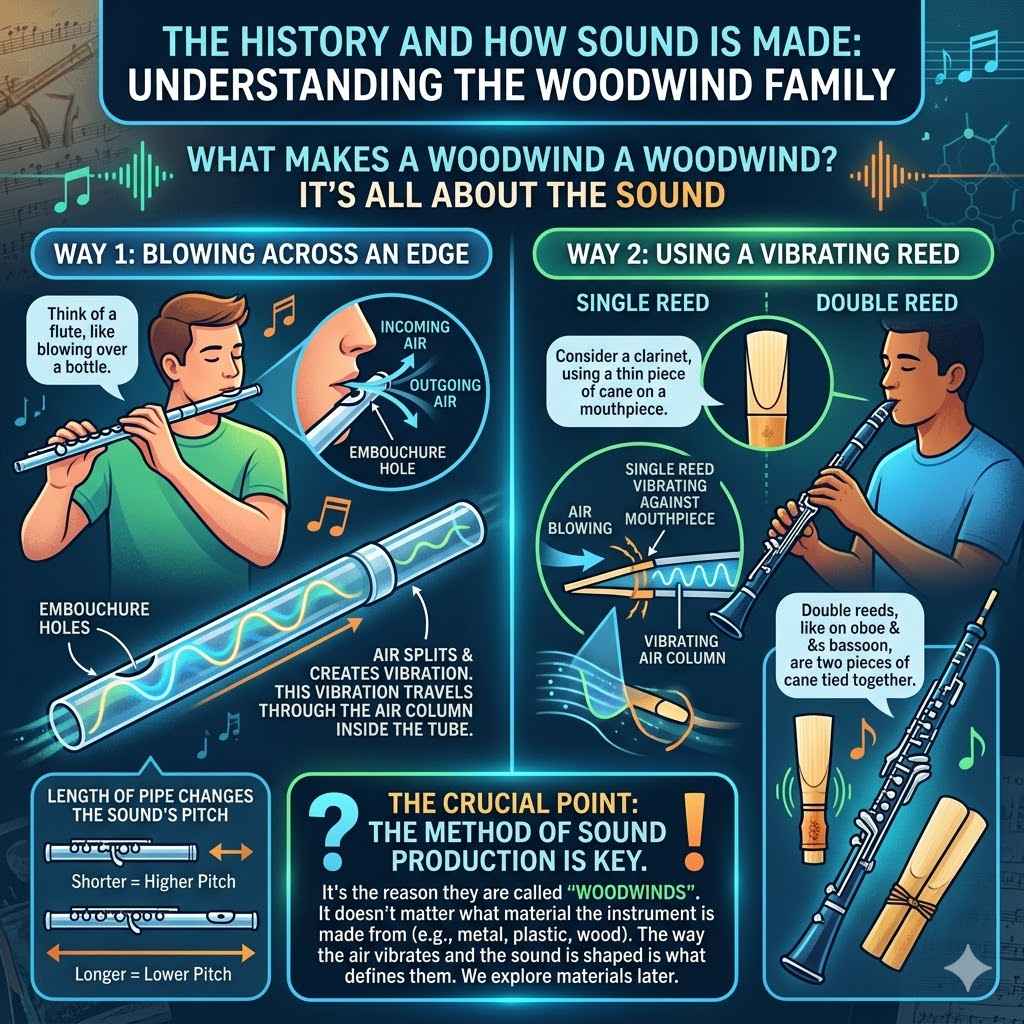
Let’s dive into what makes a woodwind a woodwind. It’s all about the sound. How do these instruments make their music?
Two main ways stand out. One is by blowing across an edge, like blowing over the top of a bottle. The other is by using a vibrating reed, like a tiny wiggling piece of cane or plastic.
Think of a flute. When you blow across the embouchure hole, the air splits. Some air goes in, and some goes out.
This creates a vibration. This vibration then travels through the air inside the flute’s tube. It’s like singing into a pipe.
The length of the pipe changes the sound’s pitch.
Now, consider a clarinet or an oboe. These use a reed. A single reed, like on a clarinet, is a thin piece of cane.
It’s attached to a mouthpiece. When you blow air, the reed vibrates against the mouthpiece. This makes the air column inside the instrument vibrate.
Double reeds, found on instruments like the bassoon and oboe, are two pieces of cane tied together.
This method of sound production is key. It’s the reason they are called “woodwinds.” It doesn’t matter what material the instrument is made from. The way the air vibrates and the sound is shaped is what defines them.
This is a crucial point to remember as we explore the materials.
My First “Aha!” Moment with Materials
I remember being in my high school band room. It was filled with the usual suspects: trumpets shining, trombones gleaming, and drums ready to rumble. Then there were the woodwinds.
I had a clarinet, and it was a beautiful dark wood. My friend played the flute, and hers was shiny silver.
I used to think, “Well, mine is wood, and hers is metal, but she’s still in the woodwind section. How does that work?” My band director, Mr. Harrison, a man who could explain anything with patience, noticed my confusion.
He gathered us for a quick talk one afternoon.
He explained that the name “woodwind” came from a time when most of these instruments were made of wood. The flute was often made of wood. The oboe, the bassoon, the clarinet – all primarily wood.
But he pointed to Sarah’s flute. “That,” he said, “is a metal flute. But it plays using the same principle as an old wooden flute.
It makes sound by splitting air across an edge. So, it’s still a woodwind.”
He then gestured to Kevin, who played the saxophone. Kevin’s saxophone was a golden brass color. “And the saxophone,” Mr.
Harrison smiled, “is almost always made of metal. But it uses a single reed, just like a clarinet. So, despite being metal, it belongs to the woodwind family because of how it makes sound.”
That day, the world of musical instruments opened up for me. It wasn’t just about the material. It was about the magic of sound creation.
It was a moment of genuine understanding, and it made me look at every instrument with new eyes. Or, rather, with new ears and a better grasp of acoustics.
Woodwinds: A Tale of Two Sound Producers
Edge-Blown Instruments:
These make sound when you blow air across a sharp edge. Think of a whistle. The air stream is split, creating vibrations.
Reed Instruments:
These use a thin piece of material (a reed) that vibrates when air is blown past it. This vibration then creates the sound.
The Traditional Wood: A Rich History
For centuries, wood was the go-to material for many wind instruments. Why? Because wood is amazing.
It’s natural, readily available, and it has wonderful acoustic properties. Different types of wood produce slightly different sounds. Makers could shape wood precisely to create the perfect instrument.
Instruments like the recorder, the oboe, the bassoon, and the clarinet were traditionally carved from hardwoods. Maple, rosewood, ebony, and grenadilla are just a few examples. These woods are dense and stable.
This helps them hold their shape and resist warping from changes in temperature and humidity.
The natural resonance of wood helps to give these instruments their warm, rich, and often complex tone. The way wood vibrates influences the sound. It can absorb some unwanted frequencies.
This can lead to a mellow and expressive sound quality that many musicians love. The grain and density of the wood play a big role.
Each piece of wood is unique. This means that two instruments made from the same type of wood might still sound a little different. This adds to the charm and individuality of wooden instruments.
It’s like each instrument has its own voice, shaped by the tree it came from.
Even today, many professional musicians prefer instruments made of wood. They value the traditional sound and the connection to centuries of musical history. The craftsmanship involved in turning a block of wood into a finely tuned instrument is truly an art form.
Common Woods Used in Traditional Woodwinds
Grenadilla (African Blackwood): Very dense and dark. Offers a powerful, focused tone. Often used for clarinets and oboes.
Rosewood: Known for its warm, rich sound. Used in various woodwinds, including oboes and clarinets.
Maple: Lighter than grenadilla or rosewood. Used for bassoons and sometimes clarinets, offering a rounder tone.
Boxwood: Historically used for recorders and early clarinets. Offers a clear, bright sound.
The Rise of Metal: Flutes and Saxophones
While many woodwinds are wooden, others are famous for their metal construction. The most prominent examples are the flute and the saxophone. This shift didn’t happen overnight.
It was a gradual evolution driven by desire for new sounds and better performance.
The flute has a long history. Early flutes were often made of wood. However, by the 19th century, metal flutes began to appear.
Silver became a popular choice. It offered a brighter, more projecting sound than wood. It was also less susceptible to changes in weather, which could warp wooden instruments.
Key figures like Theobald Boehm developed new flute designs in the mid-1800s. These designs featured advanced key mechanisms and were often made of metal. This allowed for greater speed, agility, and a wider range of notes.
Today, most orchestral flutes are made of silver, gold, or platinum. Even some wooden flutes have metal keys.
The saxophone is a different story. Invented by Adolphe Sax in the 1840s, it was designed from the start to be a metal instrument. Sax wanted to create an instrument that could bridge the gap between brass and woodwinds.
He gave it a conical bore, like an oboe, and a single reed mouthpiece, like a clarinet. But he made the body out of brass.
The saxophone’s metal body gives it its powerful, resonant, and often brilliant tone. It’s a sound that cuts through an orchestra or a jazz ensemble. While most saxophones are made of brass, they are still classified as woodwinds because of their single reed and fingering system.
The metal contributes to its unique voice.
The choice of metal for these instruments wasn’t just about looks. It was about creating specific sound qualities, improving playability, and ensuring durability. Metal allowed for thinner walls and precise shaping of tone holes, which could influence the instrument’s intonation and responsiveness.
Metal Woodwinds: A Quick Look
Flute: Traditionally wood, but modern orchestral flutes are usually silver, gold, or platinum. The metal allows for a bright, clear, and powerful sound.
Saxophone: Almost always made of brass. Its metal body is essential to its loud, resonant, and versatile tone.
Piccolo: While often a smaller version of the flute, piccolos can be made of wood or metal. Metal ones tend to be brighter.
The Unexpected: Plastic and Other Materials
The story doesn’t end with wood and metal. In recent decades, other materials have found their way into the woodwind family. Plastic, for example, has become quite common, especially for beginner instruments.
Why plastic? It’s durable. It’s affordable.
And it’s easy to clean. For young students just starting out, a plastic instrument can be a fantastic option. It can withstand a lot more bumps and drops than a delicate wooden instrument.
This makes it ideal for school programs where instruments are shared.
Instruments like the recorder are often made of plastic today. Many beginner flutes and clarinets also come in plastic versions. These instruments are designed to sound as good as possible while being practical for everyday use.
The technology has advanced so much that the sound quality can be surprisingly good.
Beyond plastic, some experimental or niche instruments might use other materials. You might find parts of instruments made from composite materials, carbon fiber, or even specialized resins. These materials can offer unique properties, like extreme lightness or enhanced durability.
The goal is always to achieve a good sound and playability. Whether it’s the warm resonance of wood, the bright projection of metal, or the practicality of plastic, each material brings something different to the instrument. It shows how instrument makers are always looking for new ways to create music.
It’s important to note that while these materials are used, they don’t change the instrument’s classification. A plastic recorder is still a woodwind because it’s edge-blown. A plastic saxophone (though rare) would still be a woodwind because of its reed and fingering.
The name sticks because of the sound-making method.
Materials Beyond Wood:
Plastic: Popular for beginner instruments like recorders, clarinets, and flutes. Offers durability and affordability.
Composite Materials: Can offer a balance of wood-like tone with the stability of synthetic materials.
Carbon Fiber: Used for its strength and lightness. Can be found in some specialized woodwind parts.
The Difference Materials Make to Sound
So, how does the material affect the sound we hear? It’s a big question, and the answer is complex. Different materials vibrate differently.
This affects the overall tone, projection, and color of the sound.
Wood, as we’ve discussed, tends to have a warmer, richer tone. It can absorb certain frequencies. This can make the sound feel more mellow and complex.
The density of the wood plays a role. Denser woods might offer more focused sound. Less dense woods might be more resonant.
Metal, on the other hand, is often brighter and more powerful. It vibrates more readily and can project sound further. This is why metal flutes are preferred for large orchestras.
The sound needs to reach everyone. The smoothness of polished metal can also contribute to a clear, pure tone.
Plastic can offer a very consistent sound. It’s less affected by temperature and humidity. This makes it reliable, especially for students.
The sound might be perceived as less nuanced than wood or metal by some experienced players. But for many, it’s perfectly adequate and very practical.
Even within the same material, subtle differences matter. The thickness of the material, the shape of the instrument, and the type of finish can all change the sound. For example, a silver flute might sound different from a gold flute.
A rosewood clarinet might have a different character than a grenadilla clarinet.
Instrument makers spend years perfecting the relationship between material, design, and sound. They understand that the choice of material is not just about practicality. It’s about achieving a specific artistic and sonic goal.
It’s about crafting an instrument that can express the music the player intends.
Material Impact on Tone:
Wood: Warm, rich, complex tones. Good resonance and absorption of certain frequencies.
Metal: Bright, powerful, projecting sound. Clear and focused tone.
Plastic: Consistent, reliable tone. Often brighter and less complex than wood, but very practical.
Real-World Context: Choosing Your Woodwind
When someone is looking to buy a woodwind instrument, the material is often a factor they consider. This is especially true for serious students and professional musicians. But for beginners, practicality often comes first.
In school band programs, plastic recorders are standard. They are tough and easy to manage. Student flutes often start with a nickel-silver body and a plated finish.
As players advance, they might move to sterling silver. Professional flutes can be solid silver, gold, or even platinum.
For clarinets, students usually begin with a plastic or composite instrument. These are more forgiving of minor damage. Intermediate and professional players often choose clarinets made from fine hardwoods like grenadilla or rosewood.
These offer the nuanced tonal qualities sought after in classical music.
Saxophones are almost always metal. The choice for students is usually brass with a lacquer finish. More advanced players might opt for different types of brass, silver plating, or even gold plating.
Each finish can subtly affect the instrument’s response and tone.
The environment where the instrument will be played also matters. In humid climates, a metal or plastic instrument might be more stable than a wooden one. Wooden instruments require careful maintenance to prevent cracking or warping.
Ultimately, the “best” material depends on the player’s needs, budget, and musical goals. There isn’t one right answer. The diversity of materials shows the vibrant evolution of these instruments and the ongoing quest for the perfect sound.
Woodwind Material by Player Level:
Beginner: Plastic, composite materials, nickel-silver (flutes). Focus on durability and affordability.
Intermediate: Sterling silver (flutes), hardwoods like grenadilla or rosewood (clarinets/oboes), lacquered brass (saxophones). Balances quality and cost.
Professional: Solid silver, gold, platinum (flutes), high-grade hardwoods (clarinets/oboes), specialized brass alloys or platings (saxophones). Focus on optimal tone and response.
What This Means for You
So, are all woodwind instruments made of wood? Clearly, the answer is no. This knowledge can change how you look at musical instruments.
If you see a shiny metal flute or a golden saxophone, you now know they belong to the woodwind family. It’s because of their sound production, not their material.
For someone looking to learn an instrument, this information can be helpful. If you’re considering a clarinet, you might find that a plastic model is a great starting point. If you love the sound of the flute, you’ll see they come in many metal forms.
It also means that the term “woodwind” is more about the how than the what. It’s a category defined by acoustics and playing technique. The materials are tools that makers use to achieve the desired sound and performance.
When you’re at a concert or listening to music, pay attention to the instruments. Try to identify the materials. Think about how those materials might contribute to the sound you’re hearing.
It adds another layer of appreciation for the musicians and their instruments.
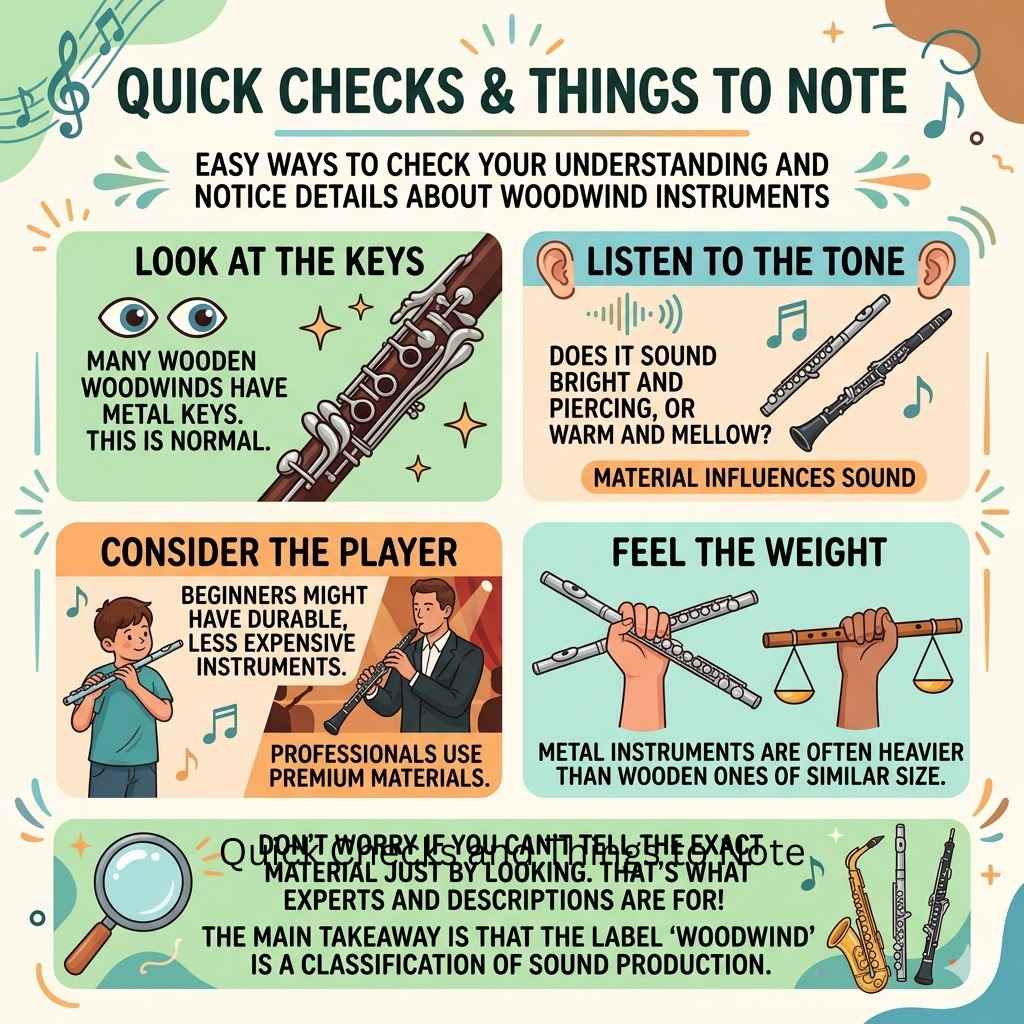
Quick Checks and Things to Note
Here are some easy ways to check your understanding and notice details about woodwind instruments.
- Look at the Keys: Many wooden woodwinds have metal keys. This is normal.
- Listen to the Tone: Does it sound bright and piercing, or warm and mellow? The material can influence this.
- Consider the Player: A beginner might have a more durable, less expensive instrument. A professional will likely have a higher-quality instrument made from premium materials.
- Feel the Weight: Metal instruments are often heavier than wooden ones of similar size.
Don’t worry if you can’t tell the exact material just by looking. That’s what experts and instrument descriptions are for! The main takeaway is that the label “woodwind” is a classification of sound production.
Frequently Asked Questions About Woodwind Materials
Are clarinets always made of wood?
No, not always. While many professional clarinets are made from fine hardwoods like grenadilla or rosewood, beginner clarinets are often made of plastic or composite materials for durability and affordability.
Why do flutes use metal instead of wood?
Metal flutes, especially those made of silver, offer a brighter, more projecting sound that is useful in orchestras. Metal also makes the instrument more stable against changes in humidity and temperature compared to wood.
Is a saxophone a woodwind or a brass instrument?
A saxophone is classified as a woodwind instrument. This is because it uses a single reed to produce sound, similar to a clarinet, even though its body is typically made of brass.
Can you get a wooden saxophone?
Wooden saxophones are very rare. While some experimental instruments have been made, almost all saxophones are constructed from brass or other metal alloys. The metal is integral to its design and sound.
Does the material of a woodwind affect its intonation?
Yes, the material can affect intonation and the overall response of the instrument. Different materials vibrate differently, which can influence how accurately notes are produced and how easily the player can adjust pitch.
What is the difference between a silver flute and a gold flute?
A gold flute generally produces a richer, warmer, and more complex tone than a silver flute. Silver flutes tend to have a brighter, more brilliant sound. The price difference is also significant, with gold being much more expensive.
Wrapping Up: A World of Woodwinds
So, the next time you hear a beautiful melody from a woodwind instrument, remember the variety of materials involved. From the age-old warmth of wood to the bright shine of metal and the practical resilience of plastic, each material plays a role. The “woodwind” family is rich, diverse, and always evolving.
Sponsored / affiliate links. As an Amazon Associate I earn from qualifying purchases. I may earn additional commission from eligible campaigns.