Best Redwood Deck Boards for Coastal Sites: Research Shows
For decks near salt water, Construction Common redwood is often used for sheltered sites, and Heart B or clear, vertical-grain boards are often used for more exposed, wind-facing locations, paired with stainless steel fasteners. The wrong grade or hardware causes cupping, fastener staining, faster checking, and early board replacement. This guide compares redwood grades, fastener choices, sealers, and maintenance by exposure level so you can buy the right deck boards the first time.
Quick picks
Construction heart redwood is the default choice for most salt-air decks because it gives you all-heartwood decking stock with the best balance of durability, availability, and cost. Clear Heart B belongs on visible parts where appearance matters most. For the longest service life, pair either grade with stainless steel hardware.
- Best overall for exposed decking: Construction heart redwood with stainless steel screws and connectors.
- Best for visible rails and benches: Clear redwood / Heart B.
- Best for wet, salt-heavy exposure: Construction heart redwood plus stainless steel fasteners and careful flashing.
Quick comparison
| Product | Badge | Best for | Price | ||
|---|---|---|---|---|---|
 |
VENTRAL Lumber 2 in. x 6 in. (1-1/2" x 5-1/2") ConstructionVENTRAL | Our pick | 2×6 redwood stud · 5FT | $47.95
Price as of 22 Oct 2026
|
View |
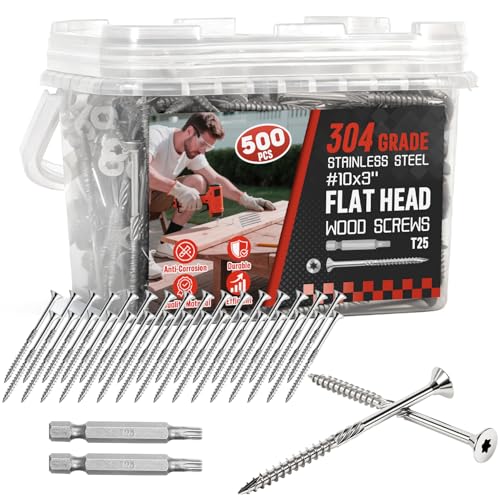 |
#10×3 Inch 304 Stainless Steel Deck Screws 500 PCS –RVSurve | Pair with it | 304 stainless · 10×3 · 500 PCS | $69.99
Price as of 22 Oct 2026
|
View |
Salt-air exposure changes the buying decision. Salt air, wet-dry cycling, and corrosion risk make the hardware package part of the board choice, not an afterthought.
How we chose
These picks are based on heartwood content, outdoor grade consistency, coastal corrosion resistance, finish compatibility, and how well each option fits real deck detailing. Board availability matters too, because decks near the coast often need long runs and clean matching stock.
Substructure risk is part of the decision. Flashing, drainage, ventilation, and fastener compatibility can shorten or extend service life as much as the decking board itself.
What is redwood decking?

Redwood decking is lumber cut for outdoor walking surfaces and related deck parts, with the useful decay resistance coming from heartwood, not mixed sapwood. That makes board selection important: exposed surfaces should minimize sapwood, especially where salt air and moisture cycles are persistent.
Heartwood vs. sapwood
Redwood heartwood has the natural rot and insect resistance that makes the species attractive outdoors. Sapwood does not share that same protection, so boards with a high sapwood content are a weaker choice for exposed deck boards, stair treads, or any spot that stays wet.
For exposed decking, heartwood-heavy stock is the safer bet. That is why construction heart redwood is the practical outdoor grade and why all-heartwood grades are better where water, sun, and wind hit hardest.
Common board sizes and lengths
Redwood decking stock commonly includes 2×6 construction heart boards, and listings also show 1×4 and 1×6 construction heart sizes. Longer lengths matter for cleaner layouts and fewer end joints; stock listings can run up to 20 feet.
Posts and timbers are also available in construction heart stock, including 4×4. That matters when you want matching material across posts, cap rails, and deck trim.
Where redwood fits among coastal decking materials
Redwood remains a strong wood option for decks near salt water because it offers natural decay resistance and good appearance without moving into the higher cost tier of many hardwoods. Compared with composite or PVC, it brings a warmer wood look; compared with cedar, it can offer stronger heartwood-focused decking grades.
It still needs maintenance. If you want a low-care surface, composite or PVC will usually demand less upkeep. If you want real wood with a more traditional look, redwood stays competitive as long as you match grade and hardware to the exposure level.
Construction heart redwood: best overall
Construction heart redwood is the best default for decks in salt air because it is the stocked outdoor grade and is described as the practical decking choice for exterior use. It gives you heartwood-dominant material for exposed walking surfaces without moving into the premium appearance-only category.
Why it suits coastal exposure
Heartwood is the part that resists decay and insects, so coastal buyers should look for boards that keep sapwood out of exposed faces and edges as much as possible. Construction heart redwood is the grade to start with when you expect salt air, rain, and regular wetting.
It is also common in decking stock, so you are more likely to find the widths and lengths a deck layout needs. That makes it easier to frame a larger deck without piecing together short runs.
Where to use it on the deck
Use construction heart redwood for the main deck surface, stair treads, skirt boards, and posts where appearance matters but the surface still takes weather. It is especially sensible on ocean-facing or wind-exposed sides where the boards will dry and wet repeatedly.
Say your deck faces a marine layer and afternoon sun, with 2×6 boards running 16 feet across the main span. Construction heart gives you a stronger base for that layout than a mixed-grade board with more sapwood and visual defects.
What to pair it
Pair construction heart redwood with stainless steel fasteners, compatible connectors, and detailed flashing at ledger and other wall interfaces. Add drainage paths and ventilation so the framing does not trap water under the decking.
A UV-blocking stain or sealer helps hold color and slow surface drying. Many makers and finish guides suggest renewing coated wood finishes about every 1 to 2 years when color retention matters.
Clear redwood / Heart B: best for appearance
Clear redwood, also called Heart B, is the higher-appearance option for visible deck parts such as handrails, benches, and accent pieces. It is all heartwood, so it gives you the same core durability advantage while improving the visual grade.
Best uses on a deck
Use Heart B where people look first and touch often: handrails, cap rails, bench tops, and trim details. It is also a good choice for short, visible runs where fewer knots or blemishes matter more than raw board economy.
For a deck with a seating wall or a wide stair landing, a Heart B rail cap can make the finished work read cleaner without changing the whole deck package.
Visual tradeoffs versus construction heart
Construction heart is the working grade. It is the smarter buy for large square footage, but it can show more knots and color variation than Heart B. If the deck is large, putting Heart B only where the eye goes first usually controls cost.
That split approach also helps with stock management. You can reserve the best boards for railings and front edges, and use construction heart on the broader walking surface.
Finish and maintenance notes
Heart B still needs the same maintenance logic as other redwood in salt air. A UV-blocking sealer or stain helps retain the red color, and it usually needs renewal every 1 to 2 years if color is the goal.
If you leave it unfinished, it will weather gray. That is normal, but it is not the same as protected color retention.
What hardware should you use with redwood decking?
Use stainless steel fasteners and connectors for redwood decking near the coast, especially where salt air reaches the deck or where hidden moisture can linger. Redwood’s tannins and coastal corrosion both punish the wrong metal choice, so the hardware package should be specified with the lumber.
Stainless steel fasteners and connectors
Stainless steel fasteners are the safest default for coastal exposure because they resist corrosion better than standard steel choices. That matters for screws, connectors, and hidden-fastener systems that stay close to wet boards and salty air.
Salt air accelerates corrosion and increases wet-dry cycling. That means a fastener that seems fine inland can age much faster near the ocean.
Hidden-fastener systems can work well with redwood if the system is compatible with the board profile and the connector material is corrosion resistant. They make the surface cleaner, but they do not remove the need for drainage and ventilation below the boards.
If the deck is highly exposed, visible stainless screws are often the simpler choice. They are easier to inspect and replace if needed.
Why flashing and drainage matter
Flashing, drainage, and ventilation decide whether the framing stays dry enough to support the decking. A good board on a poor substructure can fail early, and redwood is no exception.
Make sure the ledger, rim, and beam details shed water away from trapped surfaces. Hardware compatibility matters too, because wet framing and incompatible metal can create staining and corrosion around connection points.
Redwood deck failure modes and fixes
Most coastal redwood failures trace back to moisture movement, metal incompatibility, or unfinished surfaces that are left to weather without protection. The fixes are practical: better board selection, better detailing, and a finish schedule that matches the exposure.
| Failure mode | Likely cause | Preventive detailing step |
|---|---|---|
| Checking and end-splitting | Rapid drying, exposed end grain, and repeated sun on one side of the board | Seal cut ends, keep board edges ventilated, and apply a UV-blocking finish on schedule |
| Cupping | Uneven moisture exposure between top and bottom faces, plus poor drainage below the deck | Improve drainage and underside ventilation; orient boards consistently and avoid trapping water |
| Tannin staining and metal corrosion | Incompatible fasteners or connectors reacting with tannin-rich wood and salt air | Specify stainless steel fasteners and connectors for screws, clips, and hidden systems |
| Premature graying | UV exposure with no finish maintenance | Use a UV-blocking stain or sealer and renew it every 1 to 2 years if color retention matters |
Checking and end-splitting
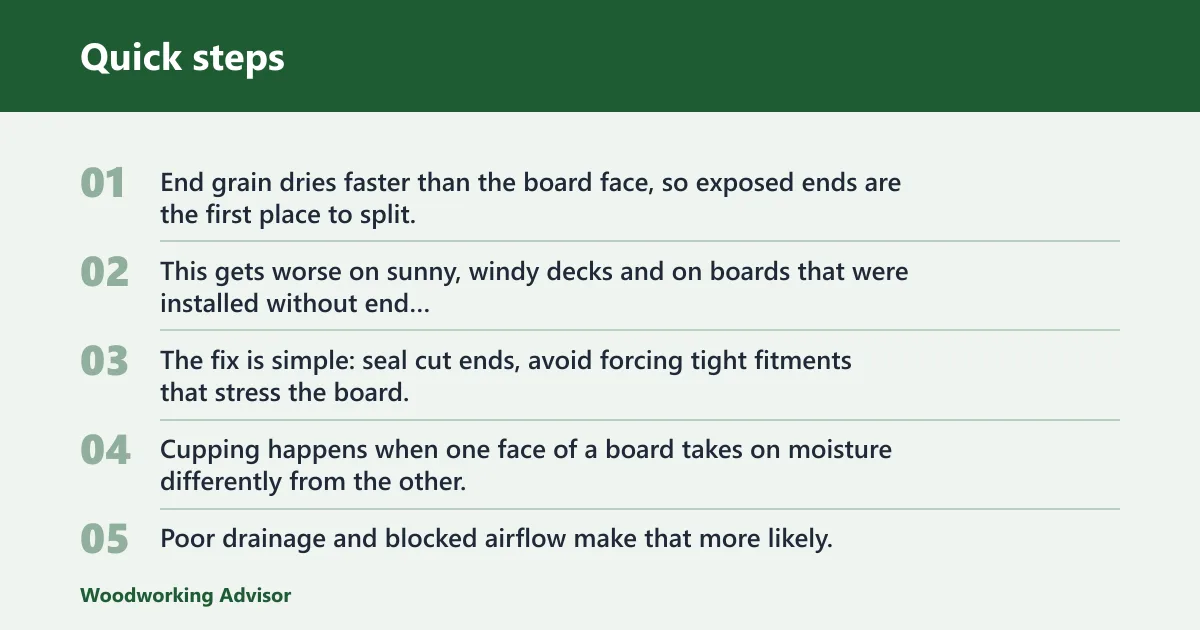
End grain dries faster than the board face, so exposed ends are the first place to split. This gets worse on sunny, windy decks and on boards that were installed without end sealing.
The fix is simple: seal cut ends, avoid forcing tight fitments that stress the board, and keep the finish maintenance interval realistic for the site.
Cupping and uneven moisture exposure
Cupping happens when one face of a board takes on moisture differently from the other. Poor drainage and blocked airflow make that more likely, especially when the deck sits low or close to wet framing.
Ventilation under the deck, proper spacing, and a drained substructure reduce the risk. Boards alone cannot solve that problem.
Tannin staining and metal corrosion
Redwood tannins can discolor nearby metal, and salt air speeds the corrosion process. The effect may show up as dark streaks around fasteners or rusting hardware at exposed edges.
Use stainless steel fasteners and connectors to reduce that risk. This is one of the clearest places where the hardware package matters as much as the lumber grade.
Premature graying and finish breakdown
Unfinished redwood weathers gray, and coastal sun can move that color change along quickly. If you want to keep the red tone, finishing is not optional.
Choose a UV-blocking stain or sealer, then plan on renewal every 1 to 2 years. If you skip that cycle, the deck may still function, but the appearance will change.
Which redwood deck should you buy?
Choose by exposure level, not by species name alone. Oceanfront decks need the strongest heartwood focus and the best hardware package. Sheltered inland-coastal decks can use construction heart redwood with a less aggressive maintenance schedule, but they still need stainless steel hardware near salt air.
Oceanfront exposure
For oceanfront or highly exposed salt-air sites, choose Heart B for visible parts and construction heart redwood for the main field, then pair it with stainless steel fasteners and corrosion-resistant connectors. This is the best path when wind-driven moisture and salt reach the deck often.
Expect the most disciplined finish upkeep here. If the goal is color retention, a UV-blocking finish every 1 to 2 years is the safer plan.
Near-coastal exposure
Near-coastal decks can usually do well with construction heart redwood as the main decking material. If some sections are more visible, move to Heart B on rails or front edges rather than paying for premium stock across the whole surface.
A common first-timer mistake is buying pretty boards first and hardware second. In a near-coastal zone, the wrong screws can cause staining and shorten the life of otherwise good lumber.
Sheltered inland-coastal exposure
Sheltered inland-coastal sites have lower salt exposure, so construction heart redwood is usually the practical choice. You still want careful flashing, drainage, and ventilation, but the corrosion pressure is lower than at the shoreline.
That makes it easier to balance budget and appearance. You can spend more on key visible pieces and less on the broad field boards.
Budget, appearance, and maintenance tradeoffs
Construction heart is the value choice for the main field. Heart B adds appearance where you see it most. Stainless steel hardware costs more up front, but it reduces the chance of premature hardware replacement in salt air.
Installed redwood deck pricing is commonly framed at about $30 to $55+ per square foot, depending on grade, finish schedule, and detailing. That range is more useful than lumber price alone because salt-air decks spend money on hardware, coatings, and risk reduction too.
How much does a redwood deck cost per square foot?
A practical installed-cost frame for redwood decking is about $30 to $55+ per square foot. That number matters more than board price alone because decks near the coast also need stainless hardware, finish renewal, and better detailing around flashing and drainage.
Oceanfront projects tend to move toward the high end of that range because corrosion-resistant hardware and finish upkeep are harder to ignore. Sheltered sites can land lower, but only if the deck is detailed well and maintained on schedule.
Is redwood good for coastal climates?
Yes, redwood is a good coastal decking choice when you buy the right grade and specify the right hardware. It has grown-in preservatives that resist rot and insects, but its success near the ocean depends on heartwood content, drainage, ventilation, and corrosion-resistant fasteners.
It is not maintenance-free. Coastal air increases wet-dry cycling and speeds metal corrosion, so the deck system has to be built for that reality.
What maintenance does coastal redwood decking need?
Coastal redwood decking needs regular cleaning, inspection, and finish renewal if you want to hold color and limit surface wear. A UV-blocking stain or sealer typically needs to be renewed every 1 to 2 years, especially in high-sun or salt-exposed locations.
Check fasteners, flashing, and cut ends during that same cycle. The boards can outlast the finish, but only if the whole deck system keeps water moving away from the structure.
- Wash away salt, grime, and loose debris before refinishing.
- Inspect stainless fasteners, connectors, and any sign of staining.
- Check flashing, drainage paths, and ventilation openings.
- Spot-seal cut ends and bare wear areas.
- Renew the UV-blocking stain or sealer on the maintenance schedule.
Frequently asked questions
What grade of redwood is best for coastal decks?
Construction heart redwood is the best all-around grade for decks near salt water because it is the stocked outdoor decking grade and keeps heartwood at the center of the decision. For visible pieces such as handrails or benches, Heart B is the better appearance grade because it is all heartwood with fewer visual defects.
Should I use stainless steel fasteners with redwood decking?
Yes. Stainless steel fasteners are the safest default for redwood in coastal air because they resist corrosion and reduce staining around tannin-rich wood. Use them for screws, connectors, and hidden-fastener systems wherever salt exposure or moisture cycling is part of the site.
Which is better for a coastal deck: redwood or cedar?
Redwood and cedar both work outdoors, but redwood is often the stronger coastal pick when you can get heartwood-heavy construction heart or Heart B stock. Cedar can be a good option too, yet the final choice should still come down to grade, hardware, and the severity of salt exposure.
Will redwood stay cooler than composite decking in full sun?
Redwood usually feels cooler underfoot than many dark composites in full sun, but color, sun angle, and deck ventilation all affect surface temperature. A lighter finish can help. Composite and PVC vary widely, so the practical answer depends on the exact product and exposure.
How long does redwood decking last near the ocean?
Service life near the ocean depends on exposure level, grade, detailing, and maintenance. One contractor figure places sealed redwood at 20 to 30 years, but that assumes proper upkeep. Oceanfront sites with poor flashing or the wrong hardware can fall short of that range.
Does redwood need sealing in salt air?
If you want to keep the red color, yes. A UV-blocking stain or sealer helps retain appearance and protects against drying and color fade, and it usually needs to be renewed every 1 to 2 years. Unfinished redwood will weather gray.
Sponsored / affiliate links. As an Amazon Associate I earn from qualifying purchases. I may earn additional commission from eligible campaigns.