Are Circular Saw Blades Universal? Arbor, RPM & Fit Guide
Circular saw blades are not universal — the arbor bore, blade diameter, and maximum RPM rating must all match your saw’s specifications, and a 5/8-inch bore that fits most handheld saws still won’t fit a 1-inch table saw arbor. Using a blade rated below your saw’s actual RPM is a real safety hazard, not just a fit issue. This guide covers arbor size compatibility, blade diameter limits, RPM ratings, and when an arbor adapter can actually help.
What Actually Determines Circular Saw Blade Compatibility
A circular saw blade is not interchangeable across every saw model. Three specs decide whether a blade actually fits and runs safely: arbor (bore) size, blade diameter, and maximum RPM rating. A blade can match on diameter and still be unusable if the bore doesn’t fit the spindle, or if its RPM rating is lower than what the saw actually spins at. Get any one of the three wrong and the blade either won’t mount, won’t clear the guard, or isn’t rated to spin as fast as the motor drives it.
Arbor Size: The Most Common Mismatch
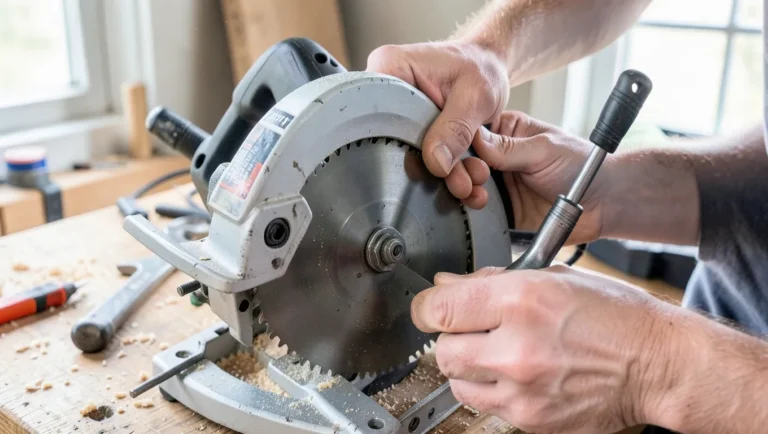
The arbor, or bore, is the hole in the center of the blade that slides over the saw’s spindle. In the US, 5/8 inch is the de facto standard bore for handheld circular saws running 7-1/4 inch to 10 inch blades — which is why it gets called “universal,” but it’s a common size, not a universal one. Larger stationary saws, including many 10 to 12 inch table saws and miter saws, commonly use a 1 inch arbor to handle the extra torque those blades see. Compact trim saws and some cordless models use smaller bores, like 1/2 inch or even 3/8 inch.
A blade with the wrong bore simply will not seat flush on the spindle — it will wobble, sit off-center, or not slide on at all. Don’t force it onto a spindle it wasn’t sized for.
| Saw Type | Common Blade Diameter | Typical Arbor Size |
|---|---|---|
| Compact/trim circular saw | 4-1/2″ – 6-1/2″ | 3/8″ or 1/2″ |
| Standard handheld circular saw | 7-1/4″ | 5/8″ |
| Contractor/jobsite table saw | 10″ | 5/8″ |
| Cabinet table saw | 10″ | 5/8″ (some 1″) |
| Miter saw | 10″ – 12″ | 5/8″ (some 1″) |
| Large stationary/industrial saw | 12″ – 16″ | 1″ |
These are the sizes you’ll see most often, but the number stamped on your saw’s spindle collar and printed in the manual is the one that actually matters — check it before ordering a blade for a saw you didn’t buy new.
Best Arbor Adapter Kit Pick
 |
UXACE Saw Blade Bushing Set, 18-Piece Reduction Ring Kit A 9-size reduction ring kit for bridging an oversized blade bore down to your saw’s actual arbor size.
|
As an Amazon Associate we earn from qualifying purchases.
Blade Diameter and Your Saw’s Guard Geometry
Blade diameter is the second compatibility factor, and it’s about more than cutting depth. Every circular saw’s blade guard, riving knife, and base plate are engineered around a specific maximum blade diameter. A blade that’s too large for the saw won’t retract fully into the guard, which can keep the guard from closing over the blade — a real safety hazard, not a cosmetic mismatch. Most 7-1/4 inch saws are built specifically around that diameter; mounting an 8-1/4 inch blade, even with a matching arbor, will not fit the guard correctly.
A blade that’s too small does clear the guard, but it can’t cut as deep, since the exposed cutting edge below the shoe shrinks along with the diameter. If you regularly need full-depth cuts through 2-inch stock, downsizing the blade diameter to solve a fit problem is the wrong fix — matching the arbor is the right one.
RPM Rating: A Safety Issue, Not a Spec Sheet Formality
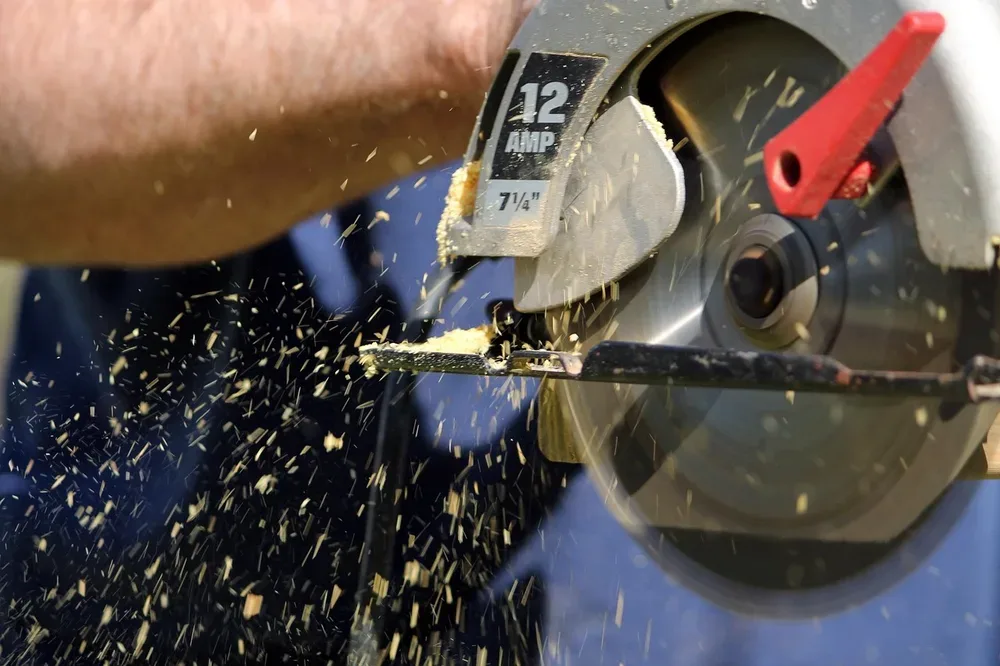
Every circular saw blade is stamped with a maximum RPM rating, and it has to be at or above your saw’s actual no-load RPM — not just close. Smaller blades are rated for higher RPM because the outer edge of a large blade travels much faster than a small one at the same rotational speed, which is why maximum RPM drops as diameter goes up.
📊 Most 7-1/4″ and 8-1/4″ handheld circular saw blades are rated in the 4,000–7,000 RPM range, while most corded circular saws spin at roughly 5,000–6,000 RPM no-load. Larger 10–12″ table saw and miter saw blades are typically rated closer to 4,000–5,000 RPM max, matching those saws’ slower spindle speeds. — Source: compiled from circular saw and blade manufacturer specification ranges, 2026
Using an underrated blade — one whose maximum RPM is lower than your saw’s actual spindle speed — is the same category of hazard as using the wrong blade for the material: run past its rating and a blade can fracture or shed a carbide tooth at speed. Always check the number stamped on the blade against your saw’s actual RPM, printed on the saw’s nameplate or in its manual, before mounting a blade you didn’t buy specifically for that saw.
Can an Arbor Adapter Fix a Mismatch?
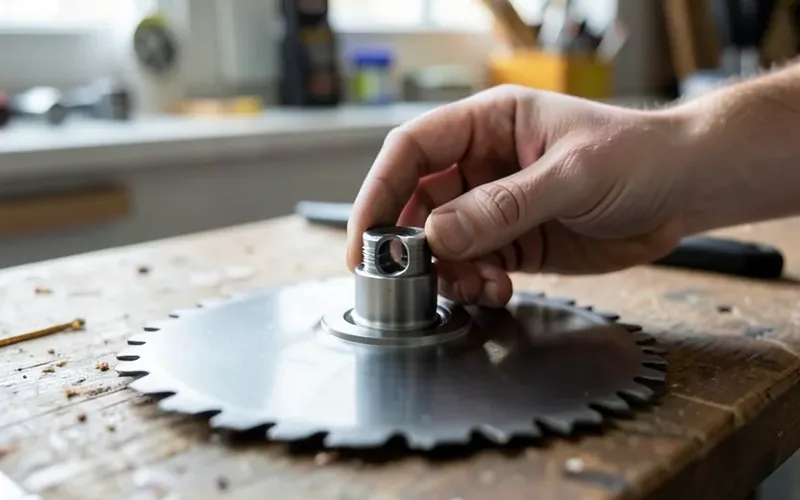
An arbor adapter — usually called a reduction ring or bushing — is a thin, precision metal ring that fits inside an oversized blade bore to reduce its effective diameter down to your saw’s arbor size. It’s a real, widely used accessory, not a workaround: many blade manufacturers sell blades with a 1 inch bore specifically because reduction rings down to 5/8 inch are standard practice on table saws. Our guide to circular saw arbor adaptors covers how to size and install one correctly.
That said, it’s not a universal fix for every mismatch. A reduction ring only works safely when it seats flush and concentric — if the blade’s bore is thinner than the bushing, or the bushing doesn’t lock the blade centered on the spindle, you get vibration and an inaccurate cut, not a safe one. Sizes that look close on paper, like a 5/8 inch bore and a 16 mm bore, are different enough (roughly 0.4 mm) that forcing one onto the other with a bushing meant for a different pair of sizes is a bad idea. If your saw takes a proprietary or unusual arbor size, buying a blade made for that size beats stacking adapters.
In our own shop, the most common blade-swap mistake isn’t picking the wrong material blade — it’s grabbing a 1-inch-bore blade for a saw that takes 5/8 inch and reaching for a bushing without checking whether the blade’s hub actually clears it. A bushing thicker than the blade’s hub throws the blade off the arbor shoulder, and the wobble is obvious the moment the saw spins up.
— Our team
Blade Type Still Matters Even When Size Matches
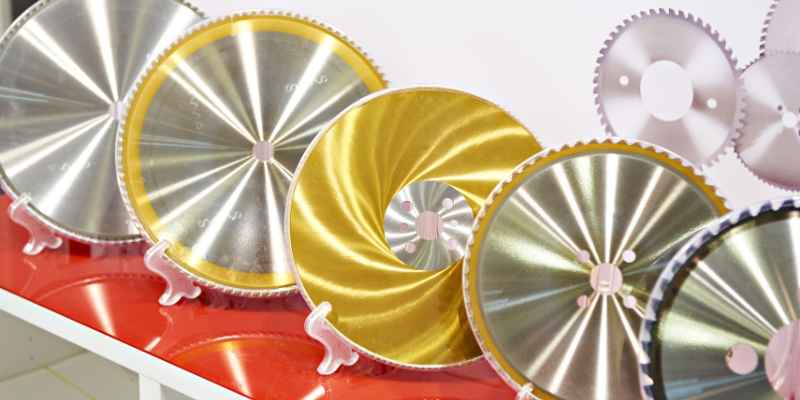
Matching the arbor, diameter, and RPM only means the blade will mount and spin safely — it doesn’t mean it’s the right blade for the material. Wood-cutting blades generally run fewer, larger teeth for fast material removal. Blades built for metal use far more teeth with different carbide geometry to handle the harder material without overheating or chipping. Masonry and tile work calls for diamond or abrasive blades entirely, not a standard carbide-tooth design. Using a wood blade on metal, even if the arbor and RPM both check out, dulls the blade almost immediately and can throw sparks and debris.
Tooth Count and Tooth Design Change the Cut, Not Just the Fit
Tooth geometry affects cutting performance as much as size does. Flat Top Grind (FTG) teeth are flat across the top and excel at ripping wood along the grain. Alternate Top Bevel (ATB) teeth alternate left-right bevels and are the standard for clean crosscuts. Triple Chip Grind (TCG) alternates a flat tooth with a chamfered one and holds up best on hard, abrasive materials like laminate or non-ferrous metal. Our saw and blade/TPI guide breaks down tooth geometry by saw type in more depth.
| Tooth Count | Cutting Speed | Finish Quality |
|---|---|---|
| Low (24–40) | Fast | Rough |
| Medium (40–60) | Moderate | Smooth |
| High (60+) | Slow | Very smooth |
Kerf Width and Why It Affects the Cut
Kerf is the width of the slot a blade cuts, and it’s a compatibility-adjacent spec worth checking too — not for fit, but for waste and motor load. Standard blades typically cut a kerf around 1/8 inch. Thin-kerf blades run closer to 3/32 inch, removing less material and putting less strain on underpowered saws and cordless motors, at the cost of slightly less rigidity in the blade itself. For thick or dense stock, a standard kerf blade tracks straighter; for cordless saws or long rip cuts where battery life or motor load matters, thin kerf is usually the better call.
Common Mistakes When Swapping Circular Saw Blades
- Forcing an oversized or wrong-bore blade onto the spindle instead of checking the stamped arbor size first.
- Ignoring the RPM stamp and trusting brand reputation instead of comparing the number to the saw’s actual no-load speed.
- Mixing metric and imperial bore sizes without checking the actual millimeter-to-inch difference — a 16 mm bore is not a 5/8 inch bore.
- Buying a blade based on diameter alone and skipping the arbor size listed in the description.
- Reusing an old reduction ring that’s bent, corroded, or was sized for a different blade — a warped bushing throws the blade off-center even if it technically fits.
Frequently Asked Questions
Are all circular saw blades interchangeable?
No. A blade has to match your saw on three specs at once: arbor (bore) size, blade diameter, and maximum RPM rating. Two blades can look identical and still not be interchangeable if one has a different bore or a lower RPM rating than your saw actually spins at.
What size circular saw blade do I need?
It depends entirely on your saw model, not on a general standard. Most handheld saws take a 7-1/4 inch blade with a 5/8 inch arbor, but compact and cordless trim saws often run smaller diameters with 1/2 inch or 3/8 inch arbors. Check your saw’s manual or the size stamped on the spindle collar before buying.
Can I use a different brand blade on my saw?
Yes, as long as the blade’s arbor size, diameter, and RPM rating match your saw’s specifications. Brand doesn’t determine compatibility — the three stamped specs do. Also confirm the blade type suits the material you’re cutting before mounting it.
Can an arbor adapter make any blade fit any saw?
No. A reduction ring can only shrink a larger bore down to a smaller arbor size, and only when it seats flush and centered against the blade’s hub. It can’t fix a blade that’s too small for your saw’s arbor, and it doesn’t change whether the blade’s diameter or RPM rating is actually right for your saw.
What happens if a blade’s RPM rating is too low for my saw?
Running a blade past its rated maximum RPM is a genuine safety hazard — the blade can flex, crack, or shed a carbide tooth at speed. Always compare the RPM stamped on the blade to your saw’s actual no-load RPM, printed on the nameplate, before mounting a blade that wasn’t sold as a match for that saw.
Is a 5/8 inch arbor really universal?
No — it’s the most common arbor size for handheld circular saws in the US, not a universal one. Many table saws, miter saws, and some handheld models use a 1 inch arbor instead, and compact or cordless trim saws often use smaller bores like 1/2 inch or 3/8 inch. Always check your specific saw rather than assuming 5/8 inch.
Conclusion
Circular saw blades aren’t universal, but they’re not a mystery either — three numbers decide compatibility: arbor size, blade diameter, and maximum RPM rating. Check all three against your saw’s specs before buying, use a properly seated reduction ring when the bore is the only mismatch, and match the blade type to the material you’re actually cutting. Get those right and blade swaps stop being a guessing game.
Sponsored / affiliate links. As an Amazon Associate I earn from qualifying purchases. I may earn additional commission from eligible campaigns.