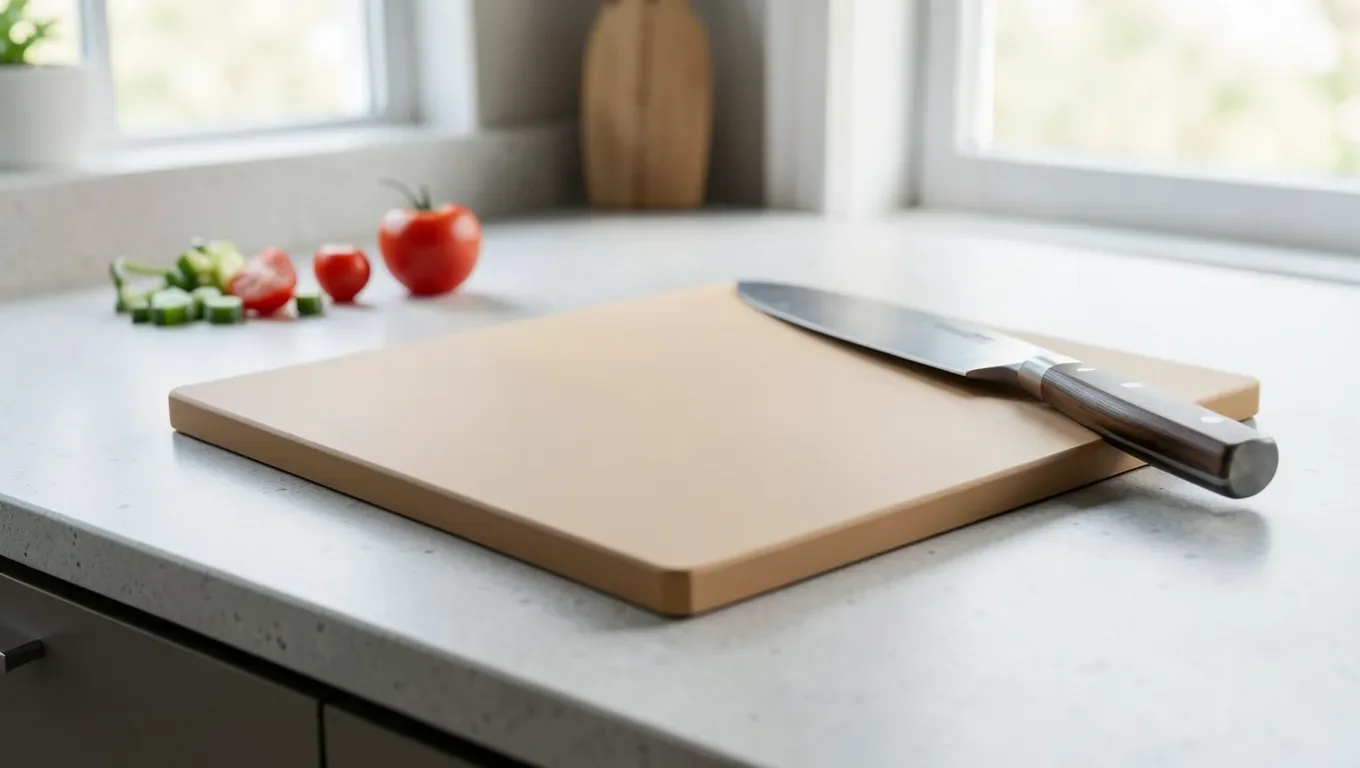
Are Wood Fiber Cutting Boards Safe? What They’re Actually Made Of
Short answer: yes. Real wood-fiber cutting boards, the ones made by an established manufacturer using food-grade resin, are NSF-certified, dishwasher-safe, and safer for raw-meat prep than a porous wooden board. The material is sometimes sold under names like Richlite paper composite, and it’s not actually “wood” in the way a maple or walnut board is. It’s compressed paper or wood fibers bonded together with a resin under heat and pressure, which changes both what makes it safe and where it falls short.
What a Wood-Fiber Cutting Board Is Actually Made Of
Despite the name, most wood-fiber cutting boards aren’t solid wood at all. The dominant material in this category, used by brands like Epicurean, is a paper composite: layers of craft paper (often recycled) are saturated with a thermosetting phenolic resin, stacked with the grain direction alternated sheet to sheet, then pressed under heat and high pressure. That pressing step fuses the layers into one dense, non-porous slab. Cheaper “wood fiber” boards use actual ground wood fibers instead of paper as the base material, bonded the same way with a food-grade resin, which produces a similar dense, low-absorption surface at a lower price point.
The alternating-layer construction is the detail that matters most for safety and durability. A solid wood board has one grain direction, so it expands and contracts unevenly with humidity and heat, which is exactly what eventually causes cracking and warping. Composite wood-fiber boards are engineered to be dimensionally stable in a way solid lumber physically can’t be.
Our Pick for a Wood-Fiber Board
NSF-Certified Composite Pick
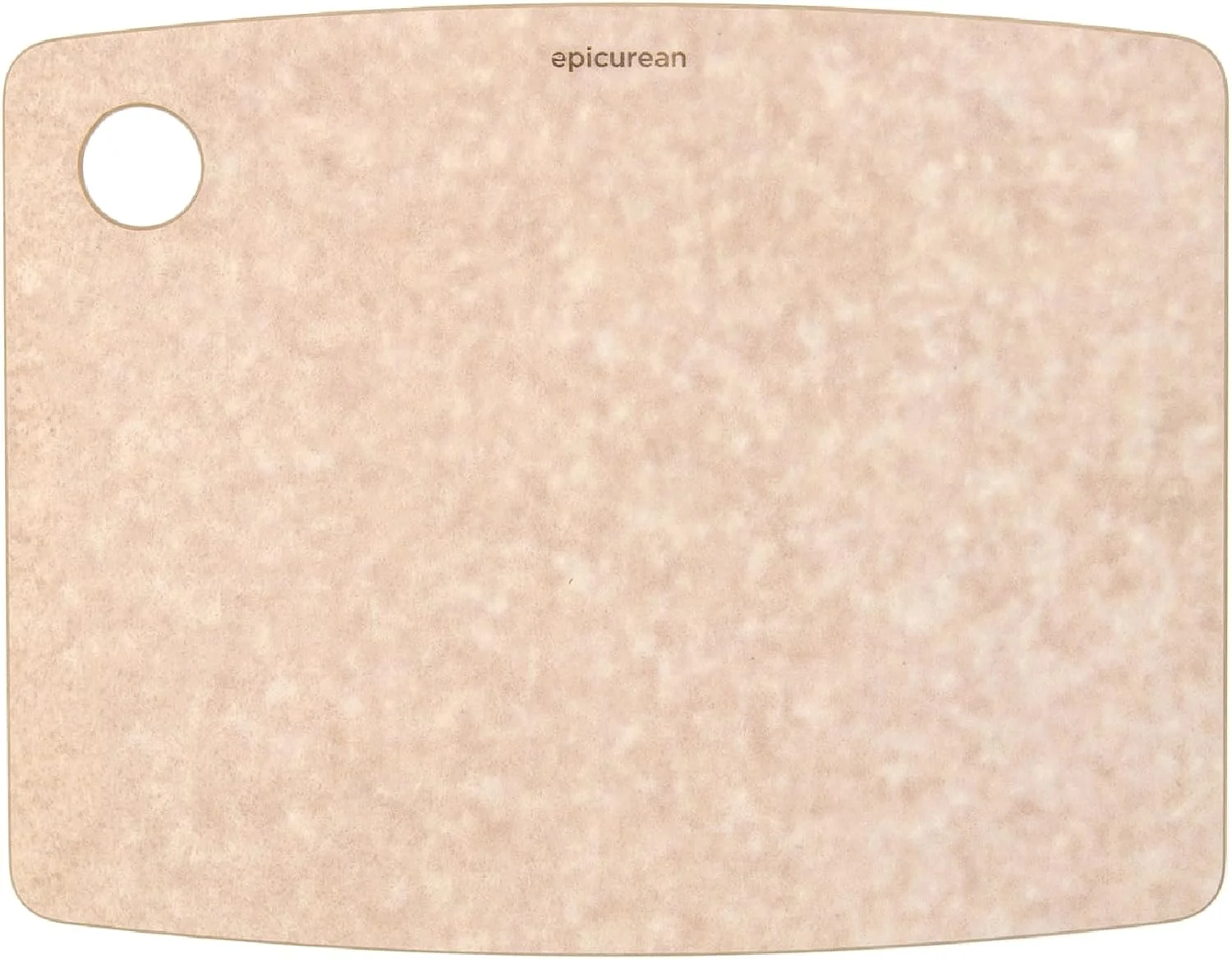 |
Epicurean Kitchen Series Cutting Board, 14.5″ x 11.25″ – $33.99 The paper-composite construction covered in this article, from the brand that popularized it – NSF-certified and dishwasher safe.
|
Is the Resin Actually Safe? Here’s What Certification Means
This is the part people are really asking about when they ask if these boards are safe: the resin. A reputable wood-fiber or paper-composite board isn’t just labeled “food safe” as a marketing claim, it’s certified by NSF International, the same organization that certifies commercial kitchen equipment. NSF testing checks that the finished material doesn’t leach chemicals into food and can be effectively sanitized. Once the resin cures under heat and pressure during manufacturing, it becomes chemically inert. It isn’t sitting on the surface waiting to migrate into your food; it’s structurally bonded into the paper or fiber layers.
The certification detail worth checking before you buy is the actual NSF mark or listing, not just a “non-toxic” claim on the packaging, since “non-toxic” has no regulated definition on a cutting board label. Some composite boards also carry GREENGUARD certification, which covers low chemical off-gassing rather than food contact specifically, but it’s a useful secondary signal that the manufacturer is testing the material rigorously. If a listing doesn’t mention NSF anywhere, that’s a reason to look elsewhere, not necessarily proof the board is unsafe.
Wood-Fiber vs. Solid Wood vs. Plastic: The Real Differences
Here’s how the three main cutting board materials actually compare once you get past the marketing language.
| Material | Pros | Cons |
|---|---|---|
| Wood Fiber / Paper Composite | Non-porous, dishwasher safe, dimensionally stable, resists staining and odors | Harder on knife edges than soft solid wood, shows scoring, costs more than plastic |
| Solid Wood | Gentlest on knives, some species naturally resist bacteria, warm appearance | Porous grain can trap moisture and bacteria if not dried, warps or cracks if run through a dishwasher, needs periodic oiling |
| Plastic (HDPE/polypropylene) | Cheapest option, lightweight, dishwasher safe | Knife grooves cut deep and are hard to sanitize, can shed microplastics as it wears, needs regular replacement |
The practical takeaway: wood-fiber boards sit between solid wood and plastic on almost every axis, but the one place they clearly beat both is dishwasher durability.
The Dishwasher Question: Why This Is the Real Advantage
Putting a solid wood cutting board through a full dishwasher cycle is one of the fastest ways to ruin it. The prolonged water exposure swells the wood’s grain, and the high heat of the drying cycle then pulls that moisture back out unevenly across the board. Do that a few times and you get cupping, cracking along the grain, or a board that no longer sits flat. This isn’t a minor cosmetic issue, a warped board rocks on the counter, which is its own knife-safety hazard.
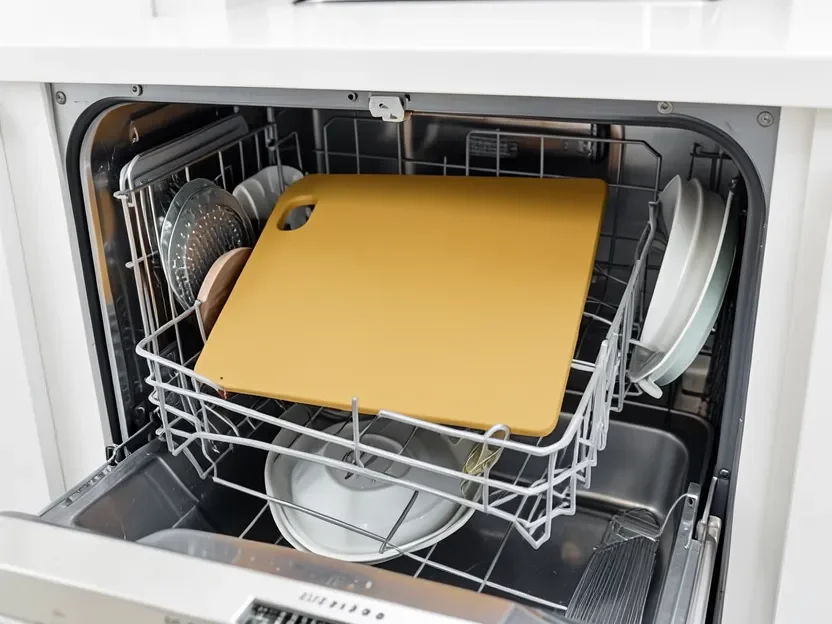
A wood-fiber composite board doesn’t have a single grain direction to swell unevenly, since it’s built from layers pressed in alternating orientations specifically to cancel that effect out. That’s an engineering choice, not a coincidence, and it’s the actual reason these boards can handle repeated dishwasher cycles at 350°F-plus heat tolerance where a solid wood board can’t. If dishwasher safety is the main reason you’re looking at wood-fiber boards, that reasoning holds up.
What Happens to Your Knife Edge
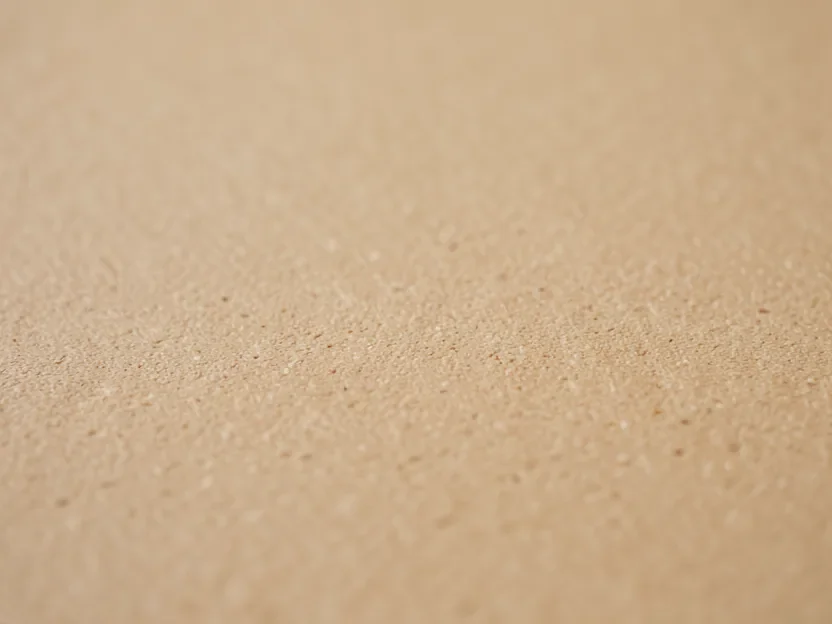
This is the honest downside, and it’s worth being specific about rather than hand-waving it away. Wood-fiber composite is denser and more uniform than most solid woods, which means it doesn’t yield the way soft, open-grain wood does under a blade. Manufacturers describe this as the board “scoring slightly” to protect the knife edge rather than dulling it, and that’s a real, physically accurate description; light surface scoring is the board absorbing impact instead of your blade. But it’s still a harder surface overall than something like end-grain walnut or maple, so expect to sharpen a bit more often than you would with a soft solid-wood board, even if the board itself shows less visible damage than a plastic one over time.
One thing to watch for with lower-quality wood-fiber boards specifically: some cheaper composites shed small fiber particles once knife grooves get deep enough, which is a sign of a thinner resin layer or lower-grade material, not something you should see from a properly manufactured, NSF-certified board. If a board starts shedding visible fuzz or particles after light use, that’s a quality problem with that specific product, not a defect inherent to the material category.
When to Replace a Wood-Fiber Cutting Board
The replacement logic is the same as for any cutting board material: it’s about how deep the scoring gets, not the material itself. Shallow surface marks are normal and don’t harbor meaningfully more bacteria than a fresh board, especially on a non-porous composite. Once grooves get deep enough that you can’t fully clean food residue out of them with a scrub and a rinse, or the board starts to feel rough, splintery, or chalky in patches, it’s time to retire it. Because wood-fiber boards resist warping and don’t need oiling, a well-made one from a reputable manufacturer typically lasts years longer under normal home use than either a plastic board or an unmaintained solid wood one.
How to Care for a Wood-Fiber Cutting Board
Care is simpler than for solid wood, which is most of the appeal.
Daily Cleaning
Hot water, dish soap, and a non-abrasive sponge handle everyday cleanup. Rinse thoroughly and let it air dry standing on edge, or towel-dry, rather than leaving it flat in a puddle of water.
Dishwasher Use
Most genuine wood-fiber composite boards are dishwasher safe, and this is the easiest way to fully sanitize one after handling raw meat or poultry. Place it on the top rack rather than against a heating element, and check the specific manufacturer’s care instructions since maximum heat tolerance varies a bit by brand.
Deep Cleaning After Raw Meat
A dishwasher cycle is usually enough, but if you want to sanitize by hand, spray the surface with undiluted white vinegar, let it sit a few minutes, then rinse and dry. A very diluted bleach solution (about 1 tablespoon per gallon of water) works too, applied and rinsed thoroughly afterward. Because the surface is non-porous, these solutions sit on top rather than soaking in, so a short contact time is genuinely enough, unlike with a porous wood board.
What to Avoid
Skip abrasive scouring pads, which can scratch the surface and create places for residue to catch. Don’t leave the board soaking submerged for long periods; even a dense composite can degrade at the edges with prolonged water exposure.
If you’re weighing a wood-fiber board against a solid-species option, it’s worth reading how a specific wood holds up for food contact first – our padauk cutting board safety breakdown covers a solid-wood species with a very different safety profile than an engineered composite.
Frequently Asked Questions
Question: Are wood fiber cutting boards eco-friendly?
Answer: Many wood-fiber and paper-composite boards use recycled or sustainably sourced paper, and the manufacturing process produces a stable, long-lasting product that doesn’t need replacing as often as plastic. They’re generally a more sustainable choice than plastic boards, which aren’t biodegradable and wear out faster.
Question: Can wood fiber cutting boards get moldy?
Answer: It’s unlikely. The non-porous surface gives mold and mildew almost nothing to grow into, as long as the board is dried after washing rather than left wet in a stack with other dishes.
Question: Do wood fiber cutting boards stain easily?
Answer: No, they resist staining well. The dense, non-porous surface keeps liquids like tomato sauce, wine, or beet juice from soaking in, so most stains wipe off rather than setting in.
Question: How long do wood fiber cutting boards typically last?
Answer: A genuine, NSF-certified wood-fiber board from a reputable brand commonly lasts a decade or more with normal home use, since it doesn’t warp, crack, or need oiling the way solid wood does.
Question: Are there any health risks associated with wood fiber cutting boards?
Answer: When the board is NSF-certified and made with cured, food-grade resin, no. The resin is chemically inert once manufactured and does not leach into food. The main thing to verify before buying is that the specific product actually carries NSF certification rather than just a “non-toxic” label.
Final Thoughts
Are wood fiber cutting boards safe? Yes, provided you buy an NSF-certified board from an established manufacturer. The paper-composite or fiber-composite construction is genuinely non-porous, genuinely dishwasher-safe, and genuinely more dimensionally stable than solid wood, all real, verifiable advantages rooted in how the material is engineered rather than marketing language. The tradeoff is a harder surface that’s a little tougher on your knife edge than soft solid wood, which is a fair trade for most home cooks who want a board they can run through the dishwasher after handling raw chicken without worrying about it warping.
Sponsored / affiliate links. As an Amazon Associate I earn from qualifying purchases. I may earn additional commission from eligible campaigns.
 Mikikit Walnut Wood Cutting Boards Unfinished Walnut Hardwood Planks for DIY Crafts with Resistance to Wear and Coffee Color Suitable for Home Renovations and Wood Burning Projects
 NSF Certified Food Grade Cutting Boards Oil, USP 350, Countertops and Butcher Blocks - Food Safe. Kosher and Halal. Compare to: Lubriplate FMO-350, UltraPro, Bayes. Made in USA (1 GL)