Armadillo Evolution Decking: Real Pros, Cons & Install Facts
Armadillo Evolution is the newer capped-composite line from Armadillo Decking, built to fix the two complaints owners had about the brand’s original boards: a slightly flat, solid-color look and a cap layer that scratched more visibly than premium competitors. Whether it’s worth the step up from Armadillo’s standard composite line, or from a value line like Trex Enhance, comes down to three things: how the cap technology actually holds up, whether the “won’t get hot” marketing claim is true, and what it costs to install versus a straight wood deck.
What Makes It an “Evolution” Over Standard Composite
Best Cleaner For Composite Decking
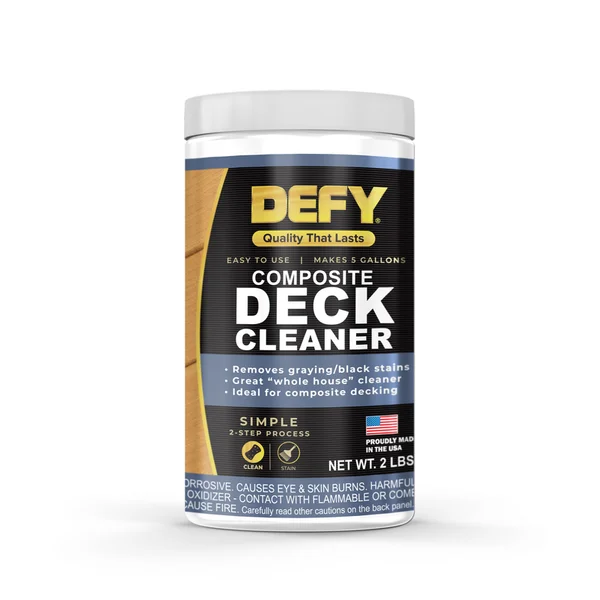 |
DEFY Composite Deck Cleaner – $25 A biodegradable, non-bleach cleaner made specifically for capped composite boards like Armadillo Evolution — won’t strip or dull the cap the way a generic wood deck cleaner can.
|
Every capped composite board, regardless of brand, is built the same basic way: a core of wood fiber and recycled plastic (usually reclaimed polyethylene from things like grocery bags and milk jugs) wrapped in a thin polymer shell called the cap. The core gives the board its strength and rigidity. The cap does essentially all the work you actually see and feel — color, fade resistance, stain resistance, and how the surface scratches.
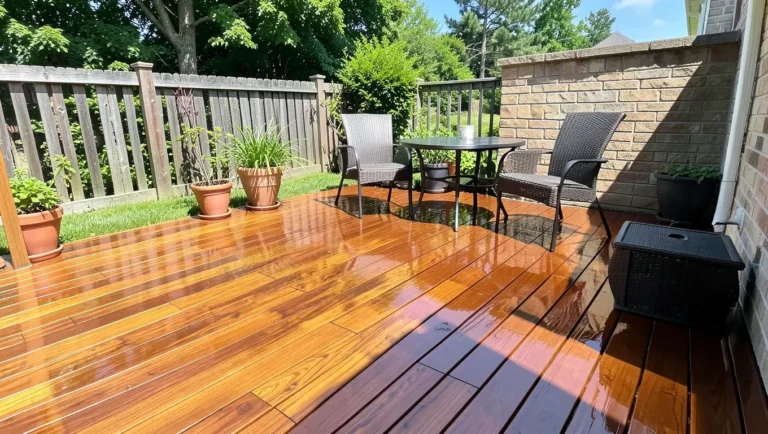
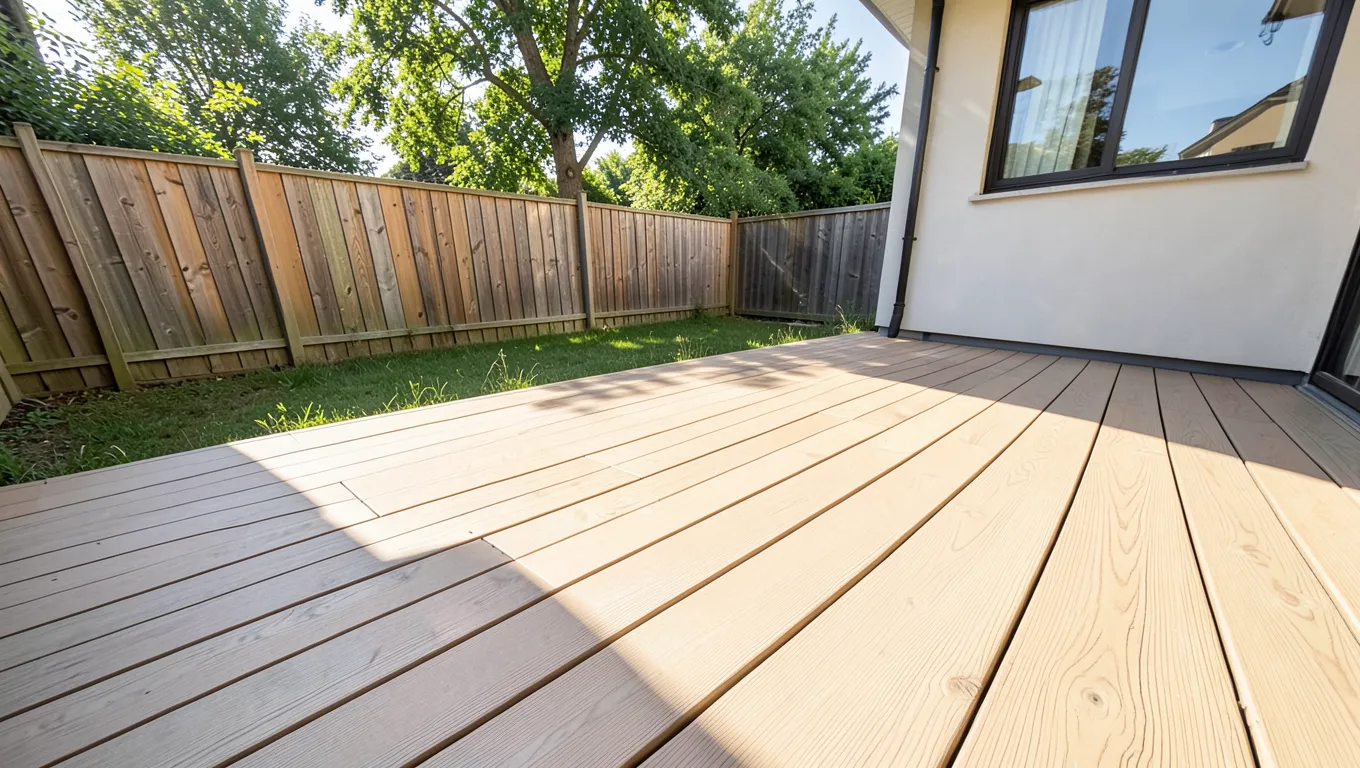
The “evolution” in this line is a change to that cap: instead of a single flat color extruded over the whole board, the cap uses a multi-tonal, variegated color blend embossed with a deeper wood-grain texture. That matters for two practical reasons. First, streaked or variegated coloring hides everyday wear — dirt, pollen film, and light scuffing — far better than a solid color does, because there’s no single flat tone for a scratch or a dusty patch to stand out against. Second, a deeper grain emboss gives noticeably better wet-foot traction than the smoother caps used on older composite lines, which matters most right at a pool or hot-tub edge.
The “It Doesn’t Get Hot” Claim, Corrected
This is worth correcting because it’s repeated on almost every composite decking product page, including older versions of this one: composite decking does not stay cool in the sun. In direct summer sun, dark-colored capped composite boards routinely measure 140–170°F at the surface — hot enough to burn bare skin on contact, and consistently hotter than a comparably-colored piece of real wood decking, because the plastic in the cap holds heat that wood simply doesn’t. Independent surface-temperature testing by groups like the Consumer Product Safety Commission and multiple university extension programs has confirmed this repeatedly since composite decking became mainstream in the 2000s.
What actually helps is color choice, not the material itself. Lighter, warmer-toned boards (tans, driftwood grays) run measurably cooler than dark browns or charcoals — often by 20°F or more on the same afternoon. If bare feet on a pool deck are a priority, pick the lightest color in the line, not the material.
Installation: What’s Actually Different From Wood
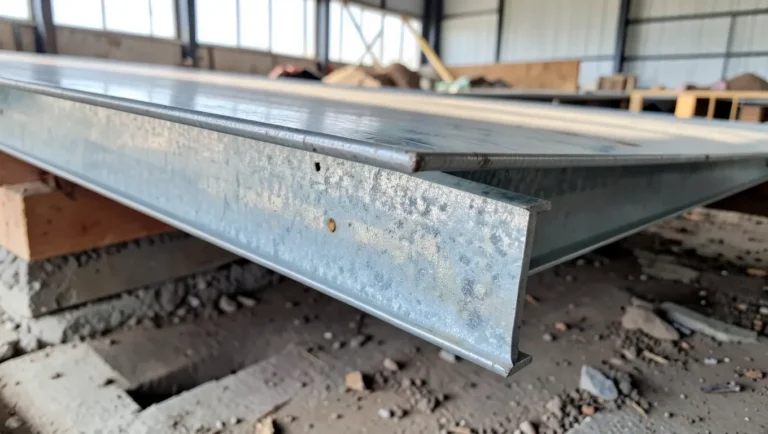
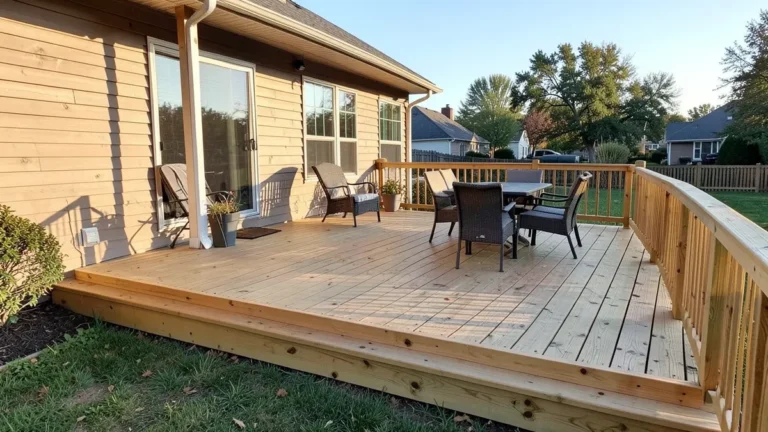
The framing underneath a composite deck is identical to a wood deck — standard pressure-treated joists, typically spaced 16 inches on center for boards run perpendicular to the joists (tighten that to 12 inches on center for a diagonal picture-frame layout, since composite has less stiffness than solid wood over a long unsupported span).
Where it diverges from wood is fastening and gapping:
- Hidden fasteners, not face screws. Grooved-edge composite boards use a hidden clip system that locks into the board’s edge groove, so there are no visible screw heads on the walking surface — a real cosmetic upgrade over a wood deck’s exposed fastener pattern.
- Gapping is temperature-dependent, and it’s not optional. Composite expands and contracts with heat more than wood does. Manufacturers specify the board gap based on the installation-day temperature (commonly a 1/8″ to 3/16″ gap in moderate weather, tighter in cold, wider in extreme heat) — installing with the wrong gap is the single most common cause of buckled or bowed composite decking reported to manufacturers.
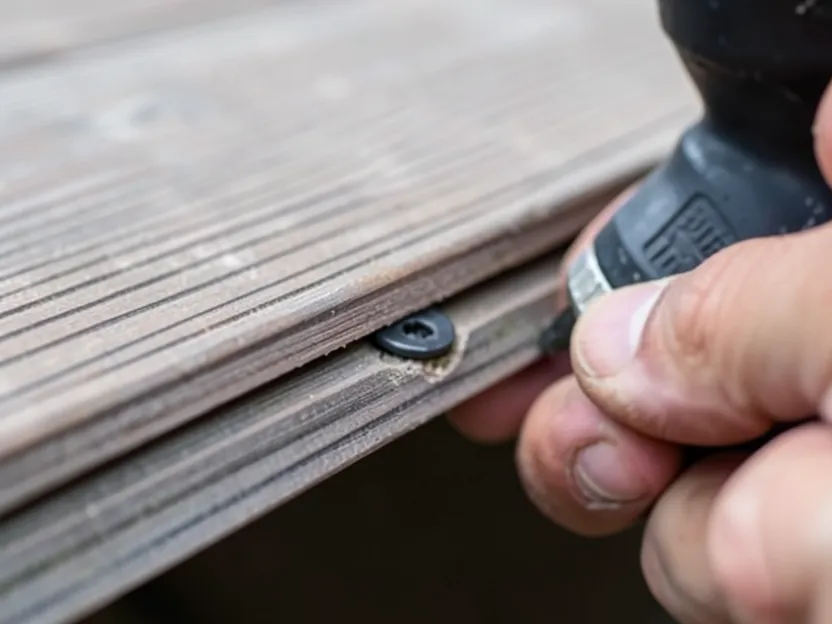
- Pre-drilling still matters at board ends, even with hidden fasteners, wherever a board is field-cut and face-screwed at a border or picture-frame edge.
Maintenance: Less Than Wood, Not Zero
The realistic maintenance routine is a deck wash twice a year with a dedicated composite deck cleaner (never a pressure washer set above about 1,500 PSI with a wide fan tip — too much pressure will etch the cap’s texture and dull the finish permanently). Regular dish soap and water handles routine dirt between washes. Unlike wood, there’s genuinely no annual sanding, staining, or sealing required — that part of the marketing is accurate. Mold and mildew can still grow on the cap surface in shaded, damp spots, so a cleaner with a mildewcide is worth using in humid climates rather than plain soap alone.
Cost, and How This Compares to Armadillo’s Standard Line
Expect this line to price above Armadillo’s standard composite boards and above entry-level composite brands generally, in the same tier as premium capped lines from Trex (Transcend) and TimberTech (AZEK). The upfront cost gap versus pressure-treated wood is real and significant — often close to double per square foot — but it’s recovered over time by skipping the wood deck’s recurring stain-and-seal cycle (typically every 1–3 years depending on climate and sun exposure).
If the multi-tonal cap and deeper traction texture aren’t priorities and budget is, Armadillo’s standard composite decking line uses the same core material at a lower price point with a simpler, flatter color cap — worth comparing side by side before paying the premium for the newer line.
Frequently Asked Questions
What is Armadillo Evolution decking made of?
A core of wood fiber and recycled polyethylene plastic, wrapped in a polymer cap that provides the color, fade resistance, and surface texture. The cap is what gives the line its multi-tonal, variegated look compared to older solid-color composite boards.
Does Armadillo Evolution decking actually stay cool underfoot?
No composite decking stays cool in direct sun — dark boards can reach 140–170°F on a hot afternoon, hotter than comparable wood. Choosing a lighter color in the line is what actually keeps the surface cooler, not the composite material itself.
Is Armadillo Evolution decking worth the extra cost over Armadillo’s standard composite line?
It’s worth it if the deeper wood-grain texture, better wet traction, and multi-tonal color that hides everyday wear matter to you. The core material and durability are otherwise similar to Armadillo’s standard composite boards, which cost less.
How is Armadillo Evolution decking installed?
On standard pressure-treated joist framing (16 inches on center for a straight layout, 12 inches for diagonal), using hidden edge-groove fasteners for a screw-free walking surface, with a temperature-dependent gap between boards to allow for expansion and contraction.
Sponsored / affiliate links. As an Amazon Associate I earn from qualifying purchases. I may earn additional commission from eligible campaigns.