Ash 4×4 Lumber: Real Size, Weight and Post Use
Ash 4×4 lumber is real, strong and often cheaper than you would guess, but it is a poor choice for a post that touches the ground. White ash is harder and stiffer than a pine 4×4, yet Wood Database rates its heartwood as perishable for decay. This guide covers what an ash 4×4 actually measures and weighs, how much lumber you are buying in board feet, where to find one, and the jobs where ash makes sense.
Most articles on this topic treat ‘strong hardwood’ and ‘good outdoor post’ as the same thing. They are not, and that gap is the most useful thing to understand before you spend money on ash posts.
Can You Use an Ash 4×4 as a Post?
Best 4×4 Post Base Pick
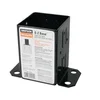 |
Simpson Strong-Tie FPBB44 E-Z Base for 4×4: $31.31 If an ash 4×4 is going outside as a post, this steel base lifts the end grain off the concrete so water cannot wick into it.
|
Above ground and out of the weather, yes. In the ground, no. Wood Database rates white ash, green ash and black ash heartwood as perishable, or only slightly durable, for decay resistance, and adds that ash is not resistant to insect attack. Hardness does not change that. A hard, dense post rots just as readily as a soft one when moisture sits against the wood.
If you do stand an ash 4×4 upright outside, the standard way to buy it time is a standoff base like the one above. It keeps the end grain clear of wet concrete, which is where post rot usually starts. It does not make ash a rot-resistant species. Sealing all six faces, including the cut ends, and keeping the top capped so rain runs off matter just as much.
What an Ash 4×4 Really Measures, Weighs and Costs in Lumber Terms
A nominal 4×4 is not four inches square. Surfaced softwood 4x4s measure about 3.5 by 3.5 inches. Hardwood is different again: it is sold in quarter-inch thickness steps (a 4-inch-thick piece is called 16/4), and a sawmill may sell it rough at close to 4 by 4 or surfaced to whatever the dealer’s planer leaves. Always ask for the real dimensions before you plan joinery.
Hardwood is priced by the board foot, not by the piece, and the calculation uses nominal size: thickness in inches times width in inches times length in feet, divided by 12. The weights below assume a surfaced 3.5 by 3.5 inch post at 12 percent moisture, using Wood Database’s dried-weight figures of 42 lb per cubic foot for white ash, 25 for eastern white pine and 47 for white oak. The board-foot and weight numbers are my own arithmetic from those inputs.
| Length | Board feet (nominal 4×4) | White ash | Eastern white pine | White oak |
|---|---|---|---|---|
| 6 ft | 8 | 21.4 lb | 12.8 lb | 24.0 lb |
| 8 ft | 10.67 | 28.6 lb | 17.0 lb | 32.0 lb |
| 10 ft | 13.33 | 35.7 lb | 21.3 lb | 40.0 lb |
| 12 ft | 16 | 42.9 lb | 25.5 lb | 48.0 lb |
The practical takeaway: an 8-foot ash 4×4 is about 10.67 board feet and roughly 28.6 pounds, about two-thirds heavier than the same piece in pine. That matters for lifting long posts alone and for the load on whatever they stand on.
Ash vs Pine vs Oak 4×4: The Numbers That Matter
These figures come from Wood Database species pages. Bending strength (modulus of rupture) and Janka hardness show why woodworkers like ash. The last column shows why builders do not use it in the ground.
| Species | Janka hardness (lbf) | Bending strength (psi) | Dried weight (lb/ft3) | Heartwood decay resistance |
|---|---|---|---|---|
| White ash | 1,320 | 15,000 | 42 | Perishable / slightly durable |
| Green ash | 1,200 | 14,100 | 40 | Perishable / slightly durable |
| Black ash | 850 | 12,600 | 34 | Perishable / slightly durable |
| White oak | 1,350 | 14,830 | 47 | Very durable |
| Red oak | 1,220 | 14,380 | 43.8 | Non-durable to perishable |
| Eastern white pine | 380 | 8,600 | 25 | Moderate to low |
Two things stand out. First, white ash matches red oak on bending strength and is slightly harder, which is a fair description of why ash is used for tool handles and baseball bats. Second, red oak is also a poor outdoor wood, while white oak is the only one in the table rated very durable. If someone tells you to use oak because it is rot resistant, they mean white oak specifically.
Black ash is notably softer and lighter than white or green ash, so check which species you are being sold. Lumberyards often label all of it simply ‘ash’.
Why Untreated Ash Fails Outdoors, and What to Do About It
Wood rots when its moisture content stays high enough for decay fungi to grow, and ash heartwood has little natural resistance to slow them. The most vulnerable spots on any post are the bottom end grain, which absorbs water like a bundle of straws, and any joint where water can sit. Bury that in soil and it stays damp for years.

If you still want ash outside, these steps reduce the risk. None of them turns it into cedar or treated pine.
- Keep it above ground. Use a metal standoff base or set the post on a stone or concrete pier so it never sits in soil or standing water.
- Seal every face, especially the ends. Apply an exterior primer and paint or a film-forming exterior finish, and recoat the cut ends after trimming.
- Give it a roof. Ash under a pergola roof, porch overhang or covered arbor stays far drier than an exposed post.
- Let water run off. Slope or cap the top of the post so rain does not pool on the end grain.
- Inspect yearly. Probe the bottom few inches with a screwdriver. Soft, crumbly wood means it is time to replace the post before it fails.
For a treated softwood option in ground contact, our guide to pressure treated wood posts covers sizes and installation.
Where to Find Ash 4×4 Lumber
Do not expect to walk into a big-box store and find one. Home centers stock 4x4s in pressure-treated pine, cedar and fir, and ash is rarely on the shelf. Better places to look:
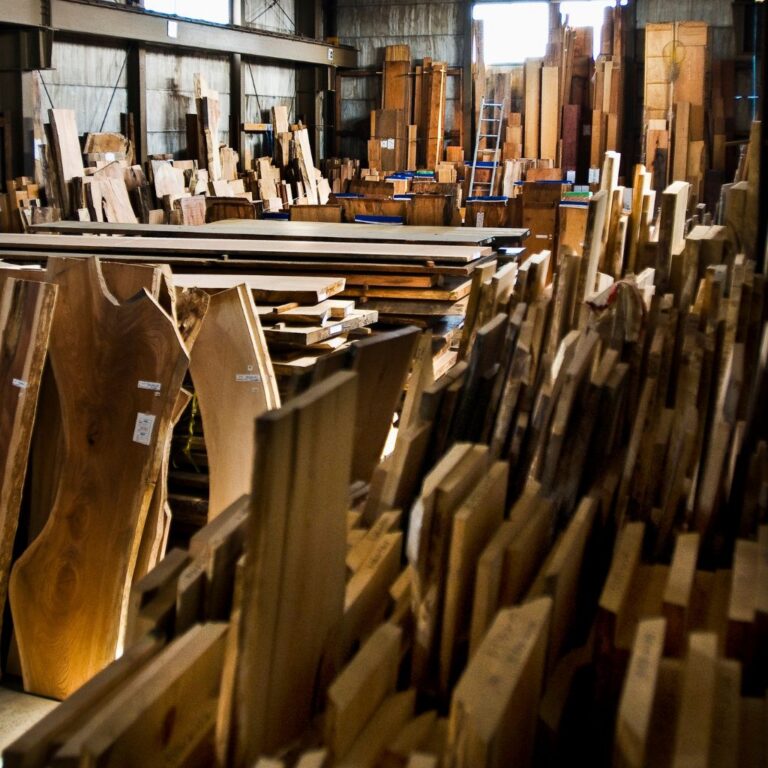
- Local sawmills: Ash is a common regional hardwood, and many mills will cut a 4×4 or thicker stock to order. Ask for kiln-dried if you plan to build furniture.
- Hardwood dealers: They sell thick stock as 16/4 and can often surface it to a stated size. Ask what the finished dimension will be.
- Salvage and urban lumber sources: Emerald ash borer has killed hundreds of millions of ash trees in the United States and Canada, according to Wood Database, so locally milled ash from removed trees is often available. Confirm it was dried properly before you build with it.
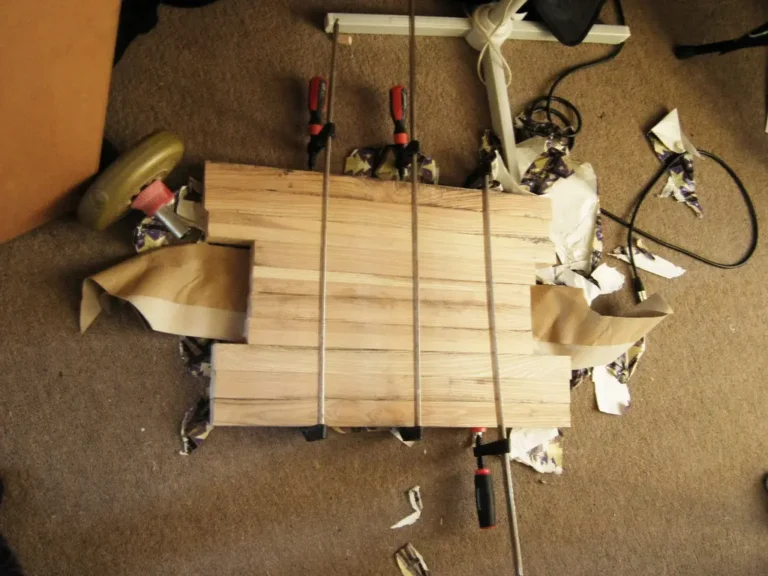
- Laminating thinner stock: If a solid 4×4 is hard to find, gluing up two or more thick boards makes a leg blank. For furniture legs this works well.
Price wise, Wood Database calls ash one of the least expensive domestic utility hardwoods and says it should compare with oak. For grades, drying and general buying advice, see our ash wood lumber guide.
Good Uses for Ash 4x4s
- Workbench and table legs: Stiff, hard and heavy, and Wood Database notes ash glues, stains and finishes well.
- Furniture posts and bed frames: Indoor environments keep decay out of the picture. For how ash behaves in furniture, see our ash furniture pros and cons.
- Tool handle and mallet blanks: Ash is a traditional handle wood, and a 4×4 gives you room to shape a blank.
- Covered timber framing: Pergola or arbor pieces that stay under a roof and off the ground.
- Turning stock: A 4×4 is a convenient size for spindle turning.
Working Ash 4x4s
Wood Database reports good results with hand and machine tools, and notes the wood can smell unpleasant while being worked. Use a sharp blade and wear a dust mask, since fine wood dust is a health hazard. Pre-drill before driving screws near the ends, because dense hardwood splits when fasteners are forced. For joining posts to rails or frames, our guide on how to connect 4×4 wood covers screws, bolts and joints.
Structural Use: Check Before You Build
A common question is whether an ash 4×4 can replace a standard post under a deck, porch or roof. Treat that as an engineering and code question, not a strength-chart question. Sawmill ash usually comes without the grade stamp that graded structural lumber carries, which means there is no published design value for that piece. Local building departments generally expect graded, approved lumber for load-bearing posts, and they set the rules where you live.
If your goal is a stronger post rather than a nicer-looking one, a solid graded 4×4 on a proper base is the safer route. Our article on using two 2x4s instead of a 4×4 explains why built-up posts are not equivalent, and the same caution applies to swapping in an unusual species without checking the code.
Frequently Asked Questions About Ash 4×4 Lumber
Is ash 4×4 lumber good for fence posts?
Not for posts set in the ground. Wood Database rates the heartwood of white, green and black ash as perishable or only slightly durable for decay resistance, and ash is not resistant to insect attack. A post buried in soil or concrete sits in the wettest, worst conditions for it. Ash 4x4s are a better fit for furniture, workbench legs and covered structures.
Can you use an ash 4×4 as a deck or porch post?
It is a risky choice. Beyond the rot rating, a sawmill ash 4×4 usually has no grade stamp or published design values the way graded structural lumber does, and building codes are written around graded lumber. Ask your local building department before using ash for anything that carries a deck, porch or roof load.
Is ash stronger than a pine 4×4?
Yes, by the numbers. Wood Database lists white ash at 1,320 lbf Janka hardness and 15,000 psi bending strength, against 380 lbf and 8,600 psi for eastern white pine. Strength is not the problem with ash outdoors, decay resistance is.
How much does an 8-foot ash 4×4 weigh?
Roughly 28.6 pounds for a 3.5 by 3.5 inch white ash post at 12 percent moisture content, using Wood Database’s 42 lb per cubic foot figure. An equal-size eastern white pine post comes out near 17.0 pounds. Rough or green lumber weighs more.
Does ash 4×4 lumber cost more than oak?
Not usually. Wood Database describes ash as one of the least expensive domestic utility hardwoods and says it should compare similarly to oak on price. Actual prices depend on your region, the grade, and whether the piece is kiln-dried and surfaced, so get a quote from a local hardwood dealer.
The Short Version
Ash 4×4 lumber is strong, heavy and reasonably priced, which makes it a good fit for furniture legs, benches and covered frames. It is a poor fit for in-ground posts because its heartwood is rated perishable and it has no insect resistance. If you want an ash post outside, keep it above ground on a standoff base, seal every face and check with your building department before trusting it with load.
Sponsored / affiliate links. As an Amazon Associate I earn from qualifying purchases. I may earn additional commission from eligible campaigns.