How to Connect 4×4 Wood: Screws, Lag Bolts & Post Brackets
To connect 4×4 wood, drive 4-inch or longer structural screws for light framing, or clamp the pieces with 1/2-inch through-bolts and washers for anything that carries load. A real 4×4 measures 3.5 x 3.5 inches, so a 3-inch screw through one face never reaches the second post. This guide covers screw and bolt lengths, end-to-end splices, post caps and bases, and what the American Wood Council deck guide says about 4×4 connections.
Screws vs Bolts for 4×4 Wood: Which to Use?
Best 4×4 Timber Screw Pick
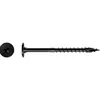 |
Simpson Strong-Tie SDWS22400DBB 4-Inch Timber Screws (Exterior Grade, Black, 50-Pack), $35.33 At 4 inches, this is the right length for fastening a 2x board (1.5 inches thick) to the side of a 4×4, the case where the length table below leaves 2.5 inches of thread in the post.
|
As an Amazon Associate we earn from qualifying purchases.
The right fastener depends on how the pieces meet and whether the joint carries load. Structural screws drive without predrilling in most wood and suit benches, rails and light frames. Through-bolts with washers are what deck code guides specify for load-bearing post connections. Lag screws sit in between: strong in side grain, but they need a clearance hole and a pilot hole, so they only work where you can drill from one side. Simpson Strong-Tie describes its SDWS Timber screw as a 0.220-inch screw sold in lengths from 3 to 10 inches that needs no predrilling in most applications.
| Fastener | Predrilling | Length for 4×4 work | Best for |
|---|---|---|---|
| Structural (timber) screw, 0.220 in. | Usually none | 4 in. for a 2x board onto a 4×4; 6 in. or longer between two 4x4s | Benches, rails, braces, light frames |
| Lag screw, 1/2 in. (DCA 6 size) | Clearance hole in piece one, smaller pilot hole in piece two | Long enough that the threads end up in the second piece | One-sided connections where a bolt cannot pass through |
| Through-bolt, 1/2 in., washers under head and nut | Full-diameter hole through both pieces | 8 in. for two 3.5-inch pieces face to face | Post to post, stair support posts, anything structural |
| Carriage bolt, 1/2 in. | Full-diameter hole through both pieces | Same as a through-bolt | Clean look on the show side; see our carriage bolt guide |
Why a 3-Inch Screw Fails in a 4×4: The Length Math
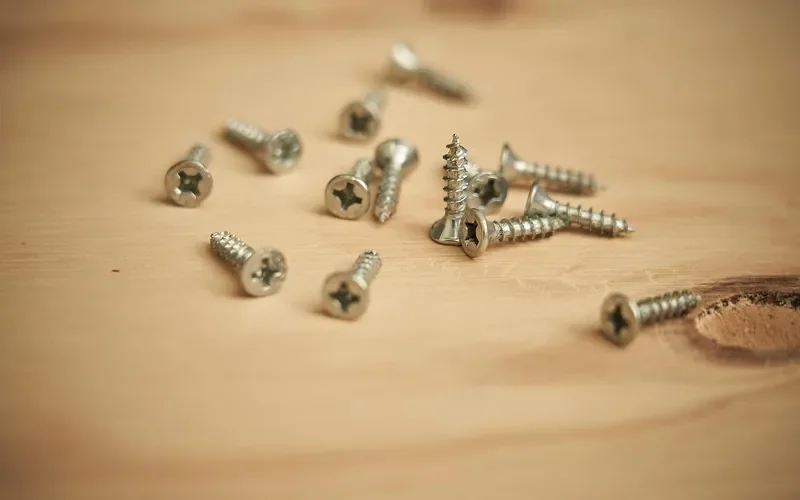
Most advice on connecting 4×4 wood quotes a screw length without saying what it has to cross. A 4×4 is a nominal size; the actual piece is 3.5 inches square (our nominal vs actual lumber size chart lists every size). Subtract the thickness of the first piece from the screw length and you get the thread that is actually gripping the second piece.
| Connection | Distance the screw crosses first | Screw length | Thread left in second piece |
|---|---|---|---|
| 2×6 board flat onto the side of a 4×4 | 1.5 in. | 4 in. | 2.5 in. |
| 4×4 face to face with a 4-inch screw | 3.5 in. | 4 in. | 0.5 in. (not a usable grip) |
| 4×4 face to face with a 6-inch screw | 3.5 in. | 6 in. | 2.5 in. |
| 4×4 face to face with an 8-inch through-bolt | 7 in. (both pieces) | 8 in. | Passes through; about 1 in. left for washers and nut |
The same arithmetic applies when you butt the end of one 4×4 against the side of another and drive a screw through the side into the end grain. End grain holds fasteners worse than side grain, so use a longer screw, add a second screw, or switch to a bolt or a metal connector when the joint matters.
Connecting 4×4 Posts: What the Deck Code Guide Says
The American Wood Council publishes DCA 6, the Prescriptive Residential Wood Deck Construction Guide (the edition we read is based on the 2015 International Residential Code). It covers single-level residential decks and is the clearest public source on how code-style connections are built. Your local code and building department still decide what is allowed, and nothing here is engineering advice. These are the 4×4 points that matter:
- Bolt size: DCA 6 specifies 1/2-inch diameter bolts and lag screws for its connections, and all through-bolts get washers under the bolt head and the nut.
- Beam to post: a beam attaches to the top of a post with a notch or a post cap. Fastening a beam to the side of a post with fasteners alone is prohibited.
- 4×4 posts can’t be notched: the guide’s commentary says a 4×4 has too little cross section for the let-in notch, so a 4×4 needs a post cap, and cap hardware for a 4×4 is generally limited to 2-ply 2-inch or single 4-inch beams. The guide’s main solution is a 6×6 post.
- Guard (railing) posts: minimum 4×4, fastened to joists at least 2×8 with a hold-down anchor rated for at least 1,800 pounds of tension for a 36-inch guard. Screws or lags alone do not meet that. See our deck railing guide for the full build.
- Stair support post: a 4×4 under a long stair stringer is notched and bolted with two 1/2-inch through-bolts with washers.
Short posts only: in the DCA 6 commentary (Table C4A), a No. 2 grade 4×4 on a 6-foot beam span with joists under 10 feet may be only 4 feet tall in Southern Pine and 2 feet tall in Douglas fir-larch. That is why the guide uses 6×6 posts for deck support.
Fasteners in pressure-treated 4x4s have their own rule. DCA 6 requires hot-dip galvanized (ASTM A153), stainless steel, silicon bronze or copper screws, bolts, washers, nuts and nails with preservative-treated wood, and galvanized or stainless connectors. Plain zinc-plated hardware is not on that list. Our guide to pressure treated wood posts covers sizes and ground-contact ratings.
How to Join Two 4x4s Face to Face With Through-Bolts
Face to face is the strongest general-purpose way to connect 4×4 wood without a connector. Follow these steps:
- Clamp the pieces: Clamp the two 4x4s in their final position with the faces flush and check the joint with a square.
- Mark the bolt centers: Mark each bolt on the centerline of the 3.5-inch face, spaced well apart and well back from the post ends, where splitting starts.
- Drill straight through both posts: Drill a hole the same diameter as the bolt through both pieces at once, keeping the bit square to the face with a drill guide or a square held beside it.
- Fit the bolt and washers: Push a hot-dip galvanized or stainless 1/2-inch bolt through the holes and fit washers under the bolt head and under the nut.
- Tighten until snug: Tighten the nut until the washers sit snug against the wood without crushing the surface, then check that the faces are still flush.
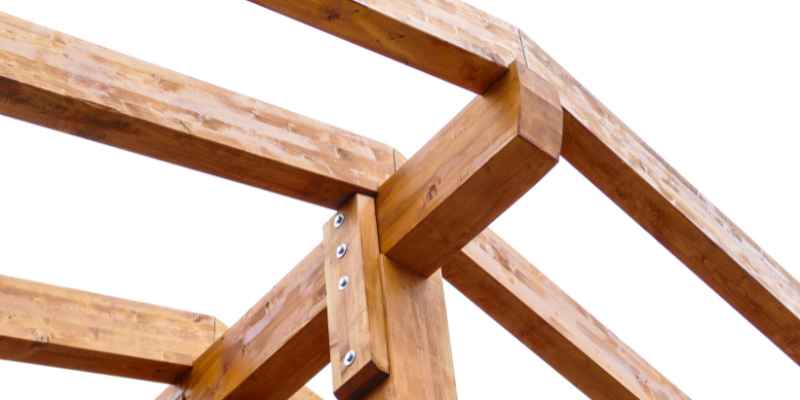
Clamps hold the pieces while you drill; a wooden hand screw clamp works well on 3.5-inch stock. Keep holes well back from the post ends, because that is where wood splits.
Splicing 4x4s End to End: Half-Lap Joint and Its Limits
A half-lap removes half of each 4×4’s thickness, which is 1.75 inches, from opposite faces of the two ends. The laps then mate flush, and the spliced section is still 3.5 inches thick. Glue the laps with an exterior-rated adhesive, clamp them, and drill through both for two bolts with washers.
The limit matters more than the technique. Bolt holes and the notch remove wood exactly where bending stress is highest, so a spliced 4×4 is weaker than one continuous post. We searched the DCA 6 text for a 4×4 post splice detail and found none; the only splices it covers are beams. Use a half-lap splice for raised-bed frames, trellis rails, bench frames and pergola rails. For a post that carries a roof, deck or guard, buy a longer post or have an engineer size the joint. For other joint types, see our guide to joining two pieces of wood.
Post Caps, Bases and Brackets for 4×4 Posts
Metal connectors solve problems screws cannot, mainly keeping the post end off concrete and tying a beam onto a post top. A standoff post base such as Simpson Strong-Tie’s ABU44Z is a 12-gauge adjustable base for a 4×4 that holds the post 1 inch above the slab so the end grain stays out of standing water. Check the fastener schedule and load rating in Simpson’s own catalog before you order, because it differs by model and finish. A post cap (the BC4 is one 4×4 example) replaces notching and nailing into end grain.
If you are thinking about doubling two 2x4s instead of buying a 4×4 for one of these connectors, read our guide on whether you can use two 2x4s instead of a 4×4 first; connector sizes assume a solid 3.5 x 3.5 inch post.
Joints for Furniture and Workshop Builds
For workbench legs, picnic tables and benches, half-lap and mortise-and-tenon joints work at 4×4 scale. A mortise-and-tenon has a tongue on one piece and a matching pocket in the other, and gives the best strength for visible joinery. Wood glue helps both (wood glue vs polyurethane glue compared), but glue alone should not carry the load; add a bolt or structural screw. Dovetails and finger joints are drawer and box joints and are impractical at 4×4 size.
Common Mistakes When Connecting 4×4 Wood
- Using 3-inch screws through a 3.5-inch-thick post, so the thread never reaches the second piece.
- Using plain zinc-plated or interior screws in pressure-treated wood instead of hot-dip galvanized or stainless hardware.
- Skipping washers under the bolt head and nut, which lets the head sink into the wood.
- Over-tightening until the washer crushes the surface; DCA 6 says lag screws should be snug, not over-tightened.
- Notching a 4×4 post to carry a beam, which leaves too little wood; use a post cap.
- Relying on glue or screws alone for a guard post. See our guide to installing wood fence posts for in-ground posts.
This guide is general information, not engineering advice. Any connection that supports a deck, roof, stair or guard must meet your local building code, so check with your building department.
Frequently Asked Questions
How Do You Join Two 4×4 Posts Together?
Clamp them flush, drill straight through both with a bit the same diameter as the bolt, and fit a 1/2-inch hot-dip galvanized or stainless through-bolt with washers under the head and nut. Two 4x4s face to face are 7 inches thick, so an 8-inch bolt is the usual length. Screws work for light projects but need to be 6 inches or longer.
Should I Use Screws or Bolts on a 4×4?
Use structural screws for light framing, benches and boards fastened to a post, and through-bolts for anything that carries load, such as a stair support post or a post joined to another post. Deck code guides specify 1/2-inch bolts and lag screws, not screws, for structural post connections, so check your local code before relying on screws.
What Size Screw Do You Need to Go Through a 4×4 Into Another 4×4?
At least 6 inches. A real 4×4 is 3.5 inches thick, so a 4-inch screw driven through the first post leaves only 0.5 inch of thread in the second, which is not a usable grip. A 6-inch screw leaves 2.5 inches. If the screw enters end grain, expect a weaker hold than into the side of the board.
How Do You Connect 4×4 Wood End to End?
Cut a half-lap on each end by removing half the thickness (1.75 inches) from opposite faces, so the two laps mate flush. Glue the laps with an exterior-rated adhesive and clamp them, then drill through and fit two through-bolts with washers. Treat a spliced 4×4 as non-structural; it is weaker than one continuous post.
What Size Lag Bolt Should You Use for 4×4 Posts?
The AWC deck guide DCA 6 specifies 1/2-inch diameter lag screws and bolts for its connections, with a clearance hole in the first piece and a smaller pilot hole in the second (5/16 inch for its 1/2-inch ledger lags). Lag screws always take washers. For a load-bearing post, follow your local code or an engineer rather than a rule of thumb.
Can You Use Wood Glue Alone on a 4×4 Connection?
No. Glue can add stiffness to a half-lap or a mortise and tenon, but it should not be the only thing holding a 4×4 connection that carries weight or gets racked by wind or use. Pair glue with through-bolts or structural screws so the hardware carries the load if the glue line ages or gets wet.
Sponsored / affiliate links. As an Amazon Associate I earn from qualifying purchases. I may earn additional commission from eligible campaigns.