Belt Sander vs. Orbital Sander: Which One Do You Actually Need?
Belt sanders strip material fast, up to 1,600 surface feet per minute, making them the right choice for flattening rough lumber or stripping old finish. Orbital sanders do spin up to 14,000 orbits per minute in a random pattern that removes far less material but won’t gouge the wood. Use a belt sander for heavy stock removal — unless you’re working thin veneer or plywood face, where it will cut straight through — and an orbital sander for the final smooth finish before paint or stain.
Quick Answer
Grab the belt sander to remove serious material fast — leveling rough lumber, stripping paint or old finish, flattening a tabletop or deck. Grab the orbital sander for the final smooth pass before stain or paint, on furniture, trim, and cabinets. Working on one piece start to finish? Belt sander first for shaping, orbital sander last for the swirl-free finish.
What’s the Real Difference Between a Belt Sander and an Orbital Sander?
Best All-Around Pick
DEWALT Random Orbit Sander, Variable Speed, 5-Inch (DWE6423)
A variable-speed random orbital sander that covers most furniture, cabinet, and trim finishing work most woodworkers actually do.
- Best for: Furniture, cabinets, and general finish sanding
- Why we picked it: Variable speed control handles both fast leveling passes and delicate final grits without swapping tools
- Main drawback: Corded — not the tool for sanding away from an outlet
Compare more sander options
 Option 1 — Belt WEN 6321 7-Amp Belt Sander with Dust Bag
|
 Option 2 — Orbital BOSCH ROS20VSC Palm Sander with Dust Collector
|
 Option 3 — Belts POWERTEC Sanding Belt Assortment, 50-Pack
|
As an Amazon Associate we earn from qualifying purchases.
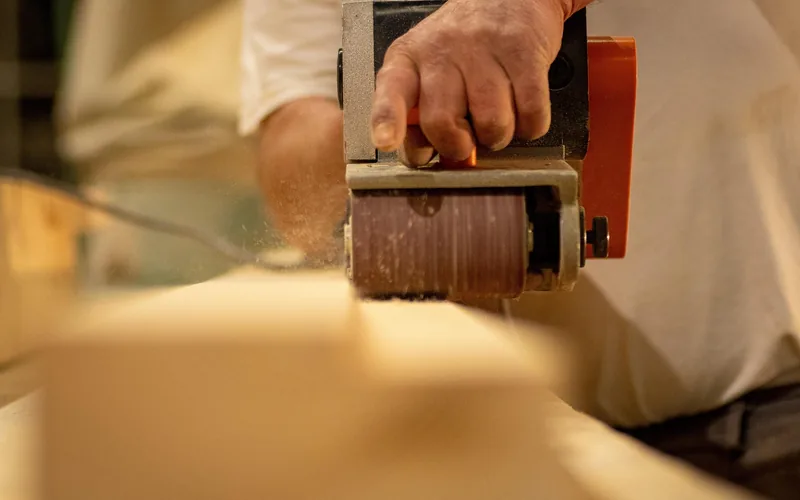
A belt sander is a handheld power tool that runs a continuous loop of abrasive belt over two rollers in one direction, cutting wood in straight-line passes. It’s aggressive by design: press too hard or pause in one spot and it will dig a trough into the surface. It belongs at the roughest stage of a project, never the final pass.
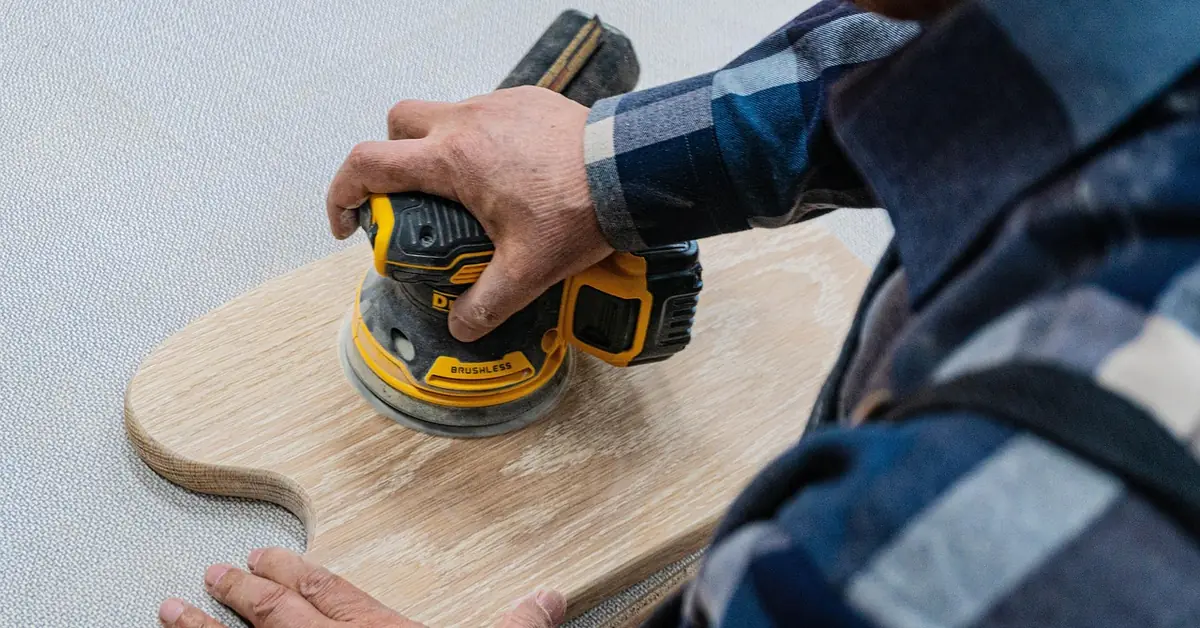
A random orbital sander is a handheld power tool that spins a round pad in small overlapping circles while also rotating randomly, which is what keeps it from leaving the swirl marks a straight-line or purely circular sander causes. It removes material far more slowly than a belt sander but is nearly impossible to gouge with, which makes it the safer tool for finish work and the one most beginners should reach for first.
Belt Sander vs Orbital Sander: Spec-by-Spec Comparison
| Spec | Belt Sander | Random Orbital Sander |
|---|---|---|
| Motion | Straight-line belt loop | Random overlapping orbits |
| Speed | 800–1,600 surface feet/min | 3,000–14,000 orbits/min (most ~10,000) |
| Material removal rate | Fast — aggressive | Slow — controlled |
| Typical grit range | 40–120 | 80–320 |
| Typical price (corded) | $35–$220 | $30–$90 |
| Best for | Rough stock removal, floors, decks | Finish sanding, furniture, paint prep |
| Learning curve | Steep — easy to gouge | Beginner-friendly |
When to Use a Belt Sander
Reach for a belt sander when there’s real material to remove, not just a surface to smooth. Start with 40 or 60 grit to strip old finish or level a warped board, then step up to 80 or 100 grit to erase the coarse scratch pattern before switching tools. Keep the sander moving at all times, work with the grain, and let the tool’s weight do the work — leaning into it is how boards end up with a dished-out low spot.
- Flattening rough-sawn or warped lumber
- Stripping thick paint, varnish, or old deck finish
- Leveling hardwood floor boards before refinishing
- Fast material removal on large, flat panels like tabletops or doors
When to Use an Orbital Sander
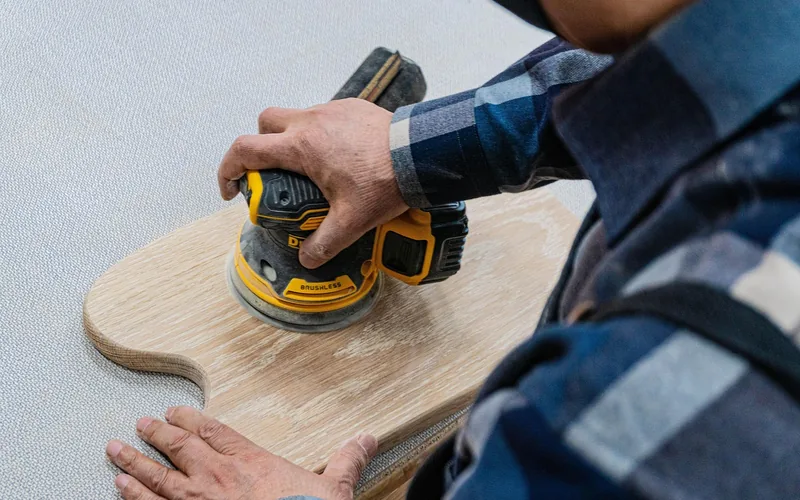
Reach for a random orbital sander once the surface is already flat and you just need it smooth. Work up through the grits in order — skipping from 80 straight to 220 leaves deeper scratches buried under a surface that only looks smooth until stain hits it and reveals every one of them. A typical finish progression is 120, then 180, then 220 grit, vacuuming or wiping off dust between each pass.
- Final smoothing before stain, paint, or clear coat
- Refinishing furniture, cabinet doors, and trim
- Sanding between coats of finish (220–320 grit)
- Rounding sharp edges and removing light imperfections
Belt Sander vs Orbital Sander by Project
The right tool depends on where the project starts, not just what it’s made of. A few common jobs, sorted by which sander actually earns its spot:
- Wood deck refinishing: belt sander to strip failed finish and knock down splinters, then an orbital sander for the smooth final pass. On a whole deck, a rented drum sander is worth comparing against a belt sander for coverage speed.
- Furniture refinishing: orbital sander almost every time — a belt sander removes material faster than most furniture surfaces can spare.
- Hardwood floors: professional refinishers lean on drum or belt-style floor sanders for the initial leveling pass; see our guide on how to sand and refinish wood floors like a professional for the full sequence, and our belt sander picks built for floor work if you’re buying rather than renting.
- Cabinet doors and trim: orbital sander only — the tight surfaces and profiles don’t give a belt sander room to work safely.
- Stripping old paint: belt sander for large flat runs, hand-sanding or a detail sander for corners and profiles a belt sander can’t reach.
Common Mistakes to Avoid
- Finishing with a belt sander. Even at 120 grit, a belt sander’s straight-line pattern leaves visible scratches under stain. Always switch to an orbital sander for the last two grit stages.
- Skipping grits with an orbital sander. Jumping from 80 to 220 buries deep scratches under a surface that only looks smooth — they reappear the moment stain hits the wood.
- Letting a belt sander sit in one spot. Even a half-second pause at 1,000+ surface feet per minute can burn the wood or cut a visible low spot.
- Ignoring dust collection. Both tools throw enough fine dust to clog the grain and dull the next coat of finish — vacuum or wipe down between grit changes.
Frequently Asked Questions
Is a belt sander better than an orbital sander?
Neither is universally better — they do different jobs. A belt sander is more powerful and suited to heavy-duty tasks like removing material quickly from large surfaces. An orbital sander is better for finer finishing work and a smooth, swirl-free surface. The right choice depends on whether you’re roughing in or finishing out.
What are the disadvantages of a belt sander?
A belt sander can gouge or burn wood if you press too hard or pause in one spot, it’s louder than an orbital sander, it throws a large volume of dust, and its size limits maneuverability in tight spaces or on detailed work.
Is an orbital sander or belt sander better for decks?
An orbital sander is the safer choice for the final pass on a deck because it sands smooth and even without gouging the boards. But for stripping old, failed finish or leveling weathered decking first, a belt sander (or a rented drum sander for a whole deck) removes material far faster than an orbital sander can.
Can I use an orbital sander instead of a belt sander?
Yes, but expect it to take significantly longer for any job that involves real material removal, like leveling a warped board or stripping thick old finish. An orbital sander is built for control and a fine finish, not speed — use it as a substitute only on small areas or when you’re willing to trade time for a gentler tool.
What grit should I use in a belt sander vs an orbital sander?
In a belt sander, start at 40–60 grit for stripping or leveling, then move to 80–100 grit to erase the coarse scratch pattern. In an orbital sander, pick up around 120 grit, then progress to 180 and finish at 220–320 grit before stain or paint. Never skip more than one grit step at a time on either tool.
Both tools earn a spot in a well-equipped shop — the belt sander does the heavy lifting, the orbital sander finishes the job. Match the tool to the stage of the project, not just the material, and you’ll get a smoother result with less sanding overall.
Sponsored / affiliate links. As an Amazon Associate I earn from qualifying purchases. I may earn additional commission from eligible campaigns.
 ZFE Random Orbital Sander 5" & 6" Pneumatic Palm Sander with Extra 5" Backing Plate, Sponge Polishing Pads, Sandpapers Low Vibration and Heavy Duty for Wood, Composites, Metal
 6" Random Orbit Air Sander, Air Palm Random Orbital Sander, Professional Pneumatic Palm Sander, Speed Adjustable Pneumatic Sander for Rust Removal, Sanding and Fine Polishing, Lightweight Low Noise