How to Sand and Refinish Wood Floors Like a Professional
Understanding the process of sanding and refinishing wood floors is key. It involves removing old finishes, smoothing the wood, applying new stain or color, and adding protective topcoats. This gives your floors a fresh, updated look and extends their life. It’s a DIY-friendly project that can save you money while delivering professional-looking results.
If your floor’s finish is just dull or lightly scratched rather than damaged down to bare wood, you may not need this full process at all – see our guide on how to resurface a hardwood floor for the quicker screen-and-recoat option.
Understanding the Wood Floor Refinishing Process
Best Pro-Grade Floor Finish
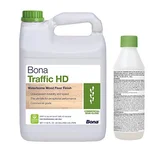 |
Bona Traffic HD Semi-Gloss Finish – $174.99 The topcoat matters as much as the sanding — this is the same commercial-grade waterborne finish pro refinishers use.
|
Refinishing a wood floor is really four separate jobs stacked on top of each other: stripping the old finish and the top layer of worn wood down with a sanding sequence, cleaning every trace of that sanding dust out of the room (see how to clean hardwood floors after sanding for the full order), adding color if you want it, and then building up a protective topcoat in thin coats. Skip or rush any one of the four and it shows in the finished floor — dust trapped under a topcoat looks like sand under glass, and a stain applied over incompletely sanded wood grabs unevenly and blotches. Done in the right order, though, this is genuinely a weekend-to-week DIY project (depending on room size) that removes decades of scratches, gray water staining, and worn traffic patterns, and it can change the floor’s color entirely if you want a different look than what’s there now. If you haven’t already confirmed your floor can safely take a full sand — especially on engineered wood — see how to check whether your floor qualifies for a full refinish before you start.
Screen-and-Recoat vs. Full Sand: Which One Do You Actually Need?
Not every floor needs the full sand-down described below. If the finish is worn but the wood underneath isn’t gouged, gray, or water-stained, a screen-and-recoat (light buffing with a fine abrasive pad, then a fresh topcoat) can restore the shine in a single day with none of the dust or noise of drum sanding.
Do the water-drop test first: if water beads up on the floor, the existing finish is still sealing the wood and screen-and-recoat will work. If water soaks in within a minute or two, the finish is worn through and you need the full sanding process below.
Step 1: Getting Ready for Sanding
Room prep isn’t a formality — a drum sander throws fine wood dust that finds its way through electrical outlets, under closed doors, and into HVAC returns if you don’t seal the room first, and anything left on the floor becomes a hazard once a 100+ lb sander is moving across it.
Clear Everything Out
Furniture, rugs, and even small items like lamps and picture frames all need to come out of the room completely, not just get pushed to one side. Working around obstacles with a drum sander is how gouges happen — the machine keeps cutting the instant it stops moving forward, so anything that forces you to pause or reroute mid-pass leaves a dug-in spot you’ll have to sand out later. An empty room also means dust settles on bare floor and subfloor instead of on cushions and lampshades, where it’s much harder to get out.
Protect What Stays
Anything too heavy to move — a built-in, an appliance — needs to be wrapped in plastic sheeting taped down at every seam, and every vent, doorway, and gap under an interior door needs the same treatment. Fine sanding dust travels on air currents, and a central HVAC return left uncovered will pull dust through the ductwork and redistribute it to every other room in the house running on the same system.
Remove Baseboards and Trim (Optional but Recommended)
Pulling baseboards with a flat bar before sanding lets the drum sander get within a fraction of an inch of the wall instead of leaving an unsanded strip along every edge that then has to be hand-sanded or edge-sanded separately. It takes maybe 20 minutes per room and the boards go back on with the same nail holes once the floor is done. Skip it and you’ll be working the edge sander closer to the baseboard than is comfortable, risking scuffed paint or trim.
Inspect Your Floors
Walk the whole room and set every proud nail or staple below the surface with a nail set and hammer — a single nail head sitting 1/16″ too high will shred a sheet of 36-grit sandpaper in seconds and can gouge the sanding drum itself, which is an expensive mistake on rented equipment billed by the hour. This is also the point to note any squeaks, since you have full access to the subfloor fasteners while the room is still empty.
Repair Damaged Boards
Badly cracked, cupped, or rotted boards need to be replaced before sanding, not after — a drum sander can knock down high spots but it can’t fill a gap or fix structural damage, and sanding around a bad board just wastes finish material on wood you’re going to tear out anyway.
Room Preparation Checklist
- Clear all furniture and rugs.
- Cover vents and doorways with plastic.
- Remove baseboards (optional).
- Hammer down loose nails or staples.
- Repair or replace damaged floorboards – see how to pull up individual boards without damaging the rest of the floor.
- Sweep and vacuum the floor thoroughly.
Step 2: The Sanding Process
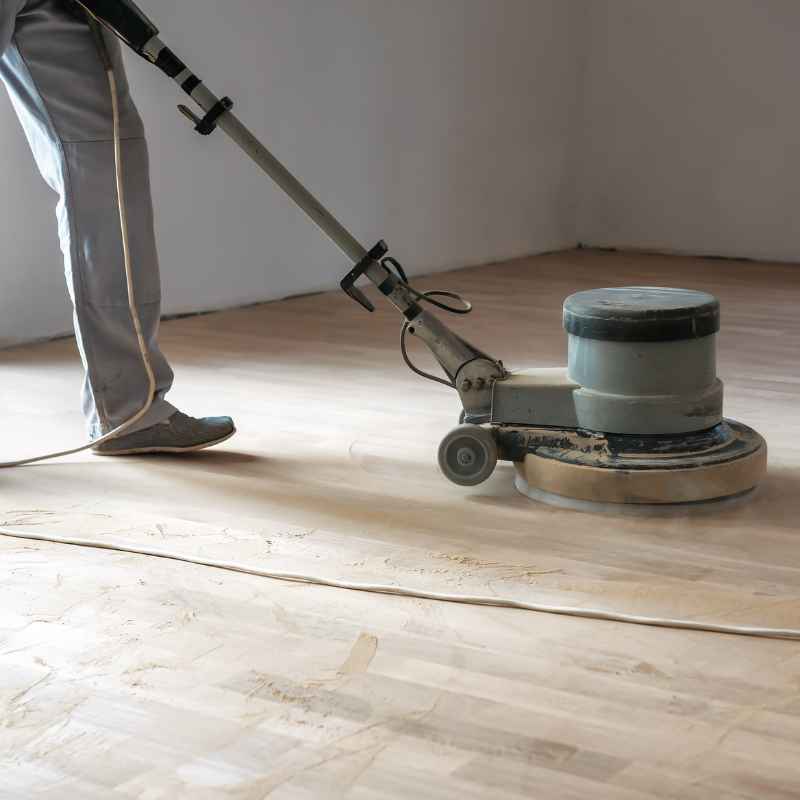
You’ll typically rent three machines for this: a drum sander for the open field of the room, an edge sander (a disc sander on a long handle) for the perimeter the drum can’t reach, and a hand block or random-orbital sander for corners neither machine reaches. Drum sanders remove material fast and aggressively — enough that a moment of hesitation can dig a trench — while an orbital sander is far more forgiving for a first-timer, if slower; see our best sander for wood comparison if you’re still deciding which to rent.
Choose the Right Grit Paper
The whole sequence works because each grit only has to remove the scratch pattern left by the grit before it — skip a step (say, jumping from 36-grit straight to 100-grit) and the 100-grit paper can’t cut deep enough to erase the 36-grit scratches, so they stay visible under the stain. A standard progression runs 36 or 40, then 60 or 80, then 100 or 120, with an optional 150-grit pass if you want an extra-smooth surface before staining.
First Pass: Coarse Grit (e.g., 36 or 40)
Load the coarsest paper and work along the length of the boards, never against the grain. Keep the sander moving the entire time it’s touching the floor — a drum sander lowers its abrasive drum onto the wood and starts cutting the instant you tilt it down, so stopping mid-pass digs a dish-shaped low spot that’s difficult to blend out later. Overlap each pass by about half the sander’s width, and if the machine starts to bog down or you hear the motor laboring, that’s the paper telling you it’s loaded with old finish and needs replacing, not a sign to push harder.
Second Pass: Medium Grit (e.g., 60 or 80)
Vacuum the coarse-grit dust completely before switching paper — leftover 36-grit dust trapped under the drum will scratch the floor even with finer paper loaded. Sanding this pass at a slight diagonal to the first pass (or a full 90 degrees, if the first pass ran the length of the room) helps the medium grit find and erase any coarse scratches the first pass missed, since scratches running one direction are far more visible when cross-lit than scratches running with the boards.
Third Pass: Fine Grit (e.g., 100 or 120)
This pass runs with the grain again and is about surface quality, not material removal — you’re erasing the faint cross-hatching left by the medium-grit pass so the wood takes stain evenly. Run a bare hand over the floor when you’re done; any roughness or visible scratch line you can feel will show up darker under stain, because open, torn wood fiber absorbs more pigment than smoothly cut fiber.
Edge Sanding
The edge sander covers the perimeter strip the drum sander’s wheels keep it from reaching, and it needs the same three-grit progression as the field. It’s a smaller, single-disc machine, which makes it more aggressive per square inch than the drum — a disc sander held stationary for even a second or two will cut a visible circular low spot, so keep it moving in small overlapping arcs rather than pressing straight down.
Hand Sanding Corners and Tight Spots
Inside corners and areas tight against a radiator or built-in cabinet base are edge-sander-proof by shape, not just by size, and need a sanding block or a folded sheet of paper worked by hand through the same grit sequence. This is the slowest part of the job per square foot, but it’s also the part that shows most clearly if it’s skipped — an unsanded corner keeps its old, darker finish color right next to freshly sanded wood.
Vacuum, Vacuum, Vacuum!
Every grit change and every finished pass gets a full vacuum with a shop vac, not a broom — a broom just relocates fine dust, it doesn’t remove it. Any dust left on the floor when stain or finish goes on gets trapped under it permanently, showing up as a gritty texture or dull spot in the cured finish. A tack cloth (a resin-treated cloth that’s slightly tacky to the touch) after the final vacuum picks up the last layer of airborne dust that settles back onto the floor within minutes of vacuuming.
Sanding Grit Progression
Use a sequence like this:
- Initial Sand: 36 or 40-grit (Removes old finish)
- Second Sand: 60 or 80-grit (Smooths out initial scratches)
- Third Sand: 100 or 120-grit (Prepares for stain)
- Optional Final Sand: 150-grit (For ultra-smooth finish if needed)
Remember: Always go up in grit number. Never skip a grit.
Step 3: Cleaning and Staining
Once the floor is fully sanded and vacuumed, you’re choosing between a clear finish that shows off the wood’s natural tone, or a stain that changes the color before the topcoat goes on. Either way, this step doesn’t start until the floor has had a final, thorough cleaning — any dust missed here gets locked in permanently by the stain or finish.
Vacuum and Tack Cloth Again
Vacuum the entire floor one more time even if you think it’s clean, then wipe it down with a fresh tack cloth. This isn’t redundant with the vacuuming you did during sanding — dust continues to settle out of the air for hours after the last pass, and this final wipe is what actually determines whether the finish goes on glass-smooth or gritty.
Choosing Your Stain
Test any stain on a scrap piece of the same wood species, or in a spot that will stay hidden (inside a closet, under where a rug will sit) before committing to the whole floor — the same stain color reads differently depending on the wood’s grain and how much natural color it already has, so the swatch on the can lid is only a rough guide.
Applying the Stain
Oil-based stains penetrate deeper into open wood grain and produce richer, more saturated color, but they take longer to dry and carry a stronger solvent smell. Water-based stains dry faster and clean up with soap and water, but tend to sit closer to the surface and can look slightly flatter on open-grained woods like oak. Apply with a brush, rag, or foam applicator in small sections, let it sit a few minutes (longer dwell time means darker, more saturated color), then wipe off the excess with the grain — wiping across the grain drags pigment into the wood unevenly and leaves visible streaks once it dries.
Be Prepared for the Smell
Oil-based stains in particular off-gas strong solvent fumes for hours after application. Open every window, run box fans to push air out rather than just circulate it, and wear a respirator rated for organic vapors (a basic dust mask doesn’t filter solvent fumes) if you’re sensitive to strong odors or working in a room with limited airflow.
Let the Stain Dry Completely
Check the product label for the actual dry time rather than guessing — it can range from a few hours to over 24 hours depending on the stain and the humidity in the room. Applying topcoat over stain that hasn’t fully dried is one of the most common causes of finish failure: the trapped solvent can’t escape, and the topcoat either stays tacky or delaminates later.
Stain Application Tips
- Test stain in a hidden spot first.
- Apply stain with a brush or applicator.
- Work in small, manageable sections.
- Wipe off excess stain with the grain.
- Ensure good ventilation during application and drying.
- Allow stain to dry completely before applying finish.
Step 4: Applying the Protective Finish (Topcoat)
The stain (if you used one) sets the color; the topcoat is what actually protects the floor from foot traffic, spills, and scratching, and it’s worth understanding the real tradeoffs between finish types rather than defaulting to whatever’s cheapest at the hardware store.
Types of Finishes
Polyurethane: The default choice for most DIY refinishing jobs. Oil-based poly is more abrasion-resistant and ambers slightly over time, which some people want for a warmer look and others find frustrating because it shifts the stain color years later. Water-based poly dries faster (often recoat-ready in 2-3 hours versus 24 for oil-based), stays clear rather than ambering, has far less odor, and resists yellowing — the tradeoff is it’s typically somewhat less abrasion-resistant per coat, though the Bona finish above closes that gap with a two-component commercial formula.
Varnish: Chemically similar to oil-based polyurethane but formulated with more natural oils, giving a slightly different look and feel underfoot. It’s tough and traditional but has largely been superseded by polyurethane in most floor-refinishing projects.
Lacquer: Dries fast enough that professionals sometimes use it for quick commercial turnarounds, but it’s noticeably less durable underfoot than polyurethane and isn’t a common choice for a DIY home floor.
Wax: Gives a soft, low-sheen look but offers minimal protection against scratches and water, and needs reapplication every few months in high-traffic areas — more upkeep than most homeowners want for a floor. It’s also the wrong choice over an existing polyurethane finish.
Choosing Your Sheen
Sheen runs from matte (least reflective, hides dust and minor imperfections best) through satin, semi-gloss, up to high-gloss (most reflective, but shows every scuff, dust nib, and footprint). Most refinished homes land on satin or semi-gloss as the balance point — enough shine to look finished without turning every scratch into a visible flaw.
Applying the First Coat
Thin, even coats applied with the grain beat one thick coat every time — a heavy coat is more prone to drips, bubbles, and slow, uneven curing, while three thin coats build the same total film thickness with a harder, more even cure. Overworking the finish with the brush or roller (going back over an area that’s already starting to tack up) is what causes visible brush marks and streaks.
Light Sanding Between Coats
Once a coat is dry, a light pass with 220-grit or a fine sanding screen knocks down “nibs” — tiny dust specks and raised grain that got trapped in the wet finish — and slightly roughens the surface so the next coat has something to mechanically grip rather than just sitting on a slick, cured layer. Vacuum and tack cloth again before the next coat, same as after sanding the bare wood.
Applying Subsequent Coats
Two coats is the practical minimum for a refinished floor; three is standard for rooms that see heavy foot traffic (entryways, hallways, kitchens) since each additional coat adds real wear-through margin before you’re back down to bare wood.
Drying and Curing Time
“Dry to the touch” and “fully cured” are two different timelines — a finish can feel solid within a few hours but keep hardening for weeks afterward as the remaining solvent or water fully evaporates and the polymer network finishes crosslinking. Stay off the floor in socks or bare feet for at least 24-48 hours, and hold off on moving furniture back for 7-14 days — a heavy dresser dragged across a finish that’s dry but not fully cured can leave a permanent imprint or scuff that a fully cured finish would shrug off.
Finish Application Steps
- Choose your finish type (polyurethane is common).
- Select your desired sheen (matte, satin, semi-gloss, gloss).
- Apply thin, even coats with a brush or roller.
- Sand lightly between coats with fine-grit sandpaper.
- Vacuum and tack cloth after each sanding.
- Apply at least two to three coats for durability.
- Allow proper drying and curing time before use.
Real-World Scenarios and Considerations
The steps above are the same on paper for every floor, but the wood species, the room’s climate, and the existing finish all change how those steps actually play out in practice.
Humidity and Temperature
Solid wood flooring moves with seasonal humidity — boards swell slightly wider in humid months and shrink in dry winter air, which is why small gaps between boards that appear in January often close up again by July. Refinishing during a stretch of unusually high or low humidity can bake in a fit that looks wrong once conditions swing back to normal, so aim for a moderate, stable humidity week if your schedule allows it, and keep normal indoor humidity control running once the finish cures.
Type of Wood
Oak‘s open, consistent grain takes stain evenly and is the forgiving default most refinishers expect. Pine and maple are both denser-grained but far more prone to blotching because they absorb stain unevenly across soft and hard grain bands — a pre-stain wood conditioner, applied and given time to soak in before staining, evens out that absorption and is close to mandatory on either species if you’re using a pigmented stain rather than a clear finish.
Existing Finish
An old oil-based varnish tends to be harder and more heat-built-up than a water-based polyurethane, which generally sands off faster and with less paper consumption. Knowing which you’re dealing with before you start (a small test scrape or a look at the receipts if you have them) helps you budget the right amount of coarse-grit paper — guessing low means multiple mid-project trips back to the rental counter.
Your Skill Level
A drum sander is genuinely easy to gouge a floor with on your first attempt, and that mistake usually means either more sanding to blend it out or living with a visible low spot. If a floor is very old, has hardwood over hardwood (a prior refinish already thinned it), or has structural damage, it’s worth getting a professional opinion before renting equipment — a pro can also tell you in five minutes how many refinishes a floor has left in it, which isn’t obvious to an untrained eye.
Cost vs. Professional Help
DIY refinishing typically runs on equipment rental (a drum and edge sander for a weekend usually lands somewhere in the $100-200 range depending on your area) plus sandpaper, stain, and finish, versus a professional crew charging by the square foot for labor. The math usually favors DIY on pure cost, but it trades on your time and the real risk of a costly mistake on your first attempt — weigh both before committing.
Wood Floor Considerations
Wood Type: Oak, maple, pine, and others behave differently.
Existing Finish: Oil-based, water-based, wax – all require different approaches.
Home Environment: Humidity and temperature affect wood and finishes.
DIY Skill: Be realistic about your abilities and time.
What This Means for Your Home
Refinishing wood floors pays off in more ways than just the finished look, though the look is usually what gets people started.
Increased Home Value
Real estate appraisers and buyers both tend to treat freshly refinished hardwood as a meaningful upgrade over worn or carpeted floors — it reads as a completed, well-maintained home rather than a to-do list for the next owner, which matters at both the appraisal and the walkthrough.
Improved Air Quality
Years of dirt, old wax buildup, and worn finish can trap dust and allergens in the microscopic texture of a failing topcoat. Sanding that layer away and sealing fresh wood with a new finish removes that reservoir, which is a real, if secondary, benefit for households with allergy sufferers, pets, or young kids who spend time on the floor.
Aesthetic Makeover
Refinishing is also your chance to change the floor’s color entirely rather than just restoring what was there — see our guide on how to stain wood floors darker if you’re going for a deeper, richer tone than the original. A new stain color changes how every other piece of decor in the room reads, often more dramatically than repainting the walls would.
Durability and Longevity
A properly built-up finish (full grit progression, adequate coat count, proper cure time) will typically hold up for 10-15 years of normal foot traffic before it needs attention again, versus a worn-through finish that’s already let moisture and grime reach bare wood.
When It’s Normal and When to Worry
Some dust lingering for a day or two after sanding, solvent smell for several days after an oil-based stain or finish, and a slightly patchy look right after staining (before the topcoat evens things out) are all normal parts of the process. What isn’t normal: deep gouges that survived the full sanding sequence, stain that stays blotchy and uneven even after wiping with the grain, or a topcoat that won’t stop feeling tacky days after it should have cured. Any of those point to a step in the process — usually incomplete sanding, skipped wood conditioner, or a finish applied too thick — that needs to be corrected rather than papered over with another coat.
Quick Tips for Success
A handful of habits separate a refinishing job that looks professional from one that looks obviously DIY, and none of them take extra time to build in from the start.
Work in Good Light
Raking light — light that grazes the floor at a low angle, whether from a window or a work lamp set low to the ground — reveals sanding scratches, missed dust, and uneven stain far better than overhead light does. Professionals often bring a shop light and set it low deliberately for exactly this reason during the final inspection passes.
Go Slow and Steady
Every stage of this job punishes rushing more than it rewards speed — a fast sanding pass leaves deeper scratches the next grit has to work harder to remove, and a rushed coat of finish is where drips and lap marks come from. Budgeting realistic time for each stage, including full dry times, avoids the pressure that leads to shortcuts.
Follow Manufacturer Instructions
Recoat windows, dry times, and application methods differ meaningfully between brands and even between oil- and water-based versions of the same brand’s product — the label reflects testing specific to that formula, not a generic industry average, so it’s worth reading before opening the can rather than assuming it matches a different product you’ve used before.
Ventilation is Key
Good airflow speeds curing, reduces the concentration of solvent fumes you’re breathing, and lowers fire risk with oil-based products, which can be flammable while wet. Open windows, run fans to push air out of the room rather than just stir it, and wear a proper respirator (not a paper dust mask) when sanding or applying solvent-based finishes.
Keep Tools Clean
Dried finish flecking off a brush or roller into your next coat creates the same kind of surface defect as dust does, so clean brushes and rollers between coats per the finish manufacturer’s instructions, and empty the sander’s dust bag regularly — a full bag reduces suction and lets more dust settle back onto the floor instead of getting collected.
DIY Floor Refinishing Cheat Sheet
- Preparation: Clear, protect, inspect.
- Sanding: Start coarse, go finer, overlap passes, sand edges.
- Cleaning: Vacuum and tack cloth religiously.
- Staining: Test color, apply evenly, wipe excess with grain.
- Finishing: Thin coats, sand between coats, proper drying.
- Safety: Ventilate, wear masks, follow instructions.
Frequently Asked Questions About Sanding and Refinishing Floors
Can I refinish a floor with a lot of scratches?
Yes, in most cases. Sanding removes the old finish along with a thin top layer of the wood itself, which takes most surface scratches with it. Deeper gouges that cut into the wood grain may need extra passes with coarse-grit paper, and a scratch deep enough to reach below what the sanding sequence removes may require board replacement instead.
How long does it take to refinish wood floors?
A single room usually takes 2-3 days including prep, sanding, staining, and finish coats with their dry times between them. A whole house can run a week or more, mostly because of the cumulative drying and curing time between coats rather than active labor.
Do I need a professional floor sander, or can I use a hand sander?
For the main floor area, yes — a handheld sander isn’t powerful enough to strip old finish and level a floor in a reasonable timeframe, which is why drum and edge sanders exist as rental equipment specifically for this job. Hand and random-orbital sanders are for corners, tight spots, and touch-ups the machines can’t reach. For stairs, closets, and perimeter bands no walk-behind machine can get into, our guide to the best belt sander for floors compares seven handhelds and what renting the big machine actually costs.
How do I prevent blotchiness when staining pine or maple floors?
Both species have grain that absorbs stain unevenly between hard and soft bands. A pre-stain wood conditioner, applied and allowed to soak in per the label’s timing before you stain, partially seals the wood so it takes pigment more uniformly. Wiping off excess stain promptly, rather than letting it sit, also reduces blotching.
What’s the best way to clean up dust after sanding?
A shop vacuum with a fine-particle filter, run over the entire floor including edges and corners, followed by a tack cloth wipe-down right before stain or finish goes on. Skipping the tack cloth step is the most common reason for a gritty-feeling finish, since vacuuming alone doesn’t catch dust that resettles from the air afterward.
Can I refinish laminate or engineered wood floors?
Laminate: no — its wear layer is a printed image under a hard coating, not solid wood, and sanding through it exposes the printed pattern layer or the core board underneath. Engineered wood has a thin veneer of real wood over a plywood-style core, and can sometimes be sanded and refinished once or twice depending on veneer thickness — check with the manufacturer or a flooring pro before sanding, since sanding through the veneer ruins the floor. Solid wood remains the best candidate for repeated sanding and refinishing.
Bringing Your Floors Back to Life
Refinishing is genuinely a multi-day commitment, not a weekend shortcut, but it’s one of the few home projects where the labor you put in translates directly into dollars of value and years of added life for the floor. Get the prep and the grit progression right, don’t rush the dry and cure times, and the floor at the end will hold up the same way a professional refinish would — because mechanically, it’s the identical process.
Sponsored / affiliate links. As an Amazon Associate I earn from qualifying purchases. I may earn additional commission from eligible campaigns.