Bench Plane vs Jack Plane: What’s Actually Different (and Which to Buy)
A jack plane is a bench plane, not a separate category of tool. If you searched “bench plane vs jack plane” trying to figure out which one to buy, the honest answer is that the comparison itself is a little off: “bench plane” is the umbrella term for every flat-soled hand plane you’d use at a workbench, and the jack plane is just one specific size in that family, numbered No. 5 in the old Stanley/Bailey system that most brands still copy today.
That mix-up is common because a lot of older buying guides (including an earlier version of this page) treat “bench plane” and “jack plane” like two competing products, which leads people to expect a real head-to-head comparison that can’t actually be made. What you actually need to compare are the different bench plane sizes against each other, and figure out which length matches the work you do. That’s what this guide walks through, along with a straight answer on which one to buy first if you only own one hand plane.
The Bench Plane Numbering System, Explained
Best First Hand Plane
 |
Jorgensen No.5 Jack Plane – $123.99 A true No.5-length jack plane, the size this guide recommends buying first if you only own one hand plane.
|
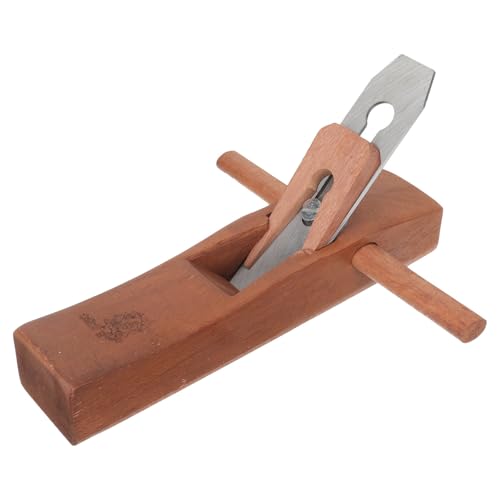
Every classic bench plane is built the same way: a flat sole, a bedded iron (blade) held at a fixed angle, a frog that supports the iron, and an adjustable mouth that controls how thick a shaving it takes. What changes between models is length and width, and that’s what the number refers to. Stanley’s original numbering (still used by WoodRiver, Lie-Nielsen, and most import brands) runs like this:
- No. 1-2 (5.5″-7″): Novelty-sized, rarely used for real work today.
- No. 3-4 (9″-10″): Smoothing planes. Short soles that can follow slightly uneven wood and leave a glass-smooth final surface.
- No. 5-5½ (14″-15″): Jack planes. The “jack of all trades” size, long enough to start flattening a board, short enough to still be maneuverable.
- No. 6 (18″): Fore plane. A middle ground between a jack and a jointer, not common in modern kits.
- No. 7-8 (22″-24″): Jointer planes. Long enough to ride over high spots and produce a truly straight edge, which matters most when you’re gluing two boards together.
So “bench plane” is the category name for all five sizes above. Asking “bench plane vs jack plane” is a bit like asking “car vs sedan” — a jack plane already is a bench plane, the same way a sedan is already a car.
Jack Plane vs. Smoothing Plane (No. 4) — The Comparison People Usually Mean
Most people who type “bench plane vs jack plane” are really trying to decide between a No. 5 jack plane and a No. 4 smoothing plane, since those are the two sizes sold as “starter” planes. Here’s how they actually differ in use:
| Task | No. 5 Jack Plane | No. 4 Smoothing Plane |
|---|---|---|
| First pass on rough-sawn lumber | Best choice — long enough to knock down high spots fast | Too short, follows the wood’s existing bumps |
| Final finishing pass before a stain or finish | Usable, but leaves a slightly less perfect surface | Best choice — tighter mouth, finer shavings |
| Blade camber (curve) | Often set with a slight curve to hog off material fast | Set nearly straight for an even, tear-out-free surface |
| Weight and length | 14″-15″ long, 4-5 lb | 9″-10″ long, 3.5-4 lb |
In practice, a jack plane with its blade set for a lighter cut can do a passable job of both roles, which is exactly why it’s the size most woodworking teachers recommend buying first — not because it’s a totally separate category from a bench plane, but because it’s the most flexible size within the bench plane family.
Jack Plane vs. Jointer Plane (No. 7/8) — When Length Actually Matters
The other comparison worth knowing is jack plane vs. jointer plane, because this one has a hard physical limit instead of just a preference. A jointer’s whole job is to ride across the high spots of a board and ignore the low spots, which only works if the sole is longer than the dips in the wood. A 22″-24″ jointer can bridge gaps that a 14″ jack plane will just dip into and follow. If you’re gluing up a tabletop from separate boards and need the mating edges dead straight, a jack plane alone won’t get you there reliably on anything longer than about two feet — you either need a jointer plane or a powered jointer.
If You’re Buying Your First Hand Plane, Buy a Jack Plane
If the real question behind “bench plane vs jack plane” is “which one should I buy first,” the practical answer is the jack plane (No. 5). Here’s why it beats starting with a smoothing plane or jointer:
- It’s long enough to flatten small-to-medium boards on its own, which a No. 4 can’t do well.
- It’s short enough to still be comfortable one-handed on smaller work, unlike a No. 7 jointer.
- With the blade sharpened straight and the mouth tightened down, it can stand in for a smoothing plane on most projects until you can justify a second plane.
- Every major plane maker sells a No. 5 as their standard “starter” model, so parts, replacement blades, and tuning guides are the easiest to find.
Setting Up a New Jack Plane
New planes, even good ones, rarely cut well straight out of the box. Before first use: flatten the sole on 220-grit sandpaper stuck to a known-flat surface (a jointer bed or thick glass) if it rocks on a straightedge, hone the iron on progressively finer stones or a honing guide until it shaves arm hair cleanly, and set the chip breaker roughly 1/16″ back from the cutting edge for general work — closer for fine smoothing, farther back for hogging off material. Wipe the sole with paste wax between uses; bare cast iron rusts fast in a humid shop.
Frequently Asked Questions
Is a Jack Plane the Same as a Bench Plane?
A jack plane is a specific size of bench plane (No. 5), not a separate category. “Bench plane” refers to the whole family of flat-soled planes — smoothing (No. 3-4), jack (No. 5-5½), fore (No. 6), and jointer (No. 7-8) — and a jack plane is one member of that family.
What’s the Difference Between a Jack Plane and a Smoothing Plane?
A jack plane (No. 5, 14″-15″ long) is used for the first flattening pass on rough lumber and can be set up for either rough or moderately fine work. A smoothing plane (No. 4, 9″-10″ long) is used for the final finishing pass, with a tighter mouth and straighter blade edge for a glass-smooth surface.
What’s the Difference Between a Jack Plane and a Jointer Plane?
A jointer plane (No. 7-8, 22″-24″ long) is long enough to bridge high and low spots and produce a truly straight edge for glue joints. A jack plane (14″-15″ long) is too short to do this reliably on boards longer than about two feet.
Which Plane Should a Beginner Buy First?
A No. 5 jack plane is the standard first recommendation because it’s versatile enough to rough-flatten boards and, with the blade tuned for a finer cut, do a passable job smoothing too — making it a reasonable one-plane starting point before adding a dedicated smoothing or jointer plane.
Sponsored / affiliate links. As an Amazon Associate I earn from qualifying purchases. I may earn additional commission from eligible campaigns.