Dust Collector for Home Shop: How to Choose the Right One
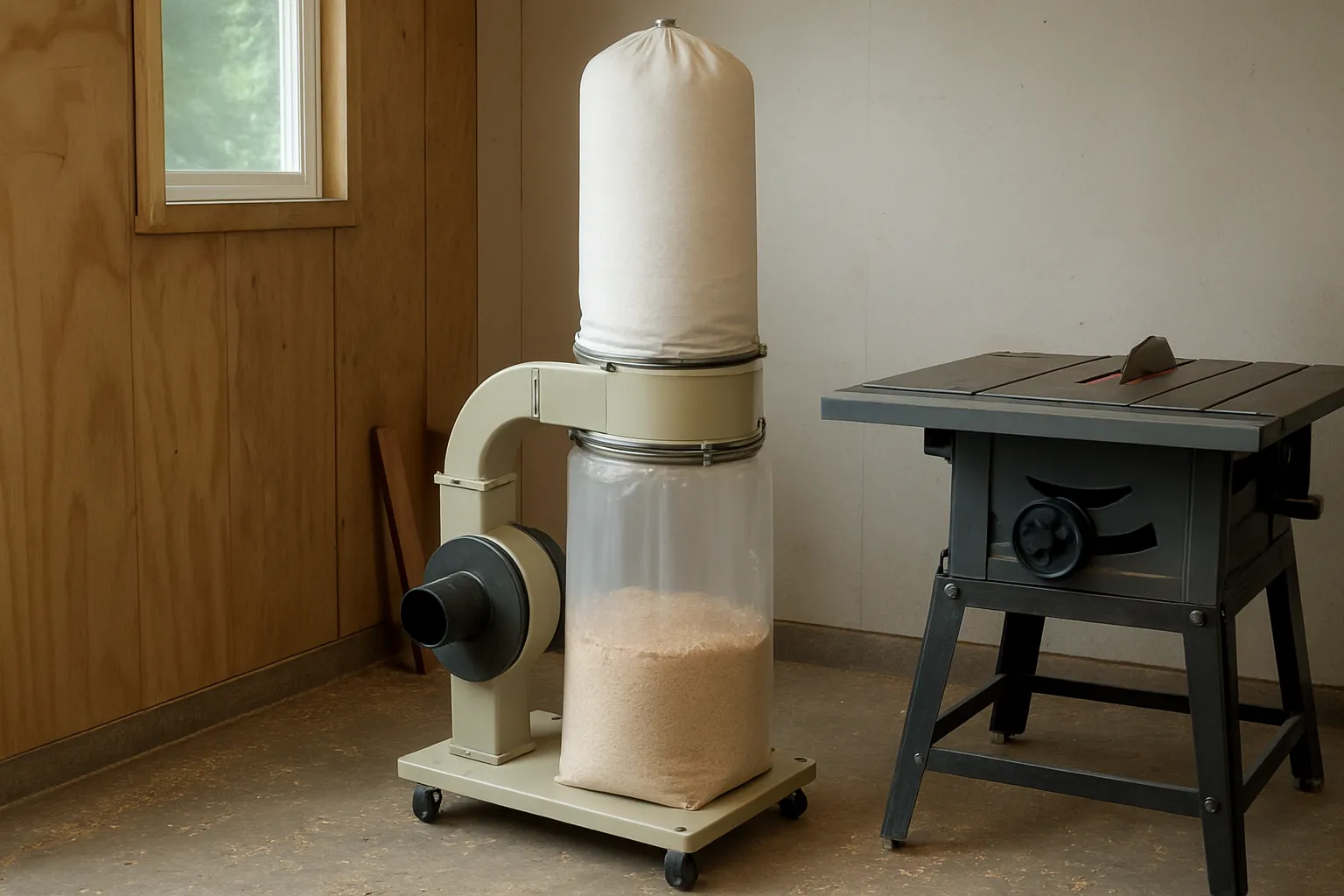
A dust collector for home shop use should move at least 350–450 CFM for a single benchtop tool, or 600–800 CFM if you’re running a table saw, planer, or jointer. A single-stage bag unit costs less and works fine for one hobbyist tool at a time; a cyclone (two-stage) unit costs more but keeps the filter clean and captures fine dust far longer between cleanings. Below, you’ll size one for your actual tools, compare the two designs, and see three real units at three real price points.
Quick Answer
For a home garage shop with one or two stationary tools, a 1–1.5 HP single-stage dust collector rated 650–1,100 CFM (real-world 400–700 CFM after hose losses) handles a table saw, planer, or bandsaw run one at a time. Add a cyclone pre-separator or step up to a 2-stage unit once you’re running three or more dust-heavy tools from one system.
What Is a Dust Collector and How Is It Different From a Shop Vac?
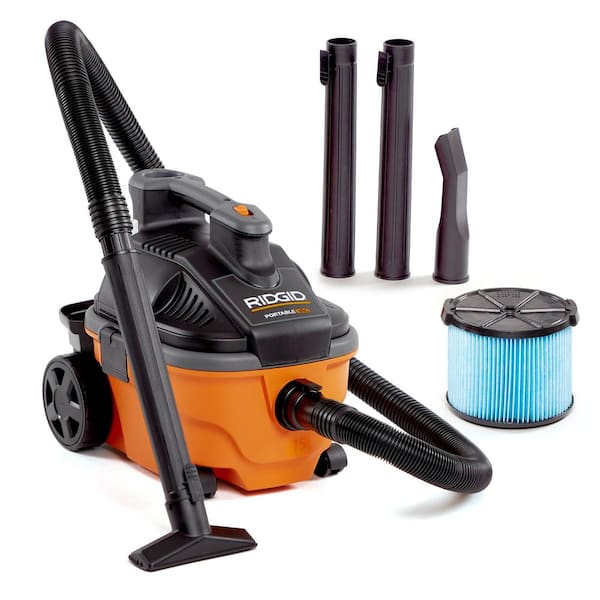
A dust collector is a high-airflow, low-suction machine built to pull large volumes of chips and dust away from stationary woodworking tools through wide 4–6 inch ports. A shop vac does the opposite: high suction, low airflow, sized for small hose diameters and handheld tools.
For the full picture on shop vacs specifically — CFM, tank size, and HEPA filtration — see our shop vacuum guide.
That distinction decides which one you actually need. A table saw or planer throws a high volume of light chips and fine dust that a shop vac’s narrow 1½-inch hose chokes on almost immediately — a 16-gallon shop vac tank can fill from a few minutes of planing. A dust collector’s 4-inch port and bag or cyclone bin are built for that volume.
A shop vac still earns its place in the same shop: it’s the right tool for a router table, sander, miter saw station, or general floor cleanup, where suction at a small port matters more than airflow volume. Most home shops end up running both — a dust collector on the big stationary tools, a shop vac on handheld and benchtop tools.
Single-Stage or Cyclone: Which Dust Collector Fits a Home Shop?
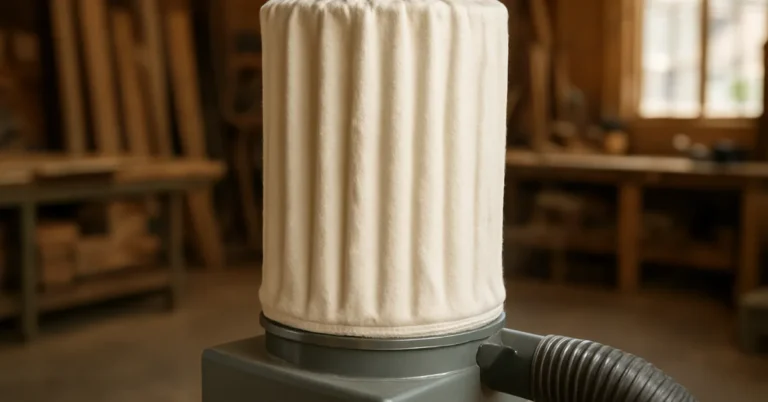
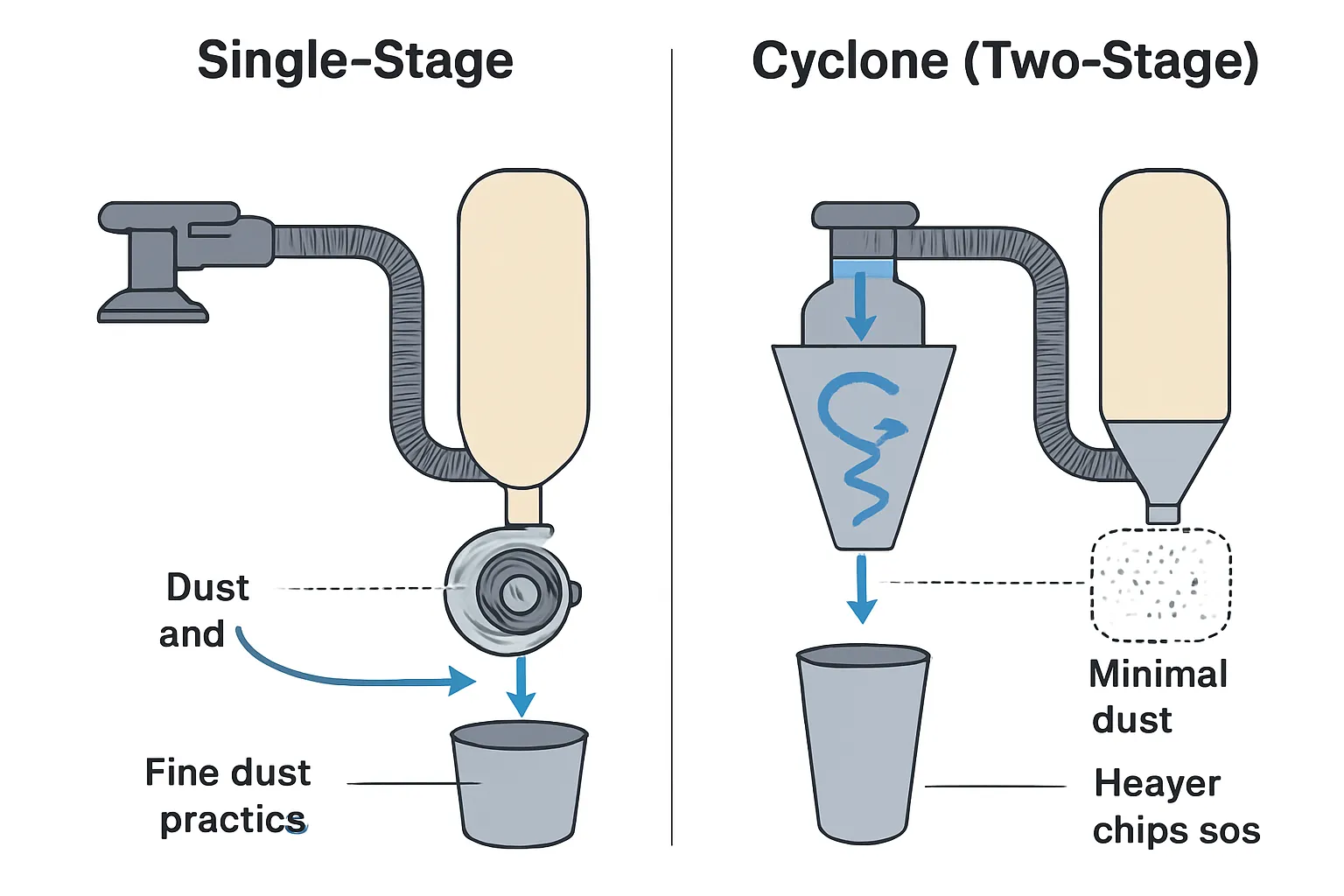
A single-stage collector pulls dust straight through the impeller into a filter bag, which is cheaper but lets fine dust clog the filter and cut suction over time. A cyclone (two-stage) collector spins heavy chips into a bin before the air ever reaches the filter, so the filter stays clean far longer.
| Factor | Single-Stage | Cyclone (Two-Stage) |
|---|---|---|
| How it works | Dust and chips pass through the impeller directly into a bag | A cone separates heavy chips into a bin first; only fine air reaches the impeller |
| Filter life | Clogs faster; suction drops as the bag fills with fine dust | Filter stays clean for weeks to months of regular use |
| Footprint | Small, often on a rolling base — 2–3 sq ft | Wall-mount units run about 3.5 sq ft of floor space |
| Spark risk | Metal debris can strike the steel impeller directly | Heavy debris is separated out before reaching the impeller |
| Typical price | $120–$250 | $280–$900+ |
For an occasional hobbyist running one machine at a time, a single-stage unit is the practical choice — it’s the only real advantage bag collectors have, but it’s a genuine one at this budget. Once you’re cutting several hours a week across multiple dust-heavy tools, the cyclone’s clean-filter advantage stops being a luxury and starts saving real cleaning time.
How Many CFM Does a Dust Collector for a Home Shop Need?
Most home-shop tools need 350–800 CFM at the tool’s port to clear chips and fine dust effectively. A benchtop sander or bandsaw needs the low end of that range; a full-size table saw, benchtop planer, or jointer needs the high end.
| Tool | Port Size | CFM Needed |
|---|---|---|
| Bandsaw / benchtop sander | 2.5″–4″ | 350–450 CFM |
| Table saw | 4″ | 350–600 CFM |
| Benchtop planer | 4″ | 400–500 CFM |
| Jointer | 4″ | 350–400 CFM |
| Multi-tool ducted system (2–3 tools) | Mixed, 4″–6″ main trunk | 800–1,200 CFM |
The number on the box is not the number you get at the tool. According to Woodcraft’s tested dust collection data, a collector rated at 650 CFM measured closer to 420 CFM once run through 6 feet of standard flexible hose — a real-world drop of roughly 35%. Every foot of flex hose, every 90-degree elbow, and every reduction in duct diameter costs airflow, so buy for the CFM you need at the tool, not the number printed on the collector.
A Simple Home Shop Sizing Path
Answer three questions and you’ll land on the right tier without a spreadsheet: how many dust-heavy tools do you own, what’s the largest port among them, and how much floor space can you give up.
- One tool, run occasionally (a bandsaw or benchtop planer used a few times a month) → a 1 HP single-stage unit rated 600–750 CFM, portable on a mobile base.
- Two to three tools, run individually with blast gates (table saw + planer + jointer in a one-car garage) → a 1.5–2 HP single-stage or entry cyclone rated 1,000–1,200 CFM, wall-mounted to save floor space.
- Three-plus tools or regular multi-hour sessions → a dedicated cyclone rated 1,200+ CFM with 6-inch main ducting, sized by a static-pressure calculation rather than CFM alone.
This maps directly to real garage constraints: a one-car garage shop running a single benchtop tool rarely needs more than the first tier, while a two-car garage set up as a permanent shop with ducted tools usually justifies the second or third.
Portable or Stationary: Which Works Better in a Home Garage Shop?
A portable dust collector on a mobile base works best when only one tool runs at a time and floor space doubles as parking or storage. A stationary, wall-mounted or ducted system works best once two or more tools are permanently positioned and you don’t want to roll a collector between them.
Portable single-stage units roll on 3-inch or 4-inch casters and connect directly to whichever tool is in use with a short length of flex hose — the practical setup for a one-car garage that still parks a car overnight. A wall-mounted cyclone frees that same floor space entirely; most wall-mount cyclone units occupy roughly 3.5 square feet of wall-mounted footprint and run fixed ducting to each tool with blast gates controlling airflow to whichever one is active.
The tradeoff is setup time: portable means dragging a hose across the floor for every cut, ducted means an afternoon of running PVC or metal pipe once and never touching it again. For a shop used a few hours a week, portable wins on simplicity. For a shop used most weekends, ducted wins on convenience.
How Much Does a Dust Collector for Home Shop Cost?
A budget single-stage dust collector for a home shop runs $120–$180, a mid-range single-stage unit with a larger motor and bag runs $175–$260, and a cyclone or two-stage unit runs $280–$900 depending on CFM and build quality.
The cheapest real path into dust collection is a $20–$40 cyclone lid that converts a standard shop vac and a 5-gallon bucket into a basic two-stage separator — it keeps chips out of the shop vac filter but doesn’t have the CFM for a table saw or planer; treat it as a stopgap for a single small tool, not a shop-wide solution.
Three Real Dust Collectors at Three Price Points
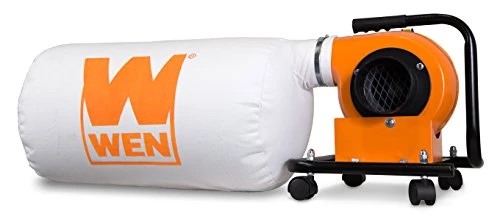
Budget Pick
660 CFM, 5.7-amp motor, 12-gallon bag, 4-inch inlet, mobile base — the entry point for a single occasional tool.
$126
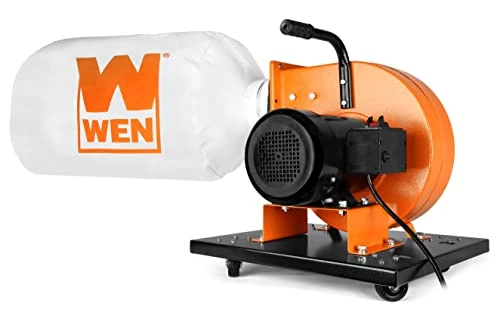
Best for 2–3 Tools
600 CFM, 7.4-amp induction motor, 9-inch impeller, 15-gallon bag, 5-micron filtration — more bag capacity for longer sessions.
$175
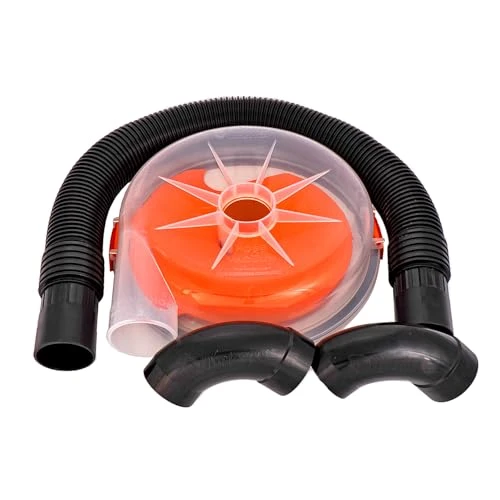
Best Cyclone Value
1,100 CFM, 1.5 HP, 2.5-micron filtration, 35-gallon + 42-gallon dual bags — cyclone separation without the full cyclone price.
$301
As an Amazon Associate, this site earns from qualifying purchases. Prices and availability current as of publish date.
What Micron Filter Rating Actually Matters for Your Health?
The stock bag on most budget dust collectors filters to only 30–50 microns, which catches visible chips but lets the finest, most harmful dust pass straight through into shop air. Particles under 10 microns are small enough to reach deep into the lungs, and OSHA identifies wood dust exposure as a respiratory hazard at these smaller particle sizes.
For the full breakdown of micron ratings, upper-vs-lower bag sizing, and when to replace a bag, see our dust collector bags guide.
A one-micron felt filter bag or a pleated cartridge filter is the upgrade that actually closes this gap, and it’s a $30–$80 swap on most single-stage collectors rather than a new machine. Cyclone systems have an advantage here too: because the cone removes most of the coarse material before it reaches the filter, the fine-particle filter clogs more slowly and stays effective longer between cleanings.
A dust collector alone does not solve airborne fine dust that never gets captured at the source — a separate ambient air cleaner running during and after a cutting session is what removes what’s already floating in the shop air. Treat the collector as source capture and the air cleaner as the cleanup pass for whatever escapes it; running both is the honest answer for anyone with real dust sensitivity, not a substitute for either one alone.
How Do You Set Up Ducting Without Losing CFM?
Smooth-wall metal duct moves air with the least resistance, flexible hose loses the most CFM per foot, and PVC pipe works but can build up static charge that needs grounding wire to avoid a shock or spark risk. If you need to trim or reroute a section that’s already glued in place, our guide to reciprocating saw blades for PVC covers the TPI and blade type that avoids melting the cut.
Keep flex hose runs as short as possible — a few feet connecting the tool to a fixed duct line, not the whole run to the collector. Every 90-degree elbow costs roughly the same airflow as several feet of straight pipe, so favor two 45-degree bends over one sharp 90 wherever the layout allows it. Blast gates at each tool let one machine pull full airflow at a time instead of splitting it across every open port in the system.
If you’re mounting a dust collector next to other stationary equipment, our guide to choosing woodworking tools and saws covers how port sizes and dust needs vary across table saws, planers, and jointers, and is worth checking before you finalize duct sizing.
Frequently Asked Questions
Can I use a shop vac instead of a dust collector?
Only for handheld tools, a router table, or cleanup — a shop vac’s narrow hose and low airflow can’t clear the chip volume a table saw, planer, or jointer produces, and its filter will clog within minutes of heavy use.
Do I need a dust collector for a small home garage shop?
Yes, if you own any stationary tool with a 4-inch or larger dust port — a table saw, planer, jointer, or bandsaw. A portable 1 HP single-stage unit on a mobile base fits a one-car garage without giving up permanent floor space.
What size dust collector do I need for a table saw?
A table saw needs 350–600 CFM at its 4-inch port. A 1 HP single-stage collector rated 650–750 CFM covers this after accounting for hose losses, as long as the hose run stays under 10 feet. Pairing that collector with a properly sealed hood matters as much as the CFM number itself — see our guide to table saw dust collection setups for hood types and sealing tips.
Is a cyclone dust collector worth the extra cost for a hobbyist?
Yes, once you’re running three or more dust-heavy tools or cutting several hours a week — the clean-filter advantage saves real maintenance time. For one tool used occasionally, a single-stage unit delivers the same dust capture at roughly half the price.
How often should I clean or replace a dust collector filter?
A single-stage bag filter needs shaking out or tapping clean every few sessions and full replacement roughly once a year with regular use. A cyclone’s filter, protected from most coarse debris, typically goes months between cleanings under the same use pattern.
Once your collector is sized and running, the next real question is what to do with everything it collects — see our guide on what to do with wood dust for disposal, reuse, and composting options instead of bagging it for the trash every week.
Sponsored / affiliate links. As an Amazon Associate I earn from qualifying purchases. I may earn additional commission from eligible campaigns.