Chinese Chainsaw Parts: 8 Kits Compared by Fit & Cost (2026)
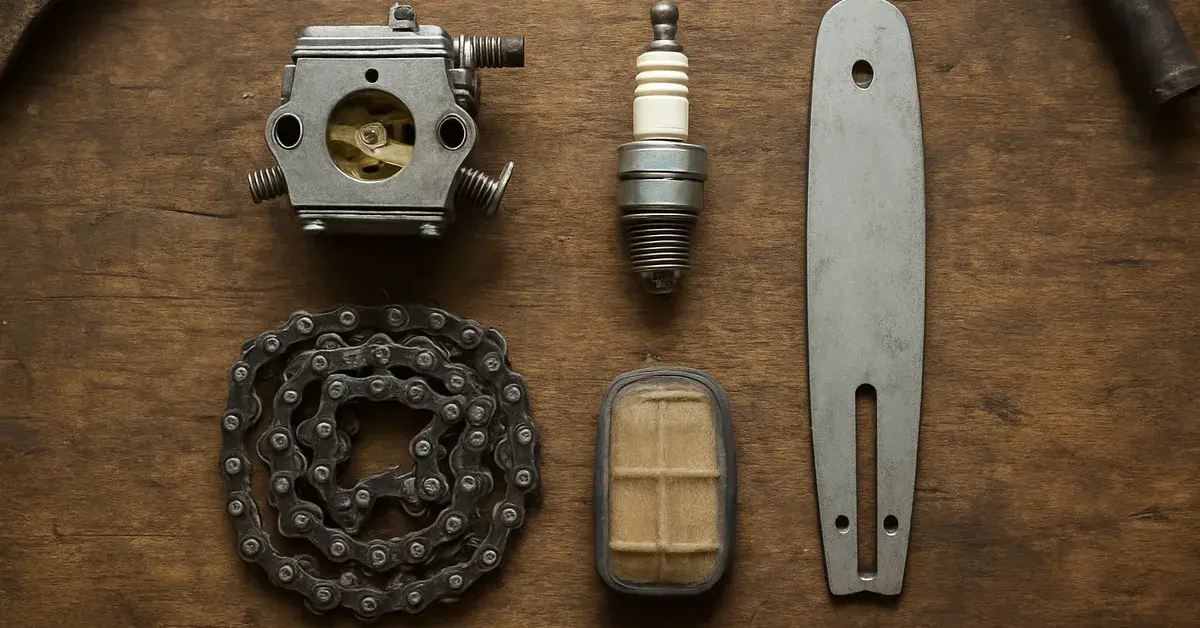
The best Chinese chainsaw part to buy first is a combined carburetor-and-spark-plug kit — it fixes the two most common no-start causes on 45cc/52cc/58cc “4500/5200/5800” saws for $12.09, barely more than a bare carburetor alone. Below, 8 real parts are compared by what’s actually in the box, claimed fitment, and real cost per individual part.
Every generic-fit chainsaw part on Amazon claims to work on “4500, 5200, 5800, 45cc, 52cc, 58cc” — but that string covers dozens of unrelated storefront brands built around the same handful of factory engine and bar-mount designs. The table below normalizes all 8 picks to cost per individual replacement part (not per package) and lists exactly what each listing itself claims will fit, pulled directly from the live product page this session, not from marketing copy elsewhere.
| Part | What’s Actually in the Box | Claimed Fitment (Seller’s Own Wording) | Price | Cost Per Part |
|---|---|---|---|---|
| Carb + Spark Plug Combo | 1 carburetor + 1 spark plug (2 parts) | Chinese 4500/5200/5800, 45cc/52cc/58cc | $12.09 | $6.05/part |
| Bare Metal Carburetor | 1 carburetor (1 part) | Chinese 4500/5200/5800, 45cc/52cc/58cc | $11.42 | $11.42/part |
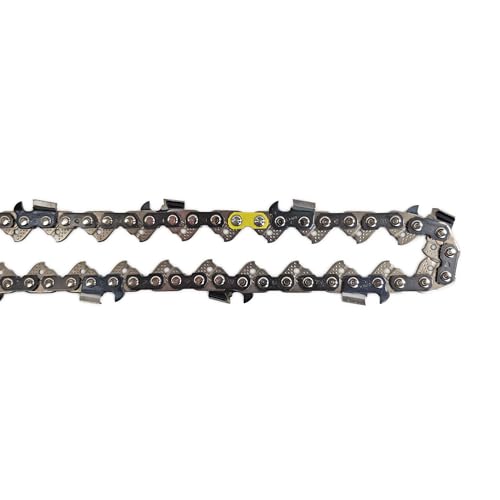
| V-MODEST Chain 3-Pack | 3 identical chains, 3/8″ pitch, .050″ gauge, 72 drive links | Husqvarna 455/460 Rancher, 55/51 Rancher — spec-matched, not saw-model-matched | $29.69 | $9.90/chain |
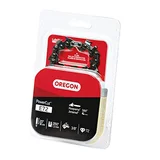
| Oregon 72DL Chain | 1 chain, 3/8″ pitch, .050″ gauge, 72 drive links | Husqvarna 365/395XP/455/460/51/55/562XP/572XP/61, Poulan PP5020AV, Stihl MS290/MS311/MS391 (by Oregon/Stihl part-number cross-reference) | $26.44 | $26.44/chain |
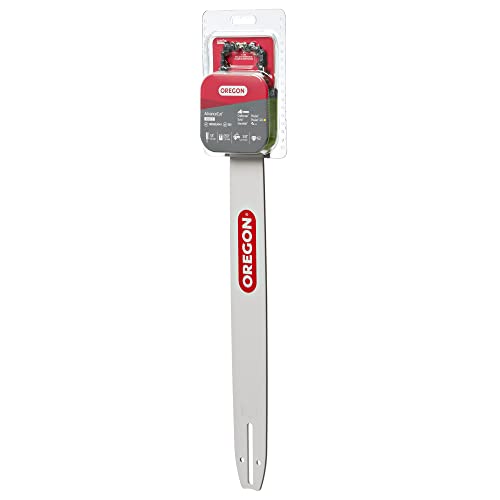
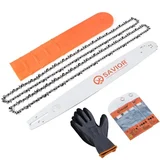
| Savior Bar + 2-Chain Bundle | 1 bar (K095 tail mount) + 2 chains + 1 pair gloves (not cut-resistant, per listing) + 1 bar cover — 5 heterogeneous items | Husqvarna 254/257/261/262/357XP/359/360/362XP, Poulan PP5020AV/PR5020, Craftsman 358.35098, Jonsered 2051, Makita DCS430/431 (via Oregon 200SFHK095 cross-reference) | $49.99 | Not a single unit — see note below |
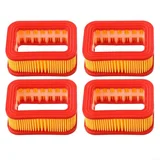
| 4-Piece Air Filter Kit | 4 identical air filters (4 parts) | 4500/5200/5800, 45cc/52cc/58cc | $6.59 | $1.65/filter |
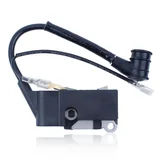
| Ignition Coil Module | 1 ignition coil (1 part) | “Chinese Brands CS4500, CS5200” (seller’s own model naming) | $9.98 | $9.98/part |
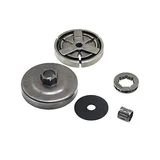
| QHALEN Clutch Drum Kit | 1 clutch + 1 drum + 1 sprocket rim + 1 needle bearing + 1 washer (5 parts) | Tarus/Taurus, Timbertech, Silverline, Kiam, Sherwood, Raptor, Trueshopping, Sanli, Plantiflex — 9 storefront brand names on one listing | $18.99 | $3.80/part |
On the bundle row: the Savior bar-and-chain package mixes a bar, two chains, gloves and a bar cover under one price, so a single “cost per unit” figure would misrepresent it — it’s priced here as a complete replacement job, not a per-part rate. On fitment claims generally: every “4500/5200/5800” claim above is the seller’s own generic-fit wording, not a verified OEM part number match — see “What to Consider” below for how to confirm a part actually fits your saw before you order it.
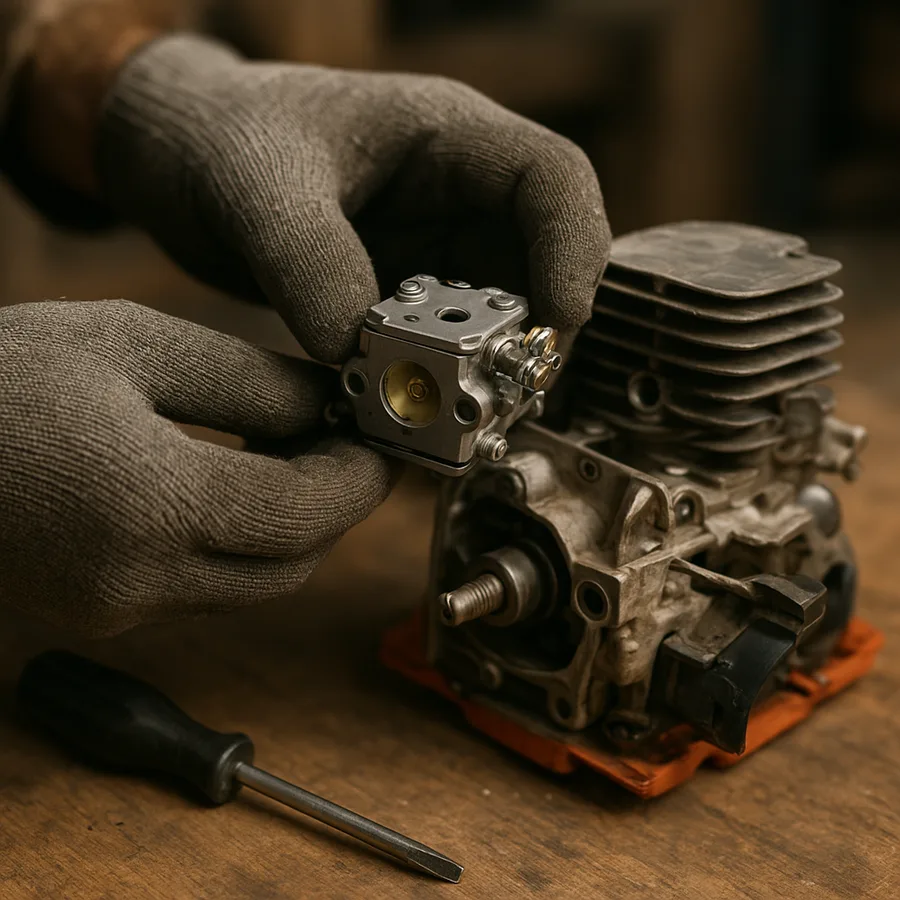
Best Chinese Chainsaw Parts
1. PHUOC LOC THO Carburetor + Spark Plug Combo — #1 Best Overall
Price: $12.09 — See current price on Amazon →
- 2 parts in one order: carburetor assembly + spark plug
- Stated fit: Chinese 4500/5200/5800, 45cc/52cc/58cc engines
- Metal carburetor body (not the all-plastic type some competitors ship)
- Price: $12.09 — $0.67 more than the bare carburetor below
This is the pick to order first if your saw won’t start and you don’t already know which of the two usual suspects — a gummed-up carburetor or a fouled spark plug — is the actual cause. Buying them separately from two different generic listings would run $11-15 anyway once you account for the cheapest standalone options, so paying $0.67 over the bare carburetor’s price to also get a new plug is close to a strict upgrade.
The catch is the same one that applies to every part in this table: the listing claims fit by engine displacement and model number, not by a verifiable OEM part number. Pull your old carburetor and compare the fuel-line fitting positions and mounting-bolt spacing before you install this one.
Pros:
- Covers the two most common no-start causes in one order
- Cheapest way to rule out both carb and plug at once
- Metal carb body, not plastic
Cons:
- Generic-fit only — no OEM part number to cross-check against
- Spark plug gap isn’t stated; check it with a gauge before installing
2. Bare Metal Carburetor (For 4500/5200/5800) — Best Value Carburetor
Price: $11.42 — See current price on Amazon →
- 1 part: carburetor only
- Stated fit: Chinese 4500/5200/5800, 45cc/52cc/58cc
- Metal carburetor body, confirmed from the listing’s own product photo
- Price: $11.42
Skip this one only if you already know your spark plug is fine — a bench spark test or a plug that still looks clean and dry after the last failed start is enough to rule it out. Otherwise, the carb-and-plug combo above costs $0.67 more and removes the guesswork.
Worth flagging: while researching this table, one similarly-titled “carburetor kit” listing was found whose actual product photo showed primer bulbs, not a carburetor — a real example of why this dataset only uses listings whose own images were checked against their own titles before being included, and a reminder to look at the actual photo on any listing yourself before ordering.
Metal-bodied carburetors like this one generally hold their tune better over the long run than the all-plastic diaphragm-cover carburetors also sold in this category — if a listing’s own photo shows an all-plastic body, weigh that against the price difference before choosing it over this one.
Pros:
- Cheapest standalone carburetor in this table that’s confirmed to be an actual metal carb (not a mismatched product photo)
- Simple, single-part order if your spark plug already tests good
Cons:
- No spark plug included — order one separately if you’re not sure it’s good
- Same generic-fit caveat as every part here
3. V-MODEST 20-Inch Chain, 3-Pack — Best Chainsaw Chain for the Price
Price: $29.69 (3-pack) — See current price on Amazon →
- 3 identical chains per pack — $9.90 per chain, the cheapest per-chain price in this table
- 3/8″ pitch, .050″ (1.3mm) gauge, 72 drive links, for a 20-inch bar
- Full chisel cutters, chrome-plated per the listing
- Price: $29.69 for 3
Chains are the one part in this table where compatibility is genuinely simple to verify: match the pitch (3/8″ or .325″ — these are not interchangeable), the gauge (.050″ here), and the drive-link count (72) against your old chain, and any chain with those three numbers will fit your bar regardless of what saw brand the listing name-drops.
At $9.90 a chain, buying the 3-pack instead of a single chain means you’re covered for the next two sharpenings-past-replacement without a second order, which matters if your saw sees regular use.
Pros:
- Cheapest cost-per-chain of anything tested here
- Spare chains on hand means no downtime waiting on a reorder
- Fits any saw with the matching pitch/gauge/link count, not just one brand
Cons:
- Chain compatibility is spec-based, not saw-model-based — measure your old chain first
- No brand-name reputation behind the steel or the sharpening tolerances
4. Oregon 72-Drive-Link Saw Chain — Best Name-Brand Chain Alternative
Price: $26.44 — See current price on Amazon →
- 1 chain, 3/8″ pitch, .050″ gauge, 72 drive links
- Cross-referenced by Oregon to real OEM part numbers (Stihl 33RS3-72E, Husqvarna H46-72/H47-72 and others)
- Oregon has manufactured saw chain since 1947
- Price: $26.44 — 2.7x the generic per-chain cost above
If the goal is ruling out chain quality as a variable entirely — rather than saving the most money — this is the pick. Oregon publishes actual OEM cross-reference part numbers instead of a generic “fits 4500/5200/5800” claim, which is a meaningfully different (and more checkable) kind of fitment evidence than anything else in this table.
It costs 2.7x more per chain than the generic 3-pack. For a saw that only comes out a few times a year, that premium is easy to justify; for a saw in daily use where chains get replaced often, the generic 3-pack’s per-chain cost adds up to real savings faster.
Pros:
- The only chain pick here with a documented OEM part-number cross-reference instead of a generic-fit claim
- Established chain manufacturer, not an unbranded storefront listing
Cons:
- 2.7x the per-chain price of the generic 3-pack
- Still needs the same pitch/gauge/link-count check before ordering
5. Savior 20-Inch Bar + 2-Chain Bundle — Best Bar-and-Chain Bundle
Price: $49.99 — See current price on Amazon →
- 5 items in one box: 1 bar, 2 chains, 1 pair gloves, 1 bar cover
- Bar tail mount: K095 — cross-referenced to Oregon part number 200SFHK095
- 3/8″ pitch, .050″ gauge, 72 drive links (matches the chain picks above)
- Price: $49.99 for the full bundle
A chainsaw bar’s tail-mount pattern (the slot-and-hole layout where the bar bolts to the saw) is the one fitment detail on this entire list that genuinely can’t be eyeballed from a photo — it has to match a code like K095 exactly. This listing states its mount code plainly and backs it with an Oregon part number, which is more verifiable than most bar listings in this category.
One honest flag: the included gloves are marked “not anti-cut” directly in the seller’s own bullet copy. Treat them as work gloves for handling a bar and chain, not as chainsaw safety PPE.
Pros:
- Replaces a worn bar and both chains in a single order
- K095 is a real, checkable Oregon part-number cross-reference, not just a generic claim
- Includes a bar cover for storage/transport
Cons:
- Gloves are explicitly not cut-resistant per the listing’s own wording — don’t treat them as PPE
- Bar mount patterns vary; K095 must match your saw specifically, not just the displacement
6. 4-Piece Air Filter Kit — Best Air Filter Kit
Price: $6.59 (4-pack) — See current price on Amazon →
- 4 identical air filters — $1.65 per filter, the lowest per-part cost in this entire table
- Plastic-and-paper construction per the listing
- Stated fit: 4500/5200/5800, 45cc/52cc/58cc
- Price: $6.59 for 4
At $1.65 a filter, this is the one part on this list where getting the fitment wrong barely matters financially — even a full miss is a $6.59 mistake, not a $30-50 one. That makes it a reasonable low-risk way to test whether a given seller’s generic-fit claims for your specific saw hold up before trusting the same seller for a pricier part.
A clean air filter matters more on these saws than on many: a clogged paper element runs the fuel mixture rich, which is a common misdiagnosed “bad carburetor” symptom. Swapping a $1.65 filter before spending $11-24 on a new carburetor is worth trying first if your saw runs rough or won’t idle cleanly.
Pros:
- Lowest cost-per-part of anything in this dataset
- Four filters on hand means a full season of swaps without reordering
- Cheap enough that fitment uncertainty is a low-stakes bet
Cons:
- Paper-element filters degrade with fuel/oil exposure faster than foam alternatives on some saws
- Still a generic-fit claim, not an OEM match
7. Ignition Coil Module Magneto — Best Ignition Coil Module
Price: $9.98 — See current price on Amazon →
- 1 part: ignition coil module with attached spark plug boot
- Seller’s own naming: “Chinese Brands CS4500, CS5200”
- Price: $9.98
Don’t order this first. A no-start saw shows the exact same symptom whether the real problem is the ignition coil, a fouled spark plug, or a flooded carburetor — and the coil is the least likely of the three. Pull the plug, check it isn’t fouled or wet with fuel, and confirm you’re getting a visible spark before spending $9.98 here.
If spark is confirmed absent, this is a straightforward swap: two mounting screws and one connector on most of these saws, plus setting the coil-to-flywheel air gap with a feeler gauge or a folded business card as a spacer — the listing doesn’t publish a gap spec, so check your saw’s own manual or the old coil’s setting before locking it down.
Pros:
- Cheapest single-part fix for a confirmed no-spark condition
- Wiring and boot come pre-attached
Cons:
- Only worth ordering after you’ve actually tested for no spark — a fouled plug or flooded carb causes the identical symptom
- No published air-gap spec to verify before installing
8. QHALEN Clutch Drum, Sprocket & Bearing Kit — Best Clutch Drum & Sprocket Kit
Price: $18.99 — See current price on Amazon →
- 5 parts in one kit: clutch, drum, sprocket rim, needle bearing, washer
- .325-7 pitch/tooth spec stated directly on the listing
- Cross-referenced to 9 separate storefront brand names on the seller’s own compatibility list
- Price: $18.99 — $3.80 per individual part
This listing’s own compatibility line reads: “For Chinese Chainsaws 5200, 4500, 5800… Tarus (Taurus), Timbertech, Silverline, Kiam Sherwood, Raptor, Trueshopping, Sanli, Plantiflex…” — nine different storefront brand names on one part listing. That’s about as direct a piece of evidence as exists that these saws are one factory engine and drivetrain design, rebadged and resold under a rotating set of names rather than built by nine separate manufacturers.
Note the pitch: this drivetrain kit is specified at .325-7, while the chain picks above are 3/8” pitch. Confirm which pitch your actual saw runs (stamped on the bar, or count the chain’s drive-link spacing) before assuming any chain in this article fits your particular saw.
Pros:
- Most parts-per-dollar of any kit in this table (5 pieces for $18.99)
- The clutch, drum, sprocket and bearing wear as a set, so replacing them together avoids a repeat teardown
- Seller’s own compatibility list is the clearest evidence of shared factory tooling in this whole category
Cons:
- Chain pitch here is .325”, not the 3/8” used by the chain picks above — don’t mix them up on the same saw
- Needle bearings in budget kits are a common early-wear point; no published bearing-grade spec
How We Picked These
This is a Tier C, spec-and-listing-comparison roundup — nobody on this site has physically bought and installed these specific ASINs. Every price, part count and fitment claim in the table above was pulled live from the Amazon Creators API this session and cross-checked against the listing’s own product photo (one carburetor listing was dropped from consideration after its photo turned out to show primer bulbs, not a carburetor). Chain and bar specs (pitch, gauge, drive-link count, mount code) were read directly off each listing’s own stated numbers, not estimated.
Two things this article deliberately does not do: it does not fabricate a star rating or review count — Amazon’s Creators API returned no review data for any ASIN checked this session, so none is shown — and it does not claim any of these parts were bench-tested on a running saw. If you’ve installed one of these specific parts and it either fit perfectly or didn’t, that real-world data point is more valuable than anything in this article; treat the fitment claims here as a starting point to verify, not a guarantee.
Picks were also chosen to span the real axis of choice in this category, rather than eight near-duplicate carburetor listings: fuel/ignition system (carburetor, spark plug, ignition coil), cutting system (chain, bar), air intake (filter), and drivetrain (clutch, drum, sprocket, bearing). A ninth candidate — a second bare carburetor from a different seller — was deliberately left out once the combo kit and the confirmed metal carburetor above already covered that price range without adding a third near-identical option.
What to Consider When Buying Chinese Chainsaw Parts
Engine Displacement (45cc vs. 52cc vs. 58cc)
The “4500/5200/5800” naming maps to engine displacement, not a single fixed model: 4500 = 45cc, 5200 = 52cc, 5800 = 58cc. Carburetors, air filters and ignition coils are usually cross-compatible across all three displacements on these saws because the engine architecture is shared — but confirm the cc stamped on your own cylinder housing before ordering, since a handful of listings do specify one displacement only.
Chain Pitch, Gauge and Drive-Link Count
Three numbers, all of which must match exactly: pitch (3/8” or .325” — not interchangeable on the same bar), gauge (.050”/1.3mm is standard on these saws, but not universal), and drive-link count (72 for a 20-inch bar on this platform). Count your old chain’s links or check the number stamped on the bar itself — don’t rely on bar length alone.
Bar Tail-Mount Pattern
The single hardest fitment detail to verify from a photo. A mount code like K095 describes the bolt-hole-and-slot layout where the bar attaches to the saw body; two bars can be the same length and pitch and still not physically bolt on if the mount pattern differs. When a listing states a specific mount code (as the Savior bundle above does), that’s stronger fitment evidence than a bare model-number claim.
Generic-Fit Claims vs. OEM Part Numbers
Most listings in this category claim fitment by saw model and displacement (“fits 4500 5200 5800”) rather than by a cross-referenced OEM part number. Several sellers say so themselves: one carburetor listing’s own bullet copy reads “please visually inspect the parts in the photo and ensure they align with the provided dimensions”, and the clutch drum kit above tells buyers to “compare it with your original parts before ordering.” Take that instruction seriously — measure your old part before you buy the replacement, not after it arrives.
One Factory Design, Many Storefront Names
The clutch drum kit above lists nine separate brand names — Tarus, Timbertech, Silverline, Kiam, Sherwood, Raptor, Trueshopping, Sanli, Plantiflex — as compatible with a single part. That’s a genuine, sourced pattern in this category, not a one-off: the same core engine and drivetrain design gets sold under a rotating set of storefront brands, which is exactly why parts shop by spec number rather than by brand name in this niche.
Quality-Control Variability
Generic small-engine parts sourced from unbranded overseas factories are a well-documented mixed bag: the same design can ship with tight tolerances in one batch and a poorly-fitted gasket or rough-cast housing in the next, and there’s no reliable way to tell which batch you’re getting from a listing photo. The recurring complaints in this category, reported across owner forums for cheap small-engine carburetors generally (not specific to any one ASIN in this article), cluster around three things: gaskets and seals that degrade or leak sooner than OEM parts, linkage or fuel-line fittings that don’t quite align without minor filing or bending, and mounting bolt patterns that are close but not identical to the original. None of that means every unit is bad — plenty of owners report a cheap carburetor running for years — it means the variance is wide and a listing photo can’t tell you which side of it you’ll land on. Chainsaw Nerds’s own case-study writeup on generic carburetors describes the same “hit or miss” pattern directly — one user’s saw developed an erratic idle and a noticeable power loss after about 6 months of moderate use, while a firewood supplier running the same type of part across several older saws found it cost-effective with no such issues. Its conclusion: acceptable for budget-conscious repairs, not a safe bet for a saw you depend on professionally. Order from a seller with an easy return window, and inspect a part (especially a carburetor’s gasket surfaces and a bar’s mount holes) before installing it.
Return Policy and Seller Responsiveness
Because fitment claims in this category are generic rather than OEM-verified, a straightforward return window matters more here than in most product categories. Prioritize sellers on Amazon (rather than marketplace listings on sites with no buyer-protection program) so a wrong-fitment part can be returned without a fight.
Tools Needed for Installation
Most parts here need only basic hand tools: a T27 Torx or flathead for carburetor mounting screws, a spark plug socket, a scrench (the combination bar-nut/screwdriver tool that ships with most of these saws) for bar and chain work, and a small flat driver for air filter housing clips. No specialty pullers are needed for any part in this table.
Fuel Mix Ratio (Why It Matters for Carburetor Life)
These are two-stroke engines, meaning the carburetor is tuned around a specific gasoline-to-oil mix ratio — commonly somewhere in the 25:1 to 50:1 range on saws this size, though the exact figure varies by engine and is printed on the saw itself or in its manual, not on the carburetor listing. Running the wrong ratio (too lean or too rich) is a common cause of premature carburetor wear and gumming, and it’s worth ruling out as the real problem before assuming a carburetor needs replacing at all.
How to Match Chinese Chainsaw Parts to Your Saw
Since almost every part in this category ships with a generic-fit claim rather than a verified OEM number, checking fit yourself before you order is the single biggest thing you can do to avoid a return.
- Find the displacement stamped on the cylinder. It’s cast or stamped directly on the engine housing near the spark plug — 45cc, 52cc or 58cc — and it’s the number every carburetor, air filter and ignition coil listing keys off of.
- Pull the old part and measure it, don’t guess from memory. For a carburetor, note the fuel-line fitting positions and the mounting-bolt spacing. For a chain, count the drive links and check the pitch/gauge stamped on the bar.
- For a bar, find the tail-mount code. It’s usually stamped near the mounting slot (e.g. K095). If you can’t find it, measure the bolt-hole spacing and slot length directly and compare to the new bar’s stated dimensions.
- Cross-check the listing’s own fitment wording against your saw’s actual brand sticker, not just the generic “4500/5200/5800” family name — some listings name specific storefront brands (Tarus, Timbertech, Silverline and similar) that may or may not include yours.
- Order from a seller with a real return window and don’t remove original packaging until you’ve test-fit the part.
- Inspect before installing. Check a carburetor’s gasket surfaces for flash or rough casting, a chain for consistent rivet spacing, and a bar for straightness by sighting down the groove.
Frequently Asked Questions
What types of Chinese chainsaw parts are compatible with models 4500, 5200 and 5800?
Carburetors, air filters, ignition coils, recoil starters, clutch drums and fuel/oil lines are generally cross-compatible across all three displacements (45cc/52cc/58cc) because the three saws share the same engine architecture. Chains and bars are compatible by spec — pitch, gauge and drive-link count for chains, and mount code for bars — rather than by the 4500/5200/5800 naming at all.
Why do the same chainsaw parts show up under so many different brand names?
Because a small number of factories in this category manufacture the underlying engine and drivetrain design, which then gets sold under dozens of rotating storefront brand names. One clutch drum listing in this article’s own dataset names nine different brands — Tarus, Timbertech, Silverline, Kiam, Sherwood, Raptor, Trueshopping, Sanli and Plantiflex — as compatible with a single part number, which is direct evidence of shared factory tooling rather than nine competing designs.
Are 3/8″ and .325″ chain pitch interchangeable?
No. Pitch determines the spacing the chain’s drive links sit on the bar’s rail and sprocket, and a chain with the wrong pitch will not track correctly even if the drive-link count and gauge otherwise look close. Confirm your saw’s actual pitch (stamped on the bar or original chain packaging) before ordering — the picks in this article include both 3/8” chains and a .325-7 drivetrain kit, and they are not interchangeable with each other.
What is the purpose of a clutch drum with needle bearing on these chainsaws?
The clutch drum houses the sprocket that drives the chain and rides on a needle bearing around the crankshaft stub, letting the engine idle without spinning the chain until the clutch engages at higher RPM. A worn needle bearing is a common cause of a chain that free-spins or drags at idle even when the clutch itself is otherwise fine.
How do I choose the right ignition coil module for my Chinese chainsaw?
Match it by the same displacement/model naming as the rest of the engine (45cc/52cc/58cc, or “CS4500/CS5200” per this article’s ignition coil pick), and only replace it after confirming you actually have no spark — a fouled plug or a flooded carburetor produces the identical no-start symptom and is cheaper to rule out first.
Why is a recoil pull starter important, and is it the same part as the ignition coil?
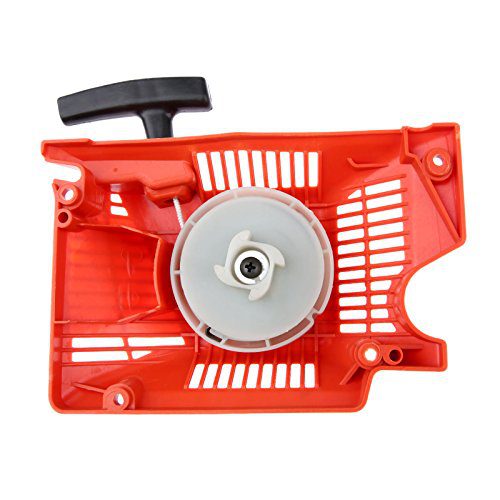
No — they’re unrelated systems. The recoil starter is the purely mechanical spring-and-rope assembly that spins the engine over to start it; the ignition coil is the electrical component that fires the spark plug once the engine is spinning. A broken recoil spring or a torn starter rope will stop the engine from cranking at all, regardless of ignition or fuel system condition.
How reliable are generic Chinese chainsaw parts?
Inconsistent by nature of the category, not by any one listing’s fault: the same unbranded design can ship with tight tolerances in one production batch and a rough casting or poorly seated gasket in the next, and no listing photo can tell you which batch you’ll receive. None of the parts in this article’s dataset carry an independently verified review count — Amazon’s own review data wasn’t available for any ASIN checked this session — so buy from a seller with an easy return window and physically inspect a part before installing it, rather than assuming any single listing’s track record.
Final Thoughts
For most 45cc/52cc/58cc “4500/5200/5800” Chinese chainsaws, start with the carburetor-and-spark-plug combo — it’s the cheapest way to rule out the two most common no-start causes at once for $12.09. The one number worth remembering from this whole dataset: the same clutch drum part ships under nine different storefront brand names, which is the clearest evidence that this entire category runs on a handful of shared factory designs rather than genuine competing manufacturers — buy by spec number, not by brand.
Cost to cover the three most common failure points: carb + spark plug combo ($12.09) + 3-pack of chains ($29.69) + 4-piece air filter kit ($6.59) = $48.37, covering the ignition/fuel system, the cutting chain (with two spares), and air intake filtration in one order — the three subsystems most likely to be behind a saw that won’t start or won’t cut cleanly. That figure is a straight sum of this article’s own three cheapest relevant picks, not a marketed bundle price.
This is one of several guides in our chainsaw buying and repair cluster — see also our picks for the best chainsaw bar oil, our best chainsaw files for keeping a chain sharp between replacements, and our breakdown of .325 vs. 3/8 chainsaw chain if you’re still not sure which pitch your saw runs. If you’re shopping for a whole saw rather than parts for one you already own, our best battery-powered chainsaw and electric top-handle chainsaw guides cover that separately.
Sponsored / affiliate links. As an Amazon Associate I earn from qualifying purchases. I may earn additional commission from eligible campaigns.