Best Plywood for a Workbench Top in 2026: we compared
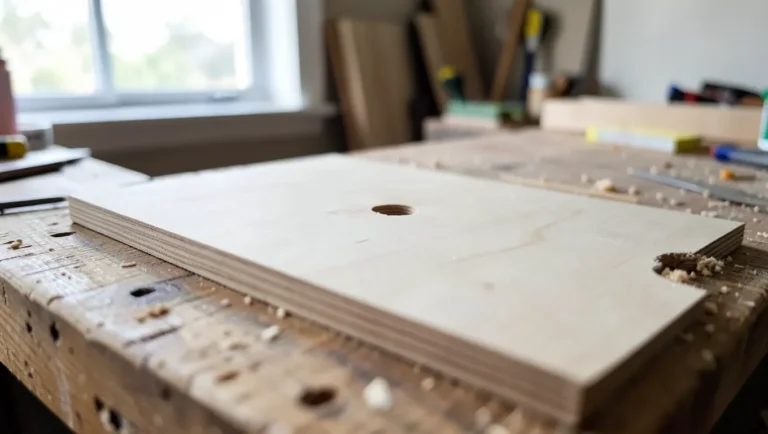
For a workbench top, 3/4-inch cabinet-grade plywood with a void-free or Baltic birch core is a solid default choice. Build the top to about 1-1/2 inches laminated only if you need extra mass. Weak plywood telegraphs voids, dents quickly, and can leave a top that sags, chips, or shifts under clamps. This guide shows how core quality, thickness, face grade, and expected abuse level should drive your choice.
This guide is part of our Plywood Thickness Chart: Which Size For Which Project series.
Quick comparison
| Product | Badge | Best for | Price | ||
|---|---|---|---|---|---|
 |
Baltic Birch Plywood 24 x 24 x 3/4 Inch – 18 mm Craft Wood,Woodpeckers | Our pick | 3/4 inch thick 24×24 Baltic birch | $45.89
Price as of 12 Oct 2026
|
View |
 |
A Grade Birch Plywood,Unfinished Craft Wood Boards, Idealbaoyeewood | Budget pick | 1/2 inch 8×8 birch plywood 4-pack | $16.99
Price as of 12 Oct 2026
|
View |
Baltic birch leads for stiffness and sag resistance, but it is not mandatory for every bench. The right top depends on use: hand-tool benches need edge strength, garage benches need moisture tolerance, and assembly tables need flatness and repairable wear layers.
How we chose
Core quality mattered more than face veneer because voids weaken fastener holding and speed up sag. Thickness and layer count came next, then repairability, moisture exposure, and cost. A workbench top also has to accept dog holes, clamps, and edge treatment without splitting or blowing out fasteners.
That is why the decision here favors laminated builds over a single thin sheet, and why plywood with a clean-looking face still loses if the core is uneven. Face veneer helps appearance. Core quality determines whether the top stays flat under real shop abuse.
Baltic birch plywood: best for most workbench tops
Baltic birch is the top pick for most benches because its many thin plies and nearly void-free core resist sagging and warping better than standard sheets. For a laminated benchtop, that matters more than a pretty face veneer. It gives you a cleaner drill line for benchdogs and more dependable screw holding near the edges.
This is the right call for a bench that will see clamping pressure, vises, and repeated rework. A common stack is two or three layers of 3/4-inch plywood, glued and screwed into a top totaling about 1.5 to 2.25 inches. Add a 1/4-inch tempered hardboard sacrificial layer if you want a replaceable wear surface.
The drawback is cost. Baltic birch is usually harder to justify for a temporary bench, and the premium pays off most when flatness and long-term stiffness matter more than initial material cost. If the bench lives in a damp garage, sealing still matters.
Cabinet-grade plywood: best for a clean shop bench
Cabinet-grade plywood is a good workbench material when the core is tight and voids are limited. The face veneer is usually smoother and looks better, but that surface quality does not guarantee a strong core. For bench performance, core quality still matters more than appearance.
This is a sensible middle ground for assembly tables, general-purpose benches, and shop furniture that needs a cleaner finish. It can work very well when laminated into a thicker top and sealed against grime and moisture. The drawback is inconsistency: two sheets sold as cabinet-grade can perform very differently.
Say your bench is 30 inches by 6 feet in a heated shop and sees light clamping, layout, and occasional hand-tool work. A void-limited cabinet-grade sheet can be enough if you laminate it into a thicker top and keep the edges protected. If the sheet has many patch plugs or soft spots, move up.
Construction-grade plywood: best only for temporary or rough shop use
Construction-grade plywood is the cheapest option, but it brings more voids, more flex, and a higher risk of fastener blowout. The face can look acceptable from a distance and still fail where it matters most: around dog holes, vise bolts, and edge screws. For a heavy bench top, that is a bad trade.
It can still make sense for a temporary assembly surface, an expendable subtop, or a bench that will be skinned later with better material. If you already own it, keep spans short, laminate layers, and avoid placing vises or benchdogs where voids are visible in the edge. Pre-drill every fastener location.
A common first-timer mistake is building a large garage bench from one cheap sheet and expecting it to stay flat. Within a season, the top can show flexing or sagging, especially where clamps pull on the front edge. If that bench will hold a vise, upgrade the core before the hardware goes on.
What kind of plywood for a workbench top?
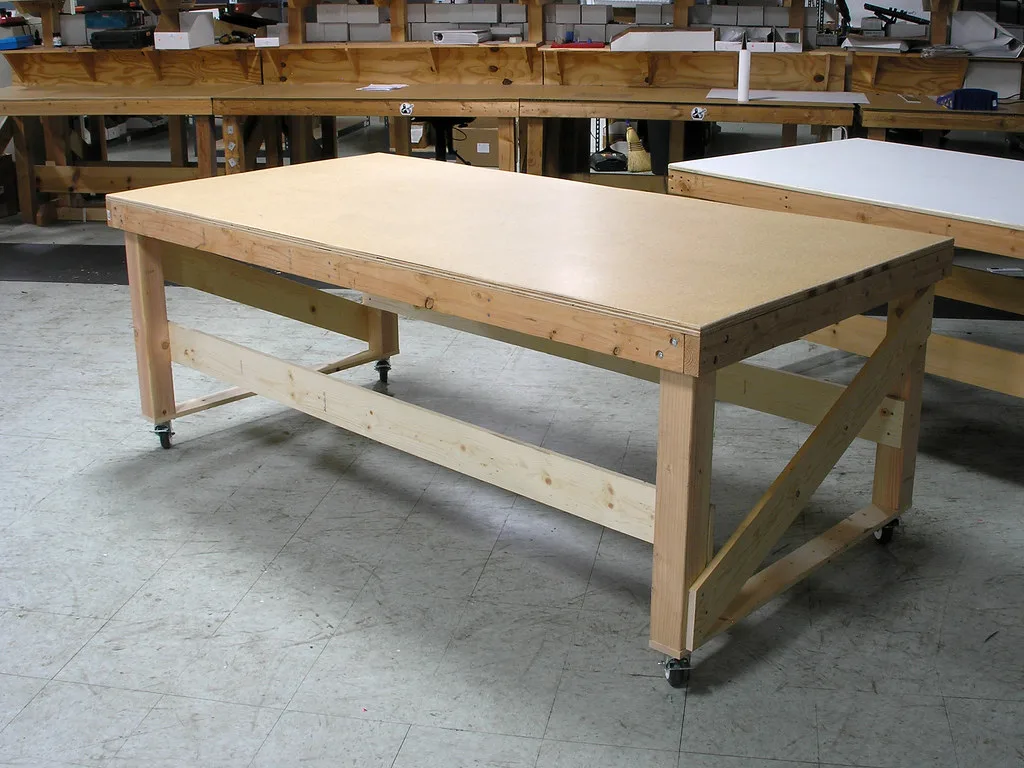
For most benches, choose hardwood plywood with a strong core, then laminate multiple layers to build thickness and stiffness. Baltic birch is the most reliable default, cabinet-grade plywood is the budget-friendly middle, and construction-grade plywood belongs at the temporary end of the scale. One thin sheet is not enough for serious use.
The face veneer matters less than the hidden core because voids affect fastener holding, edge chipping, and resistance to sag. If the bench will see dog holes, vises, or heavy clamping, prioritize a void-free core over appearance. A smooth face is nice. A stable core is what keeps the top usable.
How thick should plywood be for a workbench top?
Start with 3/4-inch plywood, then build upward with two or three layers for a laminated top. That puts most serious benches in the about 1.5 to 2.25 inches range, which is much better than a single sheet for rigidity and mass. Thickness helps, but layer count and core quality matter too.
Two layers are usually enough for a lighter shop bench or assembly table. Three layers make more sense when you want added mass, a thicker edge for dog holes, or more resistance to racking under a heavy vise. If the top will span a long frame, thicker is safer than thinner.
What kind of plywood for your use case?
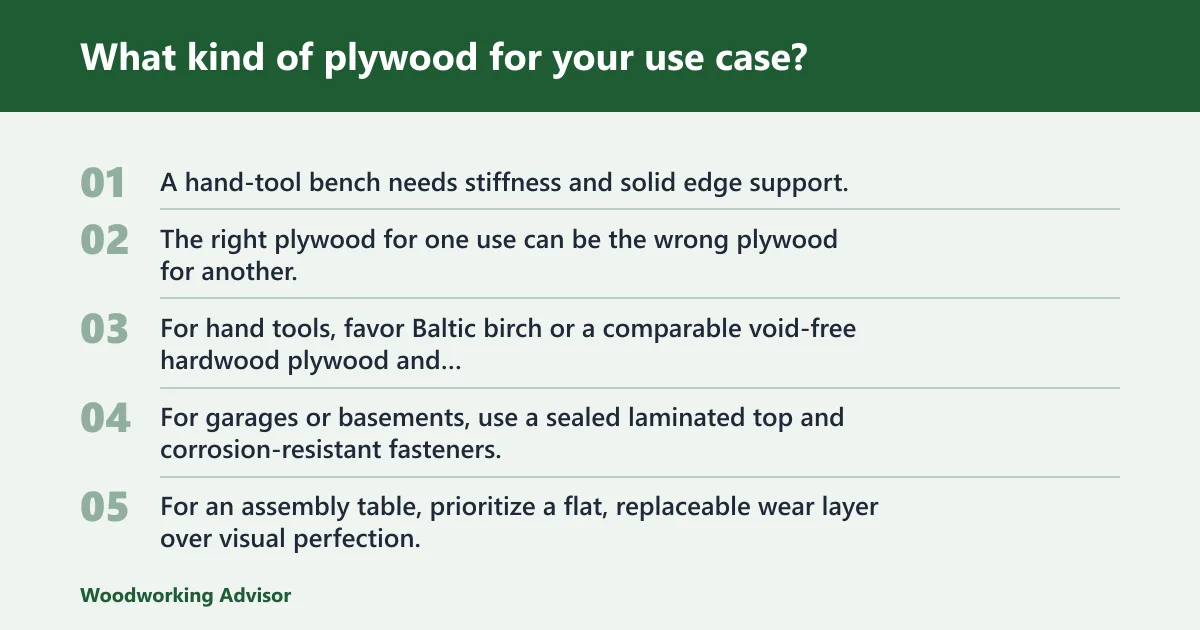
Match the sheet to the job. A hand-tool bench needs stiffness and solid edge support, a garage bench needs moisture tolerance and rust-resistant hardware, and an assembly table needs flatness plus easy repair. The right plywood for one use can be the wrong plywood for another.
For hand tools, favor Baltic birch or a comparable void-free hardwood plywood and protect the edges with solid wood. For garages or basements, use a sealed laminated top and corrosion-resistant fasteners. For an assembly table, prioritize a flat, replaceable wear layer over visual perfection.
Hand-tool bench: stiffness and edge support
Hand-tool work pushes against the bench, so the top needs stiffness, not only thickness. Use two or three layers of 3/4-inch plywood, and add solid maple edge banding around 3/4-inch thick where the front edge will take abuse. That gives clamps and planing pressure something stronger than a raw plywood edge.
Garage bench: moisture tolerance and rust-resistant hardware
In garages and unconditioned shops, moisture changes matter. Use a laminated plywood top, seal all faces and edges, and fasten layers with rust-resistant deck screws or lag bolts where the frame attaches. That does not make plywood waterproof, but it reduces swelling, grime absorption, and fastener corrosion.
Assembly table: flatness and easy repair
An assembly table benefits from a dead-flat top and a replaceable wear surface. A 1/4-inch tempered hardboard sacrificial layer makes sense here because glue squeeze-out, finish drips, and knife cuts are expected. When it gets tired, replace the skin instead of rebuilding the whole top.
Which one should you buy?
If your budget is tight, buy cabinet-grade plywood with the cleanest core you can inspect, then laminate two layers and seal the surface. If you want a long-term shop bench, Baltic birch is the safer buy because its void-free, multi-ply core handles sag and fasteners better. For wet or unconditioned spaces, sealing and hardware choice matter as much as the sheet itself.
Do not buy construction-grade plywood for a heavy-duty top unless the bench is temporary or you already plan to cover it with better material. For a bench that will hold a vise, take dog holes, and stay in service, the core quality has to justify the extra work. Spending more on the right core usually beats replacing a soft top later.
Decision matrix for three workbench top builds
This matrix turns the choice into a practical build plan. The scores are relative, with 5 as strongest and 1 as weakest. Use the stack-up that matches your abuse level, moisture exposure, and repair needs.
| Build | Recommended stack-up | Flatness | Sag resistance | Repairability | Moisture tolerance | Relative cost |
|---|---|---|---|---|---|---|
| Budget | Two layers of 3/4-inch cabinet-grade plywood, sealed, optional 1/4-inch hardboard later | 3 | 3 | 4 | 3 | 2 |
| Midrange | Two layers of 3/4-inch Baltic birch plywood, glued and screwed, with maple edge banding | 4 | 4 | 4 | 3 | 3 |
| Heavy-duty | Three layers of 3/4-inch Baltic birch plywood plus a 1/4-inch tempered hardboard sacrificial top | 5 | 5 | 5 | 4 | 5 |
Budget build trade-off: it saves money and still works well if the core is decent, but it depends on careful sealing and a supportive frame. Midrange build: it usually gives the best cost-per-performance balance for most shops. Heavy-duty build: it is the strongest and easiest to renew, but it costs more and takes more material.
Can I install benchdogs in plywood without splitting it?
Yes, if you plan the holes carefully and use a strong enough top. Benchdogs typically use 3/4-inch or 1-inch holes, and cylindrical holes are easier to keep consistent in plywood. Chamfer the hole edges to reduce chipping, and avoid drilling through visible voids if the sheet edge reveals them.
Layout matters. Keep hole spacing consistent, drill from the top face with a sharp bit or router guide, and support the underside to reduce breakout. If the top is only one layer thick, dog holes can weaken the panel around the opening. A laminated top handles that stress better.
Do I need a sacrificial top on a plywood workbench?
A sacrificial top is worth adding when you expect glue, paint, knife cuts, or frequent surface abuse. A 1/4-inch tempered hardboard layer protects the plywood beneath and is easy to replace when it gets scarred. It is especially useful on assembly tables and general-purpose benches.
If the top will be used for heavy hand-tool work, some builders skip the hardboard and keep the plywood exposed for maximum stiffness and easier dog-hole layout. That choice makes sense when the bench face must stay dead flat and clamps need direct contact. For messy work, hardboard wins.
Is maple plywood good for a workbench top?
Maple plywood can be good if the core is solid and the use case fits the sheet, but the face veneer alone does not make it a better bench top. Maple edging is often more valuable than maple face veneer because the solid-wood perimeter resists dents and takes dog holes and clamps better than a thin decorative skin.
If you mean maple-faced plywood, judge it by the hidden core, not the appearance. For a clean shop bench or cabinet-style workstation, it can be a fine choice. For a rough garage bench, core quality, sealing, and hardware matter more than the species on the face.
What is the best plywood for a workbench top?
Baltic birch plywood is the best default for most workbench tops because its void-free, multi-ply core resists sagging and warping better than standard sheets. Use it when the bench will see clamps, vises, dog holes, or regular layout work. It gives the most dependable mix of stiffness and edge strength.
If budget matters more than top-tier performance, cabinet-grade plywood with a good core is the next best move. Construction-grade plywood is a last choice for durable tops. The best plywood is the one whose core quality matches the bench’s actual abuse level.
Is plywood good for workbench top?
Yes, plywood can work very well for a workbench top when you build up thickness and stiffness with multiple layers. The key is to use a better core, not just a better-looking face, and to laminate the sheet into a thicker top that resists flex and wear.
It is less suitable when the bench will face very heavy point loads, large vises, or constant moisture and neglect. In those cases, thicker laminations, better edging, and a sacrificial top become more important. Thin, cheap plywood without reinforcement is where problems start.
What wood is best for a workbench top?
For a plywood-based top, Baltic birch is the most dependable wood choice because the core is nearly void-free and built from many thin plies. For a solid-wood edge, maple is a strong option because it wears well and holds up at the perimeter. The core and the build matter more than species alone.
If you want the most stable bench with plywood construction, choose the best core you can justify and then add solid-wood edging where abuse is concentrated. That combination gives you the benefits of plywood’s stability and the durability of hardwood where it counts.
Should I use Baltic birch or cabinet-grade plywood for a workbench top?
Use Baltic birch if you want the safer bet for sag resistance, fastener holding, and dog-hole durability. Choose cabinet-grade plywood if the core is clean and you want a lower-cost sheet for a lighter-duty bench. The deciding factor is the core, not the label on the face.
Baltic birch is the better choice for heavy clamping, vises, and long-term flatness. Cabinet-grade plywood is enough for many general-purpose benches and assembly tables. If the cabinet-grade sheet has hidden voids or soft internal layers, Baltic birch pulls ahead quickly.
Sponsored / affiliate links. As an Amazon Associate I earn from qualifying purchases. I may earn additional commission from eligible campaigns.
 Baltic Birch Plywood 1/8'' x 12'' x 18'', 6 Pack, B/BB Grade, Void-Free Core, Laser Cutting Ready, Flat Sheets for CNC, Engraving, DIY Crafts, Art Painting, Wood Burning, Staining
 Baltic Birch Plywood Sheets Box of 45 - Laser Engraving Cutting, Scroll Saw Nature Veneer Color, Stronger Than Basswood, A/A Grade,12 x 12 x 1/8”, 3mm Thickness Perfect for Wood Burning