Baltic Birch vs Regular Birch Plywood: Which Is Stronger?
Baltic birch plywood usually outperforms regular birch plywood for furniture and cabinets because its many thin plies and low-void core give more reliable screw holding, stronger edges, and more even stiffness. Pick the wrong sheet, and you invite sagging shelves, split edges, and fasteners that loosen or tear out. This guide compares bending, edge durability, screw holding, machining, and cost so you can choose the right plywood for the job.
This guide is part of our Plywood Thickness Chart: Which Size For Which Project series.
| Decision factor | Baltic Birch | Regular Birch | Winner |
|---|---|---|---|
| Bending stiffness | More thin plies and an all-birch, void-free core give more consistent panel stiffness. | Can be stiff enough, but mixed inner plies and fewer plies make results less uniform. | Baltic Birch |
| Screw holding | Better consistency because fasteners bite into a denser, lower-void core. | Can hold screws well, but voids or softer core plies can weaken some fastener locations. | Baltic Birch |
| Edge integrity | Cleans up well on trimmed edges and exposed joinery details. | More likely to reveal voids or tear-through at the edge. | Baltic Birch |
| Weight | Heavier in 18 mm form, around 36-40 kg per sheet equivalent. | Lighter, around 25-30 kg for an 18 mm combi-core sheet. | Regular Birch |
| Price | About $70-90 per 5×5 sheet. | About $40-60 per 4×8 sheet. | Regular Birch |
| Best use | Cabinets, furniture, CNC parts, and exposed edges. | Large panels, budget builds, and jobs where sheet size matters more than edge perfection. | Depends on project |
How to choose between baltic and Regular Birch
The key difference is how each sheet fails. Baltic Birch is the better choice when the panel must resist bending, keep its edge intact, or take repeated screws, while Regular Birch wins more often on cost, weight, and 4×8 availability.
Sheet size affects the job before the first cut. A 5×5 Baltic sheet fits many cabinet parts well, but a 4×8 Regular Birch panel is easier to source for longer carcasses, wide shop fixtures, and panel saw work that starts from full-size construction stock.
How are the cores built?
Baltic Birch uses birch veneer throughout every layer, and the standard sheet is described as void-free. Regular Birch is typically birch-faced or commercial birch plywood with a combi core or mixed core, and that core can include poplar, eucalyptus, or pine.
That difference matters where the sheet fails first. In Baltic Birch, fasteners and edge cuts meet more uniform material. In Regular Birch, the face veneer may look similar, but the inner plies can vary enough that edge trimming, hinge boring, and screw placement behave less predictably.
What void-free means in practice
Void-free means the core is built to avoid empty pockets that can collapse under screws or chip out when you rout an edge. That is why Baltic Birch is often favored for exposed edges, dadoes, and parts that need clean machining through the full thickness.
Where regular birch plywood can still have voids
Regular Birch may have permitted voids in the core, especially in lower-cost commercial panels. Those voids do not make every sheet poor, but they raise the chance of a weak hinge bite, a loose shelf-pin hole, or a rough edge after trimming.
Which one is stronger?
Baltic Birch is usually stronger in the ways woodworkers notice most: it bends more evenly, holds screws more reliably, and stands up to edge abuse better. Regular Birch can still be strong enough for many builds, but its mixed core makes failure more variable from sheet to sheet.
Say your cabinet side gets a concealed hinge screw near the edge. A void under that screw can let the bit pull through early, even if the face looks fine. Baltic Birch reduces that risk because its lower-void core gives the screw threads more uniform material to bite into.
Bending stiffness and ply count
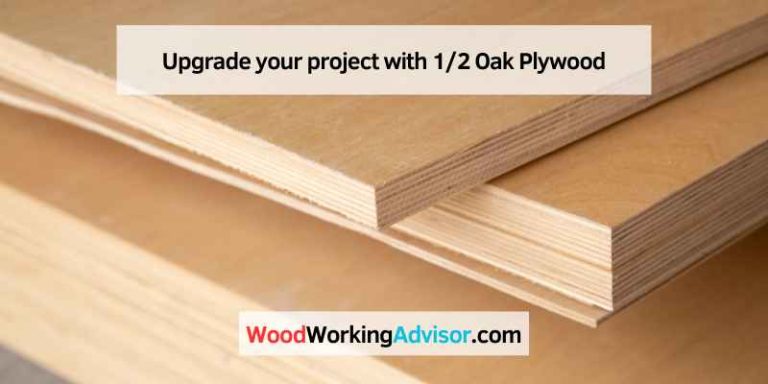
A 3/4 inch Baltic Birch panel contains 13 plies. Standard 3/4 inch construction plywood may have 5-7 plies. More plies do not automatically make a panel stronger in every direction, but thin plies usually give more even stiffness and a flatter edge profile.
Regular Birch at 18 mm may have about 5 to 9 plies, so the inner layers may be thicker. That can be fine for general work, but thick plies can leave a rougher edge pattern and less even bending behavior than the fine-grained ply stack in Baltic Birch.
Screw holding and fastener reliability
Baltic Birch is the safer pick when screws matter. The all-birch construction and void-free standard help fasteners resist pull-out and reduce blowout near corners, especially in repeated assembly or disassembly.
Regular Birch can hold screws adequately in many cabinet parts, but the mixed core changes the risk profile. A screw that lands over a soft spot or void may feel solid during installation and still fail later under load.
Edge durability and trim-out
Edge durability is where Baltic Birch often pulls ahead most clearly. The plies stay more uniform when you rout, trim, or sand the edge, so the panel is less likely to open up around a cut or show patchy filler lines.
A common beginner mistake is choosing a cheaper birch panel for exposed bandless shelves, then finding voids after the final trim. That can force filler work, edge tape, or a remake.
Machining and tear-out
Baltic Birch usually machines cleaner because its layer structure is tighter and more regular. That matters on CNC parts, template work, and joinery that leaves the edge visible.
Regular Birch still machines well enough for many shop projects, but the mixed core can chip differently as the cutter crosses plies. The result is more cleanup at edges, especially on narrow parts and small tabs.
What do ply count and weight change?
Ply count changes how the panel behaves under load and how the edge finishes, while weight changes how easy the sheet is to move, cut, and mount. Heavier does not automatically mean stronger; it often means more material per area, not a better failure mode.
Baltic Birch density is shown as 640-700 kg/m³, and the 18mm sheet weight is shown around 36-40 kg. Standard birch plywood density is shown as 450-550 kg/m³ for combi core, and the 18mm combi-core sheet weight is shown as 25-30 kg. That lower weight is a real advantage when you need to carry sheets through a small shop or lift them onto a router table without help.
Suppose you are cutting full-height cabinet sides in a garage with a panel saw. Regular Birch is easier to handle, especially before the first rip. Baltic Birch may still be the better final material, but the workflow penalty is real and should be part of the buy decision.
Birch plywood decision matrix
| Factor | Baltic Birch | Regular Birch | Best pick |
|---|---|---|---|
| Bending stiffness | Higher consistency from many thin plies and all-birch build. | Good enough for many panels, but more variable. | Baltic Birch |
| Screw holding | More reliable near edges and repeated fastening points. | Better when cost matters and screw loads are modest. | Baltic Birch |
| Edge integrity | Cleaner edges, fewer void problems. | More risk of patchy core at cuts. | Baltic Birch |
| Weight | 36-40 kg at 18 mm. | 25-30 kg at 18 mm combi core. | Regular Birch |
| Price | $70-90 per 5×5 sheet. | $40-60 per 4×8 sheet. | Regular Birch |
| Best-use scenario | Cabinets, furniture, CNC parts, visible edges. | Large panels, storage, budget builds. | Depends |
Choose Baltic Birch if…
Choose Baltic Birch if your project depends on clean edges, dependable screw holding, and consistent panel stiffness. It is the better fit for cabinets, furniture parts, CNC-cut components, and worktops where edge quality matters as much as face appearance.
- You are building cabinet boxes, drawer parts, or face-frame components that will be screwed together repeatedly.
- You need exposed edges that can stay clean without heavy filler work.
- You are cutting detailed CNC parts, templates, or joinery where voids would ruin the edge.
- You can accept the higher weight and higher sheet price.


Choose Regular Birch if…
Choose Regular Birch if the job is driven by budget, sheet size, or handling ease rather than the tightest edge performance. It is often the better buy for larger panels, storage systems, and shop fixtures where a lighter sheet and lower cost matter more than maximum edge consistency.
- You need 4×8 sheets for a larger carcass, rack, or shop build.
- You want lower material cost on a project with hidden edges.
- You are moving sheets alone and want less lift weight.
- You can tolerate more variation in the core and will not leave raw edges exposed.
What do grades and sheet sizes mean?
European birch grades such as B/BB, BB/BB, BB/CP, and CP/CP describe face quality and appearance on each side, not a direct increase in strength. US birch grades use A, B, C, and D, again as face and back designations rather than a direct strength rating.
B/BB usually means a better face and a lower-grade back, while BB/BB is more even on both sides. BB/CP and CP/CP allow more visible defects and are usually chosen when appearance matters less than cost.
Why Baltic birch is often sold in 5×5 ft sheets
Baltic Birch is commonly sold in 5×5 ft sheets, which suits many cabinet layouts and CNC workflows. The size is also a practical clue that you are looking at a different supply chain than standard 4×8 construction plywood.
A 5×5 sheet can be awkward on a small panel saw if your support tables are set up for 4×8 stock. That does not make it worse material, but it does change how you stage cuts and handle offcuts.
When 4×8 ft regular birch is easier to buy
Regular Birch is listed as a 4×8 ft standard sheet size, which usually makes it easier to source at common lumberyards. If your project already uses full-size sheet goods, that format can reduce waste and simplify layout.
Frequently asked questions
Is Baltic birch actually stronger than regular birch plywood?
Yes, in the ways that matter most for furniture and cabinets: it is usually better at bending consistently, holding screws, and surviving edge work. Regular Birch can still be adequate, but its mixed core makes performance less predictable from sheet to sheet.
What is the difference between Baltic birch and birch plywood core construction?
Baltic Birch uses birch veneer throughout every layer and is described as void-free. Regular Birch is usually birch-faced with a combi core or mixed core, and that core may include poplar, eucalyptus, or pine.
How many plies does Baltic birch have in 3/4 inch thickness?
A 3/4 inch Baltic Birch panel contains 13 plies. That high ply count helps explain the cleaner edge profile and more even stiffness that woodworkers usually notice in joinery and CNC work.
Does regular birch plywood have voids in the core?
It can. Standard birch plywood may allow core voids, depending on grade and construction. Those voids are a problem for screws, hinge boring, and clean edge trimming because they create weak spots and chip-out risk.
Is standard birch plywood cheaper than Baltic birch?
Usually yes. Baltic Birch retail price is listed at about $70-90 per 5×5 sheet, while standard birch plywood is listed at about $40-60 per 4×8 sheet. The price gap is one reason regular birch is common for larger or lower-cost builds.
Does Baltic birch weigh more than regular birch plywood?
Yes. The 18mm Baltic Birch sheet weight is shown around 36-40 kg, while the 18mm combi-core sheet weight is shown around 25-30 kg. That extra mass is part of the handling penalty, especially in small shops or solo installs.
Sponsored / affiliate links. As an Amazon Associate I earn from qualifying purchases. I may earn additional commission from eligible campaigns.
 Baltic Birch Plywood 1/8'' x 12'' x 18'', 6 Pack, B/BB Grade, Void-Free Core, Laser Cutting Ready, Flat Sheets for CNC, Engraving, DIY Crafts, Art Painting, Wood Burning, Staining
 Baltic Birch Plywood Sheets Box of 45 - Laser Engraving Cutting, Scroll Saw Nature Veneer Color, Stronger Than Basswood, A/A Grade,12 x 12 x 1/8”, 3mm Thickness Perfect for Wood Burning