Best Plywood for Painting Furniture (2026): research shows
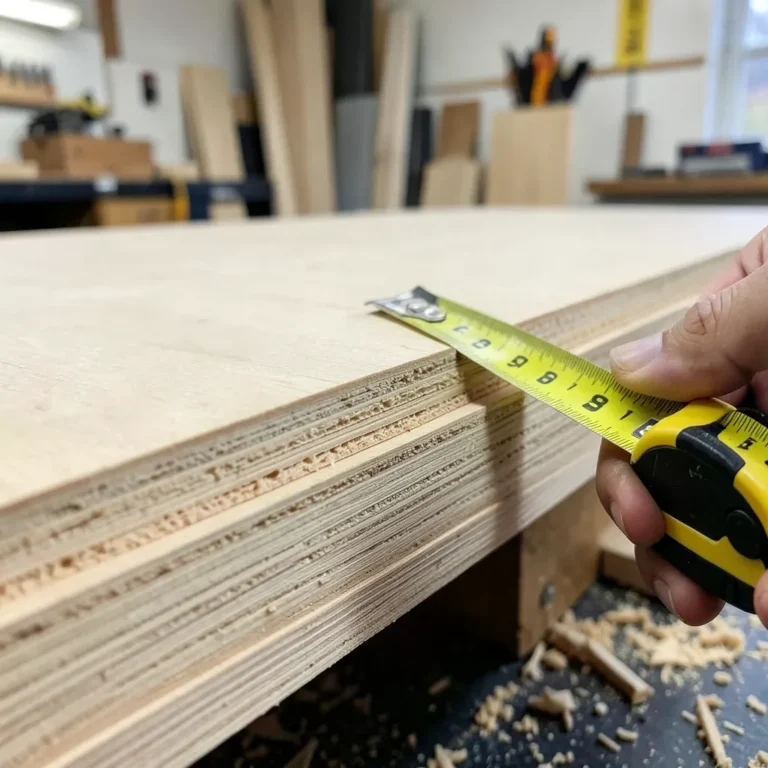
For paint-finish furniture, Baltic birch plywood is often a strong choice, with maple veneer plywood also worth considering; choose a cabinet-grade panel with a sanded, low-void core and a face veneer thick enough to sand without cutting through. Poor plywood telegraphs grain, swells edges, and can force extra filler, primer, and sanding. This guide ranks plywood for painted furniture based on grain hiding, edge filling, and how well it tends to take primer.
Quick comparison
| Product | Badge | Best for | Price | ||
|---|---|---|---|---|---|
 |
Baltic Birch Plywood Custom Cut, Customized to Size 3/4Woodpeckers | Our pick | Custom Cut · 3/4 In · Baltic Birch | $19.99
Price as of 9 Oct 2026
|
View |
 |
Woodcraft American Birch Plywood – 3/4" X 48" X 48"WOODCRAFT | Upgrade pick | 48 In · 3 Ply · Smooth Sanded | $110.99
Price as of 9 Oct 2026
|
View |
 |
8"x10" MDF Mosaic Backer Board White Melamine CoatedSabrina | Budget pick | MDF · White Melamine · No Prime | $19.95
Price as of 9 Oct 2026
|
View |
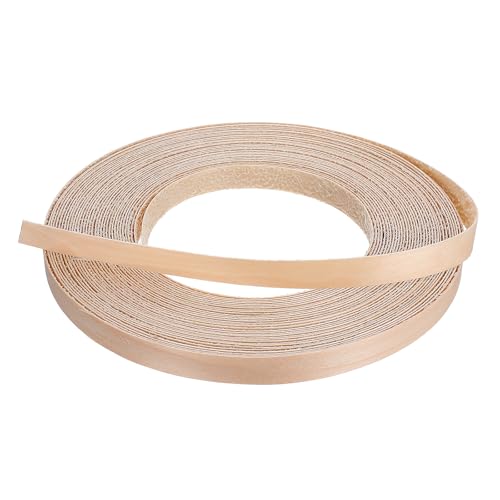 |
Birch Edge Banding 1/2 Inch X 50 Ft Preglued Iron on WoodEzymivs | Pair with it | Birch Veneer · 1/2 In · Preglued | $8.98
Price as of 9 Oct 2026
|
View |
This comparison focuses on paint outcome, not marketing labels. A smooth face helps, but the real test is how much grain shows after primer and how hard the edges are to seal.
Use it to sort good visible parts from cheaper sheet goods that look fine before primer.
📊 BrightPly describes its paint-ready product as 100% birch. Source: Brightplywood.
How we chose
We compared five practical sheet-good options by face quality, grain visibility after primer, edge behavior, indoor-use suitability, and whether the thickness and sheet size fit common furniture parts.
We also weighed adhesive type and formaldehyde compliance, because interior cabinets and painted furniture sit close to the people using them.
Face veneer matters more than a label. A panel sold as furniture-grade can still need more prep than a better sanded face with cleaner layup.
| Sheet type | Grain visibility | Edge sealing difficulty | Primer soak-in | Sanding effort | Best use case |
|---|---|---|---|---|---|
| 100% birch plywood | Low | Medium | Low to medium | Low | Cabinet fronts, painted doors, visible sides |
| Sanded plywood | Medium | Medium to high | Medium | Medium | Budget furniture, shelves, carcass parts |
| Maple veneer plywood | Very low | Medium | Low | Low | High-visibility panels and doors |
| Furniture-grade plywood | Low to medium | Medium | Low to medium | Low | Built-ins, decorative panels, custom pieces |
| Standard construction plywood | High | High | High | High | Hidden carcasses only, not visible paint work |

Sanded plywood: best for budget-painted furniture
Sanded plywood is the baseline for paint-ready work because a smoother face veneer cuts sanding and filler time. It is a solid pick for interior furniture when cost matters more than a near-perfect finish.
The face is already flatter and cleaner than rough construction panels, so primer has a better chance of leveling the surface. That still does not erase grain, especially on open-pored species.
Use sanded plywood for shelves, side panels, and carcass parts where the viewer stands back a little. It is less forgiving on drawer fronts and cabinet doors, where every edge and patch shows.
Where sanded plywood makes sense
- Painted bookcase sides.
- Closet carcasses.
- Utility cabinets that still need a clean look.
Even with a smooth face, you still need filler on knots, seams, and open end grain. Skip that step and primer will sink into weak spots.
Birch plywood: best for cabinet fronts and visible panels
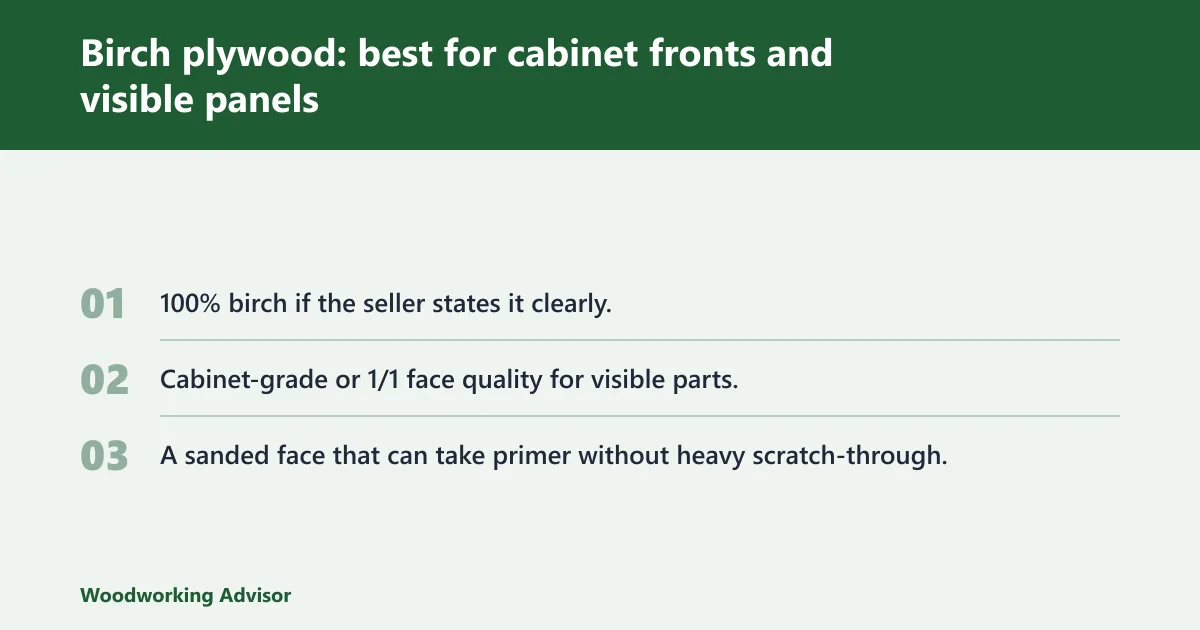
Birch plywood is a common paint-ready species, and 100% birch panels are often the safest buy for visible interior furniture. Its tighter face and cleaner surface usually hide better under primer than generic sheet goods.
For painted doors, drawer fronts, and side panels, birch often beats cheaper sanded plywood because the surface starts flatter and the finish reads more even. That matters more than a broad label like furniture-grade.
Grade notation matters here. A 1/1 grade or cabinet-grade panel signals better face quality, but the label alone is not enough; face veneer quality and sanding still decide the finish.
What to look for on birch panels
- 100% birch if the seller states it clearly.
- Cabinet-grade or 1/1 face quality for visible parts.
- A sanded face that can take primer without heavy scratch-through.
BrightPly lists paint-ready plywood in 6 mm, 9 mm, 12 mm, 15 mm, 18 mm, 21 mm, 24 mm, 27 mm, 30 mm, 35 mm, and 40 mm. That range covers parts from light trim panels to thicker furniture components.
BrightPly also offers 4×8 and 4×10 sheet sizes and custom cutting, which helps when you need cabinet sides or doors without extra saw work.
Furniture-grade plywood is a trade term, not an official plywood grade. In practice, it usually means the panel was selected for furniture, cabinetry, and other visible interior projects, where face quality matters more than rough strength claims.
This is the right tier when the painted surface is front and center, such as custom built-ins, decorative panels, or inset cabinet fronts. You are paying for cleaner faces, better layup, and less prep pain.
Do not trust the term by itself. Two panels sold as furniture-grade can perform very differently if one has a cleaner face veneer and the other has more patching or thin top plies.
How to read the label
- Check the face veneer, not only the product name.
- Look for cabinet-grade or 1/1 grade context when available.
- Ask how thick the face ply is if sanding through is a concern.
Say your project is a pair of 18-inch cabinet doors for a laundry room. A premium face panel can save time because you are sanding a large visible area, not hiding it behind trim. A rougher panel would demand more filling and spot priming before topcoat.
Can you paint plywood furniture?
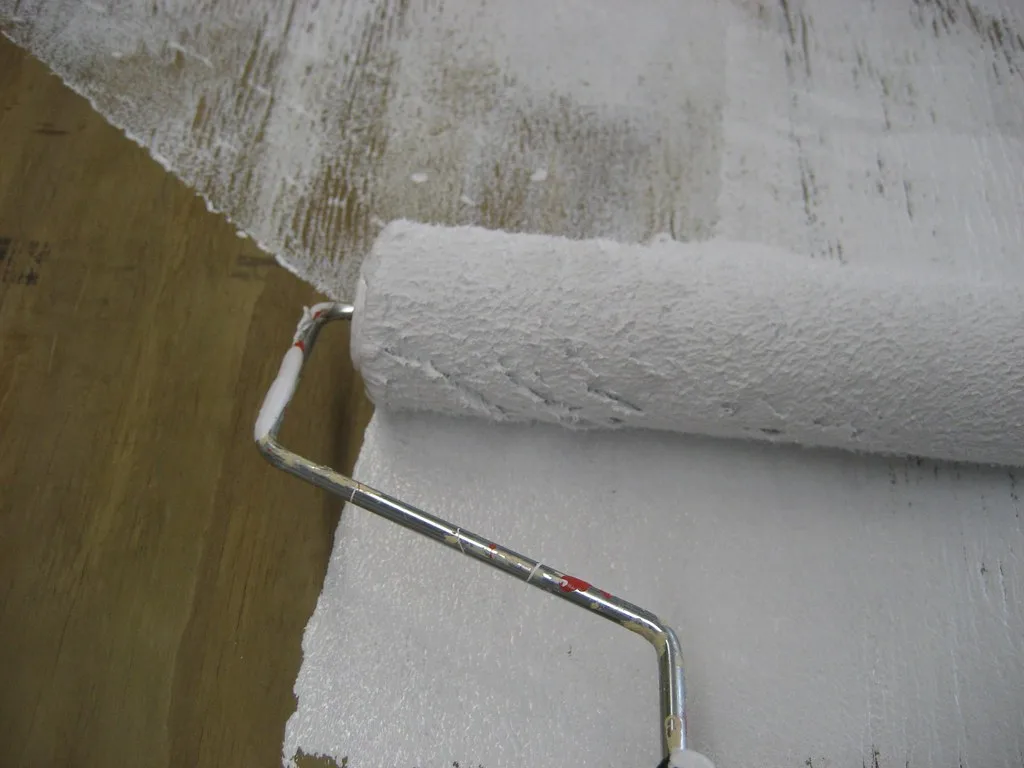
Yes, plywood furniture can be painted well if the face is smooth, the edges are sealed, and you use the right primer. Paint failures usually come from grain telegraphing, patch-through, and edge absorption, not from plywood itself.
The better the face veneer, the less sanding and filler you need before primer. But even a good panel needs prep, because end grain and exposed edges drink finish faster than the face.
What to put on plywood before painting
Start with wood filler or a high-build filler on dents, seams, and voids. Then sand the face, seal the edges, and use a bonding primer or a high-hide primer suited to your topcoat system.
- Fill dents, seams, and open pores.
- Sand the face with a progression that leaves a clean, uniform scratch pattern.
- Spot-seal the edges, especially exposed ply layers and end grain.
- Apply primer in even coats.
- Sand the primer lightly.
- Topcoat after the primer cures.
A common first-timer mistake is painting raw edges after only one quick primer coat. The edge soaks up paint, turns dull, and may need a second or third pass before it matches the face.
Common failures to watch for
- Veneer telegraphing through the paint film.
- Patch-through where filler flashes different from the board.
- Raised grain after water-based primer.
- Dark edge bands from unsealed plies.
Which one should you buy?
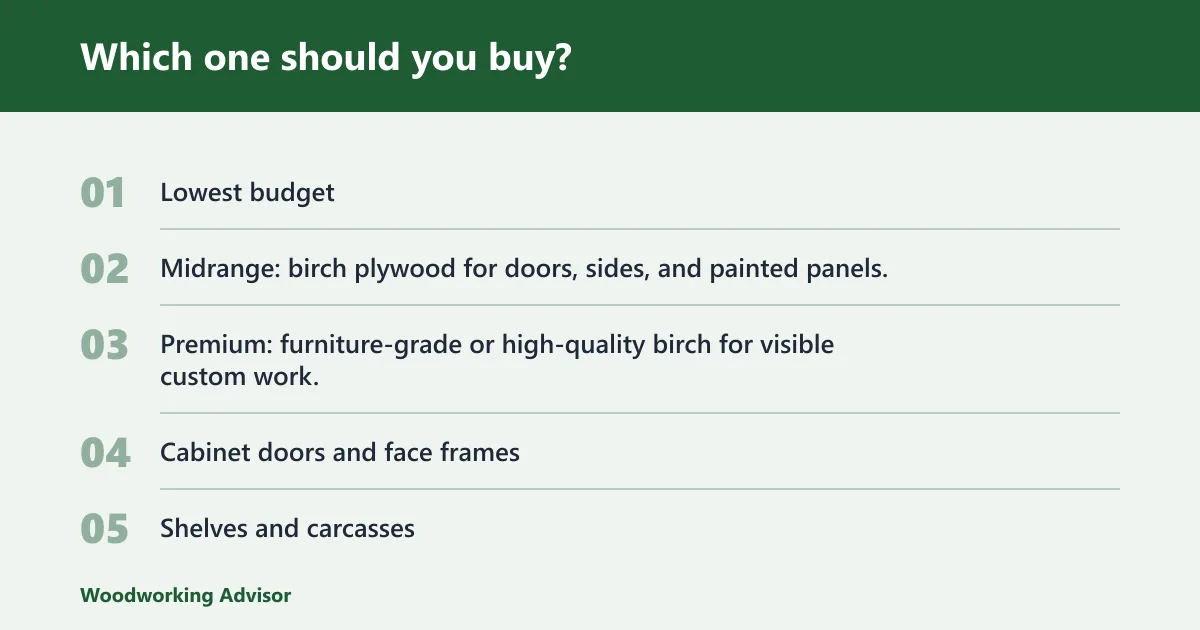
For visible furniture parts, the best choice is the panel with the cleanest face veneer and the least edge work, not the one with the broadest grade label. If you want the safest all-around painted result, choose birch or another cabinet-grade panel with a sanded face.
Spend up when the part is large, front-facing, or hard to hide. Save money when the piece is boxed in, trimmed out, or seen from farther away.
Best choice by budget
- Lowest budget: sanded plywood for shelves, carcasses, and utility parts.
- Midrange: birch plywood for doors, sides, and painted panels.
- Premium: furniture-grade or high-quality birch for visible custom work.
Best choice by part
- Cabinet doors and face frames: birch plywood or a premium furniture-grade panel.
- Shelves and carcasses: sanded plywood.
- Decorative panels: 100% birch or a cleaner maple-veneer panel.
Best choice by compliance and indoor use
For indoor furniture, low-emission compliance matters because the panel sits inside living space air, not outside in a shed. BrightPly states its paint-ready product is CARB Phase 2 compliant and TSCA Title VI compliant, and that it uses phenol-formaldehyde adhesive.
That does not make the surface ready for paint by itself. It speaks to emissions and durability, while the face still needs to be smooth enough for a good finish.
Phenol-formaldehyde adhesive is worth noting because it is commonly linked with durability and moisture resistance. That matters on painted furniture parts that may see seasonal humidity swings, but it does not replace proper edge sealing.
Available thickness also affects the result. Common paint-ready ranges run from 6 mm to 40 mm, which is roughly 1/4 in to 1-9/16 in. Use thinner sheet goods for lightly loaded panels and thicker panels for larger doors, shelves, or sides that need more rigidity.
Choose 4×8 sheets for most furniture parts, 4×10 when you need extra length, and custom cutting when the project has tight reveal lines or waste is costly. Bigger sheets can reduce seams, which helps painted surfaces look cleaner.
When the extra cost is worth it
Pay more for a premium panel when the face will be seen up close, when you want fewer primer coats, or when the piece sits in a client-facing room. The price difference is easier to justify if it saves filler, sanding, and rework.
For hidden carcass work, the cost premium is harder to defend. In that case, a solid sanded panel is usually the smarter buy.
Frequently asked questions
can you paint plywood furniture
Yes, and the finish can look clean if you prep it correctly. The face should be sanded, the edges should be sealed, and the primer should be matched to the surface. Without those steps, grain show-through and edge soak-in are common.
what plywood is best for painting
Birch plywood is usually the best all-around choice for painted furniture, especially 100% birch panels with cabinet-grade faces. Maple veneer plywood is also a strong pick for high-visibility work because it tends to hide grain well under primer.
what’s the best paint to use on plywood
A good bonding primer followed by a durable enamel or cabinet paint is the safest route. The exact topcoat depends on the room and wear level, but the primer matters most because it blocks soak-in and helps the paint film level.
what to put on plywood before painting
Use filler on dents and seams, then sand, spot-seal the edges, and prime. If the panel has open grain or patchy spots, a high-build primer can help even out the surface before the topcoat goes on.
how to paint plywood furniture
Fill first, sand next, then prime and lightly sand the primer before topcoating. Pay special attention to cut edges and end grain, because those areas absorb finish faster than the face and can leave dull bands after drying.
is plywood good for painting
Yes, provided you choose a panel with a clean face and use proper prep. Plywood is often a better paint base than solid wood with open grain, but low-quality sheets can still telegraph veneer lines and patch marks.
is plywood good for furniture
Yes, especially for cabinetry, shelves, decorative panels, and custom-painted furniture. It is widely used for interior furniture because it is stable, available in multiple thicknesses, and easy to cut to size, but visible parts still need face-quality attention.
Sponsored / affiliate links. As an Amazon Associate I earn from qualifying purchases. I may earn additional commission from eligible campaigns.