Best Way to Glue MDF Together: Right Adhesive & Technique
PVA wood glue (a standard yellow woodworker’s glue like Titebond III) is the best way to glue MDF together for most joints — it’s cheap, strong, and bonds well to the porous fiber surface. Hot glue and super glue hold briefly but fail under real load; contact cement and two-part epoxy are the better choice for edge-banding or bonding MDF to non-porous materials like ABS or laminate.
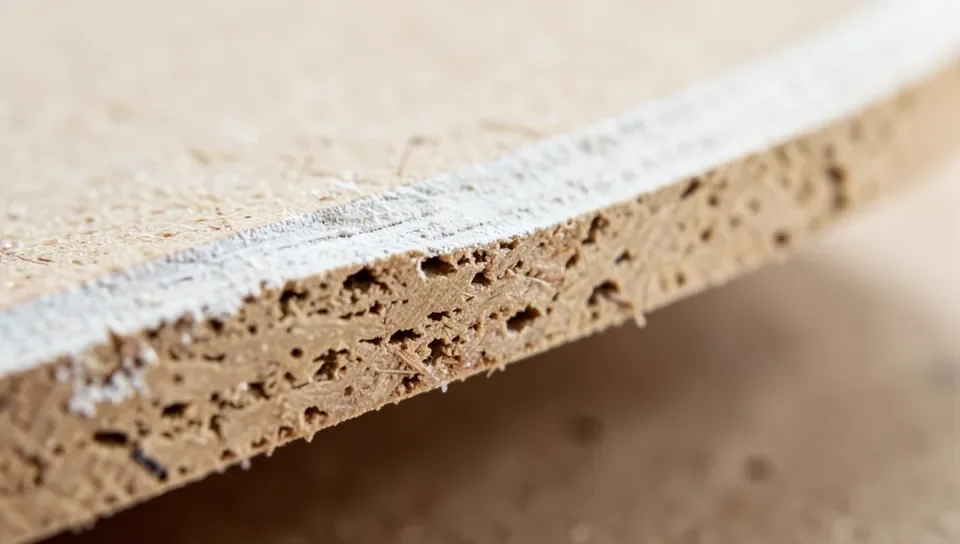
MDF’s fiber structure is more porous than solid wood, which changes how glue behaves on it: it soaks in faster (sometimes leaving a joint glue-starved if you don’t apply enough) and it doesn’t have grain to help mechanically interlock the two surfaces the way wood-to-wood joints do. That’s why picking the right glue type — and prepping the surface correctly — matters more on MDF than on solid lumber.
Choosing The Right Glue
PVA wood glue (Titebond, Elmer’s Wood Glue) is the default choice for MDF-to-MDF joints — edge-to-edge, edge-to-face, or panel assembly. It’s inexpensive, has a workable open time for positioning pieces, and creates a bond that’s often stronger than the MDF fiber itself once fully cured.
Hot glue sets in seconds and can hold pieces in position while a stronger adhesive cures, but it’s not a real structural bond on its own — a hot-glued MDF joint will fail under load or over time. Contact cement is the right choice for bonding a thin veneer, edge banding, or laminate to an MDF face, since it bonds instantly on contact rather than needing clamping. Two-part epoxy is the best option for bonding MDF to non-porous materials like ABS plastic, metal, or glass, where PVA glue won’t adhere to the non-porous side at all.
| Glue Type | Best For | Clamp/Set Time |
|---|---|---|
| PVA wood glue | MDF-to-MDF structural joints | 30-60 min clamp, 24 hr full cure |
| Hot glue | Temporary positioning only, not structural | Seconds, but weak long-term |
| Contact cement | Veneer, edge banding, laminate to MDF face | Instant bond, no clamping |
| Two-part epoxy | MDF to non-porous materials (ABS, metal, glass) | 5 min-several hrs depending on formula |
Best Glue For MDF Joints
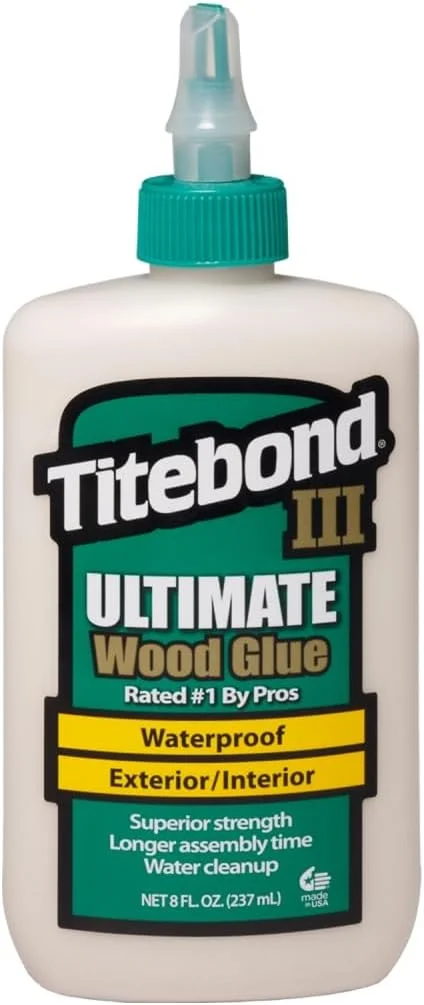 |
Titebond III Ultimate Wood Glue, 8 oz – $6.75 The standard PVA choice for MDF-to-MDF joints — strong bond, workable open time, water cleanup.
|
Preparing MDF Surfaces
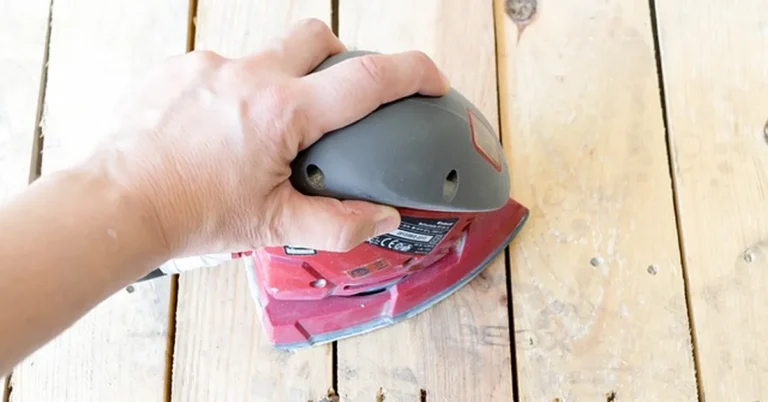
Sand cut edges lightly with 150-220 grit sandpaper to remove any fuzz or loose fiber before gluing — a rough, fuzzy edge absorbs glue unevenly and weakens the joint. Wipe away all sanding dust with a dry cloth or compressed air; leftover dust in the joint acts as a weak filler layer between the two glued surfaces.
For a stronger edge joint, pre-seal the raw MDF edge with diluted glue (a thin coat, wiped off before it sets) or a dedicated MDF primer/sealer, let it dry, then apply the real glue joint on top. This “sizing” step stops the porous fiber from soaking up so much of the actual glue that the joint ends up starved.
Application Techniques
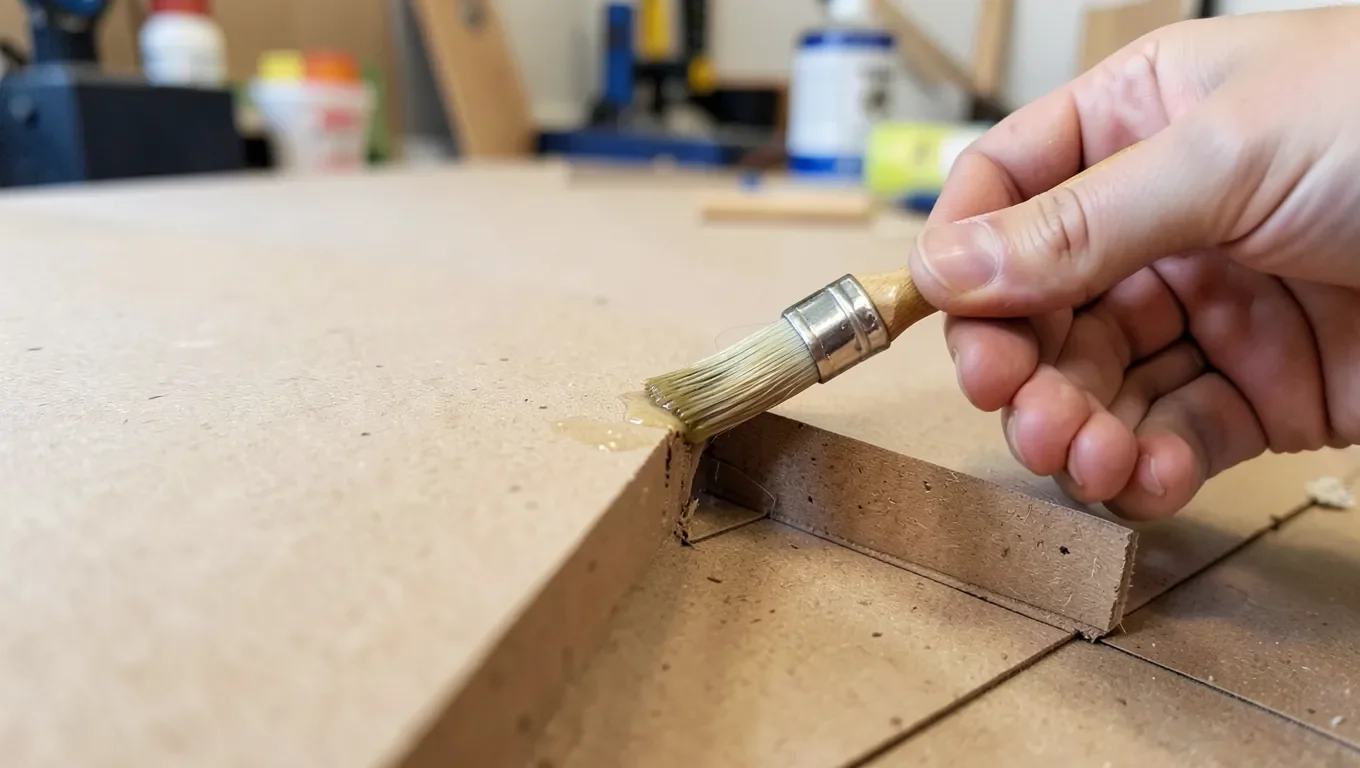
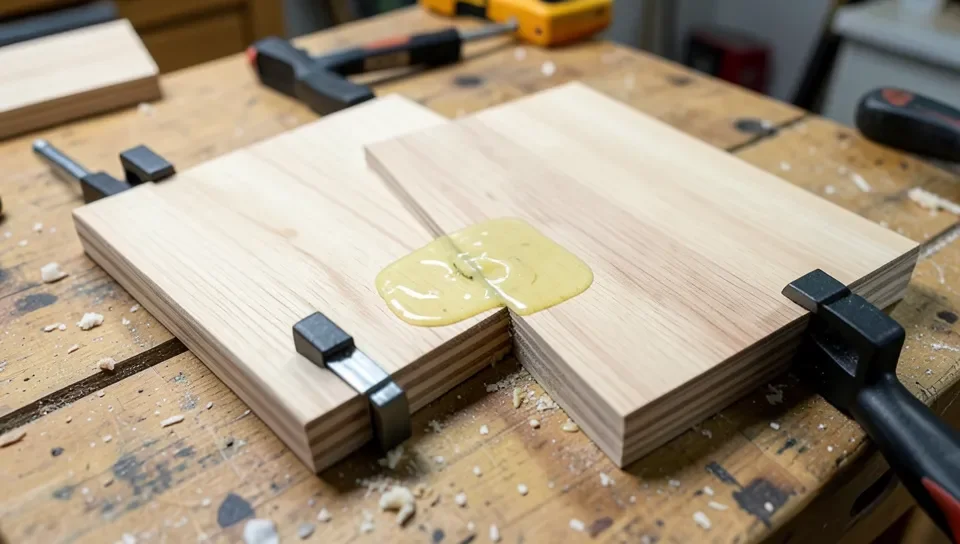
Apply glue generously to both mating surfaces, not just one — MDF’s porosity means a thin single-side application often leaves one surface glue-starved by the time you clamp. Spread it evenly with a small brush or glue roller rather than a single bead, especially on wider edge joints.
Clamp immediately after applying glue to both surfaces while the glue is still fully wet, and use even, moderate clamping pressure across the whole joint length — too little pressure leaves gaps, too much squeezes out most of the glue and starves the joint from the other direction.
Drying And Curing Time
Most PVA wood glues reach handling strength in 30-60 minutes of clamping but need a full 24 hours to reach full cured strength — don’t stress-load or unclamp a joint early just because it feels solid to the touch. MDF’s density means it holds heat and moisture slightly differently than solid wood, so err toward the longer end of a glue’s stated cure time rather than the shorter end.
Room temperature and humidity both affect cure time — a cold shop (below 55°F) can meaningfully slow PVA glue’s cure, so move the project somewhere warmer if the shop is unheated in winter rather than assuming the glue will cure at the same rate regardless of temperature.
Common Mistakes To Avoid
Using hot glue for a joint that needs to bear real weight is the most common failure mode people report — it feels solid immediately but has no long-term structural strength on MDF. Skipping edge sanding and dust removal is the second most common mistake, and it’s the harder one to diagnose after the fact since the joint often looks fine until it’s stressed.
Trying to bond MDF directly to a non-porous material (ABS plastic, laminate, metal) with standard PVA wood glue is a mismatch — PVA needs a porous surface to grip, and it won’t form a real bond on the non-porous side no matter how long it’s clamped. Use two-part epoxy or contact cement for that specific combination instead.
Expert Tips For Strong Bonds
Add biscuits, dowels, or pocket screws alongside glue on any joint that will bear real structural load (a shelf bracket, a cabinet corner) — glue alone on MDF’s fiber structure benefits from mechanical reinforcement more than a solid-wood joint does, since MDF has no long grain fibers to add extra holding strength on its own.
Test glue and MDF combination on scrap material first if you’re unsure how a specific adhesive will behave — MDF brands vary slightly in density and resin content, and a quick test joint on an offcut costs nothing compared to discovering a weak bond on the finished piece.
Frequently Asked Questions
What Is The Best Glue To Stick MDF Together?
PVA wood glue (like Titebond III) is the best glue for MDF-to-MDF joints — it’s inexpensive, bonds well to the porous fiber, and reaches full cured strength within 24 hours.
How Do You Join Two Pieces Of MDF Together?
Sand and clean both mating edges, apply PVA wood glue generously to both surfaces, then clamp with even pressure for at least 30-60 minutes, letting the joint fully cure for 24 hours before stress-loading it. Adding biscuits or dowels reinforces the joint for structural applications.
What Is The Strongest Way To Join MDF?
PVA wood glue combined with a mechanical joint reinforcement — biscuits, dowels, or pocket screws — is the strongest way to join MDF, since it adds mechanical strength that MDF’s fiber structure lacks compared to solid wood grain.
Can You Glue MDF To ABS Or Other Plastics?
Standard PVA wood glue won’t bond MDF to ABS or other non-porous plastics. Use a two-part epoxy or a plastic-compatible contact cement instead, since those adhesives are formulated to grip non-porous surfaces that PVA glue can’t.
Conclusion
PVA wood glue handles the vast majority of MDF-to-MDF joints, with contact cement for veneer/laminate work and two-part epoxy for bonding to non-porous materials like ABS. Sand and clean the edges first, apply glue generously to both surfaces, clamp evenly, and give it the full 24-hour cure before loading the joint.
Skip hot glue for anything that needs to actually hold weight — it’s a positioning aid, not a structural adhesive, on MDF or anything else.
Sponsored / affiliate links. As an Amazon Associate I earn from qualifying purchases. I may earn additional commission from eligible campaigns.