Best Way to Stain a Cedar Fence (Oil vs. Water-Based + Top Picks)
An oil-based, semi-transparent stain is the best choice for a cedar fence, but only on wood that is clean and dry to 12 percent moisture or less. Stain makers estimate 2 to 5 years per coat on a vertical fence. This guide covers prep, a timing table for new and weathered cedar, gallons needed per fence length, and brush versus spray.
Should You Stain a Cedar Fence?
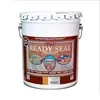 |
Best Cedar Fence Stain Pick Ready Seal 512 Natural Cedar Exterior Stain and Sealer (5 Gallon): $199.00 The oil-based, semi-transparent stain behind the coverage table below: at the maker’s 125 sq ft per gallon rate for rough cedar, one pail covers about 625 sq ft of fence.
|
As an Amazon Associate we earn from qualifying purchases.
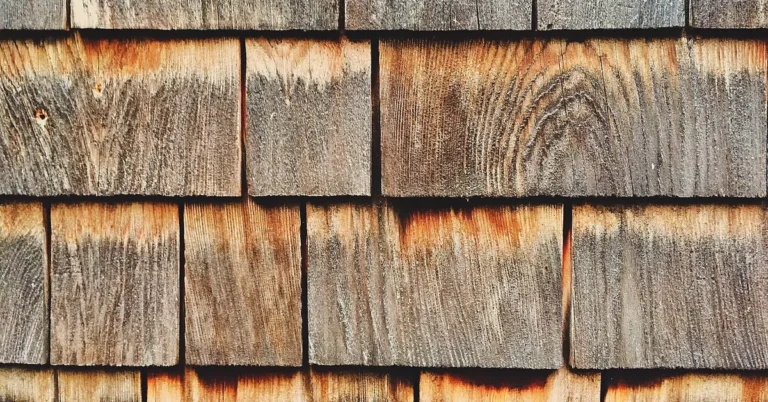
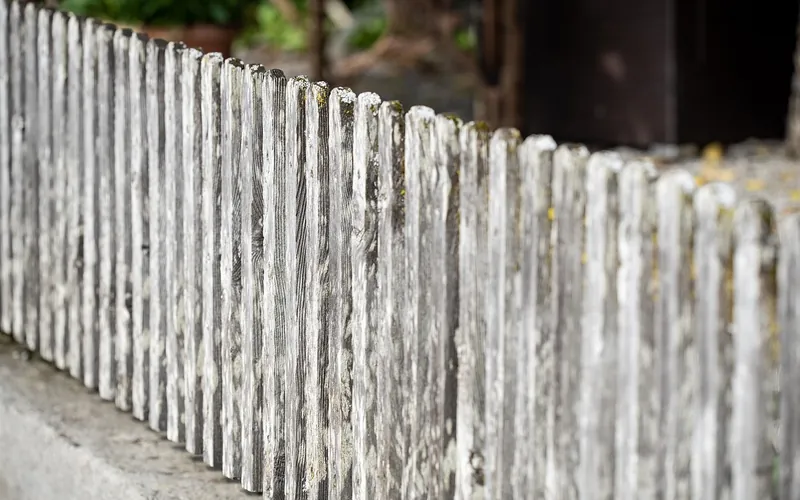
You do not have to stain cedar to keep it from rotting. According to Real Cedar, western red cedar carries natural extractives that resist insects and decay, and leaving it unfinished is a legitimate low-maintenance choice: it weathers to a silver gray. Stain is for controlling color and slowing surface weathering, not for rescuing a fence that would otherwise fail.
Stain it if you want to keep the warm red-brown tone, or if you want a finish that slows checking and fading. Either way, the choice is not permanent: gray cedar can be cleaned and stained later, as covered below. For how long an unfinished or finished fence lasts overall, see how long a cedar fence lasts.
How Long Does Each Finish Last on a Cedar Fence?
Real Cedar publishes service-life ranges by finish type. Fence pickets are usually rough-sawn or textured, so the third column is the one most fence owners should read:
| Finish type | Planed smooth cedar | Textured or rough-sawn cedar |
|---|---|---|
| Paint | Up to 10 years | Up to 12 years |
| Solid-color stain | 3 to 5 years | 4 to 6 years |
| Bleaching oil | 3 to 5 years | 5 to 6 years |
| Semi-transparent stain | 1 to 3 years | 2 to 4 years |
| Water-repellent preservative | 1 to 2 years | 1 to 2 years |
Two other published numbers sit around these. Real Cedar’s siding guide says an oil-based semi-transparent stain applied by best practice can last 3 to 6 years, and Ready Seal estimates 2 to 5 years on vertical surfaces like fences (and 1 to 3 on horizontal decks). Putting those together, plan on about 2 to 4 years for a semi-transparent stain on a rough-sawn fence, toward the longer end with two coats and a darker tone, since Ready Seal notes the pigment is what gives UV protection. That is a more cautious window than the 3 to 5 years often quoted.
Oil-Based vs. Water-Based Cedar Fence Stain
Oil-based semi-transparent stain is the safer pick for cedar. Real Cedar calls solvent-borne, oil-based semi-transparent stains the best choice for western red cedar because they soak into the wood instead of forming a surface film that can peel, and says oil-based versions outlast latex ones. Cedar also has a specific problem with water-based and opaque finishes: its water-soluble extractives can bleed through and discolor them.
| Factor | Oil-based semi-transparent | Water-based or latex |
|---|---|---|
| How it sits on the wood | Penetrates; no surface film to peel | Tends to form more of a film |
| Cedar extractive bleed | Less of a concern | Can discolor; Real Cedar says opaque latex and solid-color finishes may need an alkyd stain-blocking primer |
| Longevity | Real Cedar says oil-based outperforms latex semi-transparent | Shorter in Real Cedar’s comparison |
| Tool cleanup | Mineral spirits (per Ready Seal) | Soap and water |
| Best use on cedar | Default choice for fences | Only if low odor or a local VOC limit rules out oil |
The “tends to form a film”, “soap and water” and VOC rows are general product characteristics rather than figures from a cedar maker, so check your own can. For a different brand family, our Sherwin-Williams exterior stain comparison lists the WoodScapes and SuperDeck lines from their data sheets, and Cabot Gold vs Australian Timber Oil covers two popular oils head to head.
Preparation For Staining
Prep decides whether a penetrating stain soaks in or sits on top. The two cedar makers we read give different advice on smooth boards, so match the advice to your boards:
| Your fence boards | Prep from the maker sheets |
|---|---|
| New rough-sawn or textured | Real Cedar: no surface prep needed. Ready Seal: none beyond making sure the wood is dry |
| New smooth-planed | Real Cedar: scuff-sand with 50 to 60 grit. Ready Seal: do not sand; remove the mill glaze with 25 percent bleach and 75 percent water, 10 to 15 minutes, then rinse (pressure washer at 800 to 1,000 PSI or less) |
| Gray after a year or more, no old finish | Ready Seal: 50 percent bleach, 50 percent water, 15 to 20 minutes, rinse well. Real Cedar: sand, brush and wash |
| Old finish still on the wood | Strip it, neutralize and brighten (Ready Seal); Real Cedar says paint must come off if it is peeling, blistered or cross-grain checked |
For general dirt and mildew, Real Cedar recommends a mild non-phosphate detergent solution, with oxygen bleach for mildew, and warns never to mix bleach with an ammonia-containing detergent. If you do not own a pressure washer, our fence cleaning guide without a pressure washer covers the hand-wash methods. Fix any loose or split boards before you stain, using our guide to repairing cedar slats.
How Long Before You Can Stain a New Cedar Fence?
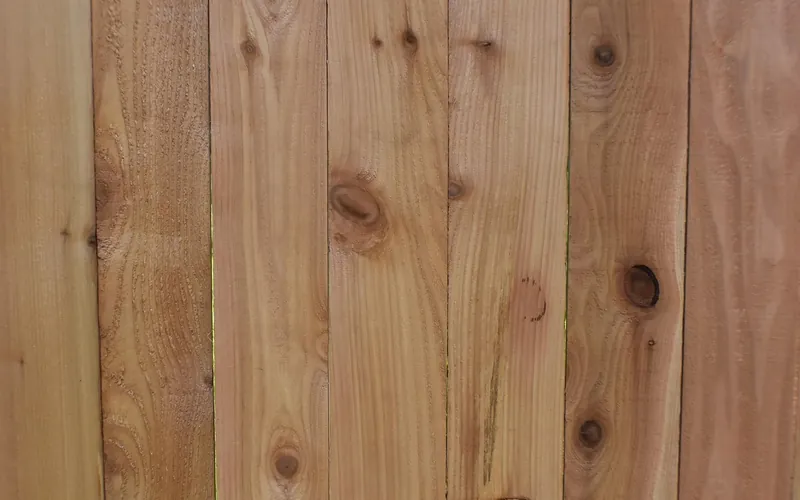
Stain a new cedar fence when it is dry, not after a fixed number of weeks. Many guides repeat a 30 to 60 day wait; we could not find that in either maker’s guidance. Real Cedar actually warns the other way: wood left exposed for a few weeks loses some ability to hold a finish, and surfaces weathered two or more weeks need to be sanded, brushed and washed first. Ready Seal ties timing to a number instead: it says touch and elapsed hours cannot tell you the wood is dry, and wants a moisture meter reading of 12 percent or less.
| Situation | What to do before staining |
|---|---|
| Just installed, wood feels dry | Meter-check several spots (corners, around knots, top and bottom); stain at 12 percent or less |
| Installed 2 or more weeks ago | Sand, brush and wash first (Real Cedar), then let it dry |
| Just washed or rained on | Wait until the meter reads 12 percent or less; Ready Seal says humid areas may only reach 14 to 15 percent, and the wood may then take just one light coat |
| Meter reads well above 15 percent | Do not stain; stain applied to wet wood can stay on the surface and later flake or peel (Ready Seal) |
The same 12 percent rule applies to every reapplication, and Ready Seal says an entry-level moisture meter works fine. Our cedar staining timing guide and cedar treatment guide cover the broader decision of which finish to use on other cedar projects.
12 percent moisture content or less before applying, on the first coat and every reapplication. Source: Ready Seal Info and Protocol, 2023
How Much Stain Does a Cedar Fence Need?
Ready Seal lists a coverage rate of 125 sq ft per gallon for a rough cedar fence, 150 for a spruce or pine fence, and 150 for smooth cedar decking. Multiply your fence area by the rate to get gallons for one coat. The table below is our arithmetic on the rough-cedar rate for a solid 6-foot-tall fence, with no allowance for gaps between pickets:
| Fence length (6 ft tall) | Area, one side | Gallons, one side | Gallons, both sides |
|---|---|---|---|
| 50 ft | 300 sq ft | 2.4 | 4.8 |
| 100 ft | 600 sq ft | 4.8 | 9.6 |
| 150 ft | 900 sq ft | 7.2 | 14.4 |
Other brands spread differently, so use the figure on your own can. Ready Seal also says not to over-apply: a coat that goes on too heavy sits on the surface instead of soaking in.
Application Techniques For Stain
Real Cedar says oil-based semi-transparent stain can be brushed, sprayed, padded or rolled, but brushing usually gives the best penetration, and spraying or rolling should be followed by back-brushing. Ready Seal takes a different line for its own formula: no back-brushing is needed, and it works with a brush, roller, pump-up sprayer or airless sprayer (0.18 to 0.23 GPM with a 211 or 213 tip).
- Fix loose or split boards and set any popped nails.
- Clean the fence of dirt, mildew and any old finish.
- Let the wood dry, then check it reads 12 percent moisture or less.
- Test the stain on a spare board or low corner.
- Apply the first coat by brush, or spray and back-brush.
- Add a light second coat only if the wood will take it.
- Wipe off any stain still wet after 24 hours.
When spraying a fence, overspray is the real risk. Ready Seal advises skipping windy days, covering plants with plastic (not on a hot day, when plastic can burn leaves), and laying a 4-foot-wide roll of construction paper along the base of the fence.
One coat or two? Real Cedar says two coats on textured cedar last longer than one. Ready Seal gives a test for whether your wood will accept a second coat: after the first coat dries for an hour, put a few drops in test spots, wait 30 to 45 minutes, then wipe. If you see only clear oil, the wood is ready for a light second coat; if you see pigment, the wood is full and a second coat will have to wait a year or more.
Can You Stain a Cedar Fence That Already Has Stain on It?
Only if the old finish is the same product or is fully removed. Ready Seal says its stain will not penetrate through any other finish, which is why a fence with an unknown old stain usually needs stripping, neutralizing and brightening back to bare wood first. If the old coat was Ready Seal applied to bare wood, the prep is a light clean: 25 percent bleach and 75 percent water for 10 to 20 minutes, then a hose rinse. A new stain also will not fully hide an old color, so test on a spare board. For stain choices on other woods, see our guide to the best fence stain.
Weather Considerations
Temperature limits vary by product, so read your can. Ready Seal states there are no temperature restrictions for its stain, that it can go on in direct sunlight, and that it will not wash off if it rains within hours, provided the wood was clean, dry to 12 percent or less, and not over-applied. It dries within hours but takes up to 14 days to cure to its final tone.
Maintenance and Reapplication
Clean the fence yearly with a mild non-phosphate detergent. Real Cedar offers a quick test to tell mildew from dirt: a drop of household bleach (5 percent sodium hypochlorite) bleaches mildew in 15 to 30 seconds and leaves plain dirt alone. Reapply on the maker’s interval, when the wood is clean and at 12 percent moisture or less, rather than on a calendar guess.
Black streaks near nails are usually not stain failure. Real Cedar says water-soluble extractives and iron contact stain the wood, and recommends hot-dipped galvanized, aluminum or stainless fasteners and a dilute oxalic acid scrub to treat existing marks.
Troubleshooting Common Cedar Stain Problems
- Still wet and oily after 24 hours: Ready Seal says this means too much was applied or something blocked penetration; wipe the surface with a rag dampened with mineral spirits.
- Stain sits on top and later flakes: the wood was too wet, over-applied, or already carried another finish.
- Patchy color on new smooth boards: mill glaze can block absorption on smooth-planed cedar, so remove it as in the prep table.
- Mildew coming back: clean with oxygen bleach and consider a stain containing mildewcide, as Real Cedar suggests when refinishing.
Frequently Asked Questions
Do You Need To Prep A Cedar Fence Before Staining?
Yes. At minimum, clean off dirt and mildew and make sure the wood is dry to 12 percent moisture or less. Rough-sawn boards need no sanding, smooth-planed boards need the surface opened (Real Cedar suggests sanding at 50 to 60 grit; Ready Seal suggests a bleach rinse instead), and gray weathered boards need cleaning and brightening.
Should A Cedar Fence Be Stained Or Sealed?
For a fence, a penetrating oil-based semi-transparent stain that also contains a sealer, such as Ready Seal, does both jobs in one product. Real Cedar notes that clear or transparent finishes without pigment fade fastest, and that film-forming clear finishes like lacquer, shellac, urethane and varnish are not recommended outdoors on cedar.
What Is The Best Thing To Stain Cedar With?
An oil-based semi-transparent stain is the best choice, according to Real Cedar. It soaks in instead of forming a film and shows the grain. Pick a darker tone for longer UV protection, since the pigment is what blocks the sun.
What Is The Best Product For Staining Cedar Fence?
Ready Seal 512 Natural Cedar is our pick for fences: it is oil-based, semi-transparent, needs no back-brushing, and is rated by its maker for 2 to 5 years on vertical surfaces. Cabot Australian Timber Oil and Sherwin-Williams WoodScapes are alternatives; compare them in our linked guides.
How Often Should You Reapply Cedar Fence Stain?
Plan on every 2 to 4 years for a semi-transparent stain on a rough-sawn fence, based on Real Cedar (2 to 4 years textured) and Ready Seal (2 to 5 years vertical). Reapply when the wood looks faded or the finish has worn thin, after cleaning and drying it to 12 percent moisture or less.
How Long Does Cedar Fence Stain Last?
Between 1 and 3 years on planed smooth cedar and 2 to 4 years on textured cedar for a semi-transparent stain, per Real Cedar, with Ready Seal estimating 2 to 5 years on fences. Darker tones, two coats on rough-sawn wood and good prep push it toward the top of the range.
Conclusion
Stain a cedar fence with an oil-based semi-transparent product once the wood is clean and reads 12 percent moisture or less, and expect to redo it every few years. Measure first, buy by square footage, and use the maker’s application method for the brand you choose.
Sponsored / affiliate links. As an Amazon Associate I earn from qualifying purchases. I may earn additional commission from eligible campaigns.