Best Way to Touch Up Wall Paint: A Genius Hack
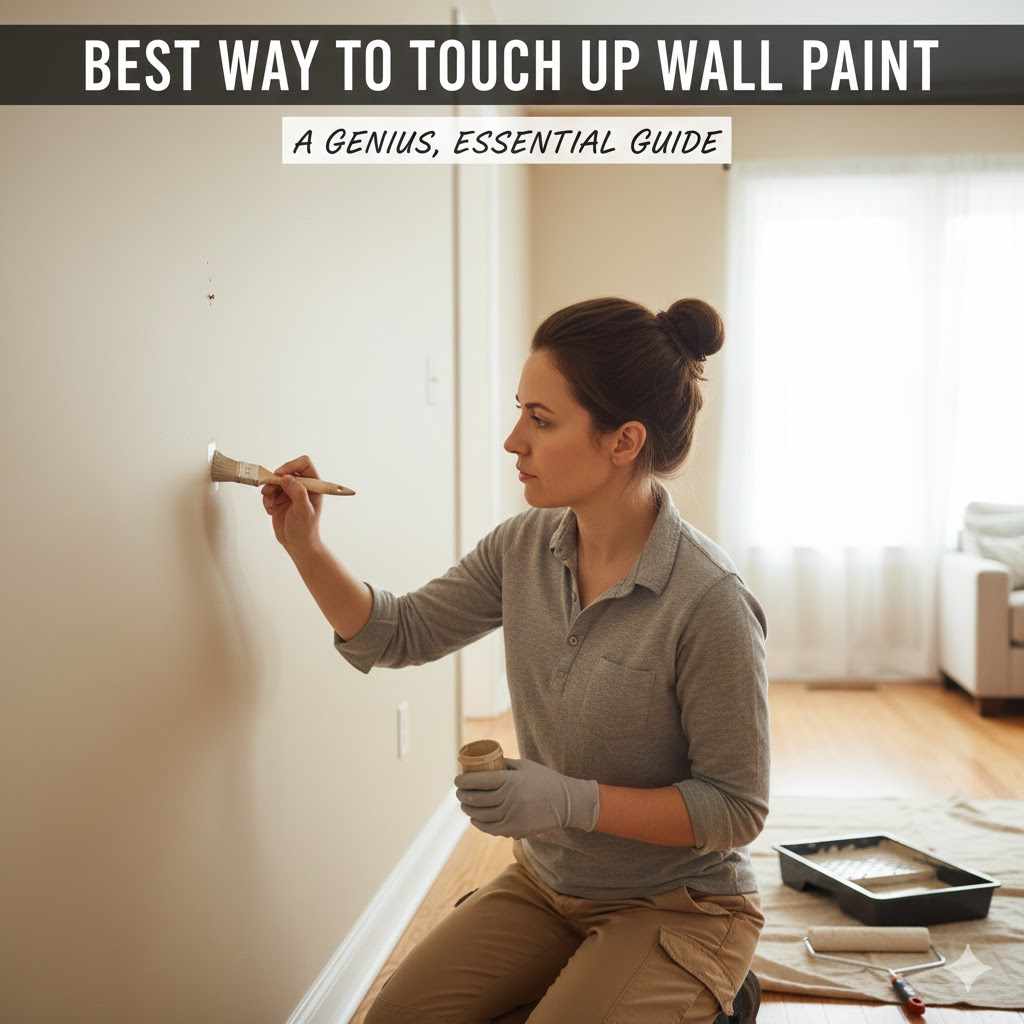
The best way to touch up wall paint is to clean the area, then apply a very thin coat of the original paint using a small foam roller. Dab the paint in the center of the scuff and use a light “feathering” motion to blend the new paint outward, which mimics the wall’s original texture and makes the repair invisible.
Hello there! I’m Md Meraj. In my workshop, I see how a small detail can make a big difference. It’s the same with your home. A tiny scuff or scratch on a beautifully painted wall can draw your eye every time you walk into the room. It’s frustrating, right? You try to fix it, but end up with a blotchy patch that looks worse than the original mark.
Many homeowners struggle with this. They want a simple fix but worry about making a mess. Well, you’re in the right place. Today, I’m going to show you a simple, no-fail method to touch up wall paint like a pro. Forget those ugly patches. We are going to make that repair completely disappear. Let’s get those walls looking perfect again, together.
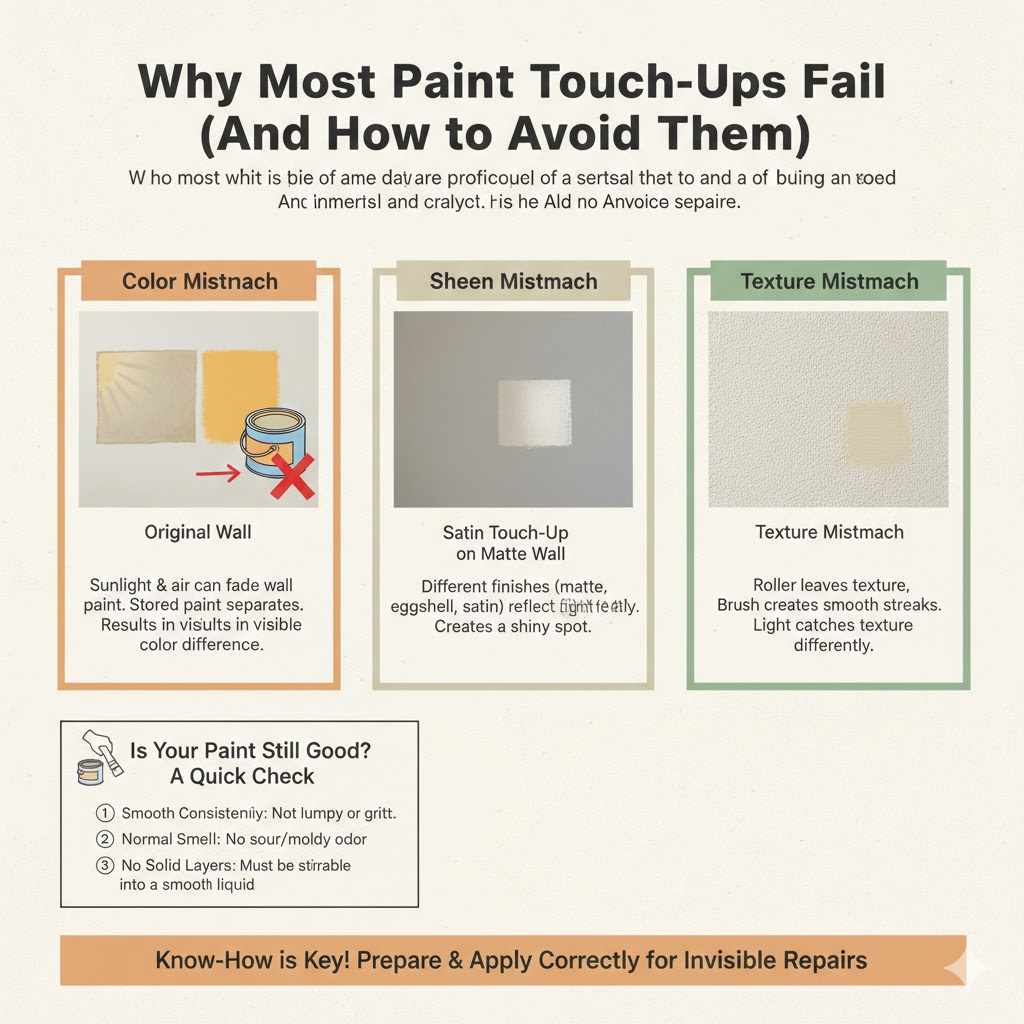
Why Most Paint Touch-Ups Fail (And How to Avoid Them)
Before we jump into our genius hack, let’s talk about why touch-ups often go wrong. When you understand the common pitfalls, it’s much easier to sidestep them. Think of this as learning the rules of the road before you start driving. It builds confidence and ensures a smooth journey.
The most common reason for a failed touch-up is a mismatch. This can happen in three ways:
- Color Mismatch: Even if you use paint from the original can, the color on your wall has been exposed to sunlight and air. It may have faded or changed slightly over time. Stored paint can also separate.
- Sheen Mismatch: Paint comes in different finishes, like matte, eggshell, satin, and semi-gloss. Applying a satin touch-up to a matte wall will create a shiny spot that sticks out like a sore thumb.
- Texture Mismatch: This is the one most people overlook. If your wall was painted with a roller, it has a slight stipple texture. Applying touch-up paint with a brush creates smooth streaks, which catch the light differently and reveal the repair.
Fortunately, you can overcome all these issues with a little bit of know-how. The secret isn’t just about the paint—it’s about the preparation and the application. Our method today tackles all three of these challenges at once.
Is Your Paint Still Good? A Quick Check
First, find that original can of paint. If you don’t have it, don’t worry—we’ll cover that in the FAQ section. If you do have it, give it a good stir. Don’t shake it! Shaking creates air bubbles. Use a paint stirrer and mix for several minutes until the color is completely uniform.
Now, let’s check if it’s still usable. Look for:
- A Smooth Consistency: The paint should be smooth, not lumpy or gritty.
- A Normal Smell: If it smells sour or moldy, the paint has gone bad. It’s best to get a new sample color-matched.
- No Solid Layers: A thick, rubbery skin on top is a bad sign. If you can’t stir it back into a smooth liquid, it’s time for a new can.
Using old, bad paint is a surefire way to get a poor result. Taking a minute to check will save you a headache later.
Gather Your Tools and Materials: Keep It Simple
You don’t need a lot of fancy equipment for this job. We’re keeping the list short and sweet so you can get started right away. Think of this as your recipe for success.
Your Touch-Up Toolkit:
- Original Wall Paint: Make sure it’s stirred well.
- Small Foam Roller (2-4 inches): This is a key part of our hack! It mimics the wall’s texture perfectly. A small “hot dog” roller is ideal.
- Small Paint Tray: Just big enough for your small roller. A paper plate works in a pinch.
- Clean, Lint-Free Rags or Microfiber Cloths: You’ll need one for cleaning and one for any drips.
- Mild Soap and Water: A simple solution in a small bowl or spray bottle is perfect.
- Fine-Grit Sanding Sponge (220-grit): Only needed if the damage is raised, like a paint drip or a rough scrape.
- Cardboard or Paper: For dabbing off excess paint from your roller.
That’s it! Having these items ready before you start makes the entire process feel calm and organized. No running around looking for supplies midway through the job.
| Tool | Why It’s Important for This Hack |
|---|---|
| Small Foam Roller | Creates a light, stippled texture that matches the original roller finish. Avoids brush strokes. |
| Mild Soap & Water | Cleans away oils and dirt, ensuring the new paint sticks properly to the wall, not the grime. |
| Cardboard Scrap | Used to offload excess paint. The key to a good touch-up is using a very small amount of paint. |
The Step-by-Step Guide to a Flawless Paint Touch-Up
Alright, let’s get to work. Follow these steps carefully, and I promise you’ll be amazed at the result. The magic is in the technique, not in working harder. We’ll go slow and be deliberate.
Step 1: Prepare the Wall Surface
You wouldn’t paint on a dusty piece of wood, and you shouldn’t paint on a dirty wall. A clean surface is crucial for proper paint adhesion.
- Clean the Area: Mix a drop of mild dish soap in a small bowl of warm water. Dip a clean cloth in the soapy water, wring it out well, and gently wipe the scuff mark and the area immediately around it.
- Rinse: With a separate cloth dampened with plain water, wipe the soap residue away.
- Dry Completely: Let the area air dry completely, or pat it dry with a clean, dry rag. The wall must be 100% dry before you apply any paint.
- Sand if Necessary: Look closely at the damage. Is it just a colored scuff, or is the surface raised or gouged? If it’s a raised paint drip or a rough scrape, very lightly sand it with a 220-grit sanding sponge. Your goal is just to smooth the texture, not to remove all the paint. Wipe away any sanding dust with a dry cloth. For dents or holes, you’ll need to fill them with spackle and prime first, but that’s a different project! This guide is for simple scuffs and scratches.
Step 2: Load Your Roller Correctly
This step is where most people apply too much paint. The mantra here is “less is more.” We want to apply a paper-thin layer.
- Pour a Tiny Amount of Paint: Pour a very small amount of your well-stirred paint into the paint tray. You only need about a tablespoon to start.
- Lightly Load the Roller: Dip your foam roller into the paint, then roll it back and forth on the ramp of the tray to distribute the paint evenly. You want the roller to be lightly coated, not dripping.
- Offload the Excess: Now for a crucial step. Roll the foam roller onto a piece of scrap cardboard or paper. This removes the excess paint and leaves you with the perfect amount for a delicate touch-up. Your roller should look almost dry.
Step 3: Apply the Paint with the “Feathering” Hack
Here it is—the genius hack that makes all the difference. We will not be painting a square patch over the scuff. We are going to blend the new paint seamlessly into the old.
- Start at the Center: Gently dab or roll the foam roller directly onto the center of the scuff mark. This deposits the most paint right where it’s needed most.
- Feather the Edges: Without adding any more paint to your roller, begin working outward from the center. Use very light pressure and a “feathering” motion. Roll gently from the fresh paint outwards into the surrounding wall area. Lift the roller as you finish each stroke. This creates a soft, undefined edge instead of a hard line.
- Stipple for Texture: Continue to lightly dab and roll around the feathered edges. This stippling motion helps replicate the texture of the original paint job and breaks up any visible lines. The repair area should now be slightly larger than the original scuff, but the edges should be faint and blended.
- Step Back and Look: Look at the wall from different angles. Does the touch-up disappear? If you can still see a hard edge, you can use the nearly-dry roller to soften it more. Resist the urge to add more paint!
The goal is to trick the eye. By feathering the paint, you are creating a gradual transition from new to old paint, which is much harder to spot than an abrupt stop.
Step 4: Allow It to Dry and Assess
Patience is a virtue, especially in DIY projects. Wet paint often looks different from dry paint in both color and sheen.
- Let It Dry Completely: Wait at least 4-6 hours, or whatever the paint can recommends for recoat time. Don’t be tempted to touch it or add a second coat too early.
- Check Your Work: Once it’s fully dry, inspect the touch-up in different lighting conditions. Look at it straight on and from an angle. In most cases, if you followed the steps, the scuff will be gone, and the repair will be invisible.
- Apply a Second Coat (Only If Necessary): If the original mark is still slightly visible, you can apply a second, very thin coat. Repeat Steps 2 and 3 exactly as before, always using a nearly-dry roller and feathering the edges. Most of the time, one thin coat is all you need.
And that’s it! You’ve just completed a perfect, professional-looking touch-up. For more guidance on paint safety and disposal, you can refer to resources from the Environmental Protection Agency (EPA).
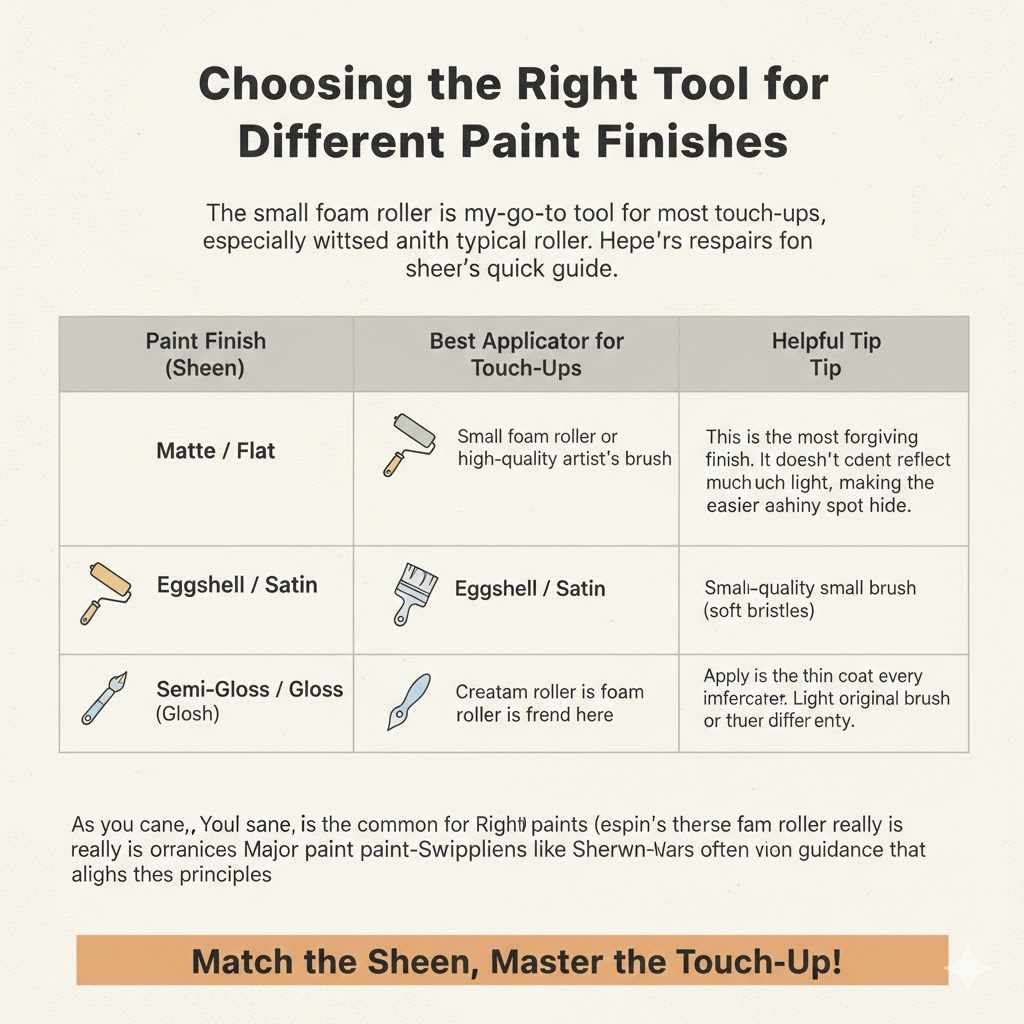
Choosing the Right Tool for Different Paint Finishes
The small foam roller is my go-to tool for most touch-ups, especially on walls painted with a typical roller. However, the sheen of your paint can influence the best choice. Here’s a quick guide.
| Paint Finish (Sheen) | Best Applicator for Touch-Ups | Helpful Tip |
|---|---|---|
| Matte / Flat | Small foam roller or high-quality artist’s brush | This is the most forgiving finish. It doesn’t reflect much light, making repairs easier to hide. |
| Eggshell / Satin | Small foam roller | These finishes have a slight sheen, so matching the texture is critical. The foam roller is your best friend here. |
| Semi-Gloss / Gloss | High-quality small brush (soft bristles) | These are the trickiest. The high sheen shows every imperfection. Apply a thin coat and follow the original brush or roller direction. |
As you can see, for the most common wall paints (eggshell and satin), the small foam roller really is the champion. Major paint suppliers like Sherwin-Williams often provide guidance that aligns with these principles, emphasizing the importance of matching both color and sheen for a successful project.
Frequently Asked Questions (FAQ)
1. What if I don’t have the original paint can?
This is a very common problem! Carefully chip off a small piece of paint from an inconspicuous area, like inside a closet or behind a large piece of furniture. A one-inch square is plenty. Take that chip to any major paint store. They have color-matching technology that can analyze the chip and create a new can of paint that is a near-perfect match in both color and sheen.
2. Do I need to use primer before touching up?
For minor scuffs and scratches on a previously painted wall, you do not need to use a primer. The existing paint acts as a primer for your touch-up. You only need a primer if you have repaired a deep gouge with spackle or if you are touching up a bare, unpainted surface.
3. Can I use a regular paintbrush instead of a foam roller?
You can, but it’s much harder to get an invisible repair. A paintbrush leaves fine lines (brush strokes) that have a different texture from a rolled wall. This difference in texture catches the light and highlights the touched-up area. A foam roller or a stippling technique with a brush is much better for blending.
4. How long should I wait to clean the newly touched-up spot?
While the paint may feel dry to the touch in a few hours, it takes much longer to fully cure and harden. Most latex paints take about 30 days to cure completely. To be safe, avoid scrubbing or aggressively cleaning the touched-up area for at least two to four weeks. A gentle dusting is fine.
5. Why does my touch-up look like a dark or shiny spot?
This is called “flashing,” and it’s usually caused by a difference in sheen or texture. If the touch-up spot is shinier, you may have used a higher-gloss paint (satin on a matte wall) or applied it too heavily. Using the feathering technique with the correct sheen is the best way to prevent flashing. Sometimes, temperature and humidity can also affect how the paint dries.
6. Can I touch up old oil-based paint with new latex paint?
No, you should never apply latex (water-based) paint directly over oil-based paint without proper preparation. The latex paint will not adhere well and will eventually peel off. If your wall has old oil-based paint, you need to first clean it, lightly sand it, and then apply a bonding primer before you can use latex paint for your touch-up.
You’ve Got This! Enjoy Your Flawless Walls
There you have it. You now have the knowledge and technique to tackle any scuff or scratch on your walls with confidence. It’s not about having expensive tools or years of experience; it’s about being thoughtful in your approach. By focusing on a clean surface, using the right applicator, and mastering that gentle feathering motion, you can achieve a repair so good that even you will have trouble finding it later.
Remember, every project is a chance to learn and build your skills. This simple hack is a perfect example of how a little insider knowledge can transform a frustrating task into a satisfying success. So go ahead, find those little imperfections that have been bothering you, and make them disappear. You’ll feel a great sense of pride every time you look at your beautiful, seamless walls.
Happy fixing!