Boise Cascade Elgin Plywood: What Mill #528 Actually Makes (2026)
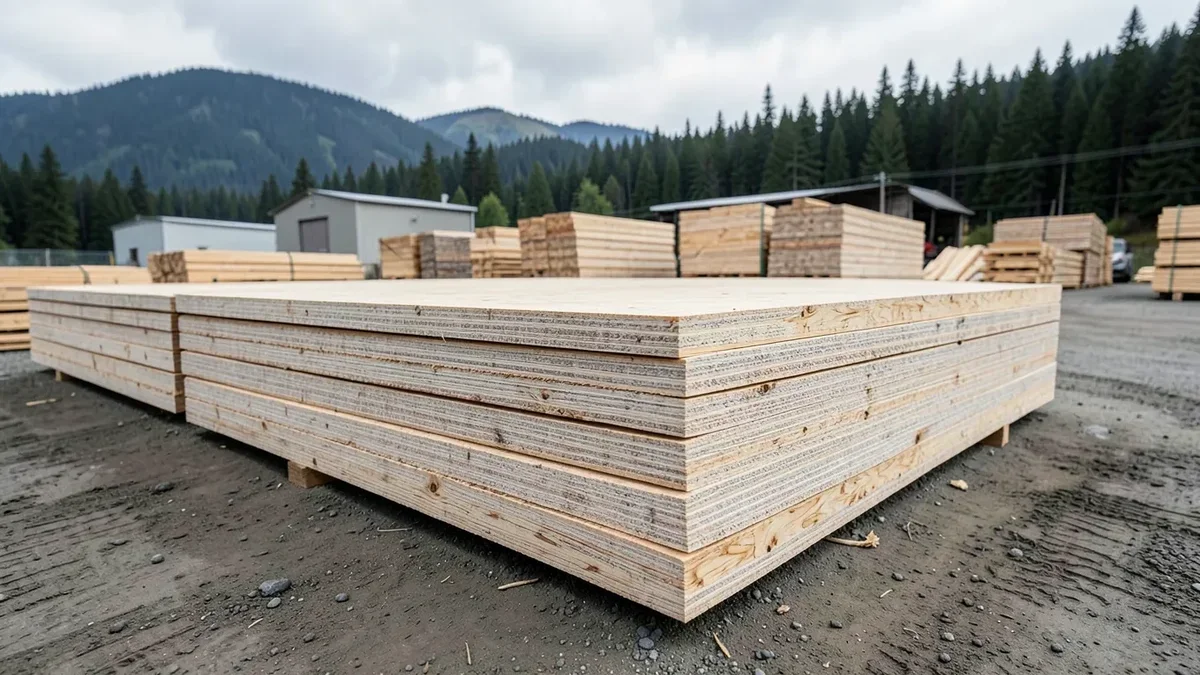
Boise Cascade Elgin Plywood isn’t a single branded product you pick off a shelf — it’s structural softwood plywood made at Boise Cascade’s Mill #528 in Elgin, Oregon, and that mill is still operating today.
If you searched for this expecting a specific consumer product page, here’s the direct answer: Elgin, in Union County near La Grande, is one of six Boise Cascade plywood mills in North America, and it’s APA-certified as Mill #528. Roughly 94% of what the mill actually ships is structural sheathing for roofs and walls — not the sanded, furniture-grade panels a lot of the old marketing copy for this page implied. Below is what the Elgin mill actually produces, how the plywood is made there, how to confirm a sheet really came from Elgin, and what you’ll need on-site if you’re installing this grade of sheathing.
What Boise Cascade’s Elgin, Oregon Mill Actually Produces
Elgin has historically peeled Douglas fir, white fir, and spruce logs for veneer. In recent years the mill has leaned more on pine logs (roughly 7 to 12 inches in diameter) as a substitute for white fir in the inner plies and panel backs — pine log costs run lower, and using less white fir frees that species up for the stud mill that sits right next to the plywood plant on the same site. The two mills share a single log-utilization yard, so almost nothing that comes off a truck goes to waste.
Sheathing is the headline product — on a 3/8-inch basis, the mill’s output has run around 235 million square feet a year, with sheathing accounting for roughly 94% of it. The rest is split between APA Sturd-I-Floor (a combined subfloor-and-underlayment panel rated for residential floor systems) and smaller runs of sanded and specialty panels that Boise Cascade also produces company-wide.
Best Adhesive For Gluing Down Plywood Sheathing
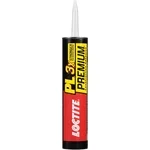 |
Loctite PL Premium Polyurethane Construction Adhesive – $6.48 Raw plywood sheathing itself isn’t something you buy on Amazon — it ships through lumberyards. This is the adhesive that actually goes with it on install day.
|
Boise Cascade doesn’t sell panels directly to homeowners, and very few retailers put “Elgin” on the shelf tag — the mill’s plywood moves through building-material distributors and lumberyards mixed in with output from the company’s other plants. The reliable way to confirm a specific sheet actually came from Elgin is the APA grade-trademark stamp printed on the panel back: look for mill number 528 in the stamp. Boise Cascade’s other plywood mills carry different numbers — Medford, Oregon is 526, and Chester, South Carolina is 548 — so the stamp, not the store, is what tells you where a sheet was actually made.
How Elgin Turns Logs Into Structural Panels
Before a log gets peeled, it’s conditioned in hot water vats to soften the wood. Douglas fir and larch logs need 10 to 12 hours in the vats to reach a 120°F core temperature; pine, by contrast, only needs about two hours at 85°F. That temperature difference is part of why the mill has been shifting more pine into the mix — it moves through conditioning faster.
Conditioned logs go through a Coe 790 charger into a Premier VL50 8-foot lathe, which can peel logs up to 27 inches in diameter into continuous veneer ribbon. From there the veneer runs through three separate dryers — a Raute jet dryer plus two longitudinal dryers from Coe and Moore — before it’s laid up, glued, and pressed. Elgin runs three press lines with 90 openings between them, which is what actually turns stacked, glued veneer sheets into a finished structural panel.
Nothing from the process gets thrown out. Bark is converted to hog fuel, wood chips go to a nearby paper mill, and sawdust and shavings feed a particleboard plant. On the emissions side, a thermal/catalytic oxidizer installed in 2003 destroys more than 95% of the VOCs generated during gluing and pressing before they reach the stack — a real piece of equipment, not the vague “eco-friendly” language the old version of this page used.
Grades, Certifications, and What “APA-Rated” Actually Means
Boise Cascade is an APA (The Engineered Wood Association) member manufacturer, and Elgin’s panels are graded on the same A-through-D scale APA uses across the industry: A-grade veneer is smooth and essentially defect-free, while lower letter grades allow progressively more knots, patches, and repairs on the face and back. Structural sheathing panels are certified to the U.S. Voluntary Product Standard PS 1 for structural plywood, which sets the requirements for panel construction, glue bond, and strength that let it carry a code-recognized span rating for roof and wall applications.
In practice, that certification — not a marketing claim about “rigorous testing” — is what a builder is actually relying on when they specify Boise Cascade sheathing on a job. The APA stamp on the panel lists the mill number, the panel grade, the span rating, and the standard it meets, all of which are checkable facts rather than a sales pitch.
Structural sheathing from a mill like Elgin typically ships in thicknesses from 3/8 inch up to 3/4 inch, with the span rating printed as two numbers separated by a slash — for example, 32/16 — on the APA stamp. The first number is the maximum recommended rafter or truss spacing (in inches) for roof sheathing use, and the second is the maximum joist spacing for subfloor use. A 32/16-rated panel, for instance, is rated for rafters up to 32 inches on-center or floor joists up to 16 inches on-center. Always match the span rating to your actual framing spacing rather than assuming a thicker panel automatically means a longer allowable span — the rating, not the thickness alone, is what your local inspector will check.
Elgin vs. Boise Cascade’s Other Plywood Mills
Boise Cascade runs plywood mills in several states, and it’s easy to conflate them if you’re researching the company rather than one specific plant. Elgin (Mill #528) and Medford (Mill #526) are both in Oregon and both run on Pacific Northwest softwood species. Boise Cascade’s Chester, South Carolina mill (Mill #548) is a separate operation the company acquired in 2013, with its own softwood plywood line and roughly 320 million square feet of annual capacity — nearly 300 employees and a facility Boise Cascade has invested more than $40 million into since taking it over. If the plywood you’re researching is tied to a South Carolina project or supplier, that’s the mill you actually want, not Elgin.
Installing This Grade of Sheathing: What Actually Holds It Down
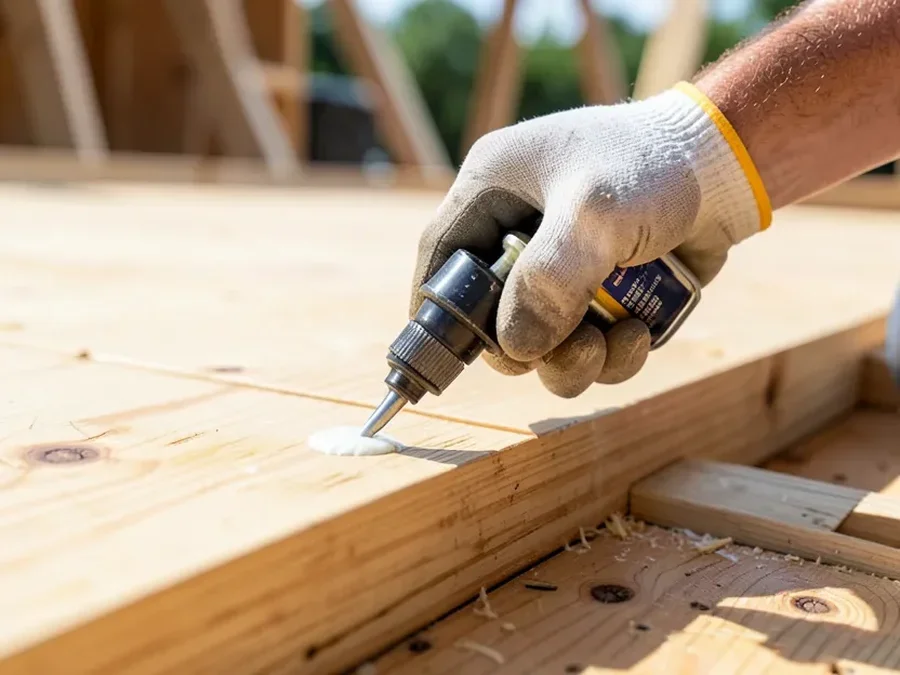
Structural sheathing like what comes out of Elgin is fastened with nails or screws on a schedule set by the local building code and the panel’s span rating — that part doesn’t change based on which mill made the sheet. What does help, especially for subfloor applications, is adding construction adhesive between the panel and the joist before fastening. A glued-and-fastened floor system resists squeaks and nail pops far better than fasteners alone, which is why APA’s own glued-floor-system spec (AFG-01) exists in the first place, and why the adhesive above meets that standard.
For sheathing on walls or roofs, the same adhesive works as a supplement to your fastener schedule at panel edges and seams, particularly where you can’t get a fastener into a stud or rafter at the exact spot you need. It’s not a substitute for proper nailing or screwing — check your local code and the panel’s span rating first — but it closes gaps that fasteners alone can leave. A typical fastener schedule for subfloor panels calls for fasteners spaced about 6 inches apart along panel edges and roughly 12 inches apart in the field of the panel, but the exact spacing, fastener type, and length always come from the span rating on the panel and your local building code — not a generic rule of thumb.
The takeaway for anyone who landed on this page looking for “Boise Cascade Elgin Plywood” as a product: what you’re actually researching is one specific, currently-operating mill’s structural sheathing output, identifiable by the APA 528 stamp, built to PS 1 and graded like any other APA panel. It isn’t a specialty or premium product line distinct from what any APA-certified mill produces — the value is in knowing exactly which mill made your panel and matching its span rating to your framing, not in the Elgin name itself.
Frequently Asked Questions
What does Boise Cascade actually make at its Elgin, Oregon plant?
Boise Cascade’s Elgin, Oregon plant (APA Mill #528) makes structural softwood plywood, mostly sheathing for roofs and walls, along with smaller volumes of APA Sturd-I-Floor and other sanded and specialty panels. It is not a furniture-grade or decorative plywood mill.
Is the Elgin, Oregon Boise Cascade mill still operating in 2026?
Yes. Elgin remains an active, APA-certified Boise Cascade plywood mill (Mill #528) as of 2026, alongside the company’s other plywood mills in Medford, Oregon and Chester, South Carolina.
How can I tell if a sheet of plywood came from the Elgin mill?
Check the APA grade-trademark stamp printed on the back of the panel. It lists a mill number along with the grade and span rating — Elgin’s panels are stamped with mill number 528. Retailers rarely label plywood by mill, so the stamp is the only reliable way to confirm the source.
Where can I buy Boise Cascade plywood?
Boise Cascade sells through building-material distributors and lumberyards rather than direct to consumers, and panels from different mills are typically mixed together on a distributor’s shelf. Ask your lumberyard whether they carry Boise Cascade sheathing and check the APA stamp on the panel if you specifically need Elgin-made (528) product.
Sponsored / affiliate links. As an Amazon Associate I earn from qualifying purchases. I may earn additional commission from eligible campaigns.