Bored Well Vs Drilled Well: The Essential Smart Choice
For most homeowners, a drilled well is the smarter, more reliable choice. It taps into deeper, cleaner water sources protected from surface contamination, ensuring better long-term water quality and security. While a bored well is cheaper upfront, its shallow depth makes it vulnerable to drought and pollution, posing potential risks.
Hello there! Md Meraj here. In my workshop, we talk a lot about making smart choices for projects that last a lifetime. Whether it’s picking the right wood or the right joint, the goal is always a strong, reliable result. Choosing a water well for your home is no different. It’s one of the most important decisions you can make for your property.
You’ve probably heard the terms “bored well” and “drilled well” thrown around. It can sound confusing, but I promise it’s simpler than you think. Getting this choice right means having safe, clean water for your family for decades. Getting it wrong can lead to headaches, extra costs, and worries about your water supply.
Don’t worry, I’m here to help clear things up. We’re going to walk through this together, step by step. We’ll look at what each well is, how they differ, and which one is the right fit for your home. By the end, you’ll feel confident and ready to make the best choice.
What Exactly is a Bored Well?
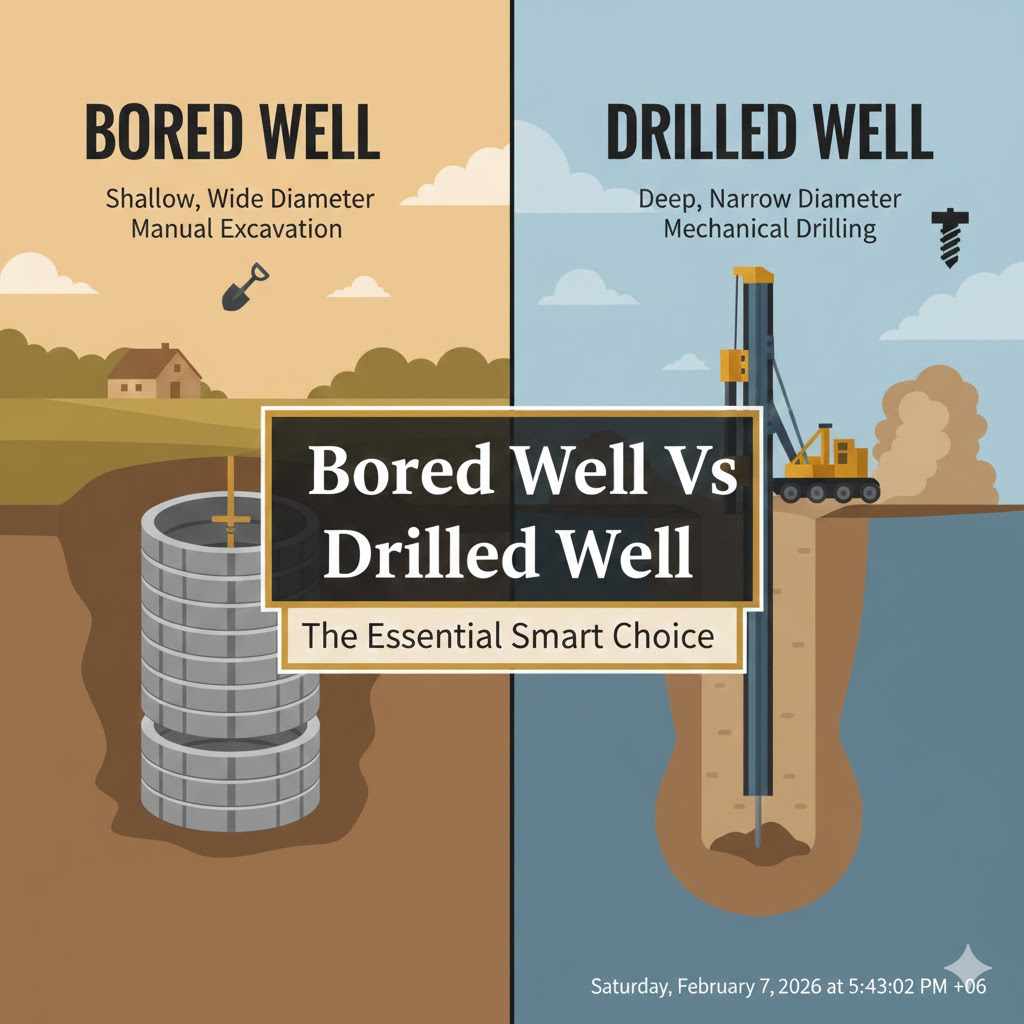
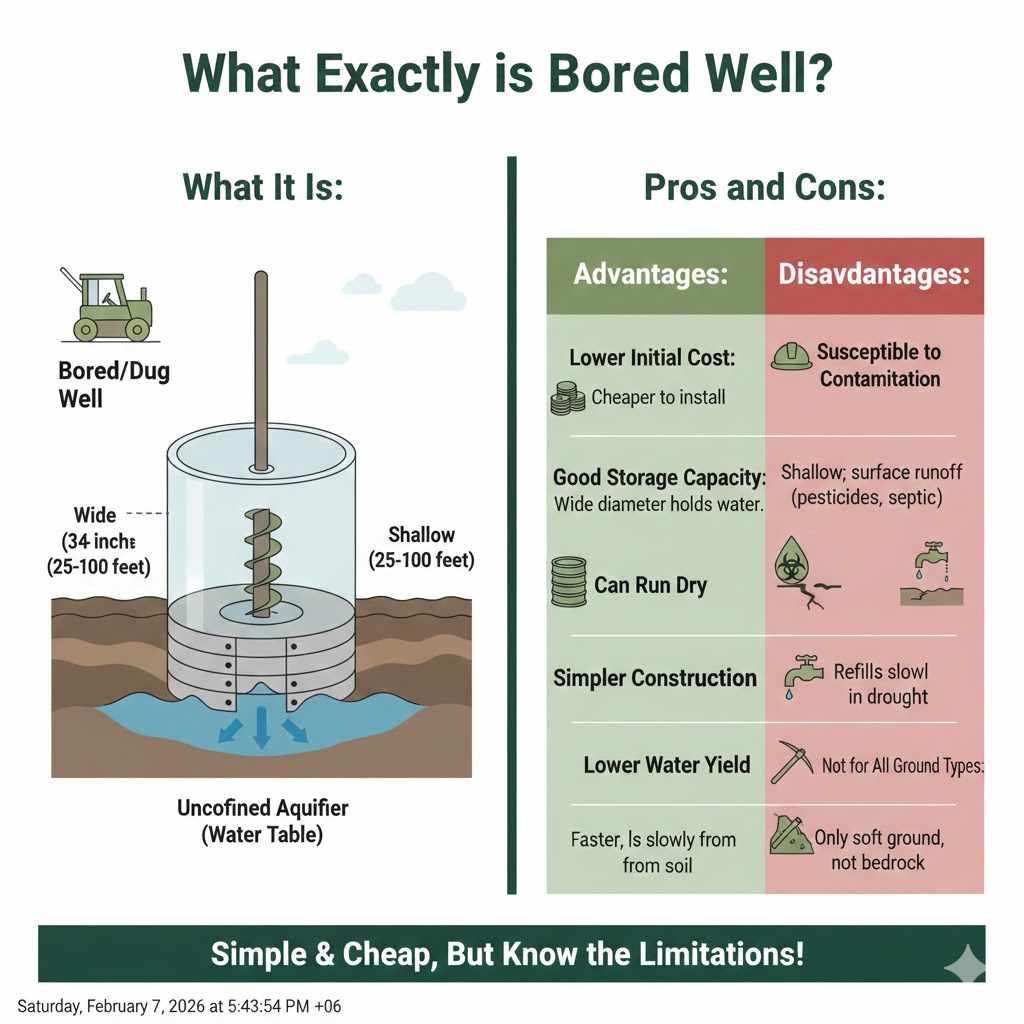
Imagine using a giant auger—like a massive corkscrew—to dig a wide, shallow hole in your backyard. That’s pretty much how a bored well is made. These wells are also known as dug wells because the process is more about digging and scooping than drilling.
The equipment used is simpler and less powerful than a drilling rig. A large-diameter auger bores down through softer ground like clay, sand, and gravel. Because of this method, bored wells have two main characteristics:
- They are wide. Typically, a bored well is 24 to 36 inches in diameter. This large size allows it to act as a storage reservoir, holding a significant amount of water that seeps in from the surrounding soil.
- They are shallow. Bored wells usually only go down 25 to 100 feet. They draw water from the unconfined aquifer, which is the water table closest to the surface.
Once the hole is dug, large concrete or steel sections called casings are lowered into it to keep the walls from collapsing. The water that fills the well is essentially groundwater that’s sitting just below the surface.
Pros and Cons of a Bored Well
Like choosing a simple pocket-hole jig over a complex mortise and tenon machine, there are times when simple and cheap is good enough. But it’s crucial to know the limitations.
Advantages of a Bored Well:
- Lower Initial Cost: The equipment and process are simpler, making bored wells significantly cheaper to install than drilled wells. For someone on a tight budget, this is a major draw.
- Good Storage Capacity: The wide diameter means the well itself holds a lot of water. This can be helpful if you use water in short, high-volume bursts.
- Simpler Construction: Installation is faster and requires less heavy-duty machinery, which can be an advantage for properties with difficult access.
Disadvantages of a Bored Well:
- Susceptible to Contamination: This is the biggest concern. Because they are so shallow, bored wells draw from surface water. This water can be easily contaminated by runoff from pesticides, fertilizers, septic systems, and animal waste. The U.S. Environmental Protection Agency (EPA) warns that shallow wells are at a higher risk for these issues.
- Can Run Dry: The water table near the surface can drop dramatically during dry seasons or droughts. A bored well that provides plenty of water in the spring might run completely dry by late summer.
- Lower Water Yield: While it can store water, a bored well refills slowly. It relies on water seeping in from the surrounding soil. If you use water faster than it refills, you’ll have to wait.
- Not for All Ground Types: Bored wells only work in soft, unconsolidated earth. They cannot get through bedrock.
What Exactly is a Drilled Well?
Now, let’s think about a drilled well. If a bored well is a wide, shallow bucket, a drilled well is a long, thin straw. It’s designed to go deep—way past the surface level—to reach pure, protected water sources.
Drilled wells are created using powerful drilling rigs. These machines can hammer and cut through all kinds of material, including dense clay, packed gravel, and solid bedrock. This allows them to reach deep underground aquifers.
Drilled wells have a few defining features:
- They are narrow. A typical drilled well has a diameter of only 4 to 8 inches.
- They are deep. Drilled wells often go down hundreds of feet—sometimes over 1,000 feet deep! This depth is key to their reliability and water quality.
A steel or PVC casing is installed for the entire depth of the well to prevent collapse and to seal it off from any shallow, contaminated water. The pump is then lowered deep into the well to bring the clean water to your home.
Pros and Cons of a Drilled Well
This is like investing in a high-quality table saw. It costs more upfront, but its power, precision, and reliability will serve you well for decades. A drilled well is a serious, long-term investment in your home’s most essential resource.
Advantages of a Drilled Well:
- Superior Water Quality: This is the number one reason to choose a drilled well. By reaching deep into confined aquifers, it bypasses surface contaminants. The layers of rock and clay act as natural filters, resulting in much purer, safer water.
- Highly Reliable Water Source: Deep aquifers are not affected by seasonal changes or short-term droughts. A drilled well provides a consistent and dependable supply of water year-round.
- Higher Water Yield: Drilled wells tap into productive water-bearing zones that can supply a high volume of water consistently. This is ideal for modern homes with multiple bathrooms, appliances, and outdoor watering needs.
- Works in Any Geology: A drilling rig can power through almost anything, from soft soil to hard granite. This makes drilled wells a viable option for nearly any property.
- Long Lifespan: A properly constructed drilled well can last 50 years or more with minimal maintenance.
Disadvantages of a Drilled Well:
- Higher Initial Cost: There’s no getting around it—drilled wells are more expensive. The heavy machinery, skilled labor, and depth of the well all add to the cost.
- Complex Installation: The process requires a professional crew with specialized equipment and can take several days to complete.
Bored Well vs. Drilled Well: A Head-to-Head Comparison
Sometimes the best way to understand two options is to see them side by side. Think of this like a spec sheet for two different power tools. It helps you quickly see where each one shines.
| Feature | Bored Well | Drilled Well |
|---|---|---|
| Average Depth | 25 to 100 feet | 100 to 500+ feet |
| Diameter | Wide (24-36 inches) | Narrow (4-8 inches) |
| Installation Cost | Lower | Higher |
| Water Source | Shallow groundwater (unconfined aquifer) | Deep groundwater (confined aquifers) |
| Water Quality | Lower (vulnerable to surface contamination) | High (naturally filtered and protected) |
| Reliability in Drought | Poor (can run dry) | Excellent (unaffected by surface conditions) |
| Yield / Flow Rate | Low and slow to recharge | High and consistent |
| Lifespan | Shorter (20-30 years) | Longer (50+ years) |
| Construction Method | Auger / digging | Rotary / percussion drilling rig |
4 Key Factors to Help You Choose the Right Well
Making the final call comes down to your specific situation. Here are the four main things to consider, just like you would before starting a big project in the workshop.
1. Your Property’s Geology and Water Table
What’s underneath your feet? If your property has deep layers of sand and gravel with a high water table, a bored well might be a possibility. However, if you have shallow bedrock or the water table is deep, a drilled well is your only realistic option. You can get information on local groundwater conditions from the U.S. Geological Survey (USGS) or a local well-drilling professional.
2. Your Family’s Water Needs
How much water do you use? A single person in a small cabin has very different needs than a family of five with a large garden and multiple bathrooms. A drilled well’s high, consistent yield can easily support a modern household’s demands. A bored well might struggle to keep up, especially during peak use times.
3. Water Quality and Safety Concerns
This is non-negotiable for me. The health of your family is paramount. Do you live in a rural area near farms that use pesticides? Is your septic system nearby? If there’s any risk of surface contamination, a drilled well is by far the safer choice. The deep, protected water source gives you peace of mind that a shallow well simply cannot offer.
4. Your Long-Term Budget
Think beyond the initial installation cost. A bored well might be cheaper today, but what about tomorrow? You could face costs for:
- Extensive water filtration and purification systems.
- Regular testing for contaminants.
- Having to drill a new, deeper well in a few years if it runs dry or becomes contaminated.
A drilled well is a larger upfront investment, but it’s an investment in decades of reliable, clean water with fewer long-term worries and expenses.
Making the Smart Choice for Your Home
In the workshop, I always say “measure twice, cut once.” It’s about planning ahead to get it right the first time. The same wisdom applies here. Choosing a well is a foundational decision for your home. It’s not something you want to redo.
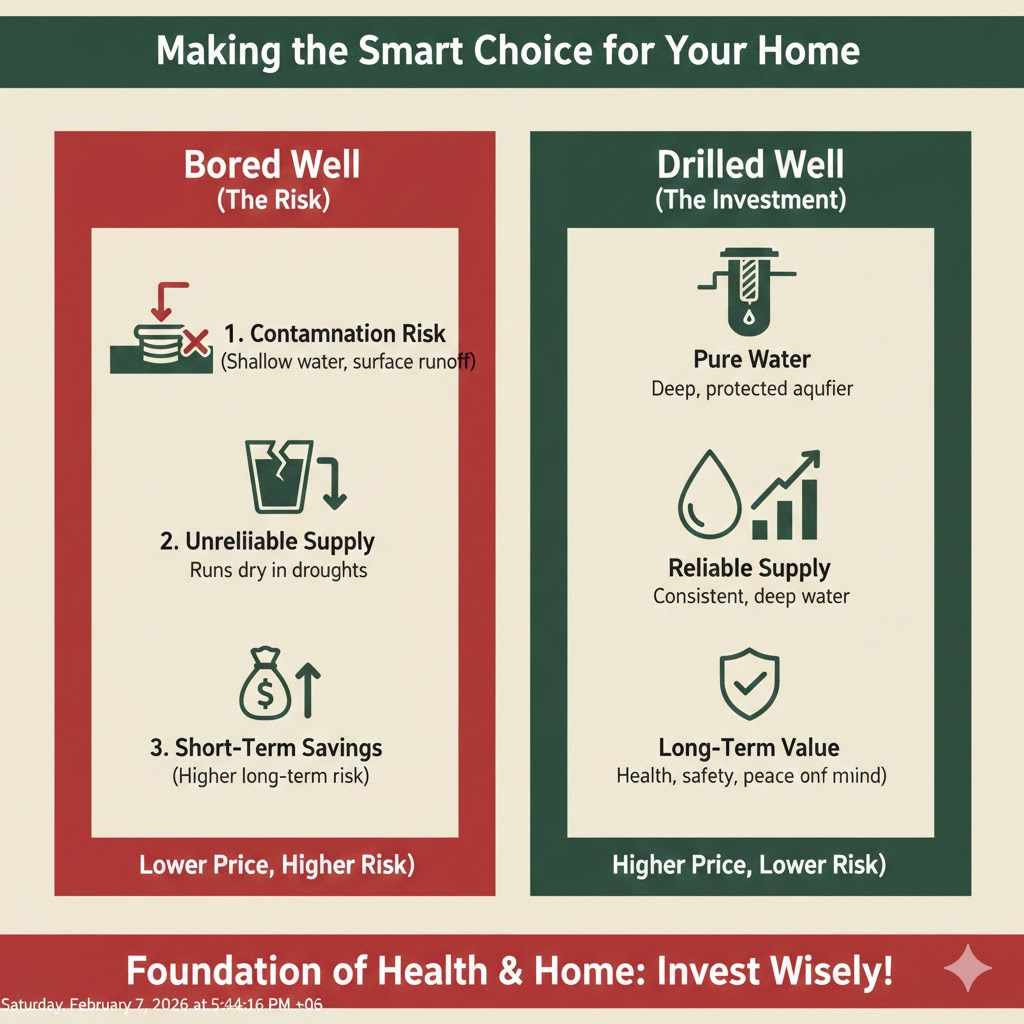
For almost every situation, the drilled well is the superior choice. It is an investment in health, safety, and reliability. The peace of mind that comes from knowing your water is pure and your supply is secure is invaluable. While the lower price of a bored well can be tempting, the risks associated with water quality and reliability are just too high for most families.
Think of it as the foundation of a house. You would never skimp on the foundation just to save a few dollars, because you know the entire structure depends on it. Your well is the foundation of your family’s health and well-being.
Frequently Asked Questions (FAQ)
1. How deep is a bored well compared to a drilled well?
A bored well is much shallower, typically ranging from 25 to 100 feet deep. A drilled well goes much deeper, often 100 to 500 feet or more, to reach protected underground aquifers.
2. Can I install a water well myself?
Installing a well is not a DIY project. Both types require specialized heavy machinery and professional expertise to ensure they are constructed safely, meet local codes, and effectively access a clean water source. Always hire a licensed and insured well-drilling contractor.
3. Which well is better for rocky ground?
A drilled well is the only option for rocky ground. The powerful rigs used for drilled wells are designed to break through solid bedrock to reach deep water. A bored well can only be installed in soft earth like sand, silt, or clay.
4. How do I know if my well water is safe to drink?
The only way to know for sure is to have it tested by a certified laboratory. You should test your water annually for bacteria, nitrates, and other contaminants. Your local health department can provide guidance on testing procedures and a list of certified labs.
5. Does a bored well run dry more easily?
Yes, absolutely. Because bored wells are shallow, they tap into the surface water table, which can drop significantly during dry seasons or a drought. Drilled wells access deep aquifers that are much more stable and are not typically affected by short-term weather patterns.
6. What is a “well casing”?
A well casing is the tube or pipe that lines the inside of the well hole. It prevents the surrounding earth from collapsing into the well and, most importantly, seals the well off from surface water and contaminants, protecting the purity of the water source deep below.
7. How long does each type of well last?
A properly maintained drilled well can last for 50 years or even longer. A bored well has a shorter lifespan, typically around 20 to 30 years, as it’s more susceptible to damage and water quality issues over time.
Your Final Decision: A Foundation for the Future
Making a decision like this feels big, because it is. You’re setting up a vital resource that will serve your home for a very long time. As we’ve seen, while a bored well might seem like an easy, affordable solution, its shortcomings in reliability and safety make it a risky choice for a modern home.
A drilled well, on the other hand, is a true long-term investment. It’s about providing your family with the safest, most reliable water source possible. It’s the “buy it once, buy it right” philosophy that we apply to quality tools and materials in the workshop, but applied to something even more essential.
Take your time, talk to local well professionals, and weigh the factors we discussed. By choosing wisely, you’ll be building a foundation of health and security for your home that you can rely on for years to come. That’s a project you can truly be proud of.