Best Circular Saw Guide Rail for Straight Cuts
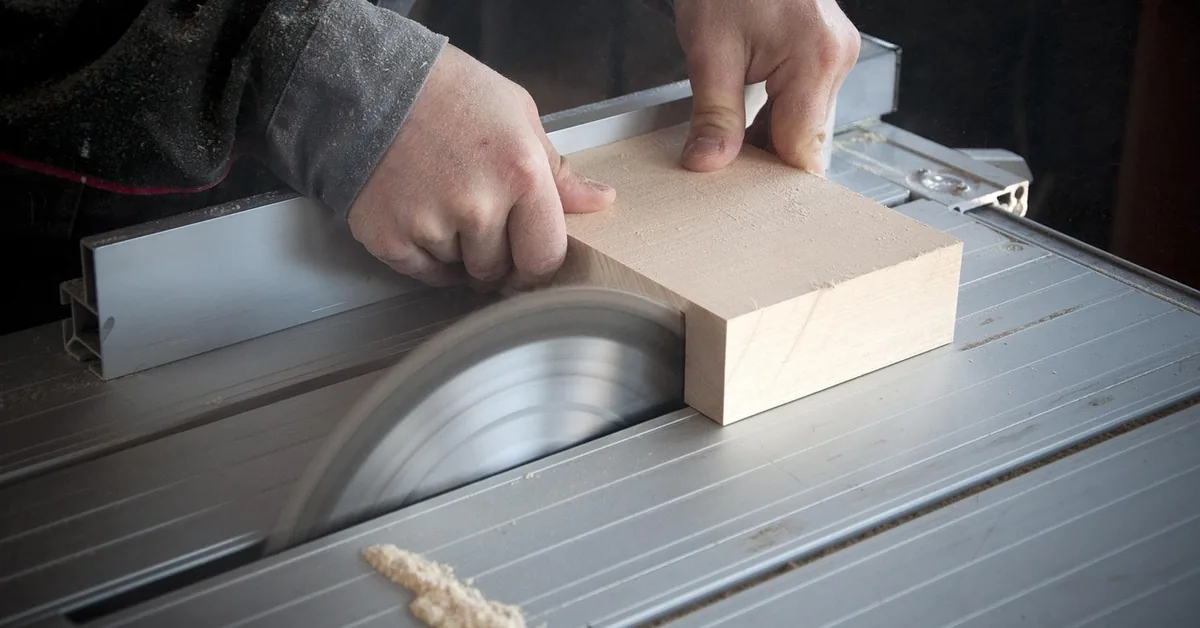
A circular saw guide rail locks your saw to a fixed straight path — no measurement drift, no tear-out on plywood, no re-measuring mid-cut. Without one, even experienced woodworkers lose 1/8 inch or more of accuracy per 4-foot cut. This guide covers what to look for when buying a guide rail, which systems are actually universal, and our four top picks from $88 to $179.
Quick Answer
A circular saw guide rail is an aluminum track that clamps to your workpiece and guides your saw in a perfectly straight line. The Kreg KMA3700 handles cuts up to 100 inches without clamps; the $88 Kreg KMA2700 covers 50 inches. Universal models work with any saw brand — proprietary rails (Festool, Makita) require a matching saw. Aluminum rail over 3/16 inch thick resists flex on long rips.
What to Look For in a Circular Saw Guide Rail
Best Circular Saw Guide Rail Pick
Kreg KMA3700 Accu-Cut XL Universal Track Saw Guide
Cuts up to 100 inches in a single pass with no clamps — the starting block and anti-slip guide strips handle the hold-down. Works with left- and right-blade saws of any brand.
- Best for: Full 4×8 plywood sheets and rip cuts without extra clamp hassle
- Why we picked it: No-clamp design saves 3 to 5 minutes of setup per cut — real productivity gain for anyone cutting panels
- Main drawback: At $179, it is the priciest option here; the shorter 50-inch KMA2700 at $88 covers most DIY rip cuts
Compare more circular saw guide rail options
 Option 1 Kreg KMA2700 Accu-Cut 50-Inch Guide
|
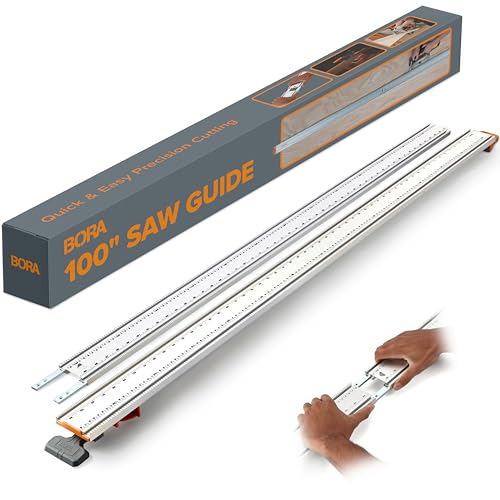
 Option 2 BORA NGX 100-Inch Clamp Edge Rail Kit
|
 Option 3 Swanson CG100 Expandable Aluminum Cutting Guide
|
As an Amazon Associate we earn from qualifying purchases.
Rail Length
A 4×8 sheet of plywood needs at least a 50-inch rail for rip cuts and a 96-inch reach for full crosscuts. Most single-rail systems top out at 50 inches — fine for rips, short for crosscuts. Systems with joining connectors (like the BORA NGX 100-inch kit) extend two 50-inch rails end-to-end for full-sheet coverage. If you cut plywood panels regularly, buy a system that supports extension rather than a single fixed-length rail you will outgrow.
Material and Build Quality
Aluminum extrusions at least 3/16 inch thick stay rigid across a 50-inch span under saw weight. Thinner rails flex when the saw passes the center, pushing the blade off line by as much as 1/16 inch on a 4-foot rip — invisible in the rail itself but obvious in the cut. Anti-slip rubber or foam backing on the underside matters almost as much: a rail that moves even 1/32 inch during a cut ruins the whole board.
Saw Compatibility — Universal vs. Proprietary
Festool and Makita guide rails use a proprietary T-groove profile that mates with their own plunge saws. You can adapt other saws to them with a universal sled (Kreg sells one), but the fit is less precise. Universal systems like the Kreg Accu-Cut and BORA NGX clamp to any saw base regardless of brand — left-blade or right-blade. If you own a standard corded or cordless circular saw (not a dedicated track saw), a universal system is the practical choice. The one exception: worm-drive saws need a guide rail that accommodates a wide base plate.
Anti-Splinter Strip
Better guide rail systems include a self-adhesive splinter guard along the cut edge. This strip sits between the rail and the workpiece and holds wood fibers down as the blade exits, giving a clean face cut even on veneered plywood. Without it, tear-out on the top face is the same whether you use a guide or a freehand straightedge. The strip wears out after 30-50 cuts and needs replacement — a small consumable cost that is worth every cut.
Guide Rail Comparison: Quick Reference
| Guide Rail | Max Cut Length | Compatibility | Best For |
|---|---|---|---|
| Kreg KMA3700 Accu-Cut XL | 100 in. | Universal (any saw) | Full plywood sheets, no clamps |
| Kreg KMA2700 Accu-Cut | 50 in. | Universal (any saw) | Rip cuts, portable setups |
| BORA NGX 100-Inch Kit | 100 in. | Universal + T-track | Workshop with router or jigsaw too |
| Swanson CG100 | 100 in. (2×50) | Universal (circular saw, router, jigsaw) | Budget full-sheet cuts |
Our Top Picks for Circular Saw Guide Rails
Guide Rail vs. Straightedge: Why the Track Wins
A clamped straightedge (a scrap of plywood or a level) seems like a free alternative to a $90+ guide rail. In practice, the gap in cut quality is measurable. A straightedge has no anti-splinter strip, so the blade entry point tear-out on the face veneer is the same as a freehand cut. The offset from the straightedge edge to the blade requires a separate measurement for each saw — a dimension that changes if you switch saws. A guide rail’s kerf strip sits exactly at the cut line, with no offset math required. For anyone cutting plywood panels more than a few times a year, the rail pays back its cost in accuracy and time within the first ten sheets.
“After switching from a clamped straightedge to a track guide, my rip cuts on 3/4-inch Baltic birch went from +/- 1/16 inch to within 1/32 inch — the difference between a drawer front that fits and one that does not.”
How to Set Up a Circular Saw Guide Rail
- Mark the cut line: Draw a clear pencil line across the full length of the cut on the face of the workpiece.
- Align the rail’s kerf strip to the mark: On most guide rail systems, the edge of the anti-splinter strip IS the cut line — set it directly on your mark with no offset calculation.
- Clamp or lock the rail: Secure at both ends. On clamp-type systems, apply pressure 6 to 8 inches from each end; on no-clamp systems like the Kreg Accu-Cut, the starting block locks the near end automatically.
- Set blade depth: Adjust so the blade protrudes 1/4 inch below the workpiece — not more. Deeper exposure increases tear-out and puts more blade surface in contact with the rail, increasing deflection risk.
- Start the saw before contacting the rail: Let the blade reach full speed before the shoe touches the guide rail. A slow start skips the anti-splinter strip and chips the entry edge.
- Feed at a steady pace: Push through at an even speed — stopping mid-cut creates a burn mark at the pause point. Complete the cut in one continuous pass.
Common Mistakes When Using a Guide Rail
- Setting depth too deep: More than 1/4 inch below the workpiece adds blade wobble and can lift the rail on thick stock. Keep the depth minimal.
- Clamping only one end: A free end of a 50-inch rail can pivot 1/8 inch by mid-cut. Clamp or secure both ends before starting the saw.
- Using the wrong compatibility adapter: Some universal sleds do not fit worm-drive saws or saws with unusually wide base plates. Confirm before buying rather than after.
- Ignoring the anti-splinter strip: Reuse a worn strip and the face veneer tears regardless of how straight the rail sits. Replace it after every 30 to 50 cuts on hardwood-face plywood.
- Trying to extend a proprietary rail with a universal connector: Festool and Makita connectors are brand-specific. Mixing brands creates a gap at the join point that the saw shoe catches.
Frequently Asked Questions
Can I use any circular saw with a guide rail?
Universal guide rail systems (Kreg Accu-Cut, BORA NGX) work with any standard circular saw — corded or cordless, left-blade or right-blade — because they clamp to the saw base rather than requiring a proprietary groove. Worm-drive saws need a system that accommodates their wider base plate; check the manufacturer’s compatibility chart before buying. Proprietary systems (Festool, Makita track saws) require the matching saw unless you add a universal sled adapter.
What length guide rail do I need for plywood?
A 4×8 plywood sheet needs at least a 50-inch rail for rip cuts (cutting with the grain along the 8-foot length) and a 96-inch reach for full crosscuts (cutting across the 4-foot width). A 50-inch single rail handles most rip cuts from one edge; for full crosscuts you need a 100-inch system or two 50-inch rails joined with a connector. The Kreg KMA3700 XL and the BORA NGX 100-inch kit both cover the full panel crosscut without adding a second rail.
Is a guide rail the same as a track saw?
No. A track saw (also called a plunge-cut saw) is a dedicated power tool with a plunge mechanism designed to mate with a proprietary guide rail system. A guide rail alone is an accessory you attach to a standard circular saw. A universal guide rail converts a regular circular saw into a track-guided system for a fraction of the cost of a full track saw — with some reduction in plunge capability and cut quality compared to a dedicated track saw. For most DIY guide rail setups, the universal system is the practical starting point.
How do I know if my saw is compatible with a Festool or Makita guide rail?
Festool and Makita guide rails use a specific T-groove profile that accepts only their own plunge saw shoes. Standard circular saws with a flat base plate do not slide into this groove without a third-party adapter sled. The Kreg KMA2400 sled fits over a Festool or Makita rail and lets a standard saw ride it, though alignment precision is reduced versus the OEM saw. For the best results with a non-Makita or non-Festool saw, choose a universal clamp-edge guide rail instead. You can also check how Makita and Festool rail systems compare before committing to either ecosystem.
How often should I replace the anti-splinter strip on a guide rail?
Replace the anti-splinter strip after every 30 to 50 cuts on hardwood-faced plywood or after any cut where you notice tear-out returning to the entry edge. On softwood or MDF, strips last longer — 80 to 100 cuts is reasonable. The strip is a consumable sold by most rail manufacturers as a replacement part; Kreg, Festool, and BORA all sell them separately. Trying to extend strip life past the point of visible wear costs more in ruined material than the strip is worth.
Conclusion
A circular saw guide rail removes the main variable that makes freehand or straightedge cuts unpredictable: drift. The Kreg KMA3700 Accu-Cut XL is the strongest all-around pick for full-sheet plywood work, with no-clamp setup and 100-inch reach. The $88 KMA2700 covers rip cuts for most home workshops at half the cost. If you need the rail to double as a router or jigsaw guide, the BORA NGX T-track system is the better choice. Whatever you pick, match the rail length to your most common workpiece size and confirm compatibility with your specific saw model before ordering.
Sponsored / affiliate links. As an Amazon Associate I earn from qualifying purchases. I may earn additional commission from eligible campaigns.