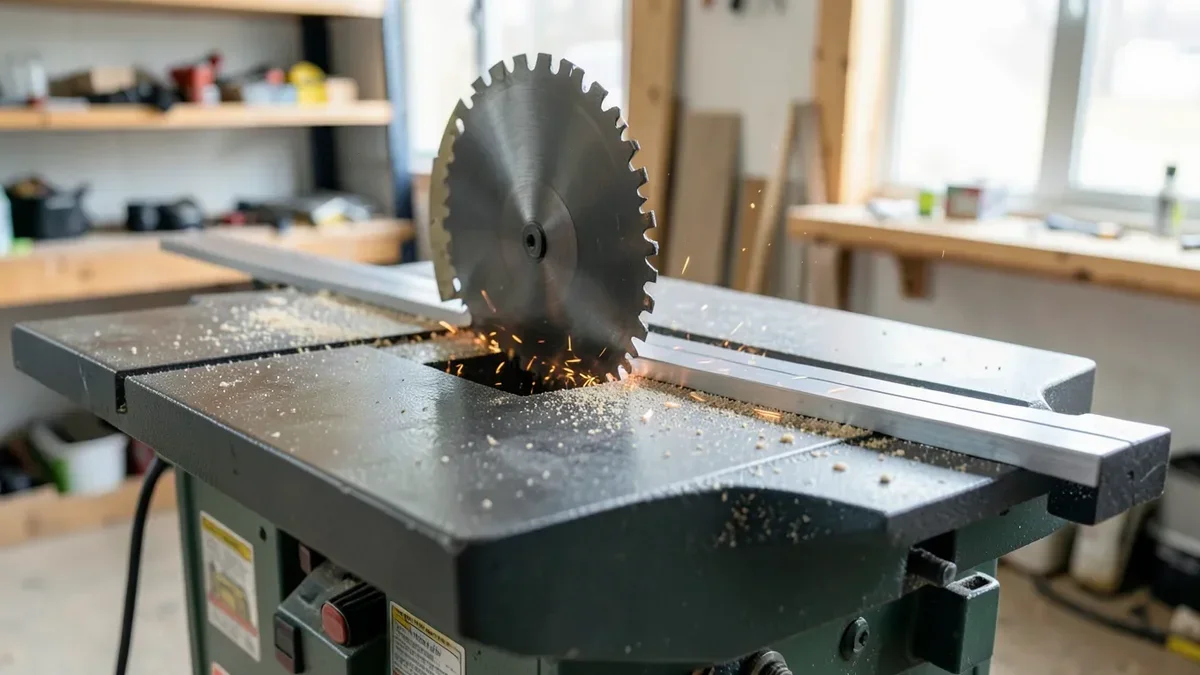
Can a Table Saw Cut Metal? Yes, But Only With the Right Blade
Yes, a table saw can cut metal, but only soft, non-ferrous metal like aluminum, brass, or copper, and only with a blade built for that job. A standard wood-cutting blade run at a normal table saw feed rate is genuinely dangerous on metal: it can grab and self-feed into the material, throw sparks into sawdust, and in the worst case shed a carbide tooth at high speed. Steel and other ferrous metals should not go anywhere near a wood table saw at all.
This guide covers exactly which metals are safe to cut, what actually happens when you use the wrong blade, and how to set your saw up correctly if you do need to cut aluminum or another soft metal.
Yes, With the Right Blade – But Steel Is Off Limits
A table saw fitted with a carbide-tipped, negative-hook-angle blade rated for non-ferrous metal can cut aluminum, brass, and copper cleanly. That’s a different blade from the positive-hook wood blade that came with your saw, and it changes how the saw behaves: slower feed, a clamped workpiece instead of a freehand push, and often a squirt of cutting wax to keep the cut cool. Ferrous metal – steel, iron, anything that sparks orange and throws off heavy grinding dust – is a different story. A standard table saw simply isn’t built for it, and the safe answer there is a different tool entirely, covered further down.
Best Non-Ferrous Blade for a 10″ Table Saw
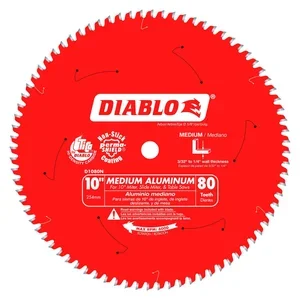 |
Diablo D1080N 10″ 80-Tooth Aluminum Blade – $63.80 A 10″ blade fits standard table saw arbors and is purpose-built for the exact job this article covers: clean, safe cuts in aluminum and other non-ferrous metal.
|
Why a Standard Wood Blade Is Dangerous on Metal
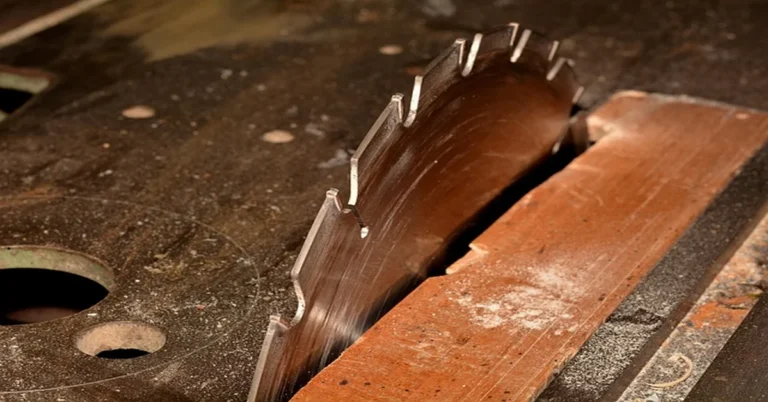
The blade that ships with your table saw has a positive hook angle – the teeth lean forward into the cut, which is exactly what you want in wood because it pulls the material through aggressively. On metal, that same aggressive bite becomes the problem. A positive-hook blade tends to grab and self-feed into aluminum or steel far faster than you’re controlling it, and that sudden grab is a real kickback mechanism, not a theoretical one: the workpiece (or a cutoff) can be thrown back at the operator hard enough to cause serious injury.
There are two more hazards specific to metal that wood cutting doesn’t have. First, metal-on-carbide contact throws real sparks, and sparks landing in a table saw’s accumulated sawdust is a genuine fire risk – clear the saw and the area around it before you cut metal, don’t just cut into a dust-covered table. Second, a wood blade’s carbide teeth and braze joints aren’t engineered for the load and heat of cutting metal at typical table-saw RPM. A tooth can crack or shear off and leave the blade at speed, which is a real projectile hazard to anyone standing in front of or beside the saw. None of this means “cut carefully with the wood blade” is an option – it means the blade itself has to change before metal touches the table.
Ferrous Vs. Non-Ferrous: What Your Table Saw Can Actually Handle
The material matters as much as the blade. Non-ferrous metals – aluminum, brass, copper – are soft enough that a correctly rated carbide blade can cut them safely on a standard table saw. Ferrous metals – steel, iron, most alloy stock – are a different problem. They’re harder, they generate far more heat and grinding-style sparks, and cutting them needs blade speeds and tooth geometry (or an abrasive wheel) that a wood-shop table saw doesn’t have. The honest, unpopular answer here: don’t cut steel on a table saw, full stop, even with a “metal-cutting” blade rated for aluminum. Reach for a cold saw, an abrasive chop saw, or a metal-cutting bandsaw instead – more on those below.
Table: quick reference for common shop metals.
| Metal | Table Saw Suitable? | Requirement |
|---|---|---|
| Aluminum | Yes | Negative-hook non-ferrous blade, clamped stock, cutting wax |
| Brass / Copper | Yes, with care | Same non-ferrous blade; thin stock only |
| Steel / Iron | No | Use a cold saw, abrasive chop saw, or metal bandsaw instead |
| Stainless Steel | No | Dedicated metal-cutting saw required |
What a Real Metal-Cutting Blade Needs
Three specs actually matter when you’re picking a blade for metal, and skipping any one of them is how the “wrong blade” accidents happen:
Negative hook angle. Look for a blade specifically marked with a negative degree, typically -5° to -6° for aluminum blades. The teeth lean back instead of forward, so the blade shaves the material instead of grabbing it – this single spec is the difference between a controlled cut and a kickback risk.
Tooth count and grind. Metal blades pack far more teeth than a wood blade – 60 to 100 on a 10″ blade is typical – using a triple-chip grind (TCG) that alternates flat and beveled teeth. More, smaller teeth mean each one removes a thinner shaving, which keeps heat and grabbing down.
Max RPM rating. Every metal-cutting blade is stamped with a maximum safe RPM. Most stationary table saws spin the arbor somewhere around 3,450 to 4,300 RPM at no load (check your saw’s own nameplate – don’t assume), so a blade rated for 6,000 RPM has margin to spare. Never mount a blade rated below your saw’s actual speed; that mismatch is exactly the kind of “just swap blades and go” shortcut that leads to a blade failing under load.
How to Set Up and Cut Aluminum Safely on a Table Saw
Once you’ve confirmed the blade is rated for the metal and the RPM, the setup itself is different from a normal wood cut in a few specific ways:
- Clear the table first. Vacuum out accumulated sawdust before you cut – metal sparks landing in dry wood dust is a real fire combination, not a minor concern.
- Clamp, don’t freehand. Secure the metal stock against the fence or in a jig. Small aluminum bar or tube can twist and bind far more easily than a wood board, and a hand-fed piece is the most common way people get caught in a kickback.
- Slow the feed rate. Push the material through more slowly than you would wood – let the extra teeth do the work instead of forcing it.
- Use cutting wax or lubricant. A stick of cutting wax applied to the blade every few cuts reduces friction, heat, and the aluminum buildup (“gumming”) that dulls a blade fast.
- Wear real eye and ear protection. Metal sparks and shavings travel differently than wood chips – safety glasses plus a face shield, and hearing protection, since metal cutting is noticeably louder.
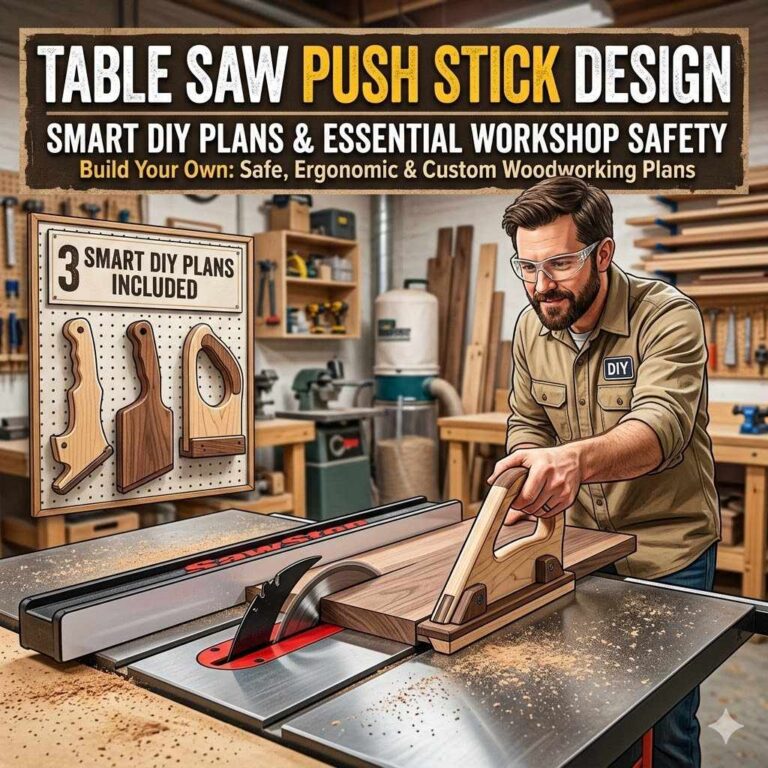
- Keep hands clear and use a push stick. The same rule as wood cutting applies, just with less margin for error, since metal doesn’t flex out of the way the way wood fibers do.
Cutting Steel or Other Ferrous Metal? Use a Dedicated Saw Instead
For steel, iron, or any ferrous stock, skip the table saw entirely and reach for a tool actually designed for it:
| Tool | Best For | Notes |
|---|---|---|
| Metal-cutting band saw | Steel, aluminum, tubing, angle stock | Slow blade speed and continuous cutting keep heat down; most versatile option |
| Abrasive or cold chop saw | Fast, straight cuts in steel bar and angle | Same wrong-blade-for-material risk applies – see our chop saw metal-cutting guide for blade selection on that tool |
| Angle grinder with cutoff wheel | Small stock, on-site or awkward cuts | Abrasive wheel rated for metal, not a woodworking accessory |
| Plasma cutter | Thicker steel, curved or intricate cuts | No blade contact at all; different skill set and setup |
Every one of these shares the same underlying rule as the table saw does with aluminum: the tool has to be matched to the material, not just switched on and pushed through. Using a wood-rated blade or a mismatched abrasive wheel on the wrong tool is the common thread behind most of the “the blade grabbed it” or “it threw sparks everywhere” accident reports.
Frequently Asked Questions
Can a table saw cut through aluminum?
Yes. A table saw can cut aluminum cleanly with a carbide-tipped blade that has a negative hook angle (around -5°) and is specifically rated for non-ferrous metal. Clamp the stock securely, slow your feed rate, and apply cutting wax every few passes. A standard positive-hook wood blade is not a safe substitute.
What type of blade is best for cutting metal?
For aluminum, brass, and copper, look for a carbide-tipped blade with a negative hook angle, a high tooth count (60 to 100 teeth on a 10″ blade), and a triple-chip grind, plus a max RPM rating at or above your saw’s actual arbor speed. For steel, a table saw blade isn’t the right category of tool at all – use a cold saw or metal bandsaw instead.
Are there risks in cutting metal with a table saw?
Yes, and they’re more severe than typical wood-cutting risks. The wrong blade can grab and self-feed into metal, causing sudden kickback. Metal sparks are a real fire hazard around accumulated sawdust, and a blade not rated for metal can crack or shed a carbide tooth at high speed. Always match the blade and RPM rating to the metal before cutting.
Can a table saw handle stainless steel cutting?
No. Stainless and other ferrous steel should not be cut on a standard table saw, even with a “metal-cutting” blade rated for aluminum. Steel needs the blade speed, tooth geometry, or abrasive wheel of a dedicated metal-cutting saw, such as a cold saw, abrasive chop saw, or metal bandsaw.
Conclusion
A table saw can cut aluminum, brass, and copper safely, but only once you’ve swapped in a negative-hook, carbide-tipped blade rated for non-ferrous metal and checked that its max RPM covers your saw’s actual arbor speed. Clamp the stock, slow the feed, and keep cutting wax on hand. Steel and other ferrous metal are a different job entirely – a cold saw, abrasive chop saw, or metal bandsaw is the safe tool for that, not your table saw with a different blade bolted on.
Sponsored / affiliate links. As an Amazon Associate I earn from qualifying purchases. I may earn additional commission from eligible campaigns.