Can Caulk Be Used As Glue: Essential Guide
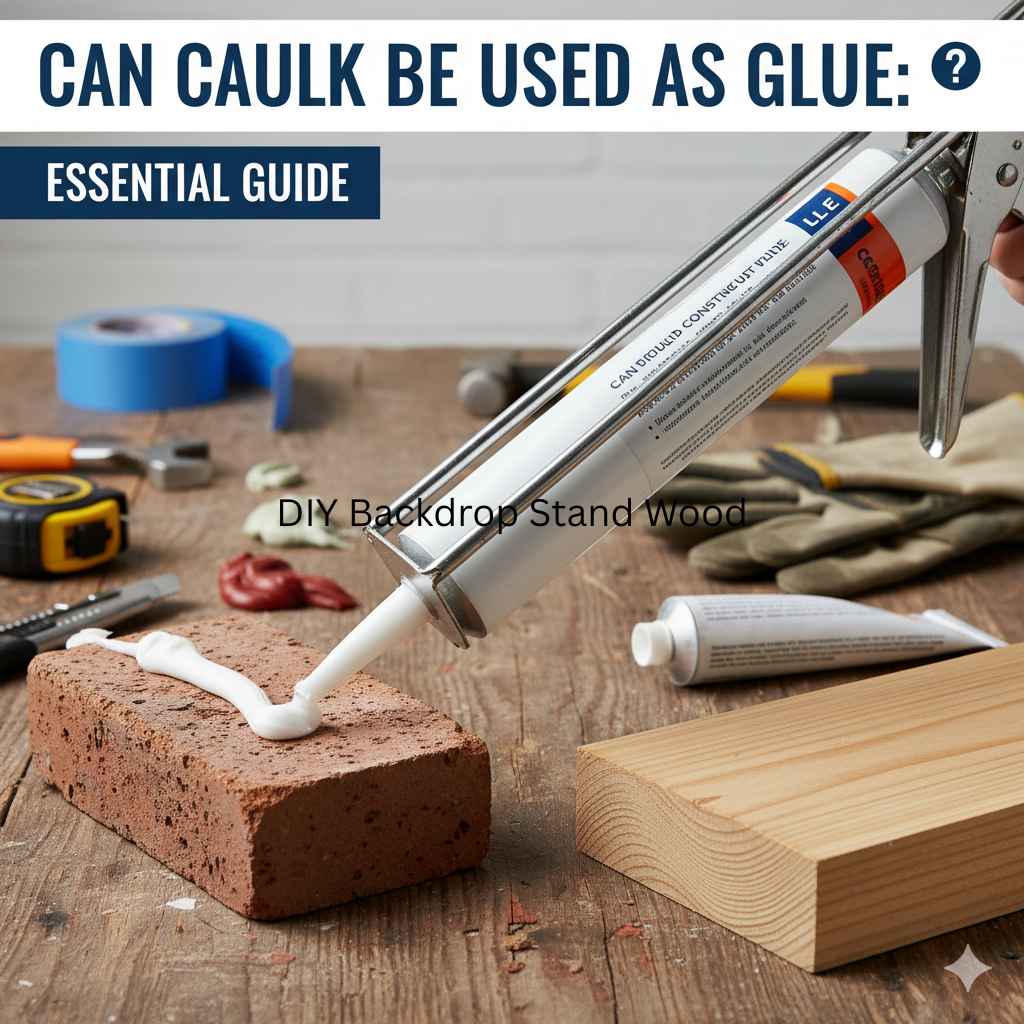
Can caulk be used as glue? While caulk’s primary purpose is sealing gaps, some types can act as a temporary bond for very light items in specific situations. However, it’s generally not recommended as a reliable adhesive due to its flexibility and lack of strong bonding power. This guide explains when you might consider it and why proper glues are usually the better choice.
Welcome to the workshop, fellow DIYers! Today, we’re tackling a question that pops up quite a bit, especially when you’re in the middle of a project and a glue bottle seems empty: “Can caulk be used as glue?” It’s a tempting thought, especially when you have a tube of caulk sitting right there. You might be tempted to grab it and make that piece of trim stick.
But is it a good idea? As your woodworking mentor, I’m here to guide you through this. We’ll look at what caulk is really for, when it might do a temporary job, and why using the right adhesive is almost always the smarter move for lasting results. Stick around, and we’ll find out together!
Understanding Caulk: What It Is and What It Isn’t
Before we dive into whether caulk can play glue, let’s get a clear picture of what caulk actually is. Think of caulk as a sealant. Its superpower is filling gaps and cracks to keep air, water, and pests out. It’s flexible and designed to move a little with temperature changes and building settling, which is why it’s perfect for around windows, doors, and in bathrooms. Because it stays somewhat soft and flexible once cured, it’s not typically designed to hold things together with significant force.
On the other hand, glue, or adhesive as it’s often called in DIY circles, is formulated to create a strong, rigid bond between two surfaces. Glues are made to withstand stress, shear, and tension, depending on the type. Imagine trying to hold two pieces of wood together for a shelf; you need something strong and permanent. Caulk, in most cases, just doesn’t have that kind of holding power. Its flexibility is its strength as a sealant, but it’s a weakness when you need a solid bond.
Can Caulk Be Used As Glue? The Short Answer
So, can caulk be used as glue? For most woodworking and serious DIY projects, the answer is a definite no. Caulk is designed to seal, not to bond. Its flexible nature means it won’t provide the strong, lasting hold that a proper wood glue or construction adhesive will.
However, in very specific, low-stress situations, like temporarily holding a very lightweight decorative trim piece in place while you secure it permanently with nails or screws, some might use it. But relying on caulk as your primary adhesive is a recipe for disappointment and potential failure.
Think of it this way: you wouldn’t use a spatula to hammer a nail, and you shouldn’t use caulk as a primary glue. Each tool and material has its purpose, and using them correctly ensures your projects are safe, durable, and look great. We’ll explore the nuances next.
When Caulk Might Seem Like an Option (and Why It’s Risky)
There are situations where someone might consider using caulk as a glue. These usually involve very light materials or temporary fixes where the visual is more important than the structural integrity. For instance:
- Temporary hold for very lightweight trim: If you’re applying a very thin, lightweight decorative molding that will be nailed or screwed in place very soon after, you might use a tiny bead of caulk to help it stay put while you get your fasteners ready.
- Hobby crafts with light materials: For certain craft projects involving paper, thin plastic, or other non-load-bearing materials, caulk might offer a temporary bond.
- Filling small gaps during a project: Sometimes, a tiny gap appears during assembly, and you might be tempted to ‘glue’ it with caulk until you can properly fix it.
However, even in these scenarios, there are significant downsides:
- Weak Bond Strength: Caulk simply isn’t made to create a strong, lasting bond. It can dry out, become brittle, or peel away under minimal stress.
- Flexibility Issues: The very flexibility that makes caulk good for sealing means it will likely flex and fail if any force is applied, potentially causing the pieces you’re joining to shift or separate.
- Difficulty in Removal: If you use caulk as glue and it doesn’t work out, it can be very difficult to remove cleanly, especially once it has cured. This makes it harder to re-do the job correctly with proper adhesive.
- Curing Time and Shrinkage: While some caulks cure relatively quickly, they can also shrink slightly as they dry. This shrinkage can also weaken any bond they might have formed.
- Not Designed for Adhesion Surfaces: Caulk is formulated for adhesion to surfaces like drywall, wood, metal, and glass, but its primary role is filling the seam. It’s not engineered to bond two surfaces together in the way structural adhesives are.
The National Association of Home Builders (NAHB) is a fantastic resource for understanding building materials and their best uses. Their guidelines consistently emphasize using products for their intended purposes to ensure structural integrity and longevity in construction and remodeling.
When to Choose Actual Glue (The Right Tool for the Job)
For almost any project where you need to join materials securely, you absolutely need to use a proper adhesive. The good news is, there’s a glue for nearly everything! Choosing the right glue depends on the materials you’re joining and the conditions the joint will face. Here’s a look at some common and highly effective glues for DIYers and woodworkers:
Wood Glues
These are the staples for any woodworking project. They are designed to create bonds stronger than the wood itself.
- PVA (Polyvinyl Acetate) Wood Glue: This is your everyday wood glue. It’s water-based, non-toxic, and cleans up with water. Great for most indoor wood projects. Brands like Titebond and Elmer’s offer excellent options.
- Polyurethane Glue: This type of glue expands slightly as it cures, filling small gaps and creating a very strong, waterproof bond. It’s excellent for outdoor projects or where moisture is a concern. It cleans up with mineral spirits.
- Cyanoacrylate (Super Glue): While not a primary wood glue for large joints, super glue is fantastic for quick repairs, small dowels, or tacking pieces in place. It bonds almost instantly.
Construction Adhesives
These are heavy-duty adhesives designed for bonding building materials. They are typically thicker and have more gap-filling capabilities than wood glues.
- Construction Adhesive (e.g., Liquid Nails, PL Premium): These are incredibly strong adhesives used for framing, subflooring, attaching paneling, and more. They can bond wood, concrete, metal, and masonry. Many are waterproof and suitable for exterior use. You can learn more about the versatility of construction adhesives from resources like This Old House, which often highlights their use in various home improvement projects.
Specialty Adhesives
For specific materials or situations, you might need a specialized glue.
- Epoxy: A two-part adhesive that creates an exceptionally strong, rigid, and waterproof bond. It’s excellent for dissimilar materials (like metal to wood) or for filling large gaps.
- Contact Cement: Applied to both surfaces, allowed to dry to a tack, then pressed together. Creates an instant, strong bond, often used for laminates or veneers.
Caulk vs. Glue: A Comparison Table
To make it crystal clear, let’s compare caulk and common glues side-by-side. This will highlight why they aren’t interchangeable.
| Feature | Caulk | Wood Glue (PVA) | Construction Adhesive | Epoxy |
|---|---|---|---|---|
| Primary Purpose | Sealing gaps, preventing leakage | Bonding wood to wood | Bonding building materials strongly | Creating very strong, rigid bonds |
| Bond Strength | Very Low | High (often stronger than wood) | Very High | Extremely High |
| Flexibility | High (flexible when cured) | Low to Moderate (becomes rigid) | Moderate to Low (rigid) | Very Low (very rigid) |
| Gap Filling | Excellent | Poor to Moderate | Good | Excellent |
| Water Resistance | Varies (some are waterproof) | Varies (Titebond III is waterproof) | Often Waterproof | Waterproof |
| Typical Use Cases | Around windows, bathtubs, baseboards | Furniture, cabinets, trim installation | Subflooring, framing, paneling | Repairing broken items, bonding dissimilar materials |
| Cleanup | Water (while wet), solvent (when dry) | Water (while wet), scraping/sanding (when dry) | Mineral spirits (while wet), scraping/sanding (when dry) | Solvent (while wet), scraping (when dry) |
How to Use Caulk Properly (When it’s NOT Glue)
Since we’ve established that caulk isn’t glue, let’s quickly review how to use it effectively for its intended purpose: sealing. Proper caulk application ensures a professional look and effective protection.
Tools You’ll Need:
- Caulk gun
- Utility knife or caulk removal tool
- Gloves
- Rags or paper towels
- Bucket of water (for latex/acrylic caulk) or appropriate solvent
- Painter’s tape (optional, for clean lines)
- Caulk smoothing tool or your finger
Step-by-Step: Applying Caulk Like a Pro
- Prepare the Area: Clean the gap thoroughly. Remove any old caulk, dirt, dust, or grease. A clean surface is crucial for good adhesion. For removing old caulk, a dedicated caulk removal tool is very effective.
- Cut the Tip: Use a utility knife to cut the tip of the caulk tube at a 45-degree angle. Start with a small opening; you can always make it bigger if needed. A smaller opening gives you more control, which is key for beginners.
- Load the Caulk Gun: Pull back the plunger, insert the caulk tube, and push the plunger firmly against the tube’s back. Squeeze the trigger slowly until caulk starts to come out.
- Apply the Caulk Bead: Place the tip of the caulk tube at a consistent angle against the seam. Apply steady, even pressure to the caulk gun trigger while moving the gun along the gap at a consistent speed. Aim for a continuous bead that fills the gap without excessive overflow. For a cleaner line, you can apply painter’s tape on either side of the gap before applying caulk.
- Smooth the Bead: This is where you finish the job. Work relatively quickly before the caulk starts to skin over.
- For latex/acrylic caulk: Wet your finger or a caulk smoothing tool slightly with water. Run it gently along the caulk bead, pushing a little caulk into the gap and smoothing the surface.
- For silicone caulk: Silicone caulk is trickier. You can use a damp rag or a dedicated smoothing tool. Avoid getting too much water on it, and be aware that latex caulk can often be painted, but silicone usually cannot.
- Clean Up: Immediately wipe away any excess caulk with a damp rag (for latex) or a rag with solvent (for silicone). Remove painter’s tape if used. If you get caulk on surfaces, it’s easiest to clean it while it’s still wet.
- Let it Cure: Allow the caulk to cure completely according to the manufacturer’s instructions. Avoid disturbing the area until cured.
Using caulk correctly means ensuring it adheres well to the edges of the gap, creating a watertight and airtight seal. For more detailed information on proper sealing techniques, resources like the U.S. Environmental Protection Agency (EPA) offer helpful guides on air sealing and weatherization, which often involve proper caulk application.
When Can Caulk Be Used As Glue: A Practical Example
Let’s walk through a hypothetical scenario where someone might think about using caulk as glue. Imagine you’re installing a small, decorative wooden trim piece around an interior doorway. This trim is very light, maybe 1/4-inch thick and 1 inch wide, and it’s purely decorative—it doesn’t bear any weight. You’ve already cut it to size.
The Temptation: You might think, “I’ll just run a bead of caulk on the back of this trim and press it into place. It’ll hold while I get my brad nailer ready!”
The Reality: Here’s why this is a bad idea, even for something light:
- The Bond is Weak: Caulk, even when fresh, doesn’t create a strong grip. The trim could easily shift or fall off if bumped.
- Uneven Pressure: Applying even pressure with caulk is hard. You might get thin spots that won’t hold at all, and thicker spots that ooze out.
- Long-Term Issues: If you don’t nail it immediately and securely, the caulk could dry partially, leaving a flimsy, unreliable bond that could fail later. Even with nails, the caulk bond is essentially just helping it stick temporarily, not contributing to the long-term strength.
- Mess Factor: Caulk is messy. If it oozes out, it’s hard to clean off the wall or the trim without smearing, especially if you’re trying to do it quickly.
The Better Approach: Instead of caulk, you would:
1. Apply a bead of construction adhesive (like Liquid Nails for wood) to the back of the trim. Construction adhesive is designed to bond and fill small imperfections, providing a much stronger hold than caulk.
2. Or, more commonly for trim, you would simply rely on brad nails or finish nails, perhaps using wood glue on the back for an extra-strong bond if desired, then filling nail holes and painting.
This example shows that while caulk can stick to surfaces, its performance as an “adhesive” is incredibly limited and often creates more problems than it solves compared to using a dedicated adhesive or fastener.
Pros and Cons of Using Caulk as Glue
Let’s summarize the potential (and mostly negative) aspects clearly.
Potential “Pros” (Very Limited & Situational)
- Readily Available: If you have caulk on hand and no glue, it’s accessible.
- Temporary Hold: For absolutely no-load, temporary situations, it might keep something in place for a few minutes.
- Gap Filling (Sort Of): It can fill small gaps, but not in a way that creates a structural bond.
Cons (Significant and Most Common)
- Extremely Weak Bond: Fails under minimal stress.
- Flexibility: Joints will move and potentially fail.
- Unreliable Curing: Drying time and shrinkage.
- Difficult to Remove: Can make future repairs messy.
- Not Durable: Bonds break down over time.
- Poor Aesthetics: Oozes and can be hard to clean up neatly.
- Wastes Material: Using caulk for a job it’s not suited for means you’ll need to buy the right adhesive later anyway.
- Doesn’t Contribute to Structural Integrity: Will not make your project stronger.
Frequently Asked Questions (FAQ)
Q1: Can I use caulk to glue wood together?
A1: It’s not recommended. Wood glue is specifically formulated to create strong, durable bonds between wood pieces. Caulk is too flexible and weak to hold wood reliably, especially if it’s structural or load-bearing.
Q2: Will caulk hold a piece of drywall up?
A2: No, caulk is not strong enough to hold drywall. Drywall needs to be secured with screws to studs or using appropriate adhesives like construction adhesive if you’re attaching it to certain surfaces without mechanical fasteners. The NAHB provides extensive guidelines on proper drywall installation.