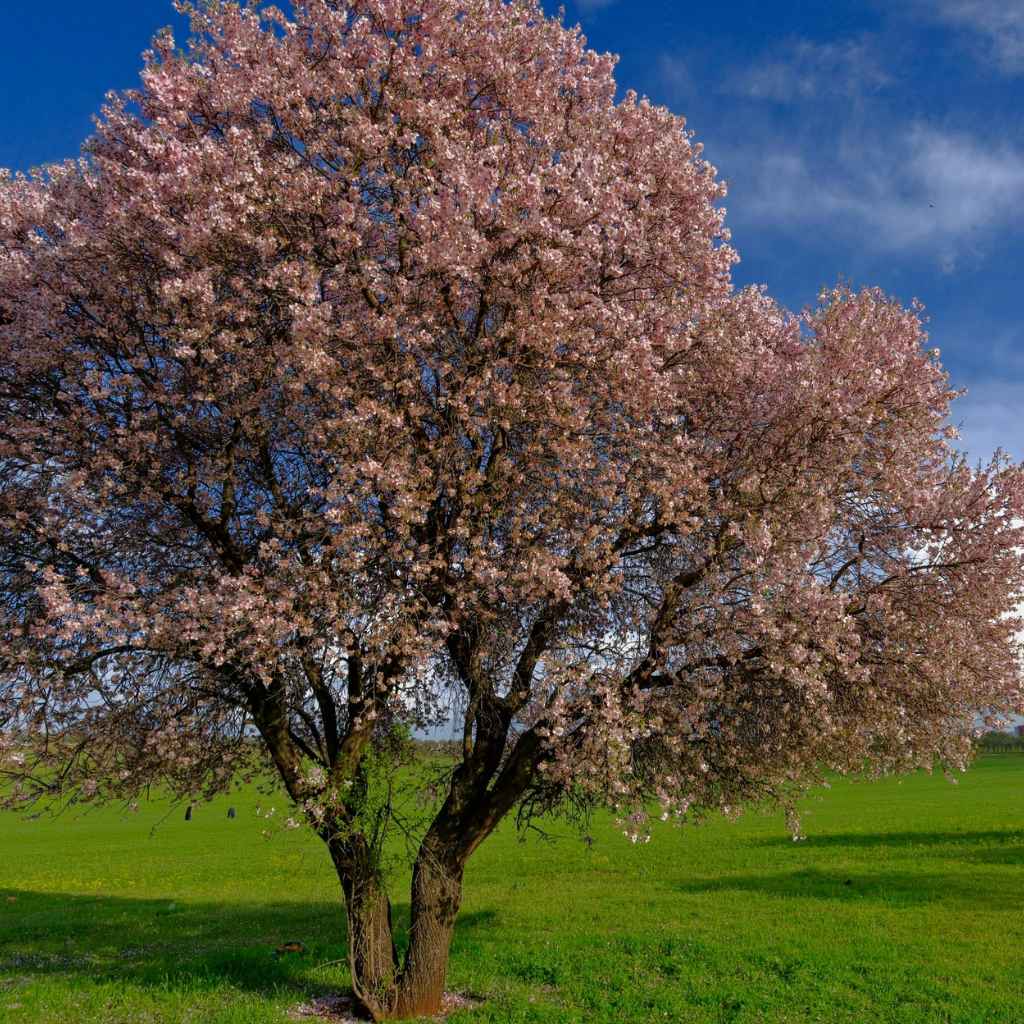
Can Cherry Trees Grow In Georgia? Best Varieties To Plant
Understanding Georgia’s Climate for Cherry Trees
Georgia has a varied climate. Much of the state has warm, humid summers and mild winters. This sounds good, right?
Cherry trees, especially the sweet varieties most people love, need a certain amount of cold weather each year. This cold helps them wake up from dormancy and produce fruit. This is called a “chill hour” requirement.
Some parts of Georgia get enough chill hours. Other parts might not. Northern Georgia, with its higher elevations, tends to have more of these chill hours.
This makes it a better spot for many sweet cherry types. Southern Georgia can be warmer. This makes it harder for some traditional sweet cherries to get the cold they need.
However, tart cherries and some specific sweet varieties are bred to handle warmer weather better. So, the location within Georgia matters a lot. It’s not just about if you can plant a cherry tree, but where you are and what type you choose.
We also need to think about summer heat and humidity. While Georgia has plenty of sunshine, those really hot and muggy spells can sometimes stress out young trees or make them more prone to certain diseases. Good air flow and choosing disease-resistant trees become very important here.
It’s a balancing act between needing enough sun and managing the heat and moisture. We’ll look at how to give your cherry tree the best chance to thrive by understanding these climate needs.
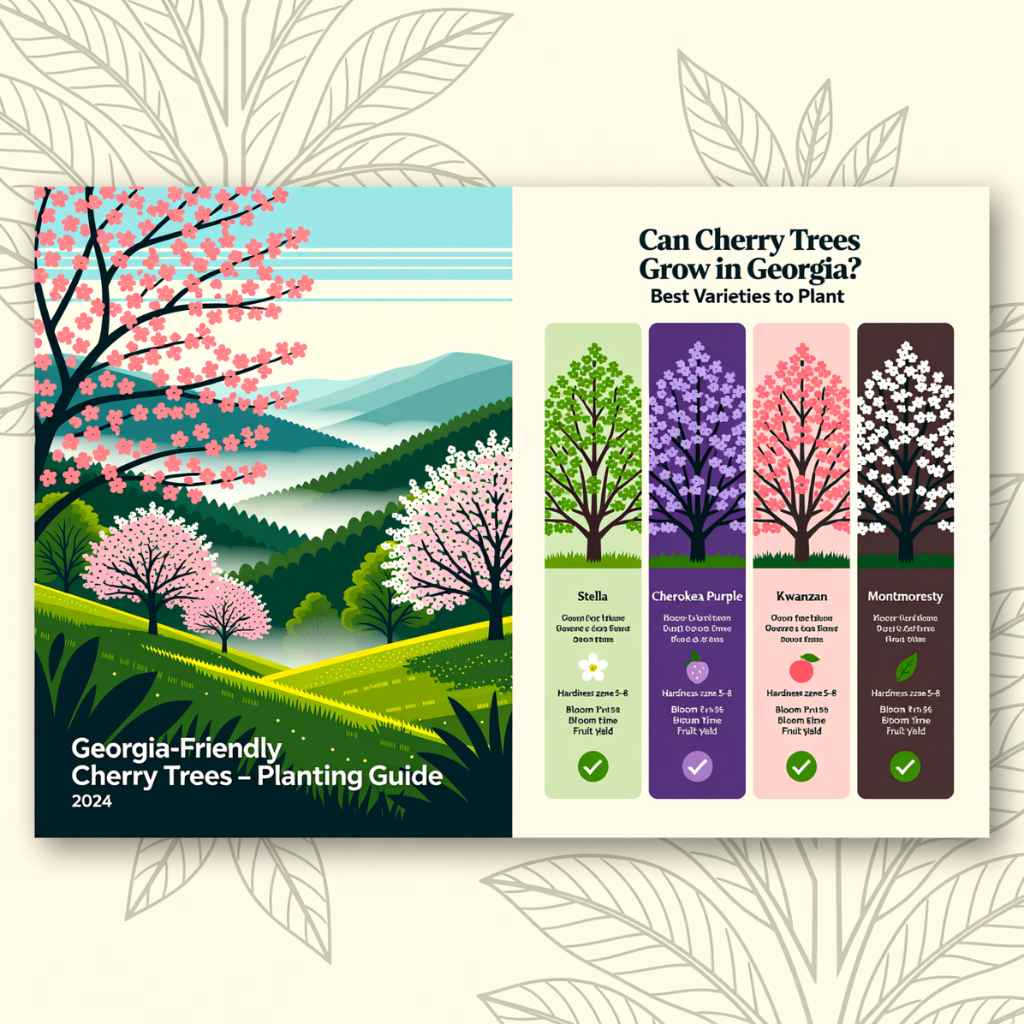
The “Chill Hour” Factor: What It Means for Georgia
Let’s dive a little deeper into “chill hours.” It sounds technical, but it’s a key piece of the puzzle for growing fruit trees like cherries. Basically, chill hours are the number of hours a tree spends between 32°F (0°C) and 45°F (7°C) during its winter dormancy period. Think of it as the tree’s winter nap.
It needs this cold period to properly set its buds for the next spring’s fruit.
Without enough chill hours, a sweet cherry tree might not produce much fruit. Or, the fruit it does produce might be small or have poor quality. This is why selecting a variety with a chill hour requirement that matches your specific part of Georgia is crucial.
Some popular sweet cherry varieties need 800 to 1000 chill hours. Many parts of South Georgia might only get 200-400 hours. This is a big difference!
Tart cherries, like Montmorency, generally need fewer chill hours. They can often do well in areas where sweet cherries struggle. There are also newer sweet cherry varieties being developed.
These are called “low-chill” varieties. They are specifically designed to produce fruit in warmer climates. These low-chill options are often the best bet for many gardeners across Georgia, especially in the southern and central parts of the state.
How do you find out your local chill hours? You can often find this information online. Local university extension offices are fantastic resources.
They study local growing conditions. They can tell you the average chill hours for your county. This data helps you match a cherry tree variety to your exact needs.
Knowing your chill hours takes the guesswork out of choosing the right tree. It’s like picking the right jacket for the weather – you need the one that’s just right.
Best Cherry Tree Varieties for Georgia
Picking the right cherry tree variety is the most important step for success in Georgia. Not all cherry trees are created equal, especially when it comes to climate. We need to look for varieties that can handle Georgia’s specific needs.
This means considering chill hours, disease resistance, and fruit type.
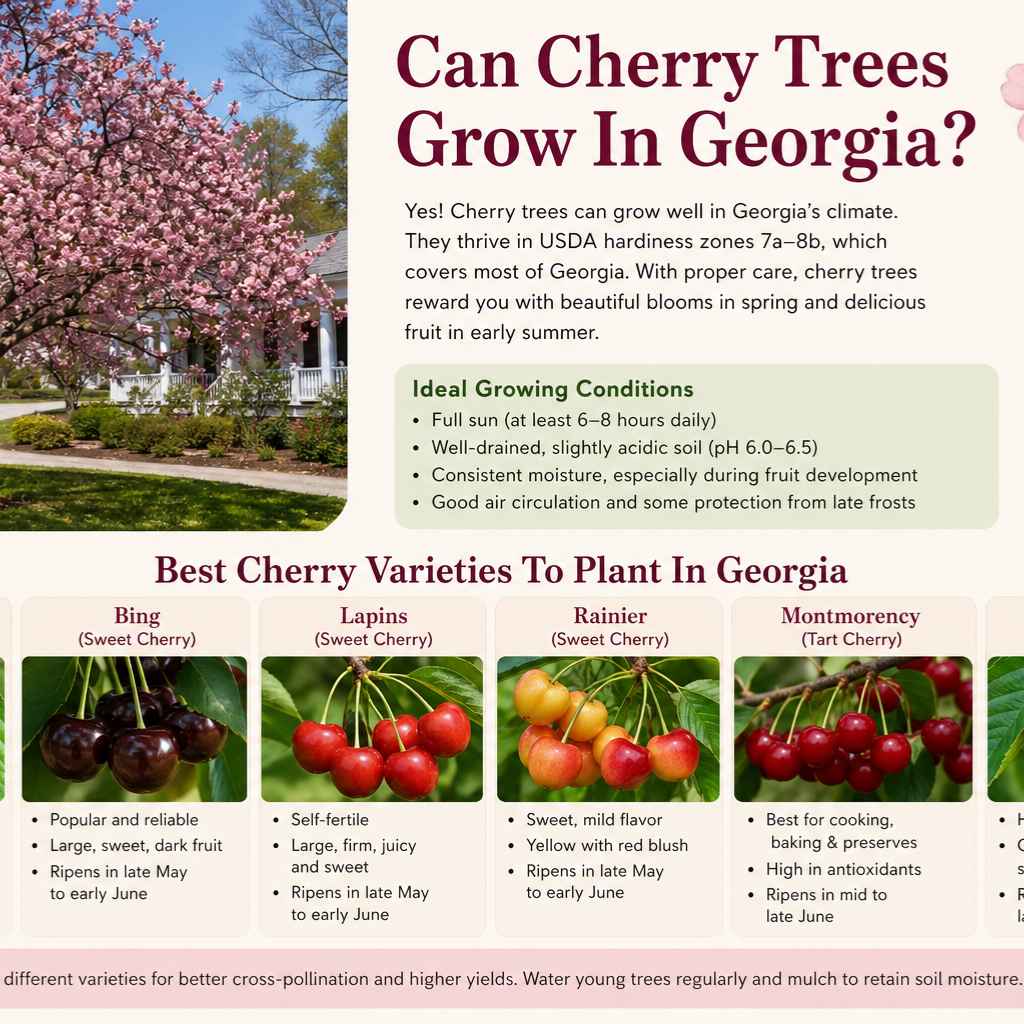
For sweet cherries, look for low-chill or moderate-chill varieties. These are trees that can produce well with fewer winter cold hours. Some popular and reliable choices that often perform well include:
- ‘Black Tartarian’: This is a classic sweet cherry. It’s known for its large, dark fruit. It typically needs around 700-800 chill hours. It’s a good option for North Georgia.
- ‘Bing’: Another very popular sweet cherry. However, ‘Bing’ generally needs more chill hours, often 700-800 or more. It can be a bit trickier in South Georgia.
- ‘Garnet’: This is a newer variety bred for warmer climates. It has good disease resistance and produces sweet, dark red cherries. It usually has a lower chill requirement, making it a good candidate for wider Georgia planting.
- ‘Royal Rainier’: A beautiful yellow-skinned cherry with red blush. It’s known for its sweetness. It usually needs around 500-700 chill hours. It might do better in middle to northern Georgia.
- ‘Stella’: This is a self-pollinating sweet cherry variety. It can produce fruit on its own. It needs about 400-600 chill hours, making it a more adaptable choice for many areas in Georgia.
If you are in South Georgia and find sweet cherries too difficult, consider tart cherries. They are much more forgiving when it comes to chill hours and are very productive.
- ‘Montmorency’: This is the most common tart cherry grown in the U.S. It needs fewer chill hours, often around 400-600. It’s very hardy and great for pies, jams, and sauces.
- ‘North Star’: Another good tart cherry variety. It also has lower chill requirements and is known for its disease resistance.
It’s also worth mentioning that most sweet cherry trees need a second cherry tree nearby to help them pollinate. Some varieties are self-pollinating, like ‘Stella’. If you don’t have a pollinator, you might not get much fruit.
For tart cherries, ‘Montmorency’ is often self-pollinating.
Always check with your local nursery or county extension office. They can give you the most up-to-date recommendations for your specific area of Georgia. They know what’s growing well right now.
Choosing Your Cherry Variety: Quick Guide
For North Georgia (Higher Chill Hours):
Sweet Cherries: ‘Black Tartarian’, ‘Bing’ (if enough chill), ‘Royal Rainier’ (moderate chill)
Tart Cherries: ‘Montmorency’ (good performer)
For Central/South Georgia (Lower Chill Hours):
Sweet Cherries: ‘Stella’ (self-pollinating, lower chill), ‘Garnet’ (low-chill bred), ‘Black Tartarian’ (might work, check local data)
Tart Cherries: ‘Montmorency’, ‘North Star’ (excellent choices)
Always verify local chill hour data and consult local experts.
Planting Your Cherry Tree for Success
Once you’ve picked the perfect cherry tree for Georgia, planting it correctly is key. This isn’t just about digging a hole. It’s about giving your new tree the best possible start so it can grow strong and healthy for years to come.
Poor planting can lead to stress, disease, and poor fruit production.
Location, Location, Location
Choose a spot that gets plenty of sun. Cherry trees need at least 6 to 8 hours of direct sunlight each day. More sun usually means more fruit.
Also, pick a spot with good air circulation. This helps prevent fungal diseases, which can be a problem in Georgia’s humid climate. Avoid planting your cherry tree in a low-lying area where frost can settle.
Cold air sinks, so frosty spots can damage blossoms in spring.
Soil Matters
Cherry trees prefer well-draining soil. This is super important. If water sits around the roots, the tree can develop root rot.
This is a fast way to kill a cherry tree. If you have heavy clay soil, you’ll need to amend it. You can do this by mixing in compost and some grit, like perlite or coarse sand.
You can also plant on a slight mound. This helps excess water run off.
The ideal soil pH for cherry trees is slightly acidic to neutral, around 6.0 to 7.0. You can get your soil tested to check its pH. Your local extension office can help with soil testing.
Digging the Hole
Dig a hole that is two to three times wider than the tree’s root ball. The hole should be just as deep as the root ball. You want the top of the root ball to be level with or slightly above the surrounding soil.
Planting too deep is a common mistake.
Gently loosen any circling roots on the root ball. This helps the roots grow outwards into the new soil. Place the tree in the center of the hole.
Make sure it’s standing straight.
Backfilling and Watering
Fill the hole with the soil you removed. Don’t add too much extra fertilizer or amendments directly into the hole. Let the tree establish its roots first.
Gently firm the soil around the roots to remove air pockets. Water the tree thoroughly after planting. This settles the soil and removes any remaining air gaps.
Mulching is Your Friend
Apply a layer of organic mulch, like wood chips or straw, around the base of the tree. Keep the mulch a few inches away from the trunk itself. Mulch helps conserve moisture, suppress weeds, and regulate soil temperature.
It’s like a cozy blanket for your tree’s roots.
Staking (Maybe)
Most young trees don’t need staking unless they are in a very windy location or are very top-heavy. If you do stake, use flexible ties that won’t girdle the trunk. Remove stakes after one year.
The tree needs to sway slightly to develop a strong trunk.
Planting Checklist for Georgia Cherry Trees
- Sun: 6-8+ hours daily
- Airflow: Good circulation is vital
- Soil: Well-draining, slightly acidic (pH 6.0-7.0)
- Hole Size: 2-3x wider than root ball, same depth
- Root Prep: Loosen circling roots
- Planting Depth: Top of root ball at/slightly above soil level
- Water: Deeply after planting
- Mulch: Apply 2-3 inch layer, keep away from trunk
- Staking: Only if necessary, use flexible ties
Caring for Your Cherry Tree Through the Seasons
Your cherry tree is planted! Now the real work of caring for it begins. Consistent care throughout the year will make a big difference in how well your tree fruits.
Georgia’s climate has its own challenges, like pests and diseases, that we need to watch out for.
Watering: The Right Amount
Young trees need regular watering. Keep the soil consistently moist, especially during the first year. Aim for about an inch of water per week, either from rain or irrigation.
As the tree gets older, it becomes more drought-tolerant. However, during very dry spells, especially when the tree is flowering or fruiting, deep watering is still beneficial. Avoid letting the soil become waterlogged, as this can lead to root problems.
Fertilizing: Feeding Your Tree
Cherry trees aren’t heavy feeders. Over-fertilizing can actually be harmful. For young trees, a light feeding with a balanced fertilizer in early spring is usually enough.
For mature trees, you might not need to fertilize every year. A soil test can tell you if your tree is lacking specific nutrients. If you do fertilize, use a product formulated for fruit trees, and follow the package directions carefully.
Spread the fertilizer around the drip line of the tree, not right at the trunk.
Pruning: Shaping and Health
Pruning is essential for fruit production and tree health. The best time to prune most cherry trees is in late winter or early spring, just before new growth begins. This is when the tree is dormant.
Remove any dead, damaged, or diseased branches. You also want to prune to open up the canopy. This allows for better air circulation and sunlight penetration.
Aim for an open, vase-like shape.
Pruning helps control the tree’s size. It also encourages the growth of fruiting spurs. Don’t remove too much at once.
Make clean cuts just outside the branch collar. This helps the tree heal faster. For young trees, pruning helps establish a strong structure from the start.
Pest and Disease Management in Georgia
Georgia’s climate can be a haven for pests and diseases that affect cherry trees. Common issues include:
- Fungal Diseases: Brown rot, powdery mildew, and leaf spot can be problems, especially with high humidity. Good air circulation through pruning and choosing resistant varieties helps. Sometimes, organic fungicides can be used.
- Insects: Cherry fruit flies, aphids, and Japanese beetles can attack the fruit or foliage. Regular monitoring is important. Sometimes, beneficial insects can help control pest populations. Insecticidal soaps or neem oil are organic options for mild infestations.
- Birds: Birds love cherries as much as we do! Once the fruit starts to ripen, you might need to cover your trees with netting to protect your harvest.
A proactive approach is best. Keep your tree healthy through proper watering, feeding, and pruning. Healthy trees are better able to fight off pests and diseases.
Inspect your tree regularly for any signs of trouble. Early detection is key. Your local extension office can provide specific advice on managing common pests and diseases in your area.
Seasonal Cherry Tree Care Calendar
- Late Winter/Early Spring (Dormant Season): Prune trees. Check for any signs of winter damage.
- Spring (Bud Break to Bloom): Monitor for early pests. Protect blossoms from late frosts if possible.
- Late Spring/Early Summer (Fruit Development): Water deeply during dry spells. Watch for fruit fly activity. Apply netting if birds are a problem.
- Summer (Harvest): Harvest ripe cherries. Continue monitoring for pests and diseases.
- Late Summer/Fall: Water trees as needed. Clean up fallen fruit to reduce disease spread.
- Winter (Dormancy): Minimal care needed, but continue to monitor for storm damage.
Dealing with Pests and Diseases in Georgia’s Humidity
Georgia’s warm, humid weather is great for growing many things, but it’s also a perfect breeding ground for plant diseases and pests. Cherry trees are no exception. Understanding what to look for and how to handle it can save your tree and your harvest.
Brown Rot: The Big One
This is probably the most common and destructive disease for stone fruits like cherries in humid climates. Brown rot starts as fuzzy, grayish-brown spots on blossoms, leaves, and most importantly, the fruit. Affected fruit will rot and often shrivel into a mummified state, carrying the disease into the next season.
Prevention: The best defense is a good offense. Start with resistant varieties if possible. Good air circulation from proper pruning is vital.
Remove and destroy any mummified fruit from the tree and the ground. Sanitation is key. Keep the area around the tree clean.
Treatment: Fungicides can help manage brown rot. Organic options include sulfur or copper sprays, applied at specific times, often starting at bloom and continuing through fruit set. Always follow label instructions carefully.
Timing is crucial with these treatments.
Powdery Mildew
You’ll see a white, powdery coating on leaves and young shoots. While not as devastating as brown rot, it can weaken the tree and reduce fruit quality.
Prevention: Again, good air circulation helps. Avoid over-fertilizing with nitrogen, as it can promote lush, tender growth that’s more susceptible.
Treatment: Organic fungicides like neem oil or potassium bicarbonate can be effective. Ensure good coverage on affected areas.
Aphids
These tiny, soft-bodied insects often appear in clusters on new growth. They suck sap from the plant, weakening it and sometimes spreading viruses. Their sticky waste (honeydew) can also lead to sooty mold.
Prevention: Encourage beneficial insects like ladybugs and lacewings. These natural predators love to eat aphids.
Treatment: A strong spray of water can dislodge many aphids. Insecticidal soaps or neem oil are also effective for larger infestations.
Japanese Beetles
These metallic green and copper beetles can defoliate trees quickly in mid-summer. They skeletonize leaves, eating the tissue between the veins.
Prevention: Handpicking beetles early in the morning and dropping them into soapy water can help. Japanese beetle traps can catch many, but they can also attract more to your yard, so placement is important.
Treatment: In severe cases, certain insecticides may be used, but always consider the impact on beneficial insects and pollinators. Neem oil can also deter them.
Birds and Cherries
This isn’t a disease, but it’s a major concern for anyone wanting to harvest cherries! Birds can decimate a crop in a matter of days.
Solution: The most effective method is to cover your trees with bird-netting as soon as the cherries start to change color. Make sure the netting is secured around the base of the tree to prevent birds from getting trapped underneath. It’s a bit of work, but it’s the only way to guarantee a share of your harvest.
It can feel overwhelming to deal with all these issues. But remember, a healthy, well-cared-for tree is your best defense. Always consult with your local Georgia Cooperative Extension office for the most current and specific recommendations for your region.
They are invaluable resources for dealing with local pest and disease pressures.
Harvesting Your Cherries: The Sweet Reward
The moment you’ve been waiting for! Harvesting cherries is a joyful experience. Knowing when and how to pick them ensures you get the best flavor and quality.
When to Pick
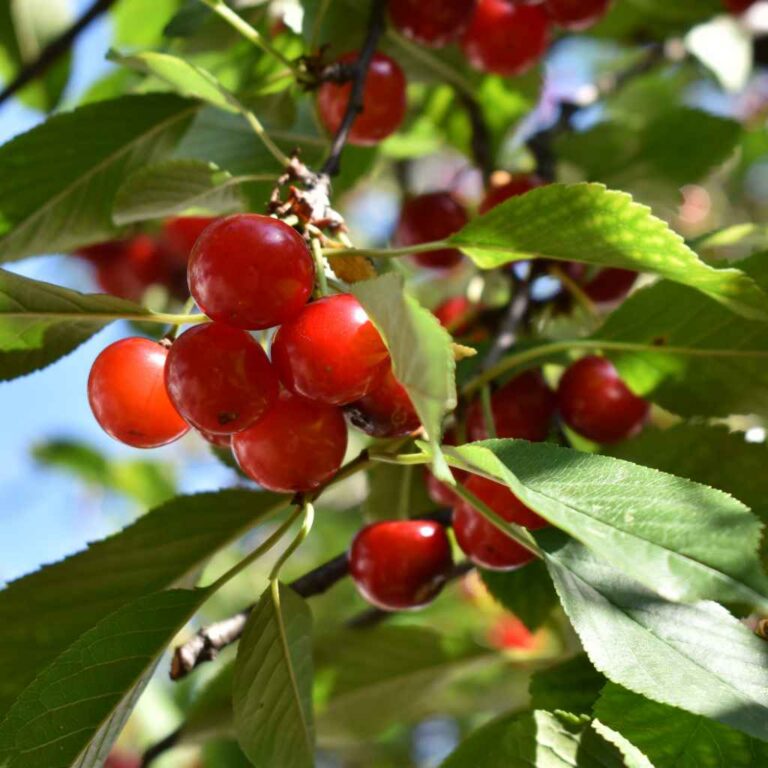
Cherries are ready to harvest when they have reached their full color and are slightly soft to the touch. For sweet cherries, this usually means they are a deep red, rich color. Tart cherries will be bright red.
Don’t rush the harvest. Let the fruit hang on the tree as long as possible. This allows them to develop their full sweetness and flavor.
However, you also don’t want to leave them too long, or they might start to split or attract more pests and diseases.
Taste is the best indicator. Pick one and taste it. If it’s sweet and juicy (for sweet varieties) or tart and flavorful (for tart varieties), it’s likely time.
You’ll often need to pick over a period of a week or two, as cherries don’t all ripen at the exact same time. Small harvests over several days are common.
How to Pick
The best way to pick cherries is to gently pluck them from the stem. Try to pull them upwards. This helps avoid tearing the bark or damaging the fruiting spur, which will produce fruit next year.
If the stem doesn’t easily release, you can try gently twisting it. Avoid pulling hard. Some people find it helpful to snip the stem with small, sharp scissors.
Just be careful not to cut the spur itself.
Handling and Storage
Cherries are delicate. Handle them with care to avoid bruising. Bruised cherries will spoil quickly.
For sweet cherries, the stems should ideally remain attached. This helps them stay fresh longer. If the stems fall off, they will deteriorate faster.
Once picked, cool the cherries as soon as possible. If you plan to eat them fresh, place them in the refrigerator. They will last for a few days to a week, depending on how ripe they were.
If you have a large harvest, consider processing them. Cherries are excellent for pies, jams, preserves, freezing, or drying. Freezing is a great way to enjoy them year-round.
Just wash them, remove the pits if you prefer, and spread them on a baking sheet to freeze individually before bagging them. This prevents them from clumping together.
Enjoying your homegrown cherries is the culmination of all your hard work and patience. It’s a taste of summer that’s truly rewarding.
Troubleshooting Common Cherry Tree Problems
Even with the best care, cherry trees can sometimes run into issues. Here are some common problems and what they might mean:
Cherry Tree Problem Solver
| Problem | Possible Cause | What to Look For | Potential Solution |
|---|---|---|---|
| No Fruit / Little Fruit | Lack of chill hours, poor pollination, young tree, disease, improper pruning. | Few or no blossoms, fruit falls off early, tree is very young. | Choose low-chill varieties, plant a pollinator (if needed), be patient, ensure proper pruning, manage pests/diseases. |
| Fruit Rotting on Tree | Brown rot, high humidity, rain during ripening. | Fuzzy brown spots, fruit turns hard and brown, then may fall or mummify. | Remove diseased fruit immediately, improve air circulation, use fungicides at bloom and fruit set. |
| Leaves Turning Yellow | Nutrient deficiency (iron, nitrogen), overwatering, poor drainage, pests. | Yellowing leaves, sometimes with green veins (iron deficiency). | Soil test, amend soil for drainage, adjust watering, fertilize if needed, check for pests. |
| Bark Splitting or Peeling | Sunscald, frost damage, borers, or sometimes natural bark shedding. | Cracked or peeling bark, sometimes with oozing sap. | Protect young trunks from sunscald (wrap in winter), check for borers (treat if found), some shedding is normal for certain varieties. |
| Leaves Dropping Early | Drought stress, disease (like leaf spot), insect damage, or natural fall color. | Premature leaf drop, sometimes with spots or chewed edges. | Ensure adequate watering, monitor for diseases and pests, improve tree health. |
It’s always a good idea to take photos of any problems you see. This can help you or a local expert diagnose the issue more accurately. Don’t hesitate to reach out to your Georgia Cooperative Extension office for personalized advice.
They are experts in identifying and managing local plant problems.
Can Cherry Trees Grow in Georgia? The Verdict
So, to answer the question directly: yes, cherry trees can grow in Georgia! However, it’s not a simple yes for every type of cherry tree or every location in the state. Success hinges on understanding the specifics of your local climate, particularly the winter chill hours, and making informed choices about variety selection and care.
For those in North Georgia, where chill hours are more abundant, you have a wider range of both sweet and tart cherry varieties to choose from. As you move south, the warmer winters mean you’ll likely need to focus on low-chill sweet cherry varieties or stick with the more forgiving tart cherries. Planting a tree that’s suited to your area’s chill hours is the single most important factor for success.
Beyond variety choice, proper planting in well-draining soil with plenty of sun, consistent watering, judicious pruning, and proactive pest and disease management are crucial. Georgia’s humidity presents challenges, but with careful attention and the right strategies, you can overcome them.
Growing a cherry tree is a journey. It requires patience, especially in the first few years. But the reward of fresh, homegrown cherries makes it all worthwhile.
By following these guidelines and utilizing resources like your local extension office, you can enjoy the beauty and bounty of a cherry tree in your own Georgia backyard.
Frequently Asked Questions About Growing Cherry Trees in Georgia
Do I need two cherry trees to get fruit?
Most sweet cherry trees need a cross-pollinator. This means planting a second variety nearby that blooms at the same time. Some varieties, like ‘Stella’, are self-pollinating and can produce fruit on their own.
Tart cherries, like ‘Montmorency’, are typically self-pollinating.
How long does it take for a cherry tree to produce fruit?
It generally takes 3 to 5 years for a young cherry tree to start producing a noticeable amount of fruit. Some might produce a few cherries in year 2 or 3, but a full harvest usually takes longer. Patience is key!
Can I grow cherries in a pot in Georgia?
Dwarf or semi-dwarf cherry trees can be grown in large containers. This is a good option if you have poor soil or limited space. However, potted trees require more frequent watering and feeding.
Ensure the container is large enough and has excellent drainage. You’ll also need to protect the roots from extreme winter cold in Georgia.
What is the best time to plant a cherry tree in Georgia?
The best time to plant fruit trees in Georgia is generally in the late fall or early winter, after the leaves have dropped and the tree is dormant. This allows the roots to establish before the heat of summer. Early spring is also a good planting time, before new growth begins.
My cherry tree has oozing sap. Is it sick?
Oozing sap, also called gummosis, can be a sign of several issues. It might be a reaction to physical damage, borers, or fungal diseases like brown rot. Inspect the area around the sap for insects or cankers.
Pruning out affected areas and applying a protective sealant or fungicide might be necessary, depending on the cause.
How do I protect my cherry tree from frost in spring?
If a late frost is predicted after your cherry tree has blossomed, you can protect it. Covering the tree with blankets or tarps before sunset can trap heat. You can also use sprinklers to lightly mist the blossoms.
The water freezing on the blossoms creates a layer of ice that insulates them. Turn sprinklers off once the sun is up.
Are tart cherries better for Georgia than sweet cherries?
Tart cherries, like Montmorency, often require fewer chill hours than many sweet cherry varieties. This makes them a more reliable choice for fruit production in much of Georgia, especially in the southern and central regions. They are also generally more disease-resistant.
Sponsored / affiliate links. As an Amazon Associate I earn from qualifying purchases. I may earn additional commission from eligible campaigns.