Can Latex Paint Go Over Oil Paint on Furniture and Cabinets?
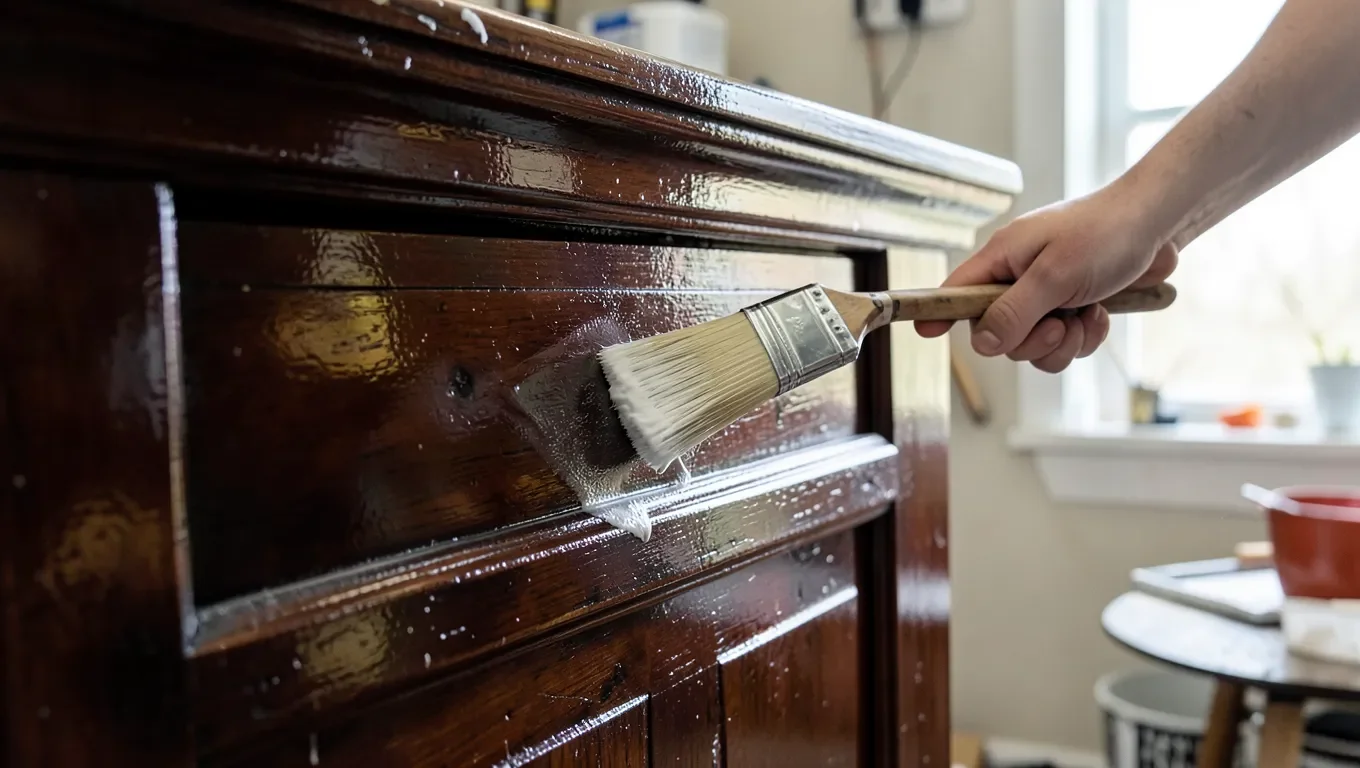
Yes, latex paint can go over oil paint on furniture and cabinets, but the glossy, non-porous surface needs to be cleaned and either deglossed or covered with a bonding primer first, or the new coat will peel within months of normal drawer and door use. Furniture and cabinets get more daily handling than a wall or a piece of trim, which is exactly why adhesion failures show up faster here than almost anywhere else in a house.
This guide focuses on the furniture and cabinet case specifically – hardware, drawer slides, and high-touch edges included. For the general wall-and-trim version of this question, see our latex over oil-based paint guide.
Why Furniture and Cabinets Are a Different Case
No-Sand Option For Furniture
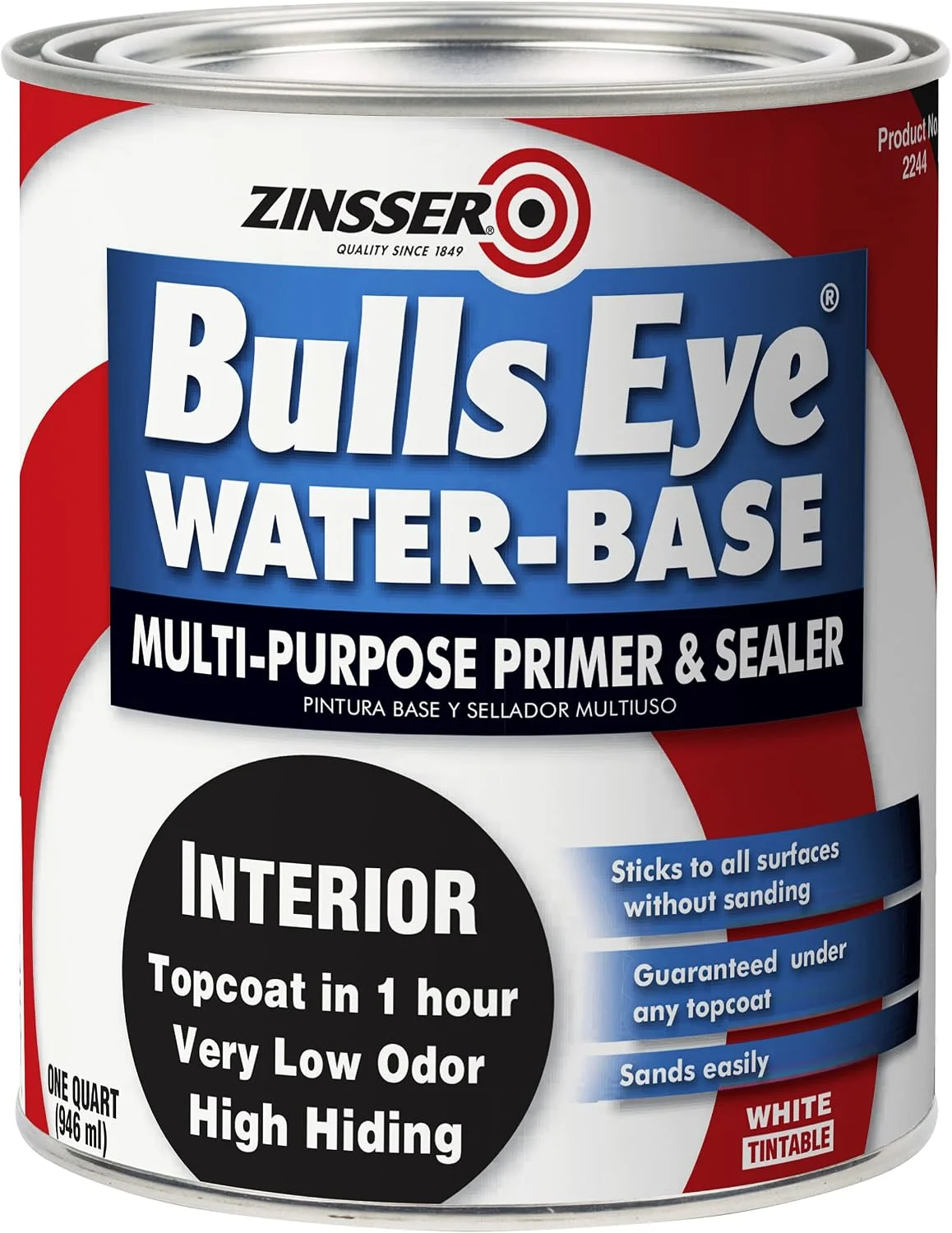 |
Zinsser Bulls Eye Water-Base Primer & Sealer, Quart Formulated to stick to glossy surfaces without sanding first – a real time-saver on a piece with lots of edges, panels, and hardware cutouts.
|
A wall gets touched occasionally. A cabinet door or dresser drawer gets gripped, bumped, and opened dozens of times a week, right at the exact edges where paint adhesion is weakest. Oil paint’s smooth, glossy surface already resists a latex topcoat’s grip under normal conditions – add repeated hand contact at drawer pulls and door edges, and any adhesion shortcut shows up as peeling and chipping far sooner than it would on a wall.
Furniture and cabinets also usually have hardware (hinges, pulls, slides) that has to come off or be masked, and drawer boxes that need the same prep as the visible faces even though they’re rarely painted – skipping the inside edges of a drawer front is a common reason paint chips at exactly the point where a hand grips it.
Step-by-Step: Repainting an Oil-Painted Piece
- Remove all hardware – hinges, pulls, knobs, and drawer slides where possible. Painting around hardware is what causes drips and buildup at edges.
- Clean every surface with a degreaser or a TSP substitute, not just soapy water – kitchen and bathroom pieces especially accumulate a grease film that blocks paint adhesion on its own, separate from the gloss issue.
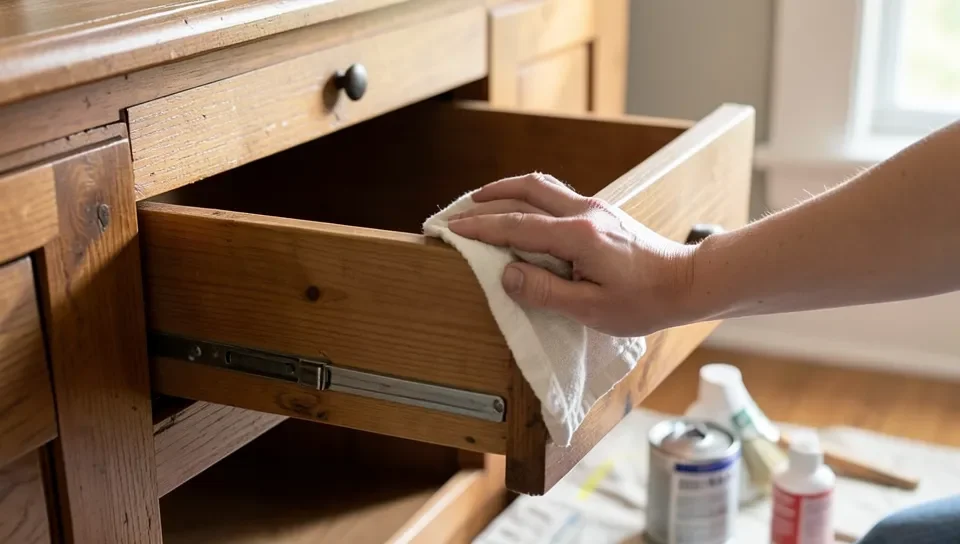
- Lightly scuff-sand the surface with 220-grit sandpaper, focusing on glossy areas. This isn’t about removing the old paint, just knocking down the sheen so a primer has something to grip.
- Wipe away all sanding dust with a tack cloth.
- Apply a bonding primer in a thin, even coat, paying extra attention to edges, corners, and drawer fronts where hands make the most contact.
- Once the primer is fully dry, apply the latex topcoat in 2 thin coats rather than one thick one, sanding lightly between coats with fine-grit paper for the smoothest final finish.
Do You Need to Strip or Sand at All?
Full stripping is rarely necessary just to switch from oil to latex – that’s a much bigger job reserved for damaged, alligatored, or lead-paint-era finishes. A modern no-sand bonding primer genuinely reduces the sanding requirement, but “no-sand” products still perform better with a quick scuff on the glossiest areas (a tabletop, a high-gloss cabinet door) than when applied straight over an untouched slick finish. Skipping sanding entirely is a reasonable shortcut on a low-stakes piece; it’s a bigger gamble on a kitchen cabinet door that gets opened 20 times a day.
Latex vs. Chalk-Style Paint for This Kind of Redo
Chalk-style paints are marketed as needing zero prep over any existing finish, which is only partly true – they still adhere better to a clean, grease-free surface, and most manufacturers recommend at least a wipe-down before painting over an oil-based finish. What chalk paint does skip is the priming step in many cases, at the cost of a more matte, textured look that usually needs a wax or poly topcoat for durability. A primed latex topcoat gives a smoother, more traditional painted-furniture look and tends to hold up better to scrubbing, which matters more on a kitchen piece than a decorative accent table.
Common Mistakes on Furniture and Cabinets
- Painting around installed hardware – leads to drips, buildup, and hinges that no longer close cleanly.
- Skipping degreasing on kitchen pieces – grease film blocks adhesion independent of the gloss issue, and soap and water alone often isn’t enough to remove it.
- Reinstalling hardware and drawer slides too soon – latex paint can feel dry to the touch well before it’s fully cured and hard enough to resist scuffing from daily hardware contact.
- One thick coat instead of two thin ones – a heavy coat is more likely to sag on vertical cabinet faces and takes noticeably longer to cure fully.
Frequently Asked Questions
Can I paint latex directly over an oil-painted dresser without sanding?
A modern bonding primer designed for slick surfaces can skip sanding on most of the piece, but a light scuff-sand on the glossiest areas still improves adhesion. Cleaning to remove any grease or wax buildup matters just as much as the sanding step.
Do I need to remove cabinet hardware before repainting?
Yes, removing hinges, pulls, and knobs gives a cleaner result and prevents paint buildup around the hardware. It also lets you clean and prime the areas underneath that get missed when painting around installed parts.
How long should I wait before using furniture after repainting it?
Latex paint typically feels dry within a few hours, but full cure – the point where it resists scuffing from daily hardware contact and handling – can take up to two to three weeks. Reinstall hardware and resume normal use only after the paint has had time to fully harden, not just dry to the touch.
Is chalk paint easier than latex for repainting furniture?
Chalk-style paint often skips the priming step, which saves time, but it still performs best over a clean surface and usually needs a wax or poly topcoat for durability. Primed latex gives a smoother finish and tends to hold up better to scrubbing on frequently used pieces like kitchen cabinets.
Conclusion
Repainting an oil-painted piece of furniture with latex works reliably as long as the prep accounts for how much handling that surface actually gets – clean, scuff the glossiest spots, prime, and give it real cure time before hardware goes back on and drawers get used daily. For the underlying reason oil and latex don’t bond on their own, see our guide to painting over oil-based primer, which covers the chemistry side of this same adhesion question.
Sponsored / affiliate links. As an Amazon Associate I earn from qualifying purchases. I may earn additional commission from eligible campaigns.