Can MDF Cause COPD? What the Research Actually Shows
Short answer: nobody has shown that MDF dust on its own causes COPD, but the wider evidence on wood dust means it is not something to breathe casually. Most of the scary lines you will read online quietly blur two different claims, and this guide pulls them apart.
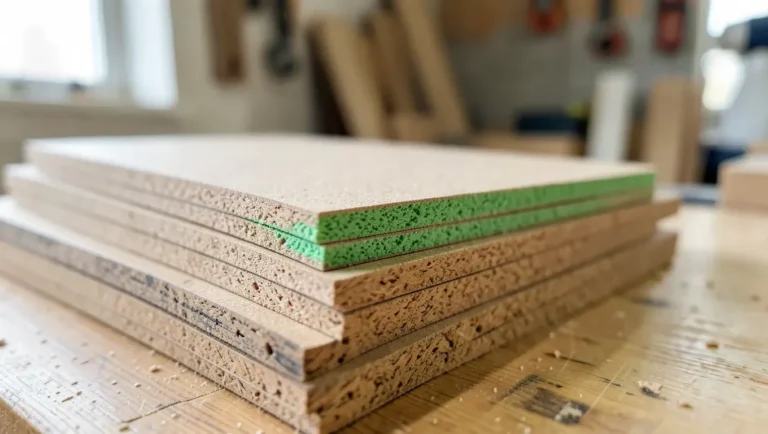
MDF (medium-density fiberboard) is wood fiber bound with resin, and cutting or sanding it throws off a very fine dust. COPD (chronic obstructive pulmonary disease) is a long-term lung condition that narrows the airways. Below is what NIOSH, OSHA, the CDC and the published worker studies actually say, what none of them can tell you, and how to cut MDF without gambling with your lungs. This is general information, not medical advice.
Can MDF dust cause COPD? What we can and cannot say
BEST MDF DUST RESPIRATOR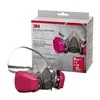 |
3M OV/P100 Half Facepiece Respirator 65021, Medium – $32.99
|
Here is the honest scorecard, based only on the sources listed at the bottom of this page:
- Established: wood dust in general is linked to respiratory problems. NIOSH lists asthma, cough, wheezing and sinusitis among its effects, and OSHA lists asthma, hypersensitivity pneumonitis and chronic bronchitis.
- Established: workplace dust and chemical exposure contribute to COPD overall. A 2019 American Thoracic Society statement put the occupational share of COPD at 14 percent.
- Suggestive, not settled: a Danish study of furniture workers found a dose-dependent link between organic wood dust and new COPD in women, but not in men.
- Not shown: I did not find a study that followed MDF-exposed people and counted COPD diagnoses, so a direct MDF-to-COPD link has not been demonstrated. Absence of proof is not proof of safety, but it is also not proof of harm.
So the accurate statement is that heavy, long-term exposure to wood dust, and probably to MDF dust, is a plausible contributor to COPD risk, while smoking remains the main cause in the United States according to the CDC.
COPD in plain terms: causes, symptoms and how it is diagnosed
The CDC says tobacco smoke is the main cause of COPD in the United States. It also lists secondhand smoke, breathing hazards at work or in the environment, family history and asthma as other risk factors. The four signs it highlights are frequent coughing or wheezing, shortness of breath during everyday activities, trouble taking deep breaths and excess phlegm or mucus. (CDC: About COPD)
Doctors diagnose COPD with spirometry, a breathing test that measures how much air you can blow out and how fast. That matters here because it separates a feeling of tight lungs after a dusty afternoon, which is common and usually irritation, from measured airflow obstruction, which needs a clinician.
What the research actually shows
| Source | Who or what it covered | What it found | What it cannot tell you |
|---|---|---|---|
| ATS statement (2019) | Population-level review of workplace exposures | Occupational exposures account for a population attributable fraction of 14 percent for COPD, 16 percent for asthma and 13 percent for chronic bronchitis | Does not single out MDF |
| Danish furniture worker study (Annals of Work Exposures and Health, 2018) | 1,112 furniture workers and 235 controls followed for 6 years | Women had higher odds of new COPD at the highest dust levels and lost roughly 125 ml of lung function over 6 years in the third exposure quartile; men showed no similar link and smoking was their main risk | Organic wood dust in general, not MDF specifically; a re-analysis of one cohort |
| Thai MDF furniture factory study (2016) | 439 employees, cross-sectional | Average MDF dust 7.67 mg/m3 and formaldehyde 2.62 ppm; irritation and allergic-type symptoms were reported | Questionnaire-based, no lung function tests, no COPD diagnoses reported |
| NIOSH and OSHA guidance | Wood dust in workplaces | Respiratory effects and a cancer warning for prolonged occupational exposure | OSHA states the extent of the hazards and the wood types involved are not clearly established |
The pattern is consistent: symptoms and lung-function effects show up in people who work in heavy dust for years, and the evidence is weakest exactly where it is most quoted, the direct MDF-to-COPD claim.
The numbers: how factory exposure compares with the limits
Exposure limits give a sense of scale. They are workplace limits, not a promise that lower levels are harmless.
| Measure | Value | Source |
|---|---|---|
| NIOSH recommended limit, wood dust | 1 mg/m3 time-weighted average, listed with a carcinogen notation | NIOSH Pocket Guide |
| OSHA legal limit, wood dust | 15 mg/m3 total dust, 5 mg/m3 respirable fraction | NIOSH Pocket Guide / OSHA |
| Average MDF dust in the Thai factory | 7.67 mg/m3, about 7.7 times the NIOSH figure | Thai factory study |
| Average formaldehyde in that factory | 2.62 ppm, about 3.5 times the 0.75 ppm OSHA figure the authors cite | Thai factory study |
Two takeaways. First, a factory that runs MDF all day can sit far above the recommended limit while staying under OSHA’s much looser 15 mg/m3 figure, so “legal” is not the same as “safe”. Second, those readings come from an industrial line. A weekend hobbyist with a shop vacuum on the saw is in a very different situation, although no study I found measured hobby-shop levels, so treat that as a reasonable inference and not a measured fact.
Myth check: “Wood dust definitely gives you COPD”
A common claim, including on earlier versions of this page, is that prolonged wood dust exposure leads to COPD as though it were settled. It is better stated as an increased risk that depends on dose, duration and the person. The Danish data showed that difference clearly: the same dust exposure was associated with more COPD in women and not in men, and smoking dominated the male results. Overstating the link does not make anyone safer, and it sends people into needless panic. Understating it is worse.
Why MDF dust deserves extra respect
- It is very fine. Fiberboard is made of refined wood fibers, so cutting it produces powder rather than chips, which stays airborne longer.
- It carries a binder. MDF is held together with resin that has historically released formaldehyde, which is why the Thai study measured both. See our guide to why MDF dust is dangerous for the formaldehyde side.
- Wood dust is a recognized carcinogen for the nose and sinuses. The National Cancer Institute cites strong and consistent associations with cancers of the paranasal sinuses and nasal cavity in occupational studies. That is a different disease from COPD but comes from the same dust.
How to cut MDF without breathing it
- Capture at the source. Connect a dust collector or a shop vacuum to the saw, sander or router. Capturing at the tool beats any mask alone.
- Cut outside or ventilate. Put a fan in a window that blows out, and open a second opening for makeup air.
- Wear a properly fitted respirator. A half mask with P100 filters, like the pick above, seals far better than a loose paper mask. Do a seal check every time and keep facial hair out of the seal area.
- Do not sweep. Brooms and compressed air relaunch settled dust. Use a HEPA vacuum or a damp cloth.
- Seal the cut edges. Primer or sealer on machined edges cuts down on what the board sheds later. Our breakdown of whether MDF is still dangerous covers what modern low-emission boards changed and did not change.
- Change clothes before you go inside. Dust rides on sleeves and hair into the rest of the house.
If you already breathed a lot of dust, what to do if you inhale sawdust walks through the immediate steps.
When to see a doctor
See a doctor if you cough for weeks, get short of breath doing things that used to be easy, wheeze, or bring up mucus regularly, especially if you work with dust. Tell them what you cut and for how long, because occupational exposure is easy to miss unless you mention it. A spirometry test is the standard way to check for airflow obstruction. Get urgent medical help for severe breathlessness, blue lips or chest pain, and do not wait for a hobby-related explanation.
Do not try to guess from an article, including this one, whether your cough is COPD, asthma or something else. Your doctor can weigh your smoking history, your work and hobby exposures and your test results together.
Frequently Asked Questions
Does MDF dust cause COPD?
There is no direct study proving that MDF dust alone causes COPD. Wood dust is linked to respiratory disease, and workplace exposures overall account for about 14 percent of COPD according to a 2019 American Thoracic Society statement, so heavy long-term exposure is a reasonable concern.
Can you get COPD from wood dust?
Wood dust is associated with asthma, chronic bronchitis and reduced lung function in workers, and a Danish furniture worker study linked higher dust levels to new COPD in women. The risk depends on dose, duration and individual factors, and smoking remains the main cause of COPD in the United States.
Is a dust mask enough for cutting MDF?
A loose paper mask is the weakest option. A NIOSH-approved half-mask respirator with P100 filters that has been fitted and seal-checked filters far more, and it works best combined with dust collection at the tool.
How do I know if MDF dust is affecting my lungs?
You cannot tell from symptoms alone. Persistent cough, wheezing, mucus or shortness of breath are reasons to see a doctor, who can order spirometry and consider your work exposure.
Is finished or painted MDF a COPD risk?
The dust is the main respiratory concern, and it is released when you cut, sand or drill the board. Intact, sealed MDF releases far less, but sanding or cutting it again reopens the exposure.
Sources
- CDC: COPD causes, symptoms and diagnosis
- NIOSH Pocket Guide: Wood dust
- OSHA woodworking eTool: Wood dust health hazards
- OSHA: Wood dust
- National Cancer Institute: Wood dust
- New-onset COPD and decline in lung function among wood dust-exposed workers (Annals of Work Exposures and Health, 2018)
- Respiratory symptoms due to occupational exposure to formaldehyde and MDF dust in a Thai MDF furniture factory
- ATS statement: The occupational burden of nonmalignant respiratory diseases (2019)
Sponsored / affiliate links. As an Amazon Associate I earn from qualifying purchases. I may earn additional commission from eligible campaigns.