Is MDF Still Dangerous? What the 2018 Rule Fixed (and Didn’t)
Yes, in two specific situations. Finished, sealed MDF furniture is a low-risk material for most people, but fresh dust from cutting or sanding it is a real health hazard, and formaldehyde from the resin is a real, though now regulated, one. This guide separates the two so you know which one applies to you.
The rules on MDF changed in 2018, and a lot of older advice online ignores that. Below you will find what the federal formaldehyde standard actually limits, what it does not cover, the workplace exposure numbers behind wood dust, and a ranked look at where the risk really sits. If you only want the formaldehyde side, see our page on whether MDF has formaldehyde; if you are asking about legality, see whether MDF is banned in the US.
Is MDF Still Dangerous? The Short Answer
MDF is not banned and it is not uniformly harmful, but two hazards remain: airborne wood dust when you machine it, and formaldehyde released from the resin binder. Dust is the one you control most directly with a respirator, so that is where the product below fits.
Best Dust Respirator Pick | |
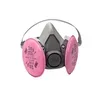 |
3M Half Facepiece Reusable Respirator 6391 (Large) with 2091 P100 Filters A reusable half mask with P100 particulate filters, the type of protection that matters most when you cut or sand MDF and the fine dust hangs in the air.
|
As an Amazon Associate we earn from qualifying purchases. | |
What Changed: The 2018 Federal Formaldehyde Rule
MDF is made by binding wood fibers with resin, and some of those resins release formaldehyde. Under Title VI of the Toxic Substances Control Act, EPA regulates formaldehyde emissions from hardwood plywood, medium-density fiberboard and particleboard, and from household and other finished goods that contain them. According to EPA, the standards are set at the same levels as California’s CARB Phase II rule.
Two dates matter. EPA states that from June 1, 2018, products manufactured or imported into the US must be certified as compliant, and that after March 22, 2019, products must be certified and labeled as TSCA Title VI compliant. The emission limits in the rule, measured with the ASTM E1333-14 test method, are:
| Product | Formaldehyde limit (ppm) |
|---|---|
| Hardwood plywood | 0.05 |
| Particleboard | 0.09 |
| Medium-density fiberboard (MDF) | 0.11 |
| Thin MDF | 0.13 |
Source: 40 CFR 770.10 (EPA TSCA Title VI).
The myth this table creates
It is tempting to read 0.11 ppm as the formaldehyde level in your room. It is not. These are emission limits for panels under standardized test conditions, not a guarantee about the air in your home, and they are a cap, not zero. Your actual room level depends on how much MDF you have, how much of it is exposed, ventilation, heat and humidity. EPA notes that a dehumidifier or air conditioning to control humidity and temperature, and more ventilation after bringing in new sources, can help reduce formaldehyde levels.
The other catch: the rule applies to product manufactured or imported after the compliance dates. A cabinet or shelf made before them was not held to this federal standard, so a label on newer product is worth looking for, and an older piece is not automatically safe or unsafe. Ask for the TSCA Title VI label when you buy new panels.
What Did Not Change: MDF Dust
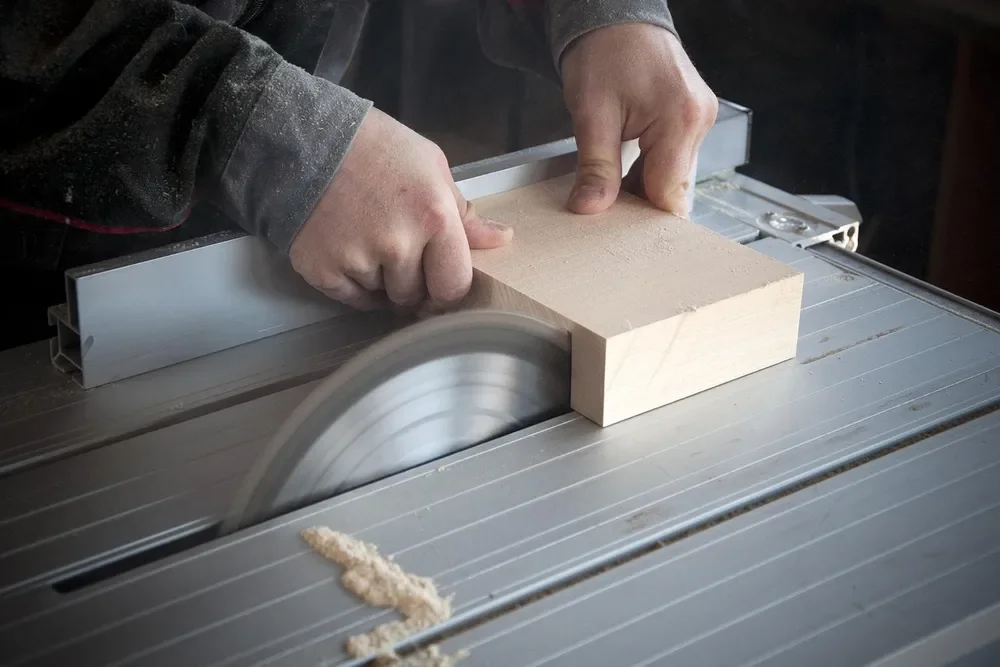
No emissions rule addresses the dust you make yourself. OSHA says wood dust has an irritant effect on the eyes, nose and throat in addition to pulmonary function impairment, and is considered a human carcinogen. The National Toxicology Program lists wood dust as known to be a human carcinogen, and IARC classifies it as carcinogenic to humans (Group 1). OSHA also notes that risks include exposure to chemicals such as formaldehyde used in processing some woods.
Two caveats keep this honest. First, most of the cancer evidence comes from occupational settings with heavy, long-term exposure, such as sawmills and furniture factories, not a weekend project. Second, we did not find agency figures specific to MDF dust, so the numbers below are for wood dust in general. MDF is made of very fine fibers held with resin, which is a reason to treat its dust seriously, but that is a precaution, not a measured result.
The Exposure Numbers, Side by Side
| Substance | Limit | Who sets it |
|---|---|---|
| Wood dust | 1 mg/m3 TWA, listed as a potential occupational carcinogen | NIOSH recommended limit |
| Wood dust | 15 mg/m3 total, 5 mg/m3 respirable, TWA | OSHA permissible limit |
| Formaldehyde | 0.016 ppm TWA, ceiling 0.1 ppm over 15 minutes, potential occupational carcinogen | NIOSH recommended limit |
| Formaldehyde | 0.75 ppm TWA, 2 ppm short-term | OSHA permissible limit |
Source: NIOSH Pocket Guide to Chemical Hazards (wood dust and formalin entries). TWA means time-weighted average over a work shift.
Notice the gap: NIOSH recommends 1 mg/m3 for wood dust, while the OSHA limit allows 15 mg/m3 of total dust. NIOSH’s recommended formaldehyde level is also far below OSHA’s. These are workplace limits, not standards for home air, but they show how much lower the health-based recommendations sit than the legal ceilings. Shop dust that looks like a light haze can be well above the NIOSH number, which is why guessing by eye is a poor plan.
Where the Real Risk Sits: A Ranked Look
This ranking is our editorial judgment built from the sources above, not measured data.
| Situation | Main concern | Our risk view | What to do |
|---|---|---|---|
| Cutting or sanding MDF with no dust control | Wood dust, plus resin particles | Highest | Dust collection or outdoors, plus a P100 respirator |
| Storing large stacks of raw, unsealed panels in a small closed space | Formaldehyde build-up | Moderate | Ventilate, keep cool and dry, seal faces and edges |
| New unfinished MDF shelving or cabinets indoors | Formaldehyde, strongest when new | Low to moderate | Choose TSCA Title VI labeled product, ventilate, finish it |
| Sealed, painted or laminated furniture | Little exposed surface | Low | Normal use, keep the finish intact |
| Burning scrap | Smoke from resin-bonded material | Avoid | Do not burn it, see our note on burning MDF |
For the dust side, the practical guide is our page on cutting MDF and the setup notes for a dust collection system. For a bigger picture on health, see is MDF toxic and is MDF bad for your health.
How to Use MDF With Less Risk
- Buy new panels labeled TSCA Title VI compliant (or CARB Phase II) so you know they meet the current emission limits.
- Cut outdoors or with dust extraction connected to the saw, and clean up with a vacuum rather than a broom so fine dust does not go back into the air.
- Wear a NIOSH-approved P100 particulate respirator for cutting, routing and sanding. A loose dust mask that is not fitted to your face will leak.
- Seal faces and edges with primer and paint. Our guide on choosing a primer for MDF covers the products that hold up on porous edges.
- Keep the room cool and ventilated when you bring in a lot of new MDF, since EPA notes heat and humidity influence formaldehyde levels.
- Do not rely on a dust respirator for formaldehyde gas. Particulate filters stop dust, not vapors.
People with asthma, chemical sensitivity or a child’s bedroom to furnish may want to be more conservative and ask a doctor. That is common-sense caution, not a claim that MDF will harm them.
Frequently Asked Questions
Is MDF still dangerous today?
MDF is not banned and finished MDF is low-risk for most people. The main hazards that remain are fine wood dust from cutting or sanding, and formaldehyde from the resin, which EPA now limits under TSCA Title VI for product made or imported after the June 2018 compliance date.
Is MDF banned in the US?
No. EPA regulates formaldehyde emissions from MDF, hardwood plywood and particleboard under TSCA Title VI rather than banning them. Products must be certified compliant, and after March 22, 2019 they must carry the TSCA Title VI label.
Does modern MDF still contain formaldehyde?
It can. The rule caps emissions at 0.11 ppm for MDF and 0.13 ppm for thin MDF in standardized testing, which is a limit rather than zero. Some boards use other resins, so check the product label or maker documentation.
Do I need a respirator to cut MDF?
Wood dust is classified by IARC as carcinogenic to humans, and NIOSH recommends a limit of 1 mg/m3. For anything beyond a cut or two, a fitted NIOSH-approved P100 respirator plus dust collection is a sensible precaution.
Bottom Line
MDF is neither poison nor harmless. Since 2018, new MDF sold in the US has to meet a formaldehyde limit, which addresses the resin question for compliant product. The dust you make when working it has not changed, and that is where a respirator and dust control earn their keep. If you are still deciding whether to use it at all, our page on whether you should avoid MDF and the MDF pros and cons are the next reads.
Sponsored / affiliate links. As an Amazon Associate I earn from qualifying purchases. I may earn additional commission from eligible campaigns.