Is It Safe to Sand MDF? Respirator and Dust Rules That Matter
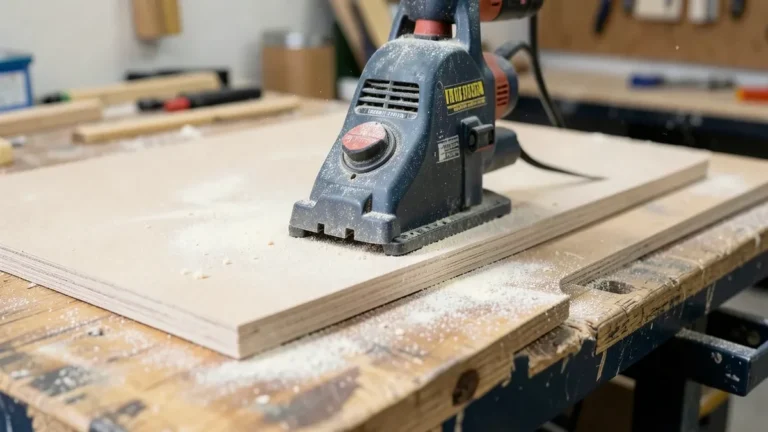
Sanding MDF is safe when you treat the dust as more than plain sawdust — because it isn’t. MDF is wood fiber held together with a urea-formaldehyde resin binder, so every pass of a sander releases fine wood particles mixed with that resin. Get the respirator rating, dust collection, and ventilation right and there’s no reason to avoid sanding it. Skip those and you’re exposed to more than you’d get from sanding solid pine or plywood.
Is It Safe to Sand MDF? The Short Answer
Yes — with real respiratory protection, not a step you can skip “just this once.” The dust MDF sheds when sanded is finer than dust from solid wood because the board is already made of compressed wood fibers, and it carries the formaldehyde-based resin binder along with it. A disposable paper mask doesn’t seal to your face and won’t stop that fine a particle. The gear below is what actually does the job.
Best MDF Dust Respirator Pick
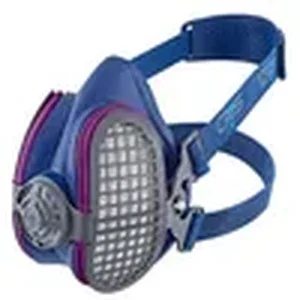 |
GVS Elipse P100 Half-Mask Respirator – $49.91 A basic paper dust mask does not seal to your face or filter formaldehyde-laden fine dust the way a real half-mask respirator does — this is the upgrade this article recommends before you sand a single MDF panel.
|
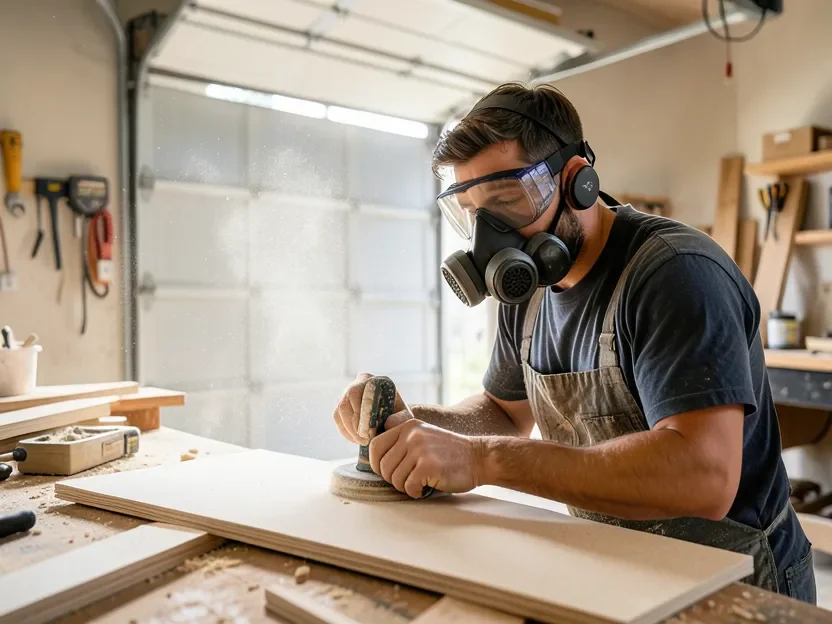
That respirator pairs with sealed safety goggles and a dust collector on your sander — details on setting that up are further down this page. None of this is overkill; it’s the same PPE combination cabinet shops and millwork manufacturers require for MDF work.
What’s Actually in MDF Dust
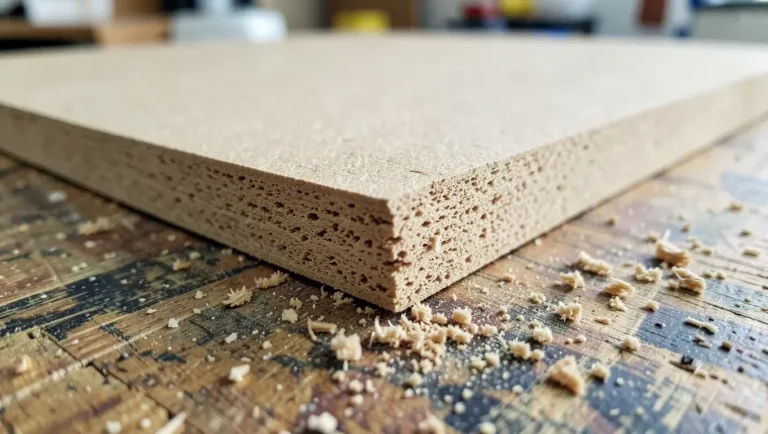
Medium-density fiberboard starts as wood chips, usually a mix of softwood and hardwood scraps, broken down into individual fibers. Those fibers are mixed with a urea-formaldehyde (UF) resin and wax, then heat-pressed into dense, uniform sheets. That manufacturing process is exactly why MDF cuts and sands so smoothly compared to plywood — there’s no grain direction and no voids — but it’s also why the dust behaves differently once you’re breathing it.
Sawdust from solid lumber is mostly cellulose fiber. MDF dust is that same fine wood fiber plus the cured resin binder holding it together, ground down to particles small enough to stay airborne for a while after you stop sanding. This is covered in more depth here if you want the full breakdown of why MDF dust specifically is treated differently from ordinary sawdust in woodshop safety guidelines.
The Real Health Risk, Without the Exaggeration
Formaldehyde is classified by the International Agency for Research on Cancer (IARC) as a Group 1 carcinogen — a substance with confirmed cancer risk in humans. That classification is based on prolonged or repeated high-level exposure, the kind seen in industrial settings over years, not a single afternoon of sanding a cabinet panel with a respirator on. It’s a real reason to protect yourself properly, not a reason to panic about a one-off project.
In the short term, unprotected exposure to MDF dust irritates the eyes, nose, throat, and lungs — the same way any fine wood dust does, plus the resin’s own irritant effect. That irritation is your actual warning sign during a project. If your eyes are stinging or your throat feels raw after sanding, your setup isn’t working and needs a better respirator or more airflow, not just a break. If that’s already happened to you, here’s what to do next, and this page goes deeper into what the formaldehyde classification does and doesn’t mean for a home woodworker.
The Respirator You Actually Need
Most “is it safe” articles just say “wear a dust mask.” That’s not specific enough to matter. Here’s what the rating on the box actually means for MDF work:
- Paper/dust mask (no NIOSH rating): Doesn’t seal to your face and isn’t rated to filter fine particulate at all. Skip it for MDF.
- N95: A real minimum — filters 95% of larger airborne particles when properly fitted. Fine for occasional, light sanding with good ventilation.
- P100 half-mask (like the pick above): Filters at least 99.97% of airborne particles and seals against your face with an adjustable strap, which is what actually matters for fine MDF dust. This is the baseline for regular sanding sessions.
- P100 + organic vapor cartridge: Adds protection against the vapor-phase formaldehyde that a particulate filter alone doesn’t stop. Worth the upgrade if you’re doing heavy or repeated MDF work, not just an occasional cut.
Whichever respirator you choose, it only works if it actually seals against your skin — a beard or loose straps defeat the filter rating entirely. Check the fit every time, not just the first time you buy it.
Dust Collection and Ventilation That Actually Works
A respirator protects you; it doesn’t protect the air in your shop or anyone else working nearby. Pair it with source capture: connect your shop vacuum directly to your sander’s dust port whenever the tool has one, rather than relying on the sander’s own small collection bag, which catches only a fraction of what’s airborne. A random orbital sander with a sealed dust port and hose connection captures dramatically more at the source than sanding freehand.
Beyond source capture, actual airflow matters. Open a door or window, or better, sand outdoors or in a garage with the door up whenever the project allows it. A box fan pointed out an open doorway helps push fine dust out of the space rather than letting it recirculate. Indoor sanding with the door closed and no dust collection is the combination that lets formaldehyde-laden dust build up in the air you’re breathing.
Step-by-Step: Sanding MDF Safely
- Put on your P100 (or better) respirator and safety goggles before you start — not after the first pass.
- Connect a shop vacuum or dust extractor to your sander’s dust port, or work with the sander’s own collection bag attached at minimum.
- Open a door or window, or move the work outdoors if the piece and weather allow it.
- Start with a coarser grit (100–120) to remove material, then step up to 150–220 grit for a smooth, paint-ready surface.
- Use light, even pressure — MDF’s compressed fiber surface breaks down under heavy force, leaving a rougher, chalky finish rather than a smooth one.
- Vacuum the piece and the surrounding area when you’re done; settled dust becomes airborne again the next time it’s disturbed.
- Bag sealed waste and dust for disposal rather than sweeping it into the open air.
Mistakes That Quietly Undermine Your Protection
The most common mistake isn’t skipping PPE entirely — it’s wearing a paper dust mask and assuming that counts. It doesn’t seal well enough to matter for MDF’s fine dust. The second most common mistake is sanding indoors with the door closed “just for a few minutes,” which is exactly how fine dust accumulates in a closed room’s air over a project. The third is skipping eye protection because the respirator feels like enough — MDF dust irritates eyes just as easily as it irritates airways, and a half-mask respirator doesn’t cover them.
If you’re sanding MDF regularly rather than for a single project, it’s worth checking whether you need to sand it at all before priming and painting — in some cases a light scuff-sand is all that’s required, which cuts your dust exposure down before you even start.
Frequently Asked Questions
Is Sanding MDF Safe?
Yes, but only with the right gear. MDF is bonded with a urea-formaldehyde resin, so sanding it produces dust that’s finer than typical wood dust and carries resin particles along with the wood fiber. A half-mask respirator rated P100 (not a paper dust mask), safety goggles, and either a shop vacuum or dust extractor hooked to your sander are the minimum setup. Skip any of those and you’re breathing something worse than plain sawdust.
Is MDF Dust Harmful to Your Health?
It can be, with enough exposure. Formaldehyde is classified by the IARC as a Group 1 human carcinogen based on prolonged or repeated high-level exposure, and MDF dust also irritates the eyes, nose, and throat in the short term. A single well-protected cut isn’t the concern; sanding MDF regularly without a respirator and ventilation is what raises real risk over time.
Can MDF Be Sanded and Repainted?
Yes. Sand with 150 to 220-grit sandpaper to knock down the fuzzy fibers MDF raises when cut, vacuum the surface completely, then apply a stain-blocking primer made for MDF before your topcoat. Skipping the primer is the most common reason paint looks blotchy on MDF, since the raw fiberboard absorbs paint unevenly.
Does All MDF Have Formaldehyde?
Most standard MDF does, since urea-formaldehyde is the standard binder resin. Lower-emission options exist and are labeled CARB Phase 2 or TSCA Title VI compliant, which caps formaldehyde emissions at a strict limit rather than eliminating the resin entirely. If a board doesn’t list a compliance certification, treat it like standard MDF for dust protection purposes.
Sponsored / affiliate links. As an Amazon Associate I earn from qualifying purchases. I may earn additional commission from eligible campaigns.