Can Rust-Oleum Paint Over Rust? What the Data Sheets Say
Yes, but only over tightly bonded rust. Rust-Oleum’s own Stops Rust data sheet says to wire-brush or sand off loose rust first, and its Rusty Metal Primer is the product made for heavily rusted steel. Without that prep the coating has nothing solid to grip. This guide covers which Rust-Oleum product fits light versus heavy rust, the recoat window many people miss, and when to skip paint entirely.
Can Rust-Oleum Paint Over Rust?
Rust-Oleum paint can go over rust that is firmly attached to the metal, which is why the brand sells products for rusty steel at all. What it cannot do is hold onto rust that is flaking or scaling off. The Stops Rust data sheet instructs you to wash the surface, let it dry, and then remove loose paint and rust with a wire brush or sandpaper. “Paint over rust” really means “paint over the rust that is left after you remove the loose rust.”
Best Heavy Rust Primer Pick
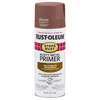 |
Rust-Oleum Stops Rust Rusty Metal Primer Spray, 12 oz ($6.48) This is the can the data sheet describes as made for heavily rusted surfaces. It goes on after the wire-brush step covered below, then takes a Stops Rust enamel topcoat inside the one-hour window.
|
As an Amazon Associate we earn from qualifying purchases.
Which Rust-Oleum Product Fits Which Rust Condition
Rust-Oleum sells several Stops Rust products that look similar on the shelf but are built for different starting conditions. The data sheets spell out the difference, and the timing columns below are where most failed jobs trace back to. The figures come from the Rust-Oleum technical data sheets for Stops Rust Enamel Sprays, Stops Rust Primer Sprays, and Stops Rust Rust Reformer, all measured at 70°F and 50% relative humidity.
| Product | Made for (per data sheet) | Dry times | Recoat or topcoat |
|---|---|---|---|
| Stops Rust Enamel Spray | Ferrous and non-ferrous metal and wood. Not for galvanized metal. | Tack-free 2 to 4 hours, handle 5 to 9 hours, fully dry 24 hours | Second coat within 1 hour or after 48 hours |
| Clean Metal Primer (7780) | Lightly rusted, bare metal, or previously painted surfaces | Touch 15 to 30 minutes, handle 1 to 2 hours | Topcoat within 1 hour or after 48 hours |
| Rusty Metal Primer (7769) | Heavily rusted surfaces only | Touch 15 to 30 minutes, handle 1 to 2 hours | Topcoat within 1 hour or after 48 hours |
| Rust Reformer aerosol | Converts rust to a paintable surface. Not for non-rusted surfaces. | Touch 20 to 40 minutes, handle 1 hour | Allow 24 hours; one coat is sufficient; topcoat after 24 hours |
| Rust Reformer brush-on | Same as aerosol | Dries to a black film in about 15 minutes; touch 20 to 40 minutes | Oil-based paint after 3 hours; lacquer or aerosol after 3 days |
The one-hour or 48-hour recoat rule
Every Stops Rust enamel and primer sheet gives the same odd instruction: recoat within 1 hour or wait until after 48 hours. The sheets do not give a safe time in between, so if you miss the one-hour window on a project, the sheet’s answer is to stop and come back after two days. That is why a primer-then-enamel job works best as one continuous session: prime, then topcoat before the hour is up.
The brush-on Rust Reformer trap
The brush-on Rust Reformer lists a 3-day wait before a lacquer or aerosol topcoat, while the aerosol version lists 24 hours. If you brush on the converter and then spray a rattle-can enamel the next afternoon, you are inside the window the sheet warns about. Plan around the slower number.
How to Prep Rusty Metal Before You Paint
The data sheets agree on a short prep sequence. Skipping any of it is the usual reason a Rust-Oleum job fails, not the paint itself.
- Wash off dirt, grease, oil, and salt with a commercial detergent, rinse with fresh water, and let the metal dry thoroughly.
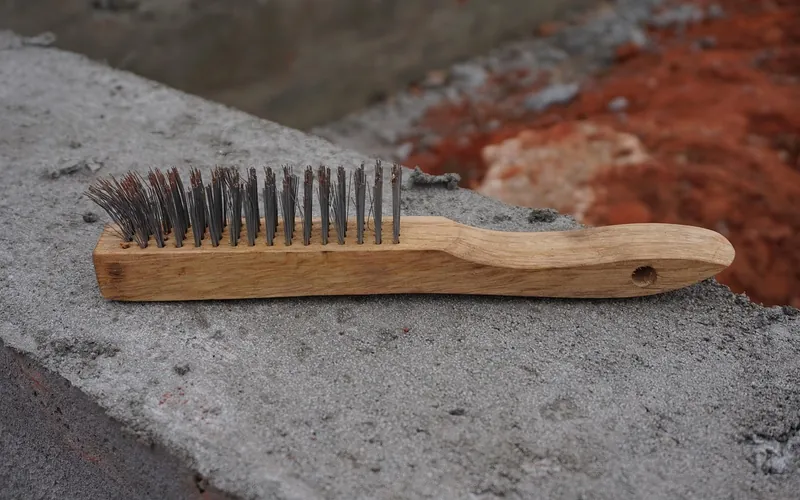
- Remove loose paint and rust with a wire brush or sandpaper. For Rust Reformer, the sheet also names scale and deteriorated coatings.
- Sand any smooth, hard, or glossy old finish to give the new coat something to bite into.
- Choose by condition: Clean Metal Primer for light rust, Rusty Metal Primer for heavy rust, Rust Reformer where you want to convert the rust instead of priming over it.
- Spray outdoors or in an open garage at 50 to 90°F. The enamel sheet says humidity below 70%; the primer and Rust Reformer sheets say below 65%.
- Shake the can hard for one minute after the mixing ball starts to rattle, hold it 10 to 16 inches from the surface, and apply two or more light coats a few minutes apart.
Light coats matter more than they sound. The Stops Rust Advanced sheet goes a step further and asks for a light first coat that targets about 50% coverage, with the can held 18 to 24 inches away instead of 10 to 16.
Safety note on old paint: the Rust-Oleum data sheets warn that scraping, sanding, or removing old paint can release lead dust, which is toxic and especially dangerous for children and pregnant women. Their instruction is to wear a NIOSH-approved respirator, clean up with a HEPA vacuum and a wet mop, and call the National Lead Information Hotline (1-800-424-LEAD) before you start. Source: Rust-Oleum Stops Rust Enamel Sprays data sheet.
What the Data Sheets Say About Using Rust Reformer
Rust Reformer is the only product in the line described as converting rust instead of covering it. It is also the easiest to misuse.
“Do not use on non-rusted surfaces.”
That one line answers a common search: Rust Reformer is not a primer for clean or already-painted steel. Use it on the rusted patches only, after the wire brush has removed loose rust, scale, and failing coating. Its aerosol coverage is listed at 8 to 12 square feet per can, so it suits spot repairs better than a whole fence.
Why Rust-Oleum Paint Sometimes Fails Over Rust
Searchers who write “used Rust-Oleum and still rusty” are usually describing one of these gaps against the sheets:
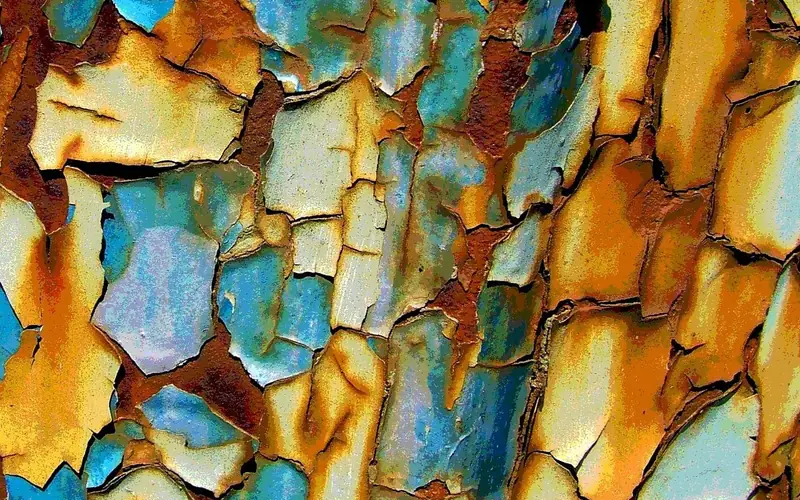
- Loose scale left in place. The sheet says to remove it; a coating over flaking rust lifts when the rust does.
- Metal that was damp. Every sheet says to rinse and let the surface dry thoroughly, and to avoid humidity above 65 to 70%.
- A recoat inside the dead zone. Between 1 hour and 48 hours the sheet gives no approved window.
- The wrong metal. All the sheets say not for galvanized metal, and galvanized steel needs its own approach (see can galvanized steel be painted).
- A heat source. The enamel is rated for surfaces that do not exceed 200°F when heated, so it is not a grill, fire pit, or exhaust coating.
Nothing in the data sheets suggests mixing additives into the can either. The only solvents they name, xylene and mineral spirits, are for cleaning wet paint and clogged tips, not for thinning or “boosting” the paint.
How Much Rust-Oleum Do You Need?
The sheets list practical coverage at the recommended film thickness, assuming 15% material loss. That makes a quick estimate possible:
| Product (12 oz can unless noted) | Practical coverage per can | Cans for about 20 sq ft, one coat |
|---|---|---|
| Stops Rust Enamel Spray | 6 to 10 sq ft | 2 to 4 |
| Rusty Metal Primer | 10 to 12 sq ft | 2 |
| Rust Reformer aerosol (10.25 oz) | 8 to 12 sq ft | 2 to 3 |
A primer plus two enamel coats on 20 square feet of rusty steel therefore means roughly two cans of primer and four to eight of enamel if you build to the full recommended thickness, which is why a gate or railing can cost more in paint than people expect. The sheet figures are calculated values and real coverage varies with the surface.
When Painting Is Not the Right Fix
Paint covers rust; it does not repair metal. Deep pitting or rust that has eaten through a section needs repair or replacement, not another coat. If you are protecting clean or freshly derusted metal, see our guide to protecting metal from rust by location. For stripping rust first, read how to remove rust from metal tools or how to remove rust from painted metal, and for a clear coat option see how to seal metal from rust. If the metal is genuinely antique, some old ironwork should not be painted at all, and for general technique our spray painting metal guide covers the application side.
Frequently Asked Questions
Do I have to sand or brush the rust off before using Rust-Oleum?
Yes, at least the loose part. The Stops Rust enamel and primer data sheets both say to remove loose paint and rust with a wire brush or sandpaper. Tightly bonded surface rust can stay under the primer; flaking scale cannot, because the new coating would only be gripping material that is about to fall off.
Can I use Rust-Oleum over a rust converter?
Rust-Oleum’s own Stops Rust Rust Reformer is a converter, and its data sheet says to topcoat the aerosol version after 24 hours. The brush version lists 3 hours for oil-based paint and 3 days for lacquer or aerosol. For a different brand’s converter, follow that maker’s recoat instructions first.
Does Rust-Oleum Stops Rust actually kill rust?
No. The data sheets describe Stops Rust enamels as a protective coating with rust prevention, not a rust remover. Only Rust Reformer is described as chemically converting rust, and it is meant for surfaces that already have rust on them.
Can you use Rust Reformer over paint?
Not on paint that is sound. The Rust Reformer data sheet says not to use it on non-rusted surfaces and to remove loose rust, scale, and deteriorated coatings. Treat only the rusted patches, and leave intact paint alone.
Can I use Rust-Oleum Stops Rust on galvanized metal?
No. The Stops Rust enamel, primer, and Rust Reformer data sheets all say not for use on galvanized metal. Galvanized steel needs a different prep and primer approach.
Conclusion
Rust-Oleum can go over rust, but the data sheets only promise that after you remove the loose rust, keep the surface dry, and respect the recoat timing. Pick Clean Metal Primer for light rust, Rusty Metal Primer for heavy rust, and Rust Reformer only on rusted patches. Then spray light coats inside the one-hour window.
Sponsored / affiliate links. As an Amazon Associate I earn from qualifying purchases. I may earn additional commission from eligible campaigns.