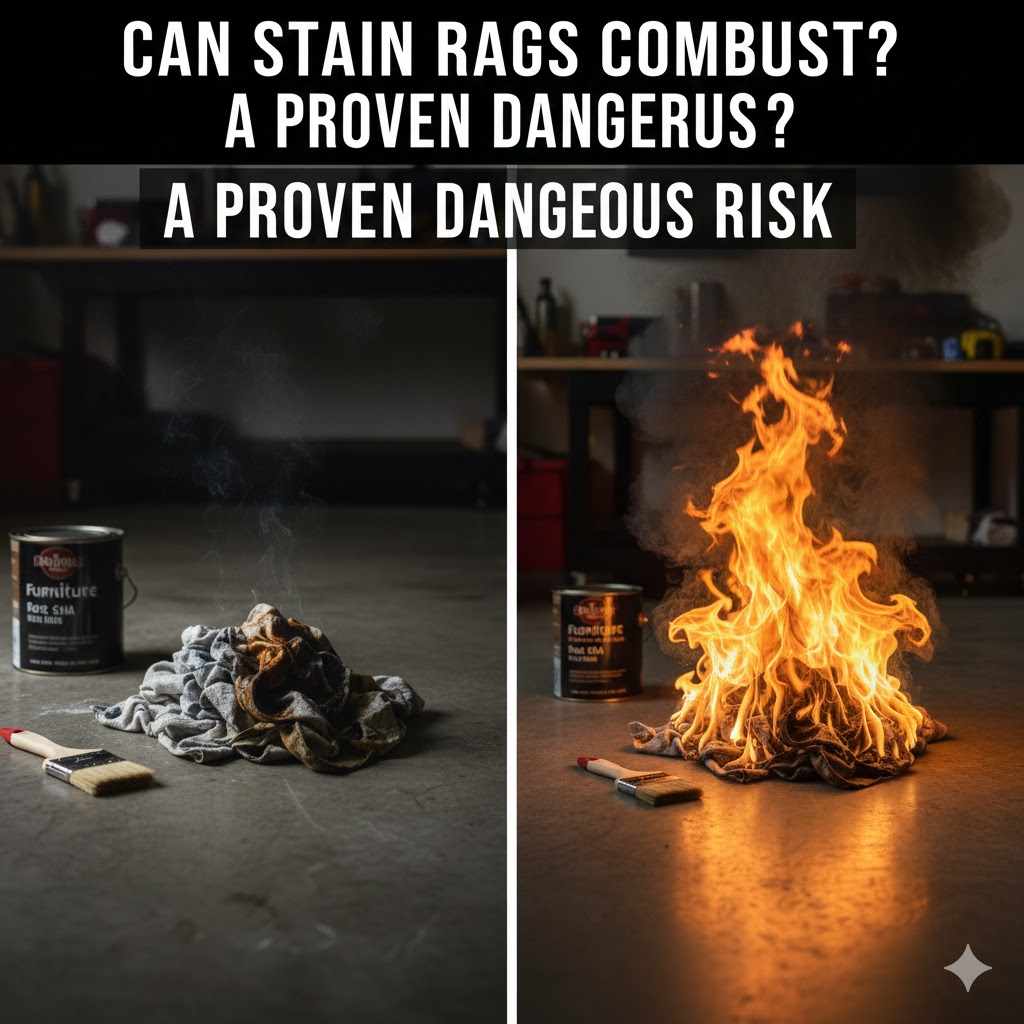
Can Stain Rags Combust? A Proven Dangerous Risk
Yes, stain rags absolutely can combust. This is a real and dangerous risk called spontaneous combustion. When oil-based stains dry, they create heat. If rags are crumpled up, this heat gets trapped and can build until the rag ignites and starts a fire all by itself, without any spark or flame.
You’ve just applied the perfect coat of stain. The wood grain is popping, the color is rich, and your project is finally coming to life. It’s a wonderful feeling! You look at the pile of used, stain-soaked rags and think, “I’ll just toss these in the trash and clean up later.” It seems harmless, but that simple act could be one of the most dangerous mistakes you make in your workshop. This hidden fire hazard is a surprise to many DIYers, but it’s very real.
Don’t worry, though. Keeping your home and workshop safe is simple once you know what’s happening and what to do about it. We’re going to walk through this together, step by step. I’ll explain exactly why this happens and give you a foolproof method for safely handling and disposing of your oily rags. Let’s make sure your beautiful project is a source of pride, not a risk.
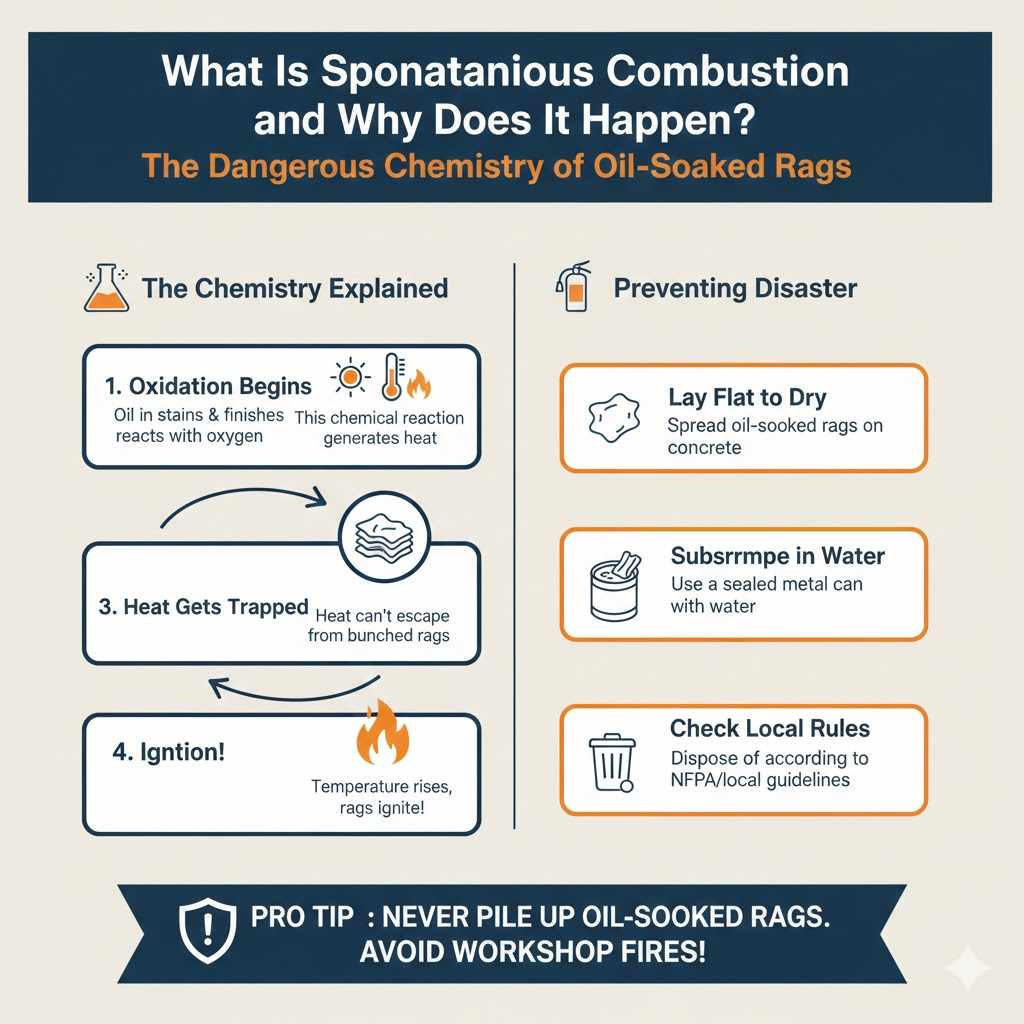
What Is Spontaneous Combustion and Why Does It Happen?
This might sound like something out of a science fiction movie, but spontaneous combustion is a very real chemical process. Thinking about it in simple terms makes it much easier to understand. It’s not magic; it’s just chemistry at work.
The key ingredient here is oil, specifically certain types of oil found in many wood stains and finishes. These are often called “drying oils.” But they don’t dry like water does—by evaporating. Instead, they dry through a chemical reaction called oxidation.
Here’s the simple breakdown:
-
- Oxidation Begins: As soon as the oil in the stain is exposed to the oxygen in the air, it starts to oxidize. This is the process of the oil curing and hardening to create that protective finish on your wood.
- Heat is Created: This chemical reaction produces a small amount of heat. When you’re staining a big tabletop, that heat has plenty of space to escape into the air, and you never notice it. It’s completely harmless.
- Heat Gets Trapped: The problem starts when you take an oil-soaked rag and wad it up into a ball. All that surface area of the rag, covered in oil, is now oxidizing in a small, tight space. All the heat it’s creating has nowhere to go. It’s like putting a blanket on a tiny heater.
- The Temperature Rises: With the heat trapped, the temperature inside the crumpled rag starts to climb. As it gets hotter, the oxidation process speeds up, which in turn creates even more heat. It becomes a runaway cycle.
- Ignition!: If the temperature inside the pile of rags reaches the ignition point of the cloth or the oil residue (which can be surprisingly low), the rags can burst into flames. This happens all on its own, without any spark, match, or external flame.
Think of it like a compost pile. If you’ve ever seen a large pile of grass clippings or leaves, you might have noticed steam rising from it on a cool day. That’s the same process! Organic material is decomposing, creating heat. A pile of oily rags does the same thing, but much, much faster and at a temperature high enough to start a fire.
It’s a Common Risk in Workshops
According to the National Fire Protection Association (NFPA), fires caused by spontaneous combustion are a significant hazard. These fires often start hours after a project is finished, typically at night when no one is around, making them especially dangerous. But the good news is, they are 100% preventable.
The Culprits: Which Stains and Finishes Are Dangerous?
The most important thing to know is that not all stain rags are a fire risk. The danger comes almost exclusively from products that contain drying oils. The primary distinction is between oil-based and water-based products.
Danger Zone: Oil-Based Products
If your can of stain or finish says “oil-based,” you must treat your rags with care. These products contain natural oils that oxidize. Common examples include:
-
-
- Linseed Oil: This is the most well-known culprit. Both raw and boiled linseed oil are highly prone to spontaneous combustion.
- Tung Oil: Another popular natural oil finish that creates significant heat as it cures.
- Danish Oil: This is typically a mix of an oil (like tung or linseed) and a varnish, but it still carries the same risk.
- Oil-Based Wood Stains: Most traditional wood stains fall into this category. Always check the cleanup instructions on the can—if it says “mineral spirits” or “paint thinner,” it’s oil-based.
- Oil-Based Polyurethanes & Varnishes: While the risk may be slightly less than with pure oils, any rag used to wipe up these finishes should be treated as dangerous.
-
Safe Zone: Water-Based Products
Water-based stains, sealers, and finishes work completely differently. They dry through evaporation—the water in the product simply evaporates into the air, leaving the pigments and binders behind. This process does not create heat. Therefore, rags used with water-based products do not pose a risk of spontaneous combustion.
Here’s a simple table to help you remember the difference:
| Product Type | Combustion Risk | How it Dries | Cleanup Method |
|---|---|---|---|
| Oil-Based Stains / Finishes | High Risk | Oxidation (creates heat) | Mineral Spirits / Paint Thinner |
| Water-Based Stains / Finishes | No Risk | Evaporation (does not create heat) | Soap and Water |
Your Rule of Thumb: If you clean up with soap and water, you’re safe. If you need mineral spirits or paint thinner, you need to follow the safe disposal steps below.
The Foolproof Method for Safe Disposal of Oily Rags
Okay, now for the most important part. You’ve finished your project, you’ve confirmed your stain is oil-based, and you have a few oily rags. What do you do? Follow these simple steps every single time. There are no shortcuts here—your safety depends on it.
Step 1: Lay the Rags Out Flat to Dry
First things first, you need to get the heat out. Don’t pile the rags up, not even for a minute.
-
-
- Find a safe, well-ventilated area away from your house, workshop, or anything flammable. A concrete driveway or a gravel patch is perfect. Avoid wooden decks or grassy areas.
- Take each rag and spread it out completely flat, in a single layer. Don’t let them overlap. This gives the maximum amount of surface area to the open air.
- By laying them flat, you allow the heat from the oxidation process to safely escape instead of building up.
- Let them hang to dry if possible. You can use a metal clothesline or drape them over the edge of a metal trash can. Just make sure they aren’t clumped together.
-
Step 2: Let Them Dry and Harden Completely
Patience is key. You need to let the rags sit until the oil has fully cured. This isn’t about just being “dry to the touch.” They need to become stiff and hard.
-
-
- This process can take 24 to 48 hours, or sometimes longer depending on the temperature and humidity.
- Once a rag is stiff and crispy, the oxidation process is complete. It is no longer producing heat and is no longer a spontaneous combustion risk.
- Be patient and check on them. If a rag is still soft or oily, it’s not ready.
-
Step 3: The Extra-Safe Method – Submerge in Water
If you need to dispose of the rags immediately and can’t wait for them to dry, or if you just want an extra layer of safety, the water-dunk method is your best friend. Oxygen is a key part of the fire triangle; by removing it, you stop the chemical reaction.
-
-
- Get a metal can with a tight-fitting metal lid. An empty paint can works perfectly. Do not use plastic, as the heat can melt it.
- Place all your wet, oily rags inside the can.
- Fill the can with water until all the rags are completely submerged.
- Seal the lid tightly on the can.
-
Now, the rags are safely contained. The water prevents oxygen from reaching the oil, stopping the oxidation process dead in its tracks. The sealed metal can contains everything securely until you can dispose of it.
Step 4: Proper Final Disposal
You can’t just toss the can or the dried rags into your regular trash. Oily rags are often considered hazardous waste.
-
-
- Check with your local fire department or waste management facility for their specific guidelines. A quick search on your town’s government website for “hazardous waste disposal” will usually give you the answer.
- Many communities have designated drop-off days or locations for materials like these.
- This is the final, crucial step to ensure the rags are handled safely from start to finish. Following local regulations keeps everyone, including waste management workers, safe.
-
Common Mistakes: What NOT to Do with Oily Rags
Knowing what to do is just as important as knowing what not to do. Here are the common, dangerous mistakes that can lead to a fire. Avoid these at all costs.
| Common Mistake (DON’T DO THIS) | Why It’s Dangerous |
|---|---|
| Tossing them in a pile on the floor. | This is the classic scenario for spontaneous combustion. The pile acts as an insulator, trapping all the heat produced by oxidation. |
| Throwing them in the trash can. | A crumpled rag in a trash can, surrounded by other flammable materials like paper and sawdust, is a fire waiting to happen. It’s a perfect fuel package. |
| Putting them in a plastic bag. | A plastic bag is even worse than a pile. It not only traps heat but also melts, adding fuel to a potential fire. Never, ever do this. |
| Leaving them in your pocket. | It sounds unbelievable, but people have suffered severe burns from oily rags combusting in their pockets hours after finishing a job. |
| Putting them in the washing machine or dryer. | The oil residue will not wash out completely. Putting them in a dryer adds even more heat, dramatically increasing the fire risk. This can burn your house down. Always dispose of them. |
My Personal Workshop Rule
In my workshop, I have a non-negotiable rule: clean-up is part of the project. As soon as I’m done staining, before I even start admiring my work, I take the rags outside and lay them flat on my concrete patio. It’s the very last step of the staining process. It only takes a minute, and that small habit gives me complete peace of mind, knowing my family and my home are safe.
Creating this habit is the best way to ensure you never forget. Make it as automatic as putting the lid back on the stain can.

Frequently Asked Questions (FAQ)
1. How long does it take for stain rags to combust?
It can vary widely, from just a few hours to over a day. Factors like the type of oil, the ambient temperature, and how tightly the rags are piled all play a role. Fires often start between 4 and 10 hours after use, which is why they frequently happen overnight.
2. Are water-based stain rags dangerous too?
No, they are not. Water-based products dry by evaporation, which is a cooling process. They do not generate heat and do not carry the risk of spontaneous combustion. If you can clean it up with soap and water, you are safe.
3. Can I reuse my oily rags after they have dried?
No, you should not. Once the oil has cured, the rag becomes stiff and crusty. It won’t absorb stain properly and can leave bits of hardened finish on your project. Always use a fresh, clean rag for the best results and dispose of the used ones safely.
4. Does this same risk apply to paint rags?
It depends on the paint. Rags used with oil-based paints, primers, and enamels carry the same risk because they use drying oils as a binder. However, rags from latex or acrylic (water-based) paints are safe and do not pose a combustion risk.
5. Is it enough to just let the rags dry outside completely?
Yes, laying them flat until they are completely stiff and hard neutralizes the immediate fire hazard from spontaneous combustion. However, many municipalities still consider them hazardous waste. The safest final step is always to check your local disposal guidelines before tossing them in the regular trash.
6. What does spontaneous combustion smell like before it ignites?
You may not smell anything until it’s too late. Sometimes, people report a smell of smoldering or burning oil right before a fire starts. However, do not rely on your nose to detect this danger. The process can be completely silent and odorless until flames appear.
7. Is a metal can with a lid absolutely necessary?
For the water submersion method, yes. A plastic container can melt from the heat, and a container without a lid doesn’t fully cut off the oxygen supply. A proper, sealed metal can is the only guaranteed safe container for temporarily storing wet, oily rags before final disposal.
Conclusion: Safety Is the Best Tool in Your Workshop
That beautiful woodworking project you just finished deserves to be a point of pride for years to come. The last thing you want is for it to be associated with a dangerous and destructive accident. The threat of spontaneously combusting stain rags is serious, but it’s also incredibly easy to prevent.
By understanding the simple science behind it and by building a safe, consistent habit for disposal, you completely eliminate the risk. Remember the golden rules: lay oily rags out flat to dry away from anything flammable, or submerge them in water in a sealed metal can. That’s it. Those two simple choices ensure that you, your home, and your family stay safe.
Now you can get back to what you love—creating beautiful things with wood—with the confidence that you’re doing it both skillfully and safely. Happy woodworking!