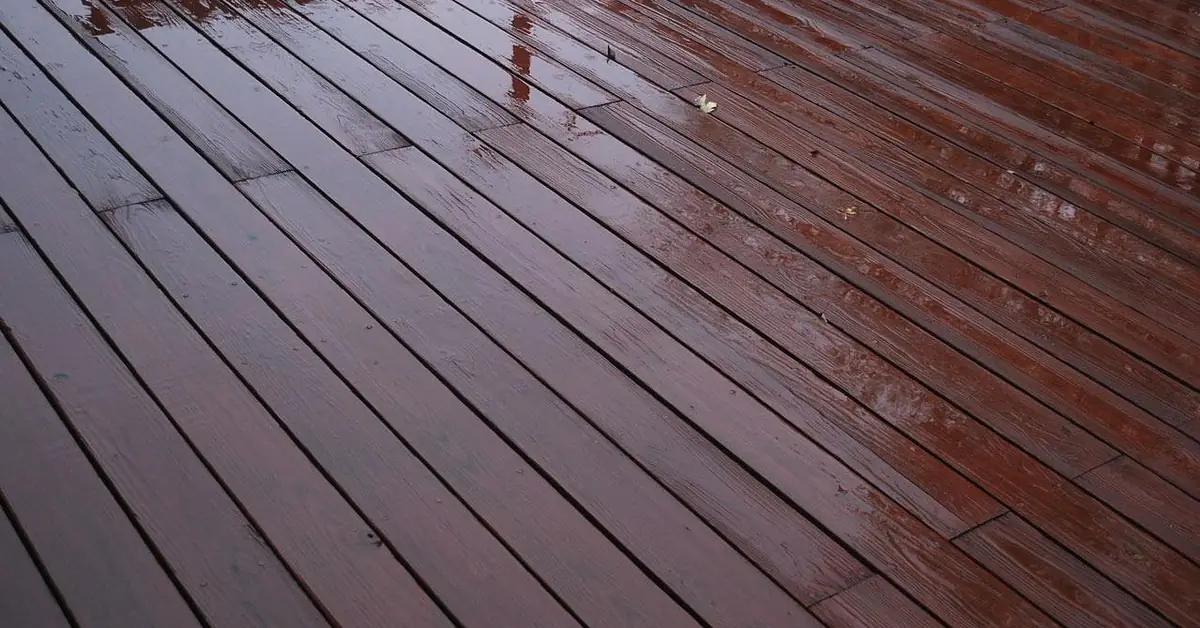
Can You Put Thompson Water Seal Over Stained Wood? (Label Rules)
Usually no, not over fresh stain. Thompson’s WaterSeal pages say not to use the product on painted or recently stained surfaces, and the tinted lines add that loose, flaking or peeling stain must come off first. Stain that has weathered until water soaks in within five seconds passes the label’s own readiness test. This guide covers that test, which Thompson’s lines are water-based, and when to strip.
Can You Put Thompson Water Seal Over Stained Wood?
It depends on what the stain is doing right now, not on whether it is oil or latex. If water soaks into the stained wood, the sealer can go on. If water beads on a film of fresh or intact finish, the sealer cannot penetrate, and the label says to wait or strip.
Best Old-Stain Stripper Pick
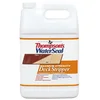 |
Thompson’s WaterSeal Maximum Strength Deck Stripper (1 Gallon), $39.85 Thompson’s own pages tell you to remove loose, flaking or peeling stain before its waterproofing stains go on. This is the same brand’s product for that job, so it fits the splash-test step below.
|
As an Amazon Associate we earn from qualifying purchases.
What Thompson’s Labels Actually Say About Stained Surfaces
Most advice online, including an earlier version of this page, boils the question down to “oil-based stain only.” The manufacturer pages we read do not say that. They say three things:
- Do not use the product “on painted or recently stained surfaces” (printed on the Clear, Transparent, Semi-Transparent and Solid Color pages).
- Remove all existing loose, flaking or peeling stain first, or the new coat will keep flaking and peeling (Semi-Transparent and Solid Color pages).
- Run the splash test: sprinkle water on several spots, and if it absorbs and darkens the wood within five seconds, the surface is porous and ready to treat.
Thompson’s Clear Wood Sealer is oil-based (it contains mineral oil), while its Transparent, Semi-Transparent and Solid Color sealers clean up with soap and water. Source: Thompson’s WaterSeal Clear Wood Sealer product page, with the water-cleanup lines confirmed on their own product pages.
So the old “Thompson’s is oil-based” rule is only true for the clear sealer. The other three lines are water-based, which is why oil-versus-latex alone cannot tell you whether a coat will stick. Here are the four exterior wood lines side by side, using the numbers on Thompson’s own pages:
| Product line | Base | Coverage per gallon | Dry time stated | Sizes seen |
|---|---|---|---|---|
| Clear Wood Sealer | Oil-based (mineral oil, combustible) | 200 to 400 sq ft | At least 48 hours | Not listed on the page we read |
| Transparent Wood Sealer | Water cleanup | 150 to 400 sq ft | 2 to 4 hours; second coat within 4 hours | 1 and 5 gallon |
| Semi-Transparent Wood Sealer | Water cleanup | 150 to 400 sq ft | 2 to 4 hours; second coat within 4 hours | 1 gallon |
| Solid Color Wood Sealer | Water cleanup | 150 to 400 sq ft | Touch dry within 2 hours; second coat within 4 hours | 1 gallon |
All four carry the same “recently stained” warning, so picking a water-based line does not get you around it. The clear line also needs the surface free of mildew stains, dust, dirt, oil, soot and grease, and Thompson’s recommends reapplying it every year. If you are choosing between the tinted lines, our transparent vs semi-transparent stain comparison covers how much grain each shows and how long each lasts.
The Five-Second Splash Test: Will Your Old Stain Accept Sealer?
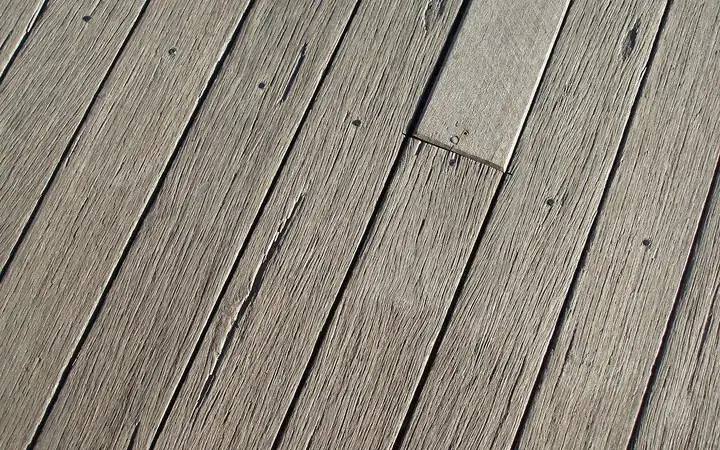
The splash test replaces guessing about how many weeks have passed. Do it on a dry day, on several spots, including the most worn boards and the least worn ones, because a deck rarely weathers evenly.
- Sweep the boards clean and let them dry.
- Sprinkle a small amount of water in four or five places, such as the board ends, a high-traffic area and a shaded corner.
- Watch for five seconds. Water that soaks in and darkens the wood means the surface is porous.
- Water that stays in beads means a finish film is still intact or too fresh.
| What the water does | What it means | What to do |
|---|---|---|
| Soaks in and darkens within 5 seconds | Surface is porous (Thompson’s own readiness test) | Clean, dry, then apply the sealer |
| Soaks in on some boards, beads on others | Finish has worn unevenly | Strip or sand the beading areas, then re-test before sealing the whole surface |
| Beads everywhere | Fresh stain, or a film-forming finish is still intact (our reading of the test, not a Thompson’s statement) | Wait out the stain’s cure time and re-test, or strip |
| Stain is lifting, flaking or peeling | Label says all loose stain must be removed | Strip and clean, then follow the application steps below |
One limit of the test: it only measures the top surface. A stain that passes in the morning can still be soft underneath if the boards were wet or the weather was cold when the stain went on. If you stained in the last few weeks, read the cure time on that stain’s label and add the extra wait. Our guides on sealing stained wood and restaining over old stain go through wait times by finish type.
Which Stain Situations Work With Thompson’s Water Seal
| Your wood right now | OK to use Thompson’s sealer? | Notes |
|---|---|---|
| New pressure-treated lumber | After 30 days (Thompson’s stated wait) | Splash test first. Our guides on when pressure-treated lumber can be stained and how long to wait cover moisture readings |
| Stained last week | No (“recently stained” exclusion) | Wait for the stain’s own cure time, then splash test |
| Old stain, faded, absorbs water | Yes, after cleaning | Passes the label’s own readiness test |
| Old stain, peeling or flaking | Not until removed | Label: remove all loose, flaking or peeling stain |
| Painted or solid-film finish | No (“painted” exclusion) | Strip fully, or choose a coating made for painted wood |
| Bare weathered wood | Yes, after cleaning and splash test | The easiest case for any of the four lines |
How to Strip the Old Stain First
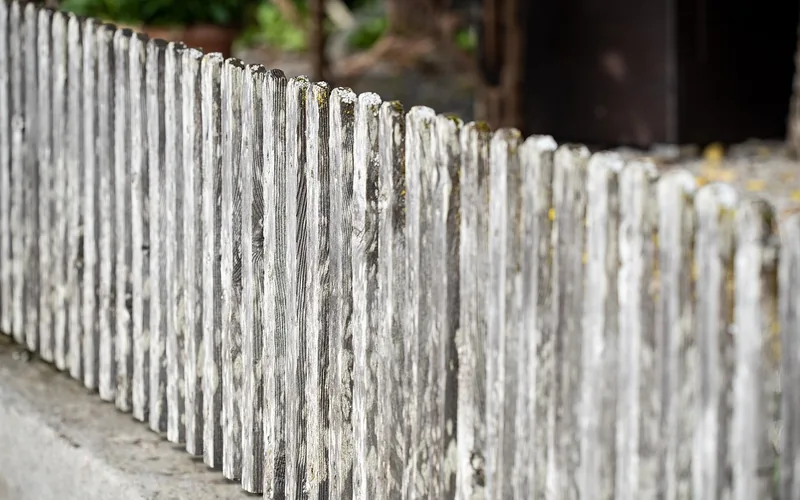
When the splash test fails or the stain is peeling, removal is the label’s answer. Thompson’s Maximum Strength Deck Stripper is its removal product, and its instructions give a clear sequence:
- Do a trial patch first. Do not use the stripper on new or untreated wood, because it can fuzz or raise the grain.
- Wet the ground around plants and cover shrubs. Pour the stripper into a plastic bucket or watering can, never a metal container, and never through spray equipment.
- Brush or roll it on with a synthetic bristle brush, covering only an area you can finish in 10 to 15 minutes.
- Wait 10 to 15 minutes, then scrub with a stiff synthetic brush. Do not use a wire or natural-bristle brush.
- Rinse thoroughly with a hose or pressure washer, then neutralize with a wood brightener.
- Let the wood dry 2 to 3 days depending on weather, then re-run the splash test.
Wear chemical-resistant rubber gloves and goggles throughout. Steps follow the Thompson’s Maximum Strength Deck Stripper instructions. For a deck that only needs a fresh coat rather than stripping, see our walkthrough of the best way to apply stain on a deck.
Applying Thompson’s Water Seal After the Test Passes
- Check conditions: surface and air above 50 degrees F during application and for 48 hours after, and no rain forecast for 24 hours.
- Apply one even coat. Thompson’s says one coat is enough on its wood sealer lines.
- On the tinted water-based lines, a second coat for more color must go on within 4 hours of the first, and about 2 hours after the first is the stated gap.
- On the clear oil-based sealer, plan on at least 48 hours of drying before foot traffic and furniture return.
- Expect 150 to 400 sq ft per gallon on the water-based lines and 200 to 400 on the clear, with thirsty, weathered wood at the low end.
Tinted lines will also shift the color of whatever is underneath, so test a hidden board. If you are matching an existing stain shade, our list of Behr outdoor wood stain colors shows how stain families run in tone.
Why Does Clear Thompson’s Water Seal Darken Wood?
The Clear Wood Sealer contains mineral oil, and oil that soaks into wood fibers deepens the color the same way water does when you splash a bare board. That is the same darkening the splash test uses as its pass signal. Expect the shade to look richest while wet and settle as it dries, and avoid heavy coats, which can leave a tacky surface. Thompson’s describes this product as keeping the wood’s natural color, so test a hidden board if your stain was light.
Can You Mix Stain Into Thompson’s Water Seal?
No. The Semi-Transparent and Solid Color pages say not to mix with other waterproofing products and not to use the sealer as a paint additive. The cleaner route to color is a tinted Thompson’s line, or a separate stain coat that has finished curing before the sealer goes on.
Oily Rag Safety With the Clear Oil-Based Sealer
The Clear Wood Sealer is oil-based and combustible, and oil-based wood finishes can heat as they cure. A rag left in a pile can ignite on its own. The National Fire Protection Association engineer quoted by Consumer Reports describes it as an oxidation reaction as the oil dries.
- Spread used rags flat outdoors on the ground or a metal rack until completely dry, about two full days.
- Never ball up or pile damp rags, and never put them in a regular trash can while wet.
- Once fully dry and hardened, throw them out with normal trash.
Those steps come from Consumer Reports’ guidance on oily rags. The Thompson’s pages we read did not give a rag-disposal instruction of their own, so confirm against the label on your can. The water-based Thompson’s lines clean up with soap and water.
Common Mistakes With Thompson’s on Stained Wood
- Sealing over stain that is still curing, then seeing a tacky or blotchy surface.
- Skipping the splash test and judging by the calendar.
- Putting a second coat on after the 4-hour window on the tinted lines.
- Applying below 50 degrees F, or ahead of rain.
- Brushing sealer over flaking stain instead of removing it first.
Frequently Asked Questions
Can I put Thompson’s Water Seal over stain I applied last week?
No. Thompson’s pages say not to use the product on painted or recently stained surfaces, and they give no day count for “recently.” Wait until the stain maker’s own cure time has passed, then run the splash test. If water still beads, keep waiting or strip the finish.
Is Thompson’s Water Seal oil-based or water-based?
It depends on the product. Thompson’s lists the Clear Wood Sealer as oil-based (it contains mineral oil and is combustible). The Transparent, Semi-Transparent and Solid Color Wood Sealers clean up with soap and water, so they are water-based. Check the label on your can.
Can you put Thompson’s Water Seal over a water-based or latex stain?
The label does not draw a line between oil and water-based stain. It draws the line at recently stained surfaces and at loose, flaking or peeling stain. A water-based stain that has fully weathered and passes the five-second splash test is a different case from a fresh coat.
How long should I wait to seal after staining?
Thompson’s gives no number for stained wood. Its only stated wait is 30 days for new pressure-treated lumber. For stained wood, follow the cure and recoat time printed on your stain’s can, then confirm with the splash test.
How long does Thompson’s Water Seal last?
Thompson’s recommends reapplying the Clear Wood Sealer every year for maximum sun protection. The pages we read for the Transparent, Semi-Transparent and Solid Color sealers did not state a lifespan, so use the splash test each season instead of a calendar.
Can you mix stain into Thompson’s Water Seal?
No. The Semi-Transparent and Solid Color pages say not to mix with other waterproofing products and not to use the sealer as a paint additive. If you want color, buy one of Thompson’s tinted sealers instead of tinting a clear one yourself.
Bottom Line
Thompson’s WaterSeal is not off limits on stained wood, but it is off limits on recently stained or painted wood, and it does not overlook loose stain. Test the water, strip where it fails, and pick the line by finish: the oil-based clear for natural color, or the water-based Transparent, Semi-Transparent or Solid Color lines for tint.
Sponsored / affiliate links. As an Amazon Associate I earn from qualifying purchases. I may earn additional commission from eligible campaigns.