Can You Clean Wood Floors With Water? Myths Busted!
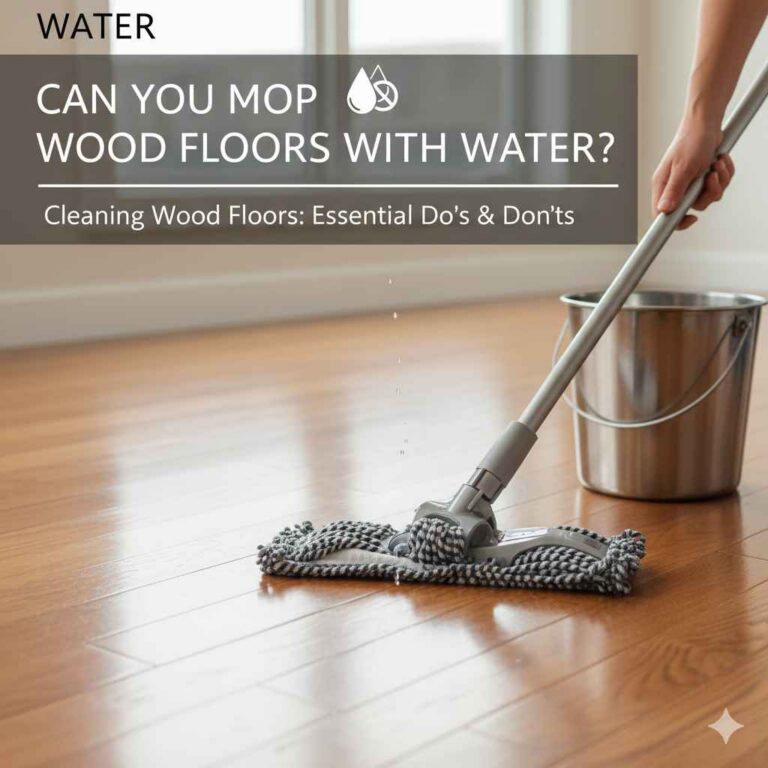
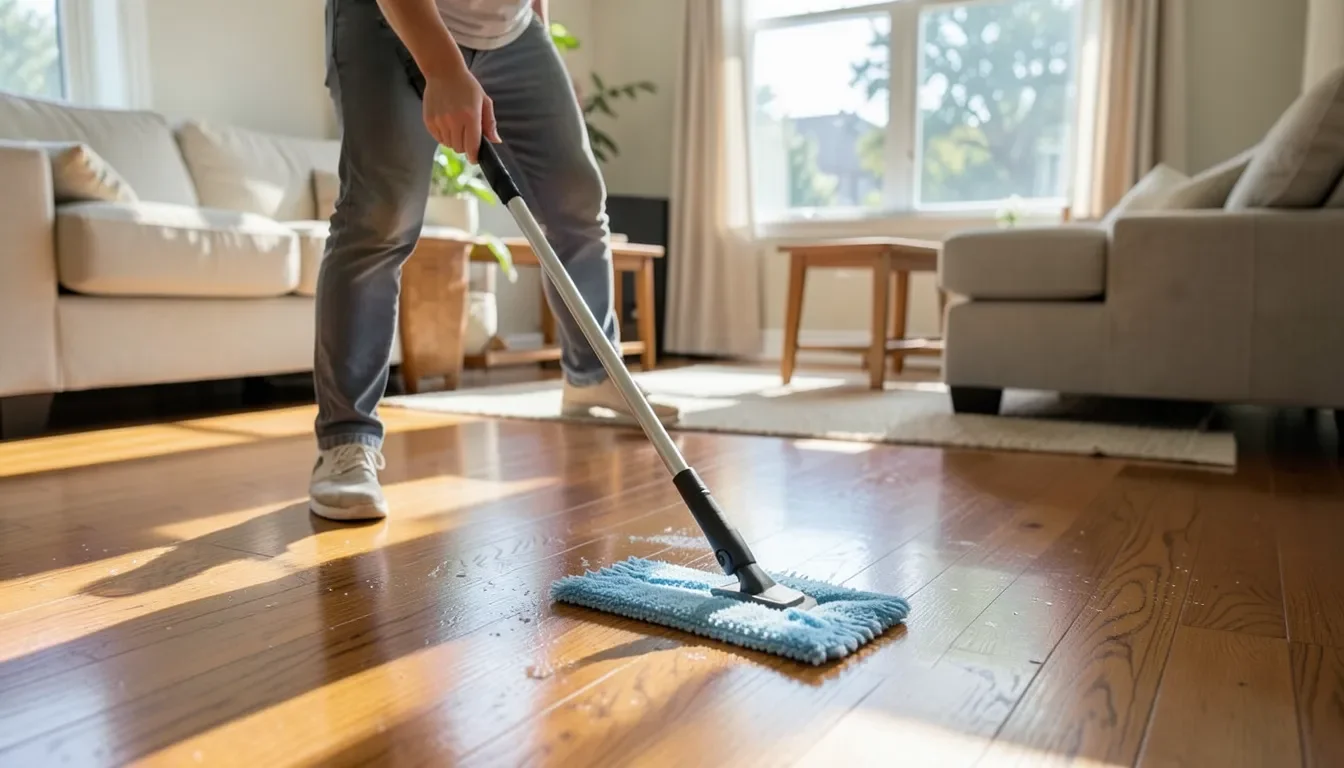
Yes, but only with a slightly damp mop — never a soaking one. Wood is porous, so standing water works into the grain and the finish’s seams, and that’s what causes swelling, cupping, and warped boards, not the water itself. A damp mop touches the surface without leaving enough moisture behind to soak in.
Why Water Damages Wood Floors
Best For Streak-Free Wood Floor Cleaning
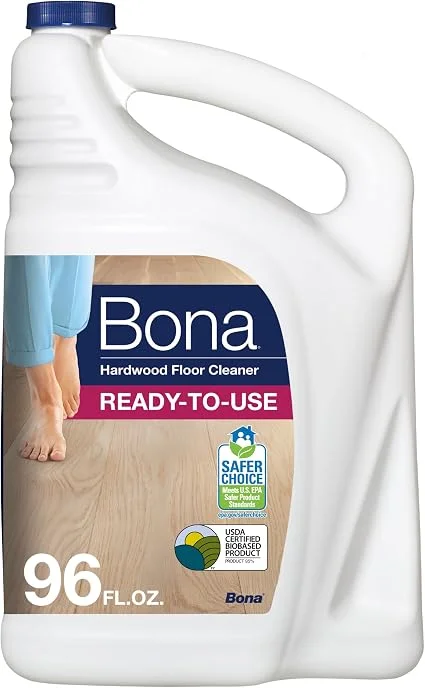 |
Bona Hardwood Floor Cleaner Refill, 96 fl oz – $15.99 A pH-neutral, residue-free formula made specifically for sealed wood floors — no rinsing needed, and no risk of the vinegar-dulls-finish problem below.
|
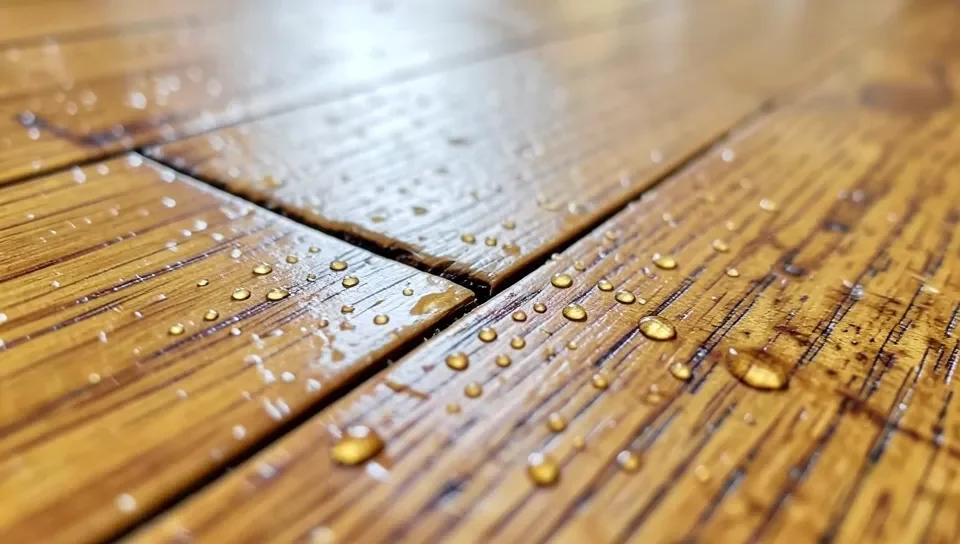
Wood fibers absorb moisture the way a sponge does, just slower. Standing water gets pulled into the grain at the seams between boards first, since that’s where the protective finish is thinnest. Once inside, the fibers swell — boards press against each other and cup or buckle. If it happens repeatedly, the wood loses structural integrity and becomes more prone to cracking, and standing moisture also creates the damp conditions mold and mildew need to take hold underneath the finish.
Not All Wood Floors Handle Moisture The Same Way
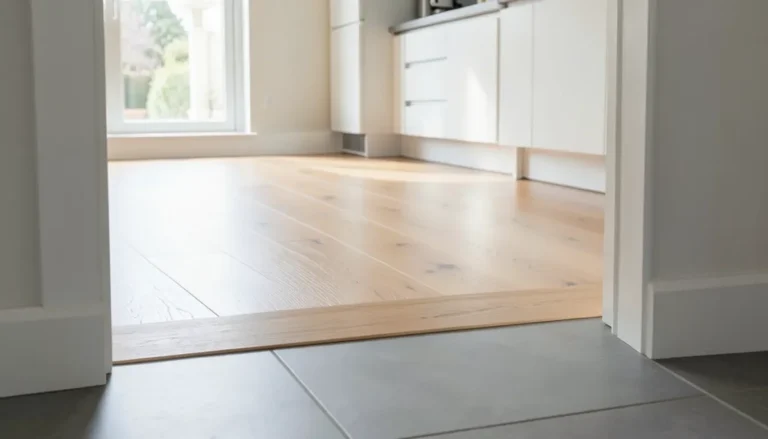
Engineered wood flooring has more built-in moisture resistance than solid hardwood, since its plywood-style core layers are cross-laminated and less prone to the swelling that happens along a solid plank’s grain. That said, “more resistant” isn’t “waterproof” — engineered wood’s top veneer is still real wood and still reacts to standing water at the seams, so the same damp-mop rule applies. Unsealed or wax-finished floors are the most vulnerable of all, since there’s no protective film keeping water off the wood itself — these need a near-dry cloth, not a damp mop.
How To Mop Wood Floors With Water Correctly
- Sweep or vacuum first to remove loose dirt and grit — mopping over grit grinds it into the finish like sandpaper.
- Fill a bucket with warm water and a wood-safe cleaner (skip straight water for anything beyond light dust — see the acid problem below).
- Dip the mop, then wring it out until it’s damp, not dripping — no water should come out when you squeeze it against the bucket rim.
- Mop in the direction of the wood grain, working in small sections.
- Go back over each section with a dry microfiber cloth or a second dry mop pass to lift any residual moisture immediately.
Homemade Solutions: What Actually Works
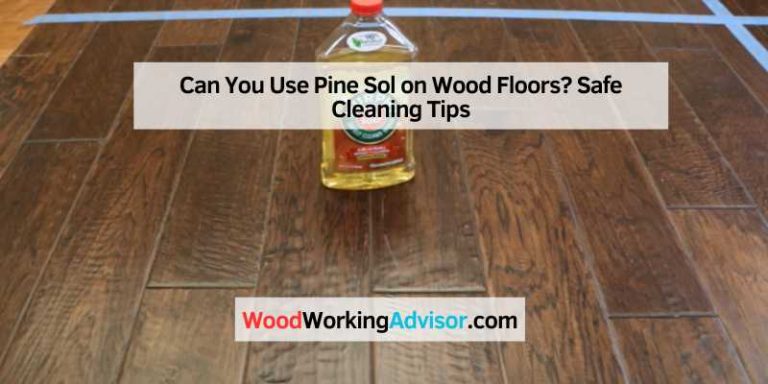
Vinegar-and-water is the most commonly recommended DIY wood floor cleaner online, but it comes with a real tradeoff worth knowing before you use it: vinegar is acidic, and repeated use can dull a polyurethane or wax finish over time by breaking down the topcoat’s sheen. It’s fine as an occasional light-cleaning solution (roughly 1/4 cup white vinegar per gallon of warm water, mopped nearly dry) but not as a daily go-to — a pH-neutral commercial cleaner like the one above is the safer default for regular use. Baking soda paste works as a mild, non-acidic spot treatment for scuffs, applied with minimal water and wiped dry immediately. Olive oil is sometimes suggested as a “natural polish,” but it doesn’t clean — it just adds a temporary sheen on top of dirt, and it can leave a slippery, dust-attracting film. It’s not a cleaning method, and skipping it entirely is the simpler call.
Handling Spills And Standing Water
The single biggest factor in whether a spill causes damage is how long the water sits. Blot it up immediately with a dry towel rather than wiping (wiping spreads it into a wider area first). For anything beyond a quick spill — a leaking dishwasher, a pipe issue, a flooded basement — get every visible drop up within minutes if you can, since sustained exposure of even a few hours is what turns “wipe it up” into “replace the boards.” Placing mats at entryways and doorways to catch tracked-in water, and fixing slow leaks before they become floor problems, prevents most of this before it starts.
Daily And Weekly Maintenance
- Daily: dry sweep or dust-mop to remove grit before it scratches the finish.
- Weekly: vacuum with a hard-floor attachment (not a beater-bar head, which can scuff the finish) to reach dust in the seams.
- Every 1-2 weeks: damp-mop high-traffic areas with a wood-safe cleaner, following the correct-technique steps above.
- Monthly: a full damp-mop pass with a dedicated hardwood cleaner for a deeper clean.
When To Call A Professional
If boards have already visibly cupped, buckled, or the finish has bubbled and peeled, drying it out won’t reverse the damage on its own — a flooring professional can assess whether the boards need to be sanded and refinished or replaced outright. Acting fast after a major water event (a burst pipe, a flood) still matters, since boards that are dried within the first day or two have a much better chance of being saved than ones left wet for a week.
Frequently Asked Questions
Is It Okay To Mop Hardwood Floors With Water?
Yes, as long as the mop is only slightly damp, not soaking wet. Standing water is what causes swelling and warping, not water itself — wring the mop until no water comes out when you squeeze it, and dry the floor immediately after.
What Is The Best Way To Clean Wood Floors?
Dry sweep or dust-mop daily, vacuum weekly with a hard-floor attachment, and damp-mop with a pH-neutral wood-safe cleaner every one to two weeks — always following with a dry cloth pass to remove any leftover moisture.
Does Water Affect Hardwood Floors?
Yes — standing water seeps into the wood’s pores, especially at the seams between boards, and can cause swelling, cupping, warping, and eventually rot if it sits long enough. Blotting a spill up immediately, rather than letting it sit, prevents nearly all of this.
Can You Mop A Floor With Just Water?
Yes for light dust, but plain water won’t cut through grease or grime the way a wood-safe cleaner does. For anything beyond light soil, a pH-neutral cleaner used with a damp (not wet) mop gets a genuinely clean result without leaving residue.
Conclusion
Water itself isn’t the enemy of wood floors — standing water is. A slightly damp mop, a pH-neutral cleaner, and drying the floor immediately after will keep hardwood clean for decades without the swelling, warping, or dulled finish that comes from soaking it or relying on straight vinegar too often.
Sponsored / affiliate links. As an Amazon Associate I earn from qualifying purchases. I may earn additional commission from eligible campaigns.