Can You Drill Into Tempered Glass? No — Here’s Why
No — once glass has been tempered, you cannot safely drill it, at home or in a professional shop. Any attempt to drill, cut, or grind the edge of already-tempered glass will almost always cause the entire pane to shatter instantly into small pebble-like fragments, not just crack at the drill point. If you need a hole in tempered glass, the hole has to be cut before the glass is tempered, or a professional has to drill an annealed (untempered) piece and then have it tempered afterward.
Editor’s note: this is a glass-fabrication topic, not woodworking — it’s here because it shares searchers with our drill and rotary-tool content. We corrected this page because an earlier version told readers they could drill tempered glass themselves with a diamond bit and patience, which is not true and could lead to a ruined (or dangerously shattering) piece of glass.
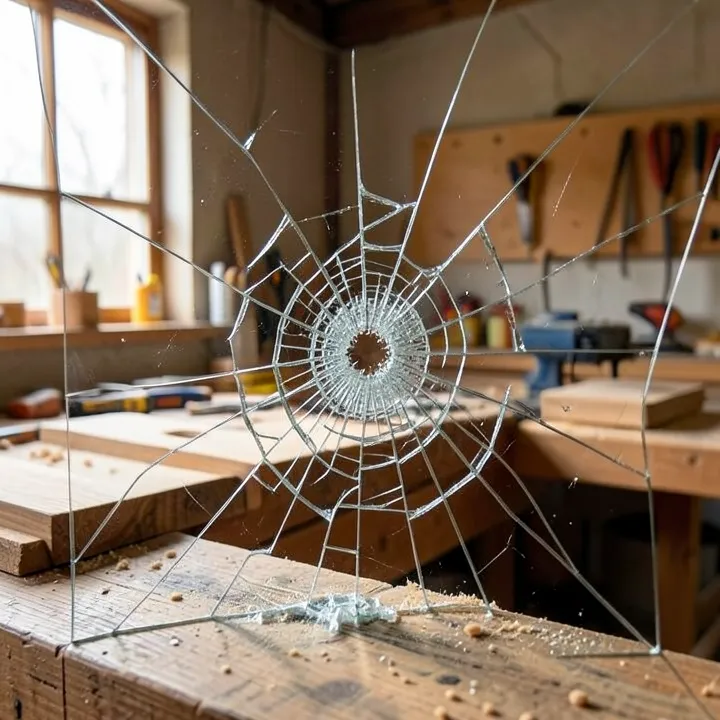
Why Tempered Glass Can’t Be Drilled After the Fact
Tempering works by heating glass to roughly 620-650°C and then rapidly cooling (quenching) the surfaces with jets of air. The outer surfaces cool and contract first while the core is still hot, which locks the outer layers into permanent compression and the inner core into permanent tension once everything settles. That balanced internal stress is what makes tempered glass 4-5 times stronger than the same thickness of regular (annealed) glass, and it’s also why it breaks into small, relatively blunt pebbles instead of long dagger-like shards when it does fail.
Drilling removes material and creates a new edge in the middle of that stress field. Because the compression and tension are balanced across the whole pane, breaching that balance anywhere releases the stored energy everywhere at once — the entire sheet fractures, not just the area around the drill bit. This isn’t a matter of technique, patience, or the right bit; it’s the physics of how the glass was strengthened in the first place. A diamond bit, slow speed, and water cooling are exactly the correct method for drilling annealed (regular, untempered) glass — see our guide to drilling regular glass for that process — but none of that changes the outcome once a piece has actually been tempered.
What to Do Instead
Order It Pre-Drilled, Before Tempering
This is the standard approach for shower door hardware, glass tabletop bolt holes, and railing systems. Give your glass fabricator the exact hole sizes and locations when you order the piece — they cut and drill the glass while it’s still annealed, then temper it as the final step. Because the tempering happens after all machining, the finished piece keeps its full strength and stress balance with the holes already in place.
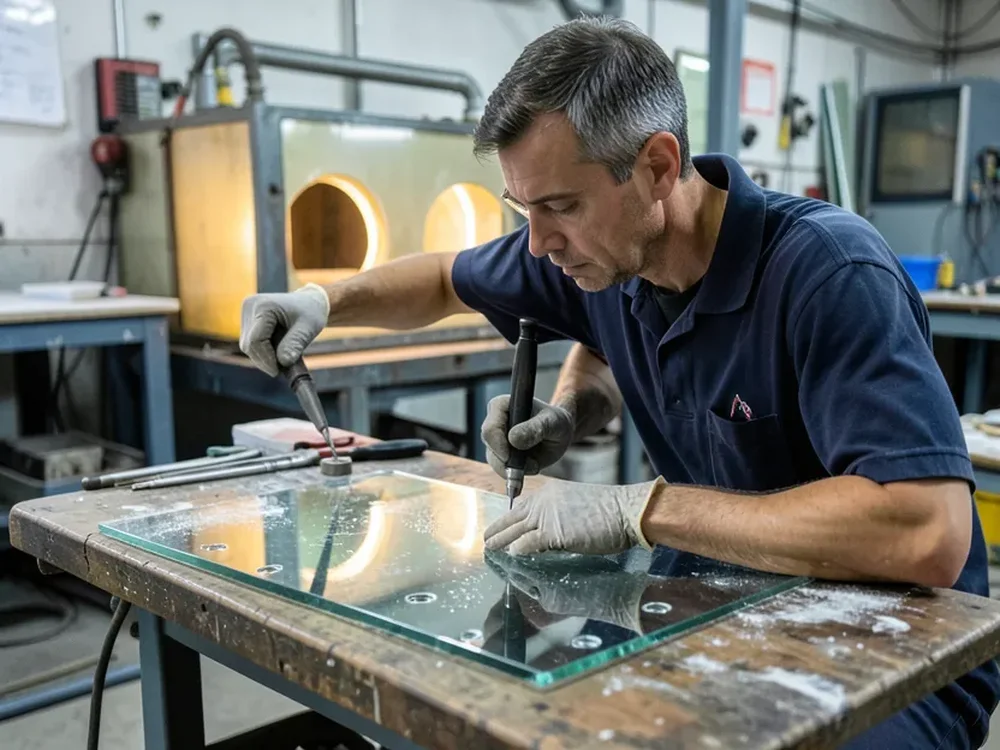
Have an Annealed Piece Drilled, Then Tempered
If you already have a plan cut in regular (annealed) glass, a glass shop can drill it using diamond bits and then send it out for tempering afterward. This only works if the glass hasn’t been tempered yet — once it has, this option is off the table, and the piece has to be replaced with new stock.
Use a Different Hardware Approach
For some projects — shower door hinges and glass railing clamps especially — clamp-style or adhesive-mounted hardware exists specifically so installers don’t have to drill tempered glass at all. If a through-hole isn’t strictly necessary for your project, ask a glass or hardware supplier whether a clamping system can do the job instead.
How to Tell If Your Glass Is Actually Tempered
Look for a small etched logo or manufacturer’s mark in one corner — most tempered panes are legally required to carry a permanent certification mark (often reading “Tempered” or “Safety Glass” plus a manufacturer code) etched into the glass, usually in a bottom corner. Shower doors, glass tabletops sold as “tempered,” patio doors, and most vehicle side/rear windows are tempered by default. If there’s no mark and you’re not sure, treat the glass as tempered until a supplier confirms otherwise — attempting to drill glass you believe is annealed, when it’s actually tempered, is exactly how this goes wrong.

If You’ve Already Tried and It’s Cracking
Stop immediately. A tempered pane that has started to crack or chip at the surface is likely to fully shatter soon, sometimes with a delay of minutes to hours rather than instantly. Clear the area, keep hands and face away from the glass, and treat the piece as compromised — don’t continue working on it or set anything on it. Dispose of it once it fully lets go, or have a glass supplier assess it if it’s still intact but visibly damaged.
Frequently Asked Questions
Can a Diamond Bit Drill Tempered Glass?
No. Diamond bits are the correct tool for drilling annealed (regular, untempered) glass, but the bit’s material doesn’t change the outcome on tempered glass — the internal stress balance created during tempering causes the whole pane to shatter as soon as the surface is breached, regardless of what tool or technique is used.
Can Tempered Glass Be Cut to a Smaller Size After the Fact?
No, for the same reason it can’t be drilled — cutting breaches the same balanced stress field. A tempered piece that needs a different size or shape has to be replaced with new glass cut and tempered to the correct dimensions.
How Do Manufacturers Add Holes to Tempered Glass Products?
They drill and cut the glass to its finished shape, including all holes, while it’s still annealed, and temper it as the very last manufacturing step. This is why custom tempered glass orders take the hole locations as part of the initial spec, not as a modification made afterward.
Is It Dangerous to Try Drilling Tempered Glass?
It carries real risk, though tempered glass’s fracture into small, relatively blunt pebbles (rather than sharp shards) makes it less dangerous than a comparable failure of annealed glass. Still, the shatter is sudden and total, fragments do scatter, and hands working close to the surface are at risk of cuts — wear eye protection and gloves even though this guide recommends against attempting it at all.
Conclusion
Tempered glass can’t be drilled, cut, or ground after tempering, no matter the bit or technique — the same stress balance that makes it strong makes any breach total rather than local. If a project needs a hole in tempered glass, get it cut and drilled before tempering, have an annealed piece tempered after drilling, or find hardware that clamps on instead of requiring a hole.
Sponsored / affiliate links. As an Amazon Associate I earn from qualifying purchases. I may earn additional commission from eligible campaigns.