Can You Glue Wood Together Without Sanding? Prep Rules
Yes. If the wood is freshly machined, flat, clean, and bare, you can glue it without sanding. Skip prep only when the surface has no finish, wax, dirt, or burnish. Poor prep gives weak joints, messy squeeze-out, and parts that creep or fail later. This guide shows when glue can bite directly, when a quick sand is enough, and when sanding cannot save the surface.
Can you glue wood together without sanding?


What you’ll need before you decide to skip sanding
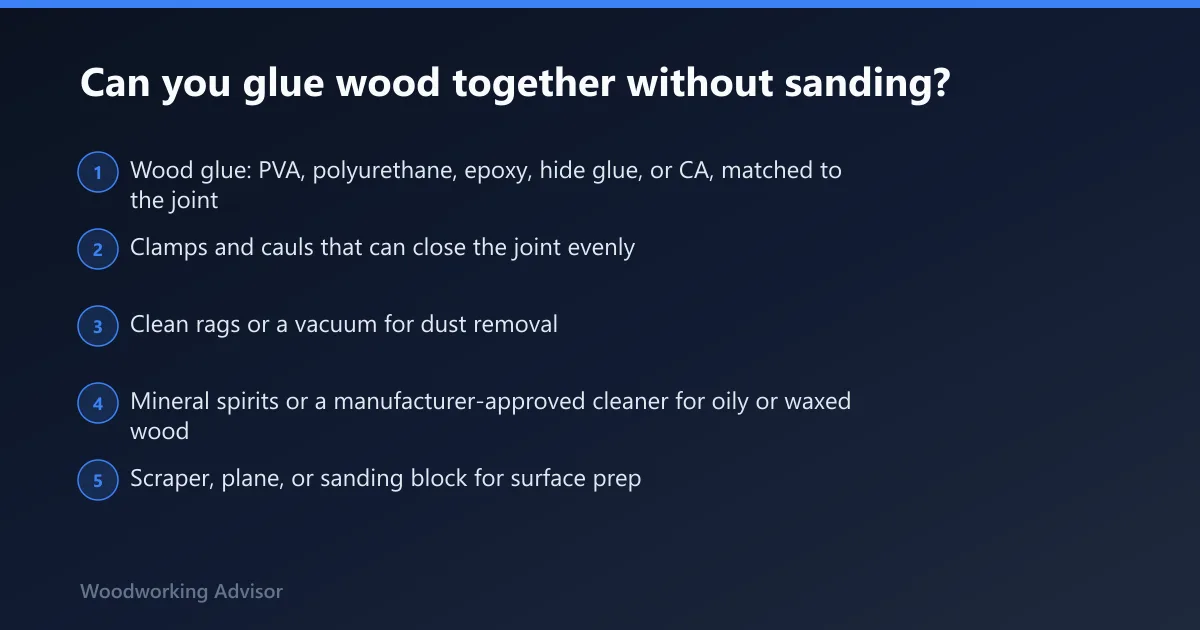
- Wood glue: PVA, polyurethane, epoxy, hide glue, or CA, matched to the joint
- Clamps and cauls that can close the joint evenly
- Clean rags or a vacuum for dust removal
- Mineral spirits or a manufacturer-approved cleaner for oily or waxed wood
- Scraper, plane, or sanding block for surface prep
- Sandpaper in a medium-grit range, depending on the surface
- Putty knife or chisel for old glue removal
Step 1: check the surface, not just the wood species
- Inspect the mating faces for finish, paint, wax, oil, dust, or old glue.
- Confirm the joint is flat and tight before opening the bottle.
- Use fresh machining as the default green light only on bare wood fibers.
- Stop and prep further if the surface feels glossy, greasy, or crusted.
Step 2: use the right fix for the actual surface problem
- Lightly sand clean, smooth wood with a suitable grit if it needs more tooth.
- Wipe dusty wood, then vacuum the joint line before glue-up.
- Clean or degrease oily or waxed wood before sanding or bonding.
- Strip paint or finish from the glue area instead of sanding through it.
- Scrape old glue back to bare wood before a repair joint.
When is it safe to skip sanding before wood glue?
It is safe to skip sanding when the joint faces are freshly planed or jointed, flat, bare, and assembled soon after machining. Clean long-grain faces usually bond well without extra abrasion. A quick dust-off is enough in that case. Sand only if the surface has a polished feel, a little sheen, or light machine marks that keep the joint from closing well.
Freshly machined bare wood is the best case
Wood glue bonds best to clean, bare wood fibers. Fresh cuts expose those fibers directly, so PVA, polyurethane, epoxy, hide glue, and CA can wet the surface without needing extra tooth. Clamp pressure still matters. It needs to close the joint without starving it, and the assembly should stay put through the full cure time.
Joint type changes the answer
Edge and face joints are the easiest to glue without sanding when they are freshly machined and tight. Miter joints ask for more care because they depend on full contact along a long angled face. Veneer work gives little room for error. End grain is often one of the trickier cases because it can absorb glue quickly and may benefit from extra prep or sizing.
Does wood glue stick to finished wood?
Usually no, not well enough for a durable joint. Finish, paint, wax, and cured coatings block wood glue from reaching bare wood fibers, so the bond rides on a weak film instead of the wood itself. Sanding over finish is not a fix if the coating remains. Strip to bare wood before gluing, then clean the dust off completely.
What to do instead of hoping sanding will help
Remove the coating first. A scraper, plane, or finish stripper is usually more reliable than trying to sand through paint or varnish into wood that still carries residue. After the bare surface is exposed, a light sand with medium-fine grit can help even out scratches. Then glue and clamp normally.
What surfaces should never be glued without prep?
Dirty, oily, waxed, painted, finished, and old-glue surfaces should not go straight to glue. Sanding alone cannot fix oil, wax, or hardened finish, and it often spreads the contamination. These surfaces need cleaning, stripping, or scraping first. Dust is another common failure point; even a thin film can interfere with glue wetting the wood.
Proof table: five surface states and the safe prep choice
| Surface state | Safe prep choice | Direct glue-up? | Failure risk |
|---|---|---|---|
| Freshly planed, bare wood | Glue directly if flat, tight, and dust-free | Yes | Low, unless the joint is loose or end grain |
| Dusty bare wood | Vacuum, brush, or wipe clean first | Sometimes, after cleaning | Medium to high |
| Oily or waxed wood | Clean or degrease first; then sand lightly if needed | No | High |
| Finished or painted wood | Strip to bare wood before gluing | No | High |
| Old-glue repair | Scrape or chisel to bare wood; dry fit again | No | High |
Is sanding necessary for PVA, polyurethane, or epoxy glue?
No single glue type requires sanding in every case. PVA and hide glue work best on clean, bare wood fibers. Polyurethane and epoxy tolerate some surface variation better, but they still fail on dust, oil, wax, and finish. CA grabs quickly on close-fitting parts, so surface prep needs to be done before it sets. Clamp pressure and cure time still apply.
Match the prep to the glue and joint
PVA wants clean, tight long-grain joints. Polyurethane can fill small gaps, but it is not a cure for dirty wood. Epoxy handles imperfect repair work better than PVA, yet it still needs a sound substrate. CA is fast and unforgiving; once the parts touch, there is little time to correct a bad surface.
How to prepare smooth, finished, or dirty wood before gluing
Start with the problem you actually have. Smooth bare wood may only need a light scuff. Finished wood needs the coating removed. Dirty wood needs cleaning. Oily or waxed wood needs degreasing before any glue touches it. If the joint is old and crusted, remove all loose residue first and re-fit the parts before opening the glue.
If that didn’t work, try this next
- Open the joint and inspect the mating faces under strong light.
- Scrape or plane to fresh wood if glue still beads on the surface.
- Sand lightly with 80-120 grit only to remove gloss or tool marks.
- Vacuum the joint line and wipe away all sanding dust.
- Dry-fit again before applying glue and clamps.
Common mistakes
Most glue failures come from surface contamination or poor joint fit, not from skipping sanding on freshly machined wood. The surface state matters more than the calendar. A clean, flat, bare joint can glue well without sanding. A dirty or finished one usually cannot, no matter how much sanding you do on the wrong layer.
What goes wrong and how to avoid it
- Gluing over dust: Vacuum and brush the joint before assembly.
- Trusting sanding to fix wax, oil, or paint: Strip or degrease first.
- Using too-fine grit on softwood: Stay around 80-120 grit when tooth matters; very fine paper can burnish and reduce grab.
- Skipping clamp pressure: Use enough pressure to close the joint without squeezing out too much glue.
- Trying to bond old glue: Remove cured glue until fresh wood is exposed.
Prevention
Test-fit every joint dry, then keep the mating faces covered from shop dust until glue-up. A freshly machined surface can lose its edge fast if it sits around the bench open to airborne grit.
Can you glue painted wood together?
Not reliably. Paint creates a barrier between the glue and the wood fibers, so the bond depends on the paint film instead of the wood. That film can peel under load. Strip the paint from both mating faces, then clean off dust before applying glue. If the paint has soaked into the grain, cut back farther until bare wood appears.
Do you need to sand old glue off before re-gluing wood?
Yes. Cured glue can block new glue from reaching wood fibers, especially on repair joints. Scrape, chisel, or plane off the old glue until you get back to clean wood. A light sand can finish the job, but it is the removal of the old adhesive that matters, not the sanding by itself.
What happens if you glue dusty wood without sanding?
Dust acts like a weak release layer. The glue bonds to the dust instead of the wood, which lowers strength and can cause the joint to creep, open, or fail later. Vacuum, brush, or wipe the surface before gluing. If the dust is from previous finish or old glue, remove that layer too.
Frequently asked questions
Will glue hold on smooth planed wood?
Yes, if the planed surface is clean, bare, and not burnished to a glossy feel. Freshly machined long-grain faces often bond well without sanding. If the planer left a slick surface on softwood, a light scuff with 80-120 grit can improve grab.
Sponsored / affiliate links. As an Amazon Associate I earn from qualifying purchases. I may earn additional commission from eligible campaigns.