Gorilla Glue vs Loctite: You’re Comparing the Wrong Products
“Gorilla Glue vs Loctite” is a bit of a mismatched comparison — each name covers an entire family of different adhesive chemistries, not one product. Gorilla’s lineup spans polyurethane, PVA wood glue, and cyanoacrylate (super glue). Loctite’s lineup spans cyanoacrylate, epoxy, and anaerobic threadlockers. Which one “wins” depends entirely on which product from each family you’re actually comparing.
The Comparison Most Guides Get Wrong
Actually the Best Pick for Wood Joints
 |
Titebond III Ultimate Wood Glue, 8 oz – $8.99 Neither Gorilla Original nor any Loctite product is the strongest choice for wood-to-wood joints — a PVA wood glue like this one is, with higher shear strength and no foaming mess.
|
Compare More Gorilla and Loctite Adhesives
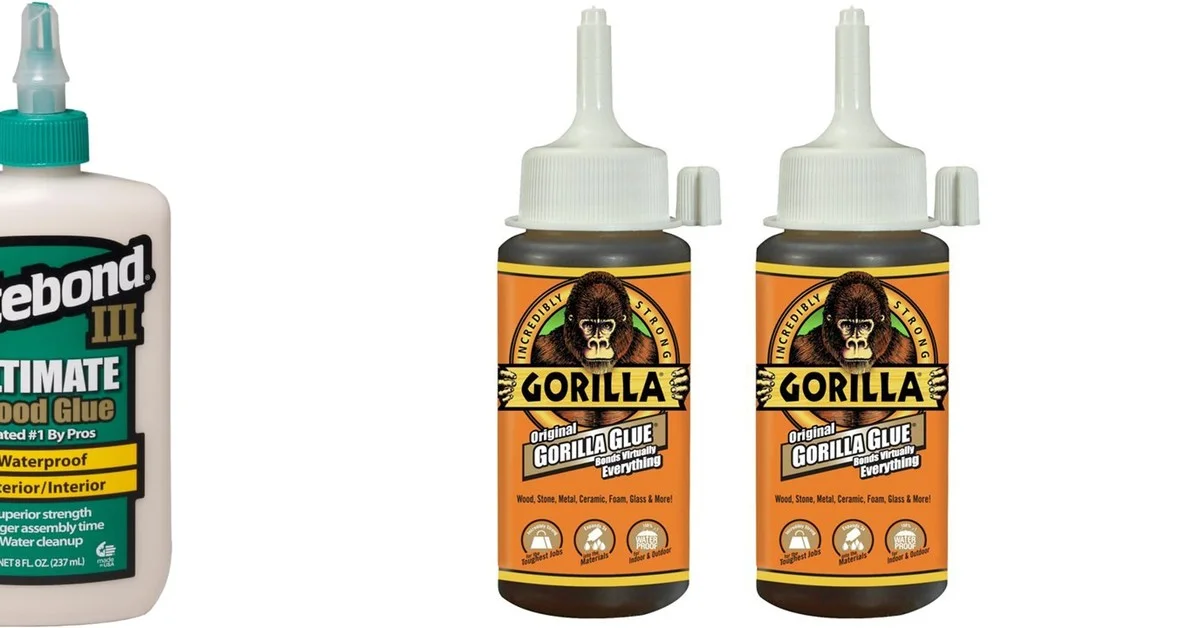
 Gorilla Original Polyurethane Glue, 2-Pack – $8.99 Best for mismatched or porous surfaces where the expanding foam can mechanically lock a gap — not for tight-fitting wood joints. View on Amazon |
 Gorilla Super Glue Gel XL, 25g – $6.48 Cyanoacrylate (CA) — sets in ~10 seconds for small, non-structural, non-porous repairs. View on Amazon |
 Loctite Threadlocker Red 271 (Permanent) – $9.98 What Loctite is actually known for in a shop — keeps bolts/screws from vibrating loose, not a wood glue at all. View on Amazon |
The original Gorilla Glue — the brown bottle most people picture when they hear the name — is a polyurethane adhesive. It’s activated by moisture, expands roughly 3x as it cures, and needs the surface dampened and the joint clamped tightly while it sets. That expansion is genuinely useful for locking into rough or mismatched surfaces, but it comes with two tradeoffs many buying guides skip: the foam squeeze-out is messy and needs to be scraped off after curing, and independent shear-strength testing on clean wood-to-wood joints has repeatedly shown PVA wood glues (Titebond, or Gorilla’s own separate Wood Glue product) hold better than the polyurethane formula in that specific use case. Polyurethane’s strength advantage shows up on rough, porous, or gapped joints — not on a well-fitted wood joint, which is most furniture and cabinetry work.
Loctite has a similar branding issue in reverse: most people think “Loctite” means super glue, but the products that actually built the brand’s reputation in workshops and on production lines are anaerobic threadlockers — liquid adhesives that only cure in the absence of air, which happens naturally once you thread them into a bolt or screw. Blue (242) is removable with hand tools; red (271, shown above) cures to a bond strong enough that it usually needs heat to break loose, meant for fasteners you don’t plan to remove. Loctite’s cyanoacrylate super glues are a completely separate product line built for fast, small, non-structural bonds — not for holding a wood joint together under real load (see our full breakdown of which Loctite formulas actually bond wood).
Which Product Actually Fits Your Job
- Wood furniture, cabinetry, edge-gluing boards: PVA wood glue (Titebond III or Gorilla Wood Glue) — not the polyurethane Original, not a CA super glue.
- Rough, porous, or gap-filled joints (uneven stone, foam, mismatched scrap): Gorilla Original polyurethane, dampened and clamped.
- Small non-porous repairs (ceramic, plastic trim, ABS) needing a bond in seconds: a cyanoacrylate super glue — Gorilla’s or Loctite’s gel formulas both work similarly.
- Bolts, screws, or threaded fasteners that vibrate loose: a Loctite threadlocker, not a glue at all — blue for anything you’ll remove later, red for fasteners meant to stay put permanently.
- Bonding dissimilar materials with a gap to fill (metal-to-wood, cracked tool handles): a two-part epoxy, which neither the polyurethane nor the CA formulas from either brand are designed to replace.
Cure Time and Working Time
PVA wood glue needs roughly 20-30 minutes of clamp time and 24 hours to fully cure, but it gives you several minutes of open working time to adjust a joint before it grabs. Gorilla’s polyurethane needs 1-2 hours clamped and a full 24 hours to cure, with a similar working window, but that window shrinks in warm weather since heat speeds the moisture-activated cure. Cyanoacrylate super glue sets in 10-30 seconds with almost no working time — get the alignment right before the pieces touch, because there’s no repositioning after. Anaerobic threadlockers cure over several hours to full strength but hold the fastener in place functionally within minutes, and their cure only proceeds properly once the fastener is fully seated and air is excluded.
Frequently Asked Questions About Gorilla Glue and Loctite
Is Gorilla Glue or Loctite stronger for wood?
Neither, for a typical tight-fitting wood joint — a PVA wood glue (Titebond, or Gorilla’s separate Wood Glue product) generally out-performs both Gorilla’s polyurethane Original and any Loctite CA or threadlocker product in wood-to-wood shear strength. Gorilla Original’s expanding formula is better suited to rough or gapped joints, not clean wood-to-wood glue-ups.
What is Loctite actually used for?
Loctite’s best-known workshop products are anaerobic threadlockers, which keep bolts and screws from vibrating loose by curing only once threaded into place and sealed from air. The brand also makes cyanoacrylate super glues and epoxies, which serve very different jobs from the threadlockers.
Why does Gorilla Glue foam and expand?
The original formula is a polyurethane adhesive that’s activated by moisture and expands as it cures, roughly tripling in volume. That expansion helps it mechanically lock into rough or uneven surfaces, but it also means squeeze-out has to be scraped away after curing and the joint needs to be clamped firmly while it sets.
Should I use super glue or wood glue for furniture repair?
Wood glue (PVA) for any joint that bears real weight or stress — it has far better long-term shear strength on wood than cyanoacrylate super glue, which is brittle and better suited to small, non-structural fixes.
Sponsored / affiliate links. As an Amazon Associate I earn from qualifying purchases. I may earn additional commission from eligible campaigns.