Can You Clean Hardwood Floors With Bleach? The Real Answer
Bleach is the first thing a lot of people reach for when a hardwood floor looks dingy, but it’s the wrong tool for almost every routine cleaning job. Full-strength chlorine bleach can cloud or strip a polyurethane finish, raise the wood grain, and bleach out stain color unevenly – sometimes on the first application. There are a couple of narrow, legitimate uses for a properly diluted bleach solution (killing mold or mildew in a small spot, or lightening bare wood before refinishing), but “clean my floors with bleach” and “spot-treat one stain with diluted bleach” are two very different projects, and mixing them up is how floors get ruined. Here’s what bleach actually does to hardwood, when a diluted solution is genuinely appropriate, and what to reach for instead.
Is Bleach Safe for Hardwood Floors? The Short Answer
Our Pick for Everyday Floor Cleaning
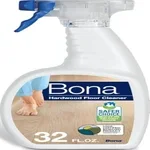 |
Bona Hardwood Floor Cleaner Spray, 32 fl oz – $8.97 A pH-neutral, no-rinse spray built specifically for finished hardwood – the everyday alternative to reaching for bleach.
|
No – not as a routine cleaner. Full-strength household bleach (sodium hypochlorite) is formulated to disinfect and whiten, and hardwood floors are exactly the wrong surface for that combination. The finish on top of the wood – polyurethane, wax, or an oil finish – is what actually takes the hit first. Bleach breaks down that finish layer, which is what leads to the cloudy, sticky, or dull patches people report after using it. Once the finish is compromised, the bleach reaches the bare wood underneath and can lighten or discolor it unevenly, especially on stained floors, because the stain doesn’t bleach out at the same rate across the grain.
How Bleach Actually Damages a Hardwood Floor
There are three distinct failure modes, and they don’t all show up at once, which is part of why people underestimate the risk:
- Finish breakdown: Bleach is a strong oxidizer. It attacks the polymer chain in polyurethane finishes, leaving a cloudy or slightly tacky film. Wax finishes are even more vulnerable – bleach strips wax on contact.
- Uneven discoloration: If bleach gets past the finish (through a worn spot, a seam, or a crack between boards), it lightens the wood itself. Because stain absorbs differently along the grain and at board edges, the result is rarely uniform – you get blotches, not an even lightening.
- Raised grain: Any water-based liquid left sitting on bare or thinly-finished wood swells the fibers, and they don’t shrink back perfectly flat once they dry. That’s raised wood grain, and it means a rough, fuzzy-feeling floor even after the discoloration issue is dealt with.
None of this is reversible with a second cleaning. A bleach-damaged finish generally has to be sanded back and refinished, and a bleach-damaged floor waiting on a fresh finish to cure is a multi-day project you didn’t sign up for when you were just trying to clean up a spill.
When Diluted Bleach Actually Makes Sense
There are two situations where a properly diluted bleach solution is a reasonable, targeted tool – not a routine cleaner, a spot treatment:
- Mold or mildew on bare or heavily worn wood. A mild solution (roughly 1 cup of bleach per gallon of water, applied with a cloth, not poured) can kill surface mold on wood that has no intact finish left to protect – think a water-damaged spot or an old unfinished red oak section awaiting refinishing.
- Lightening wood before refinishing. Some refinishers use a diluted bleach or two-part wood bleach as a pre-treatment step to even out color on bare wood before staining, specifically because the wood has already been sanded down and has no finish left to damage.
In both cases, the wood is bare or about to be sanded – the finish that bleach would otherwise ruin is already gone. That’s the deciding factor: bleach on a finished floor is a mistake, bleach on bare wood headed for refinishing is a controlled, reversible step.
Chlorine Bleach vs. Oxygen Bleach vs. Oxalic Acid
These three get lumped together as “wood bleach,” but they’re chemically different and suited to different jobs:
- Chlorine bleach (sodium hypochlorite): Strongest and harshest. Disinfects effectively but is the most likely to strip finish and discolor wood unevenly. Reserve it for mold/mildew on bare wood only, heavily diluted.
- Oxygen bleach (sodium percarbonate, or a 3% hydrogen peroxide solution): Much gentler oxidizer. Lifts general grime and light staining without the harsh discoloration risk of chlorine bleach. A reasonable middle ground for a floor that needs more than soap and water but isn’t a disinfection job.
- Oxalic acid: Not a bleach at all – it’s an acid, and it’s the actual industry-standard product for the specific problem of black water stains and iron/tannin discoloration on bare wood (the dark blotches you get where a plant pot sat too long). It won’t disinfect mold, but it’s the right tool for that specific stain, and it’s what refinishers reach for before chlorine bleach.
If you’re not sure which applies, the underlying question is always the same: are you trying to kill something biological (mold/mildew – chlorine bleach territory), or remove a stain/discoloration on bare wood (oxalic acid or oxygen bleach territory)? Routine dirt and grime on a finished floor is neither – that’s a job for a pH-neutral cleaner, not any of the three.
The One Rule That Actually Matters: Never Mix Bleach With Ammonia
Whatever bleach product you use, never combine it with an ammonia-based cleaner (many glass and multi-surface cleaners contain ammonia). The reaction produces chloramine gas, which is toxic and can cause serious respiratory damage in an enclosed room. If you’ve used an ammonia-based cleaner on a floor recently, rinse the area thoroughly with plain water and let it dry before ever bringing bleach near it. This isn’t a wood-specific issue – it applies to any surface – but it’s worth repeating here because people cleaning floors are often switching between multiple cleaning products in the same session.
How to Safely Spot-Treat With Diluted Bleach
- Confirm the finish is gone or the wood is bare at the spot you’re treating. If there’s any intact polyurethane, wax, or oil finish, don’t use bleach – use one of the alternatives below instead.
- Ventilate the room – open windows, run a fan, or turn on an exhaust fan. Bleach fumes build up quickly in a closed room.
- Dilute properly – about 1 cup of household bleach per gallon of water for mold/mildew treatment. Never use it full-strength.
- Apply with a cloth, not a mop or sprayer, so you can control exactly where it goes and avoid runoff onto finished areas nearby.
- Let it sit briefly (a few minutes), then rinse thoroughly with clean water and dry the area completely. Standing liquid is what raises the grain.
- Wear gloves and avoid skin contact, and never combine with any other cleaning product, especially anything ammonia-based (see above).
Safer Alternatives for Everyday Hardwood Cleaning
For routine cleaning – the dirt, dust, and light grime every floor accumulates – skip bleach entirely:
- pH-neutral hardwood floor cleaner (like the Bona spray above): formulated specifically not to react with polyurethane, wax, or oil finishes.
- A microfiber mop with plain water, lightly damp, for daily dust and light dirt.
- 3% hydrogen peroxide as a milder bleaching option for light staining, when you do need some oxidizing action but want to avoid full-strength chlorine bleach.
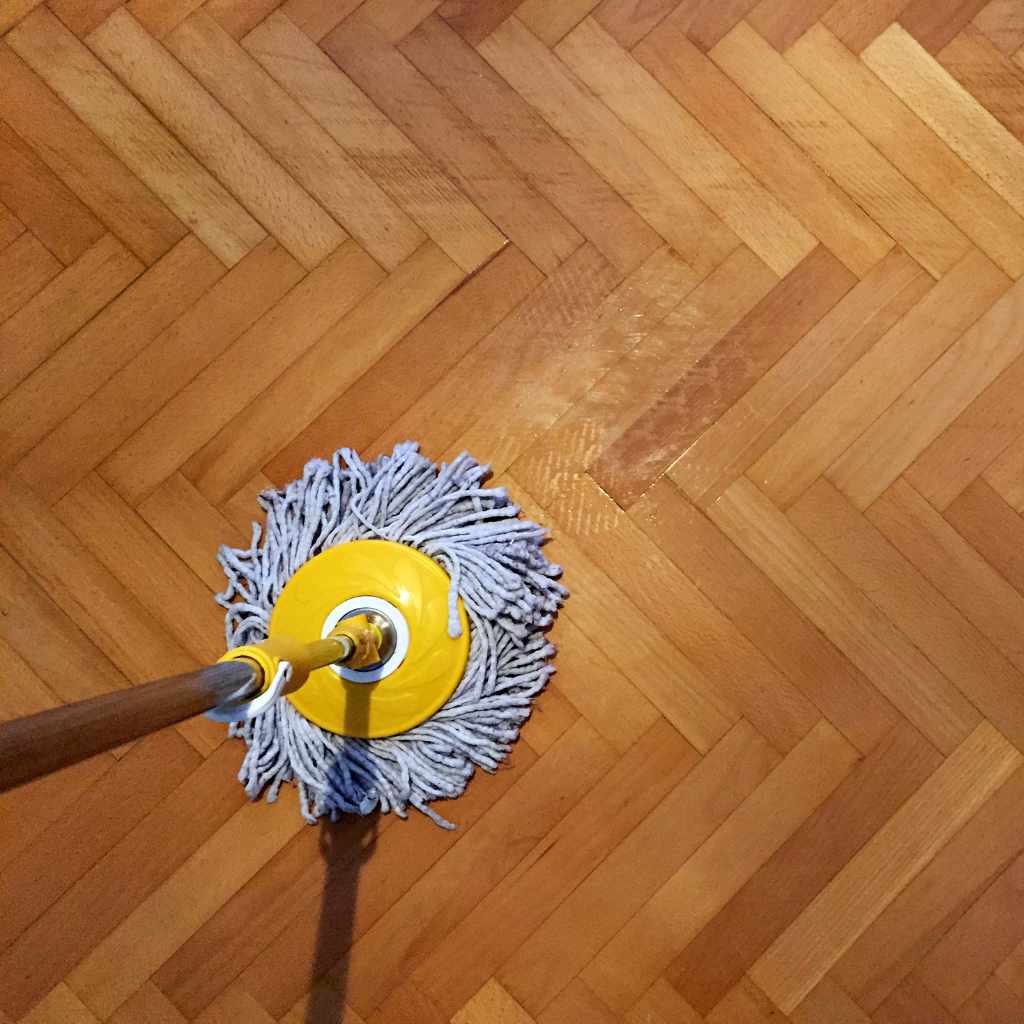
Our full hardwood floor care guide covers the day-to-day routine – sweeping frequency, mat placement, and finish maintenance – in more depth if bleach isn’t actually what brought you here.
Frequently Asked Questions
Is it ever safe to use bleach on hardwood floors?
Only as a heavily diluted spot treatment on bare wood with no intact finish – for killing mold/mildew or as a pre-refinishing step. Never on a finished floor, and never full-strength.
What happens if I accidentally get bleach on my finished hardwood floor?
Wipe it up immediately and rinse the area thoroughly with clean water. A brief accidental splash that’s rinsed right away often causes no visible damage; bleach left sitting on the finish for several minutes or longer is more likely to cloud or dull that spot permanently.
What’s the difference between oxalic acid and bleach for wood stains?
Oxalic acid is an acid, not a bleach, and it’s the standard product for black water stains and iron/tannin discoloration on bare wood. Chlorine bleach is a broader disinfectant/whitener that’s harsher and more likely to discolor the surrounding wood unevenly.
Can I mix bleach with my regular floor cleaner?
No. Never mix bleach with an ammonia-based cleaner – it produces toxic chloramine gas. Use one product at a time and rinse thoroughly with water before switching.
Sponsored / affiliate links. As an Amazon Associate I earn from qualifying purchases. I may earn additional commission from eligible campaigns.