Colonial Hardwood Flooring: Real Species, Grades & 2026 Cost Guide
Colonial hardwood flooring means wide, straight-grained boards in species colonial builders actually had on hand — oak, heart pine, chestnut, and hickory — finished simply so the grain does the talking. Expect $8 to $22 per square foot installed in 2026, with the biggest swings coming from plank width and wood grade, not the species itself.
What Makes a Floor “Colonial” Style?
Best Cleaner For Colonial-Style Wide-Plank Floors
 |
Bona Premium Hardwood Floor Spray Mop – $41.97 Colonial-style floors are usually satin or matte finished specifically to show grain, which also means a harsh cleaner or steam mop can dull the finish fast — this is the pH-neutral, streak-free system made for that exact finish.
|
“Colonial” isn’t a manufacturer’s product line — it’s a look borrowed from 17th- and 18th-century American homes, back when boards were cut by hand from whatever hardwood grew nearby and nailed straight to the joists. That history shows up in three specific traits: random-width planks (often mixing 4-, 6-, and 8-inch boards in the same room instead of one uniform width), face nailing with visible fasteners near the plank edges, and finishes thin enough to show every knot, mineral streak, and saw mark instead of hiding them.
Modern “colonial-style” flooring recreates that look on purpose. Manufacturers mill wider boards than a typical strip floor, use lower grades that keep more character, and finish with satin or matte polyurethane instead of the high-gloss sheen you’d see on a contemporary red oak floor. The result reads as older and more substantial without actually requiring century-old lumber.
Our Pick for Keeping a Colonial Floor Looking Right
Never use steam mops, wax-based polishes, or oil soaps on a polyurethane-finished colonial floor — steam forces moisture into the seams between those wide boards, and wax/oil soap builds up a film that later finish coats won’t bond to.
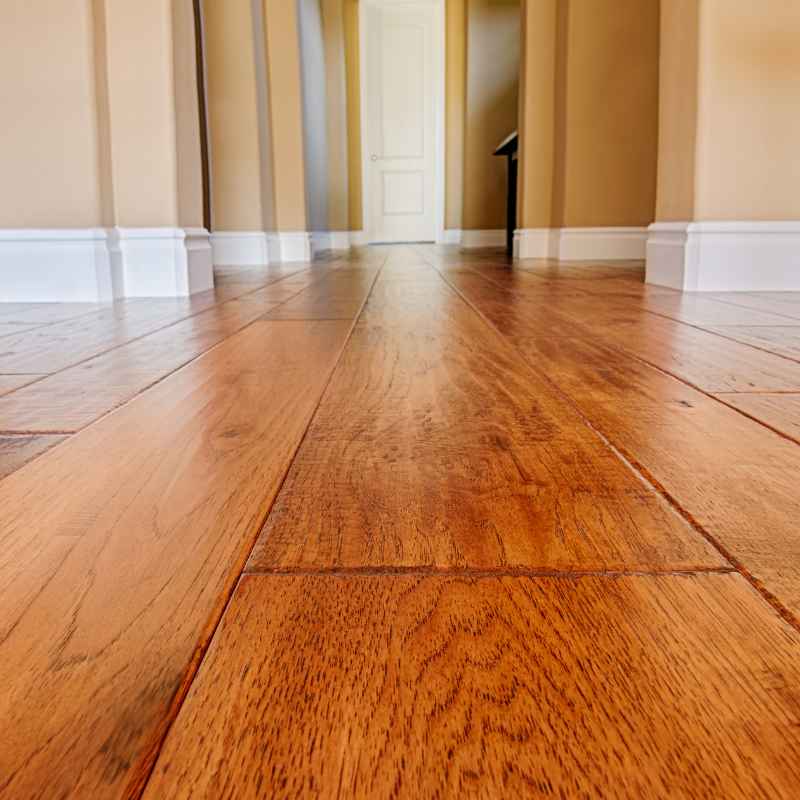
Species Colonial Builders Actually Used — and What’s Sold Today
Original colonial floors were built from whatever hardwood a region had in quantity, not from a catalog of options. New England and Mid-Atlantic homes leaned on white oak and American chestnut; the South used heart pine almost exclusively. One of those species has a real story worth knowing before you shop: American chestnut was the dominant flooring and framing wood in the eastern U.S. until a fungal blight, first identified in New York in 1904, wiped out an estimated four billion trees by the 1950s. Reclaimed chestnut flooring still exists — pulled from old barns and mills — but it’s a specialty, expensive product, not something you’ll find at a big-box store.
Species You Can Actually Buy for a Colonial Look
White oak: The modern default. Grey-brown undertone, closed grain that resists moisture better than red oak, and it takes dark stains evenly — see our dark oak hardwood flooring guide for 2026 pricing.
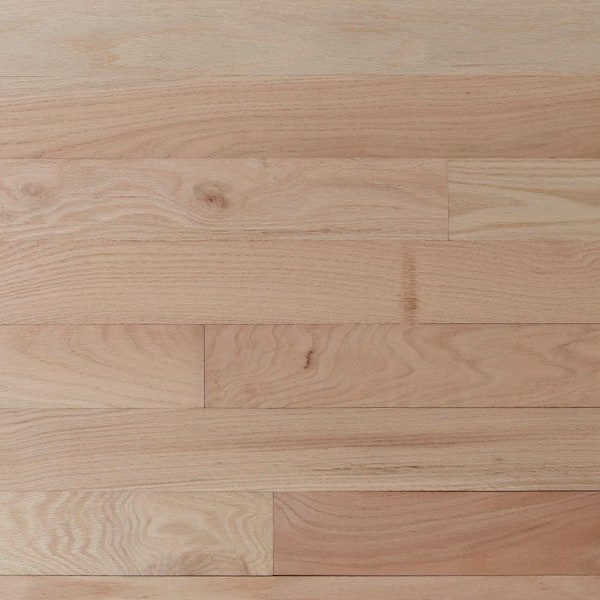
Red oak: Warmer, pinkish tone and more open grain than white oak. Cheaper and more widely stocked, which is why it dominates budget colonial-style lines.
Hickory: The hardest common domestic flooring species (Janka rating around 1820, versus about 1360 for white oak). Heavy color variation between boards, which reads as rustic-colonial rather than formal.
Heart pine: The historically correct choice for Southern colonial homes. Soft compared to oak or hickory, so it dents more, but reclaimed and new “heart pine” boards both develop a deep amber patina with age that’s hard to fake with stain.
Maple: Historically less common in colonial homes but sold today as a lighter alternative. Takes stain unevenly compared to oak because of its tight, closed grain — a real limitation if you want a dark colonial stain color.
Plank Width: The Detail That Actually Reads as “Colonial”
If you only change one spec from a standard oak floor, make it width. Colonial-era sawmills couldn’t mill uniform strip flooring, so real historic floors mix widths in the same room — a detail most reproduction lines still replicate on purpose.
Plank Width Guide
Strip (2 1/4″): Standard modern width. Reads as contemporary, not colonial, on its own.
Plank (3″-5″): The most common “colonial-style” width sold today. Balances an authentic look with normal installation costs.
Wide plank (6″-8″+): Closest to genuine colonial boards. Shows more grain and character per board, but wider planks move more with humidity, so acclimation and a stable indoor climate matter more.
Random width mix: Combines two or three widths (commonly 4″, 6″, and 8″) in one floor — the single most historically accurate option, and usually a special order.
Wood Grades: Why Two “Oak Floors” Can Look Completely Different
The National Wood Flooring Association (NWFA) and hardwood manufacturers sort every species into grades based on how much natural character — knots, mineral streaks, color variation — the boards show. Grade has nothing to do with structural quality; a #2 Common board is just as strong as a Select board. It only affects appearance and price, which matters a lot for a colonial look, since more character generally looks more authentic, not less.
NWFA-Style Grading, Oak and Similar Species
Select/Better: Minimal knots, mostly uniform color, straight grain. The most formal — and least colonial-looking — option.
#1 Common: Visible knots and moderate color variation. The most popular grade for colonial-style floors because it looks lived-in without being chaotic.
#2 Common (sometimes labeled “Character” or “Rustic”): Heavy color variation, larger and more frequent knots, occasional mineral streaks. Closest match to a genuine 1700s floor, and usually the cheapest grade per square foot.
A formal dining room can carry Select grade, but for the actual colonial look most people are chasing, #1 or #2 Common in a random width is the closer match — and it costs less, not more.
2026 Cost Breakdown for Colonial Hardwood Flooring
Species has less effect on total cost than most buyers expect. Oak, the most common colonial-style choice, isn’t priced much differently from other domestic hardwoods. Plank width and grade move the number far more — wide-plank, random-width floors cost more to mill and install than standard 3-inch strip flooring in the same species.
2026 Cost Estimate Per Square Foot
Material (solid hardwood, standard plank): $4 – $9
Material (solid hardwood, wide/random-width): $7 – $13+
Material (engineered hardwood): $5 – $13+
Installation labor: $3 – $7+
Subfloor prep/moisture barrier: $1 – $3+
Total installed: $8 – $22+ per square foot
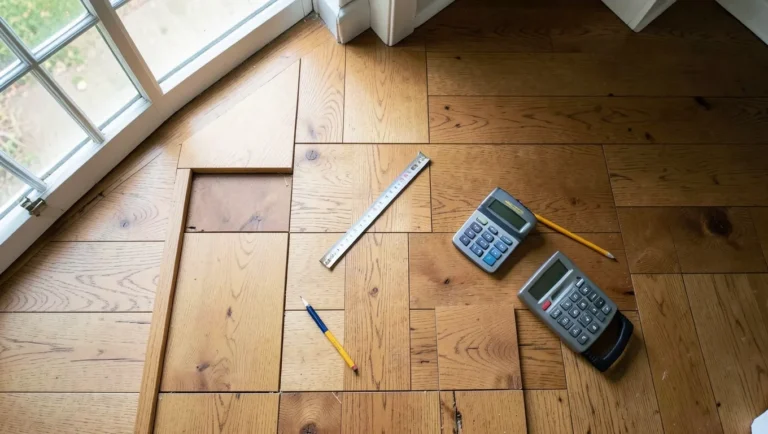
Two costs buyers routinely forget to budget: acclimation delays (the wood needs to sit in the home 3-7 days before installation, which can push a project timeline) and transition strips or new baseboards where the new floor meets tile, carpet, or an existing floor at a different height.
Installation: What Actually Determines Longevity
Colonial-style hardwood is installed the same three ways as any solid or engineered floor — the style only changes the boards, not the method. Getting the installation right matters more for wide-plank colonial floors than standard strip flooring, because wider boards move more with seasonal humidity and show gaps or cupping more visibly when subfloor prep is skipped.
Installation Methods
Nail down: Standard for solid hardwood over a wood subfloor. A pneumatic flooring nailer drives cleats or staples through the plank’s tongue at an angle, so the fastener is hidden once boards interlock.
Glue down: Adhesive bonds the plank directly to plywood or a concrete slab. Common for engineered hardwood and the only realistic option over concrete.
Floating: Boards click together and float over an underlayment without attaching to the subfloor. Typical for engineered wood, rare for solid colonial-style planks.
Whichever method your installer uses, three things prevent the callbacks that cost the most to fix later: a subfloor moisture reading taken before installation (not just “it feels dry”), 3-7 days of acclimation with the flooring boxes opened in the actual room, and a expansion gap left at every wall to account for seasonal movement — wider colonial-style planks need a larger gap than 2 1/4-inch strip flooring, not the same one.
Where Colonial Floors Work Best in a Home
Colonial-style hardwood suits any room where you want warmth and history rather than a sleek, uniform look — dining rooms, living rooms with a fireplace, entries, and hallways all carry it well. Kitchens work too, as long as spills get wiped up quickly; the wider gaps and lower-sheen finish typical of colonial-style floors show water damage faster than a tightly sealed strip floor.
Skip solid hardwood — colonial-style or not — in full bathrooms and laundry rooms. Engineered hardwood with a moisture-resistant core can work in a powder room if the manufacturer’s warranty explicitly allows it; check that before assuming.
Decor Pairings
Traditional: Upholstered furniture, antique or antique-reproduction pieces, classic patterns.
Farmhouse: Rustic wood accents, vintage-finish hardware, natural-fiber rugs.
Modern classic: Clean-lined furniture and a neutral palette let the wide-plank floor be the texture in the room.
Coastal: Lighter species like maple or ash keep the colonial plank width without the heavy, dark-stain look.
What’s Normal vs. What’s a Defect
Because colonial-style floors are graded specifically to include more knots and color variation, it’s easy to mistake a real defect for “character,” or the reverse. The distinction is whether the feature is stable or actively getting worse.
Inspection Checklist
Normal: Color variation between boards, tight knots, visible grain/mineral streaks, slight sheen differences between satin-finished boards.
Defects — flag before installation: Cupped or bowed boards straight out of the box, knots that are cracked or loose (not just dark), splintering on the surface, visibly uneven finish sheen across a single board.
Action: Open and inspect boards from several boxes, not just the top layer of one box, before the installer starts. Photograph anything questionable and flag it to the supplier the same day.
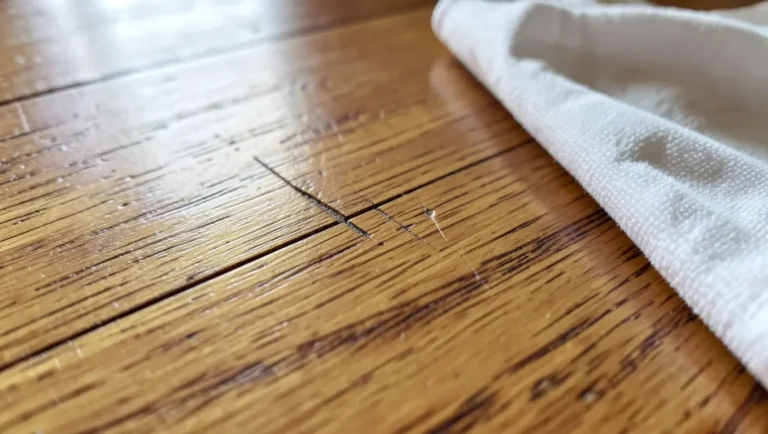
Hardwood is a natural material — it will pick up minor scratches and dents over normal use, and for most people that’s part of the appeal rather than a flaw. If you need a floor surface that never shows a mark, hardwood (colonial-style or otherwise) isn’t the right product regardless of species or grade.
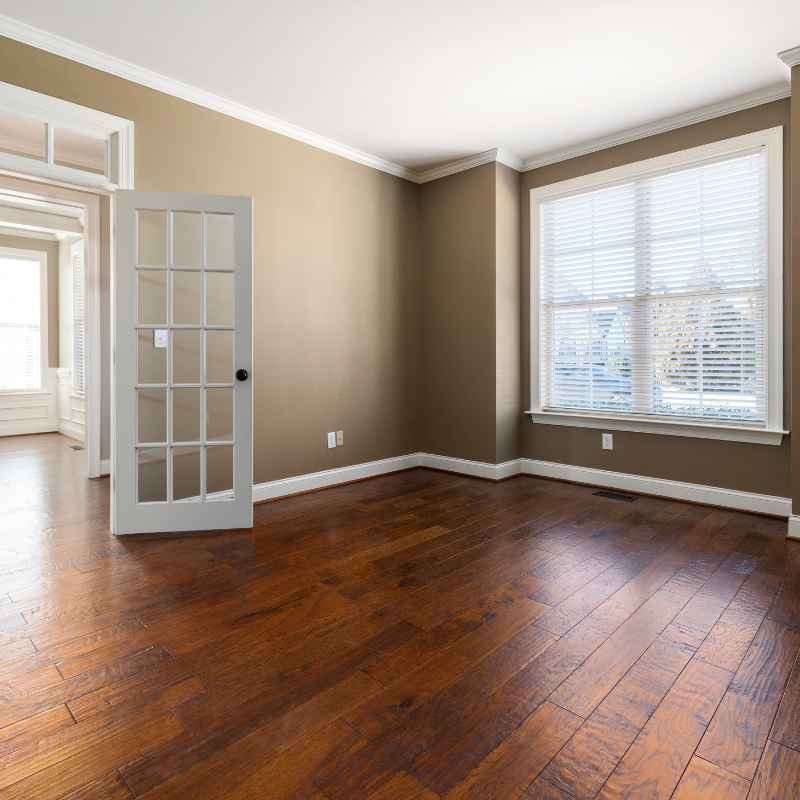
Maintaining a Colonial-Style Floor Long-Term
Because most colonial-style floors use a satin or matte finish specifically to look more natural, they show cleaning product residue more visibly than a high-gloss floor would. That makes the cleaner you use a bigger deal than it would be on a standard glossy oak floor.
Care Routine
Sweep or vacuum with a hard-floor attachment weekly: A beater-bar vacuum head or stiff broom bristles can scratch a satin finish over time.
Wipe spills immediately: Standing water is the single fastest way to damage the seams on a wide-plank floor.
Use a pH-neutral, residue-free cleaner: Steam mops, vinegar solutions, and oil soaps all cause long-term problems on polyurethane-finished wood — see the product pick above.
Felt pads under every furniture leg: Standard practice, but especially important on softer species like heart pine.
Hold indoor humidity between 40-60%: This matters more for wide and random-width colonial boards than for narrow strip flooring, since wider boards show more visible gapping or cupping per percentage point of humidity swing.
Frequently Asked Questions About Colonial Hardwood Flooring
Is colonial hardwood flooring still in style in 2026?
Yes. Wide-plank and random-width oak floors have been a steady trend in both historic renovations and new-build “modern farmhouse” homes for over a decade, and they pair with far more decor styles than a single trend-driven finish would.
Can I install colonial hardwood flooring myself?
Nail-down and glue-down installation both require a flooring nailer or the right adhesive and trowel, plus an accurate moisture reading on the subfloor first. It’s possible as a DIY project if you have real tool experience, but a bad install on wide-plank flooring is more visible and more expensive to fix than on standard strip flooring.
How much does colonial hardwood flooring typically cost?
Expect $8 to $22 or more per square foot installed in 2026, including materials and labor. Wide or random-width planks and lower (more rustic) grades land at the lower end of that material cost per square foot despite looking more “premium,” since character grades cost less than clear grades.
Is solid or engineered hardwood better for a colonial look?
Both work. Solid hardwood is the historically accurate choice and can be refinished many more times over its life. Engineered hardwood handles humidity swings better, which matters more as plank width increases, and it’s the only real option for installing over a concrete slab.
What wood species did actual colonial-era floors use?
It depended on region: white oak and American chestnut were common in the Northeast and Mid-Atlantic, while heart pine dominated in the South. Chestnut is now rare and expensive because a blight discovered in 1904 killed off most of the species’ population by the mid-1900s — reclaimed chestnut flooring today comes from salvaged old-growth lumber, not new-growth trees.
How do I clean a colonial-style hardwood floor?
Sweep or vacuum with a hard-floor setting weekly, wipe spills up immediately, and clean with a pH-neutral, residue-free hardwood cleaner rather than steam, vinegar, or oil soap. Satin and matte finishes show cleaner residue more than glossy finishes, so the product matters more here than on a standard floor.
Bottom Line
A genuinely colonial-looking floor comes down to three choices that matter more than the species name on the box: random or wide plank widths instead of uniform strip flooring, a #1 or #2 Common grade instead of Select, and a satin or matte finish instead of high-gloss. Get those three right and oak, hickory, or heart pine will all read as authentic — and budgeting $8 to $22 per square foot installed will keep the estimate realistic before you start getting quotes.
Sponsored / affiliate links. As an Amazon Associate I earn from qualifying purchases. I may earn additional commission from eligible campaigns.
 East West Furniture SP-5HH05 Sango Premier Engineered Hardwood Flooring - European Oak - 1/2 in x 7 in x Random Length Handscraped, 26.24 sqft/box, Shadow Grey
 East West Furniture SP-7HH02 Sango Premier Engineered Hardwood Flooring - European Oak - 1/2 in x 7 in x Random Length Handscraped, 26.24 sqft/box, Special Walnut