Can You Mop Hardwood Floors With Vinegar?
You can mop finished hardwood floors with a heavily diluted vinegar solution occasionally, but most flooring manufacturers and the National Wood Flooring Association don’t recommend it as a regular cleaner — vinegar’s acidity, even diluted, gradually dulls a polyurethane or urethane finish with repeated use. If you’ve seen the popular advice to mix vinegar and water 1:1, that ratio is too concentrated and is more likely to etch the finish than clean it safely. This guide covers the actual safe dilution, when vinegar makes sense to use, and why a pH-neutral cleaner is the better everyday choice for a finished floor.
Is Vinegar Actually Safe for Hardwood Floors?
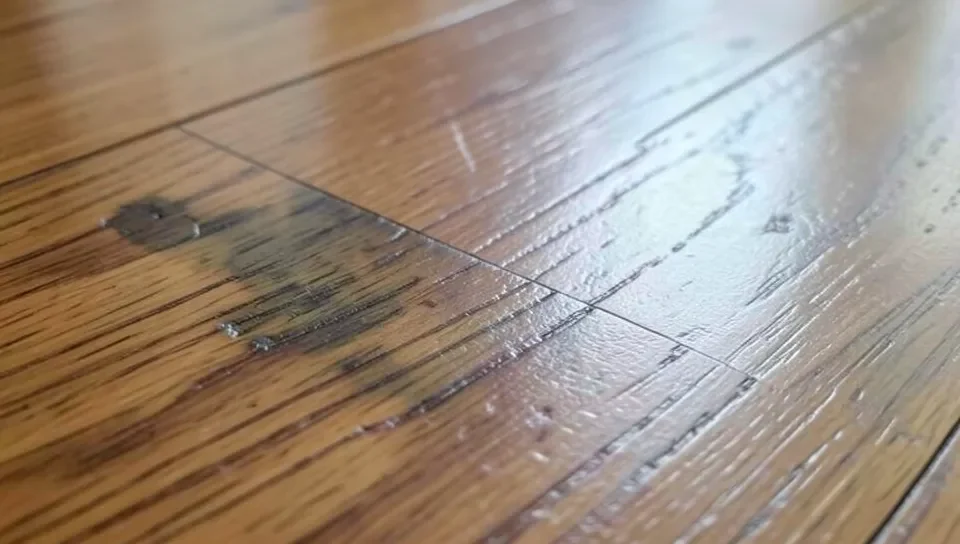
Vinegar is a mild acid (acetic acid, roughly pH 2.5 in its undiluted form), and most hardwood floors sold and refinished today are protected with a polyurethane or urethane-based film finish, not the oil/wax finishes common decades ago. Repeated exposure to an acidic cleaner slowly breaks down that film finish’s sheen, leaving a hazy, dull look over months of regular use — the damage isn’t immediate or dramatic on any single mopping, which is exactly why the “vinegar is a safe natural cleaner” advice spreads so easily even though flooring manufacturers advise against it for routine cleaning.
Skip the Vinegar Guesswork
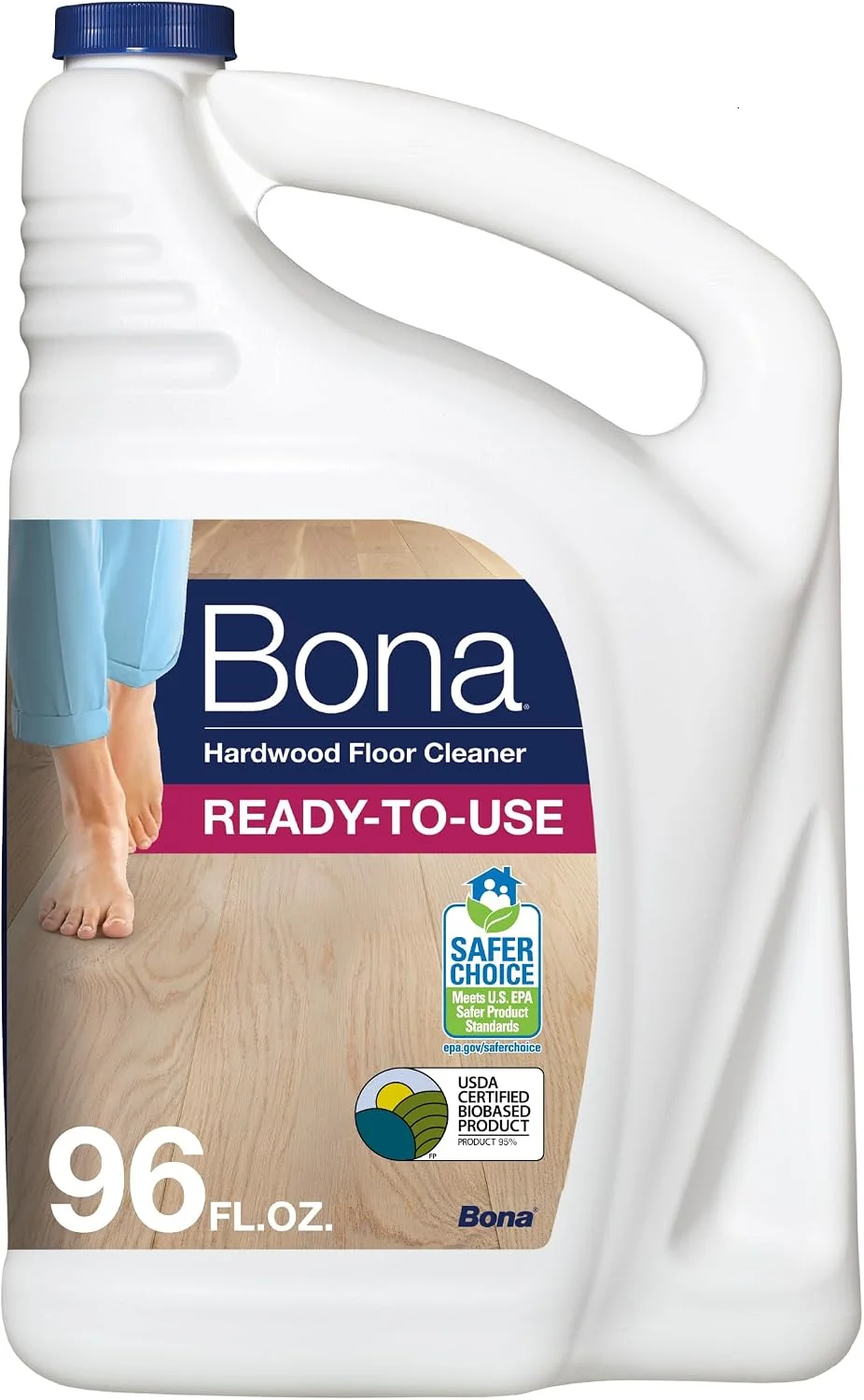 |
Bona Hardwood Floor Cleaner Refill, 96 fl oz – $14.97 pH-neutral and residue-free, so it won’t dull a polyurethane finish the way repeated vinegar use can.
|
The Right Dilution, If You Use Vinegar
If you want to use vinegar anyway, dilute it far more than the commonly repeated 1:1 ratio: about ½ cup of white distilled vinegar per gallon of warm water (roughly a 1:32 dilution) is the concentration most cleaning guides that do recommend vinegar actually specify. Use it occasionally — for an odor or a sticky residue a regular cleaner isn’t cutting through — rather than as your weekly go-to, and always test an inconspicuous spot first since finishes vary in how they hold up.
When Vinegar Is a Bad Idea Regardless of Dilution
Skip vinegar entirely on unsealed, waxed, or oil-finished floors — without a film finish protecting the wood, the acid contacts the wood fibers directly and can cause real discoloration and damage, not just a dulled sheen. If you’re not sure what finish your floor has, a water-drop test helps: on a film finish (poly/urethane), a few drops of water will bead on the surface for a while; on an oil or wax finish, the water absorbs and darkens the wood almost immediately. Wax and oil finishes need finish-specific products, not water-based cleaners of any kind.
How to Mop Hardwood Floors Safely
Prep the Floor
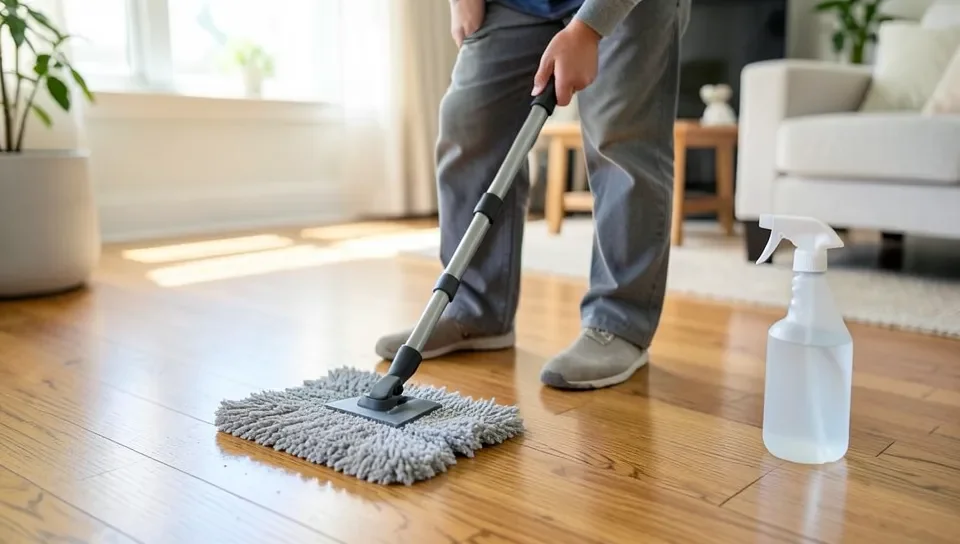
Sweep or vacuum with a hard-floor attachment first — mopping over loose grit just drags it across the finish and can add fine scratches. Clear furniture and rugs from the area so you can work in full, even sections rather than cutting corners around obstacles.
Mop with Minimal Water
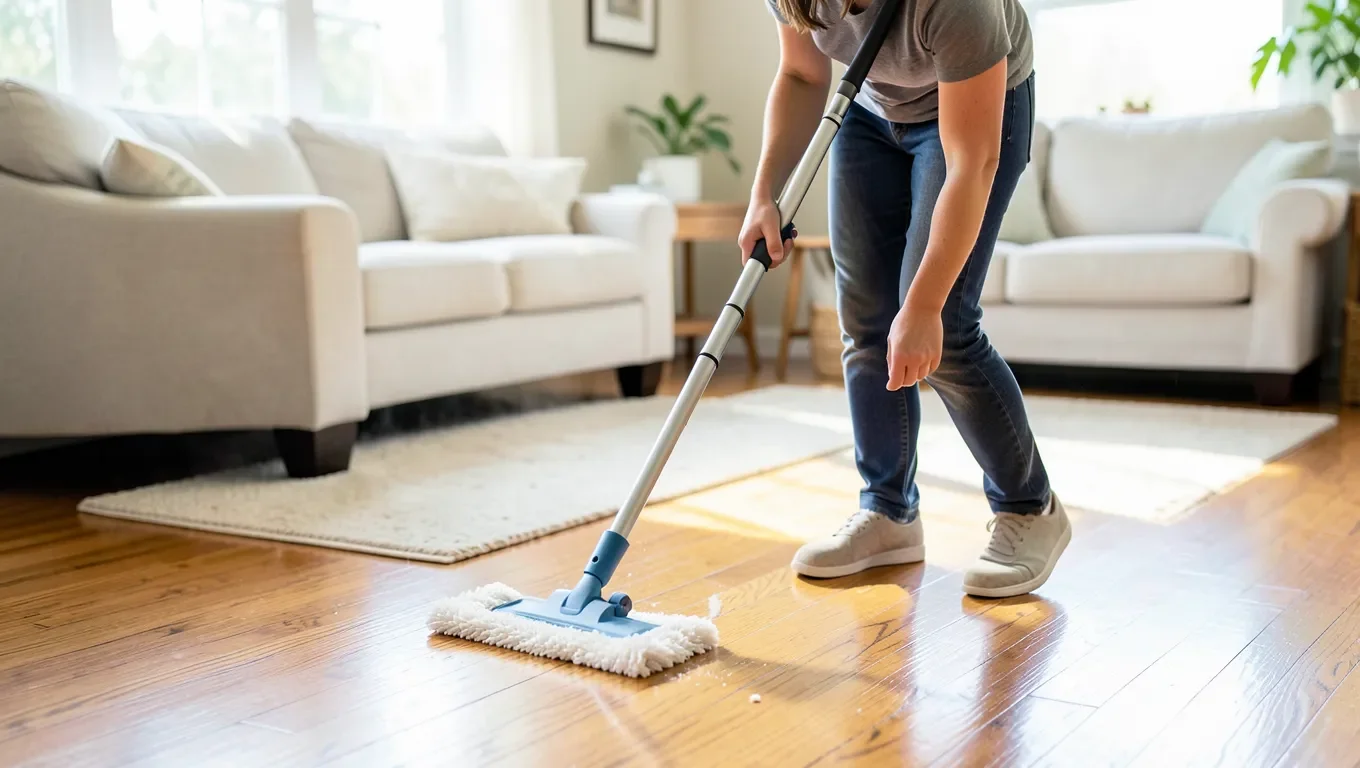
Use a microfiber flat mop, damp rather than wet — standing water is what actually causes swelling and cupping in hardwood, and it happens faster than most people expect on a floor with any seam or gap. Work in small sections with the grain, wringing the mop frequently so it’s picking up dirt rather than redistributing dirty water across the floor.
Dry Immediately
Let each section air dry, or go over it with a dry microfiber cloth right behind the mop if you want to avoid streaking. Never let a spill or mopped section sit wet — the amount of time water spends in contact with the wood matters more than the amount of water used.
How Often to Mop
Weekly damp-mopping is typical for a normal household; homes with pets, kids, or high foot traffic often need it more often, while a low-traffic room can go longer between moppings. Dry dust-mopping or vacuuming between wet moppings handles day-to-day dust and grit without adding any moisture exposure at all, and it’s worth doing more often than the wet mop regardless of your cleaning solution — it’s the single easiest way to cut down on the fine scratches that make a floor look dull over time.
Common Mistakes That Damage Hardwood Floors
- Over-wetting: a soaked mop or a puddle left standing is the fastest way to swell or cup boards — wring the mop until it’s just damp
- Undiluted vinegar or other acidic cleaners: even occasional full-strength use can etch a film finish noticeably
- Steam mops: heat and moisture together are worse for hardwood than either alone; most manufacturers explicitly warn against them
- Abrasive pads or scouring tools: these scratch the finish even when the cleaner itself is safe
- Oil soaps and wax-based cleaners on a poly finish: these build up a residue and can make refinishing later much harder
Most of these mistakes share a common thread: they’re each fine in isolation, once, but compound with repetition. A single mopping with an oil soap or a slightly-too-strong vinegar mix won’t visibly harm a floor; it’s the routine, weekly repetition of the same mistake that eventually shows up as a hazy finish, a sticky residue buildup, or fine surface scratching. That’s also why switching cleaners after noticing dullness doesn’t fix it immediately — a residue or etching pattern built up over months of the wrong routine takes a proper deep clean (sometimes a professional screen-and-recoat) to fully reverse, not just a switch to a better product going forward.
Other Cleaning Options
A pH-neutral commercial hardwood cleaner (Bona and Bruce are two of the most widely recommended by flooring manufacturers) is formulated specifically to clean without leaving residue or affecting the finish, and it’s the option most manufacturers’ warranties assume you’re using. For a homemade alternative genuinely gentler than vinegar, a few drops of pH-neutral dish soap in warm water works for light cleaning, though it can leave a residue if overused. For more homemade recipes and which ones actually suit which finish, see our full guide to homemade wood floor cleaner recipes.
Frequently Asked Questions
Can I Use Vinegar On All Types Of Hardwood Floors?
No. It’s only appropriate, heavily diluted and used occasionally, on sealed floors with a polyurethane or urethane film finish. Skip it entirely on unsealed, waxed, or oil-finished floors, where the acid contacts bare or lightly protected wood directly.
How Do I Remove Streaks From My Hardwood Floors After Mopping?
Streaks usually mean too much water or too much cleaning solution was used. Wring the mop out more thoroughly, and go over the floor with a dry microfiber cloth right after mopping to pick up any remaining moisture before it dries into a streak.
What’s The Best Mop To Use On Hardwood?
A flat microfiber mop is the standard recommendation — it holds less water than a sponge or string mop and doesn’t leave streaks. Avoid mops that saturate the floor or require wringing by hand, since consistent wringing is harder to control.
Is A 1:1 Vinegar-To-Water Ratio Safe For Regular Cleaning?
No — that ratio is far too concentrated for routine use and is more likely to dull or etch the finish than to clean it safely. If using vinegar at all, roughly ½ cup per gallon of water (about 1:32) is closer to what cleaning guides that recommend it actually specify, and it should still be used occasionally rather than as a weekly cleaner.
How Do I Tell What Finish My Floor Has Before Cleaning It?
Drip a few drops of water on an inconspicuous spot. If it beads on the surface for a while before slowly absorbing, you have a film finish (polyurethane/urethane) and water-based cleaners are generally fine when used sparingly. If the water absorbs and darkens the wood almost immediately, you have an oil or wax finish and need a finish-specific product instead.
Final Thoughts
Vinegar can clean a finished hardwood floor, but the popular 1:1 dilution is too strong for regular use and works against the finish it’s supposed to be cleaning. A heavily diluted, occasional vinegar solution is fine as a backup, but a pH-neutral commercial cleaner is the safer everyday choice — and knowing your floor’s actual finish type matters more than which cleaner you pick.
Sponsored / affiliate links. As an Amazon Associate I earn from qualifying purchases. I may earn additional commission from eligible campaigns.