Can You Paint MDF With Emulsion? Expert Tips Inside
Yes, you can paint MDF with emulsion paint. MDF takes emulsion well as long as it’s properly primed and sealed first – skip the primer and the exposed, absorbent fibers (especially on cut edges) soak up paint unevenly, leaving a blotchy, dull finish instead of the smooth one MDF is capable of.
MDF (medium-density fiberboard) is a popular choice for shelving, cabinet doors, skirting, and DIY furniture builds because it’s affordable, flat, and takes paint far more evenly than real wood once it’s prepped correctly. The catch is entirely in that prep – MDF’s compressed wood-fiber structure behaves very differently from solid wood or even plywood when it comes to absorbing moisture and paint.
Why MDF Needs Special Prep
Best Primer For This Job
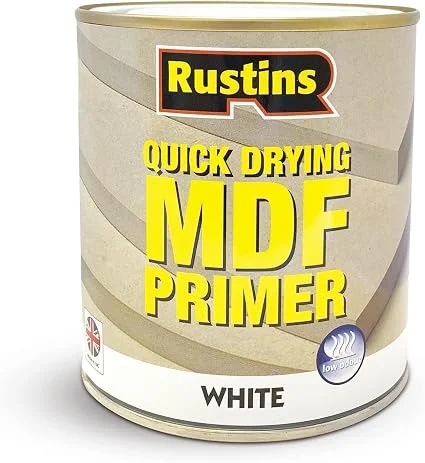 |
Rustins Quick Drying MDF White Primer, 500ml – $20.00 Formulated specifically for MDF’s absorbent, exposed-fiber cut edges – the single step that determines whether the emulsion coat on top looks flawless or blotchy.
|
MDF is made of fine wood fibers bonded with resin under heat and pressure. The faces are relatively sealed by that manufacturing process, but any cut, drilled, or routed edge exposes raw, highly absorbent fiber – and that raw edge will drink up paint (or worse, water) far faster than the rest of the board. Left unprimed, those edges swell slightly, soak paint in unevenly, and often telegraph a rough, fuzzy texture right through the topcoat.
Emulsion paint itself is water-based, which makes this more of an issue than it would be with an oil-based paint – water-based products are more likely to raise MDF’s surface fibers and cause visible swelling on unsealed edges. That’s exactly why priming first isn’t optional the way it sometimes is on solid wood.
Step-By-Step: Painting MDF With Emulsion
- Sand lightly. Use fine-grit sandpaper on all faces and edges to knock down any rough or fuzzy fiber, then wipe away all dust with a damp (not wet) cloth or tack cloth.
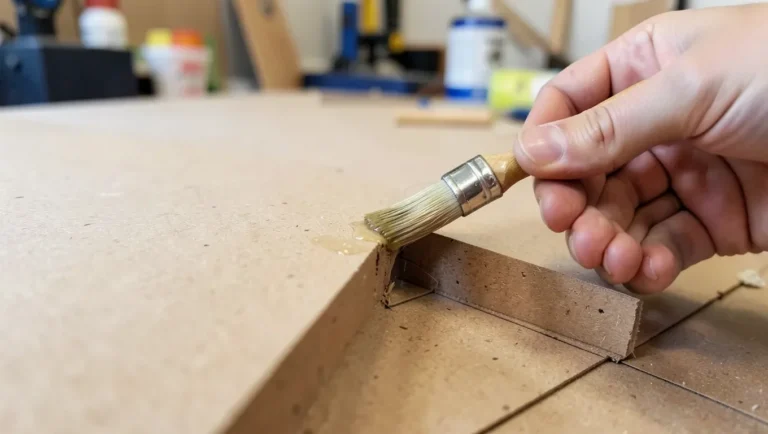
- Prime every surface, edges included. Use a primer formulated for MDF (a general all-purpose primer works in a pinch, but an MDF-specific one seals the fiber more reliably). Pay particular attention to cut and routed edges – they need it more than the flat faces do.
- Let the primer dry fully, then lightly sand it smooth before the topcoat – this knocks down any fiber the primer raised and gives the emulsion something consistent to grip.
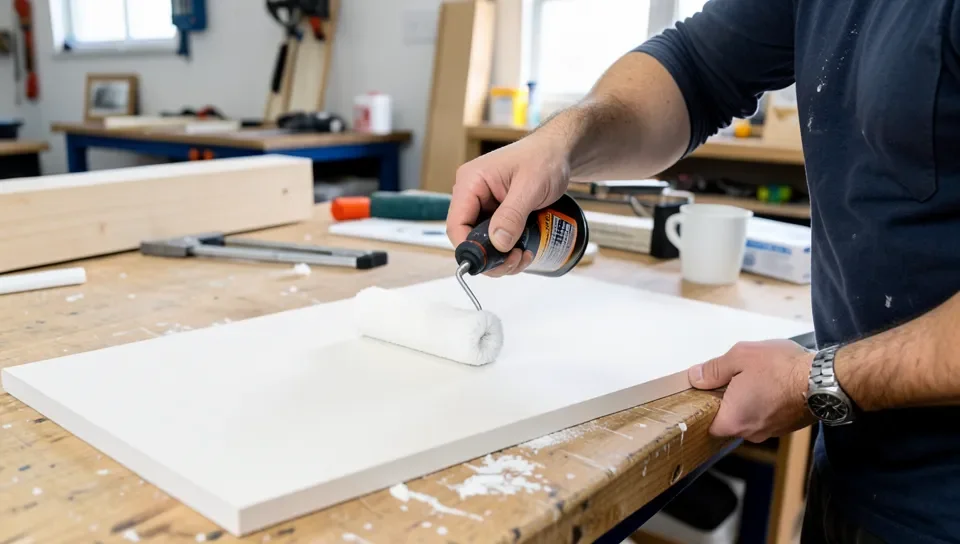
- Apply emulsion in thin coats. A foam roller gives the smoothest, most even finish on flat faces; a brush handles edges and corners better than a roller does.
- Let each coat dry completely before the next. Two thin coats consistently look better and last longer than one thick one, which is prone to drips, sagging, and a soft, easily marked surface.
Choosing Between A Brush And A Roller
A foam roller is the better default for large, flat MDF surfaces – it lays down paint evenly and leaves a smoother finish than a standard nap roller or a brush would on its own. A brush is still necessary for edges, corners, and any routed or recessed detail a roller can’t reach cleanly. Most projects use both: roller for the field, brush for the edges, working the brushed sections first so any brush marks can be leveled out as the rolled paint dries alongside them.
Emulsion Vs. Other Paint Types On MDF
Emulsion isn’t the only option for MDF, and it’s worth knowing where it fits relative to the alternatives before committing.
| Paint Type | Best For | Tradeoff |
|---|---|---|
| Emulsion (water-based) | Walls, shelving, low-traffic furniture faces | Softer finish, less scrub- and impact-resistant than specialist options |
| Acrylic eggshell/satin furniture paint | Cabinet doors, furniture that gets handled and wiped down often | Costs more than plain emulsion, but noticeably more durable |
| Oil-based paint | High-durability trim and skirting | Longer dry time, stronger odor, harder cleanup – increasingly less common for interior MDF work |
| Spray lacquer | The smoothest possible factory-style finish | Needs proper ventilation and spray equipment – not a brush-and-roller job |
For a shelf, wall panel, or anything that won’t see heavy daily handling, a properly primed emulsion finish is a perfectly durable, budget-friendly choice. For a cabinet door or anything that gets opened and touched constantly, stepping up to a dedicated furniture paint is worth the extra cost even though the prep process is identical either way.
Common Mistakes That Ruin The Finish
- Skipping the primer. This is the single most common cause of a poor result – paint over bare MDF, especially on an edge, almost always looks patchy.
- Applying paint too thick. A heavy coat is more likely to crack, sag, or drip, and it dries soft rather than durable.
- Not sanding between primer and topcoat. Skipping this step leaves whatever texture the primer raised baked into the final finish.
- Ignoring the edges. Faces get primed, edges get forgotten – and the edges are exactly where MDF is most vulnerable to swelling and uneven absorption.
- Painting over moisture. MDF that’s damp, even slightly, won’t take paint or primer evenly and risks swelling permanently once painted over.
Caring For Painted MDF
Painted MDF holds up well for everyday use but stays vulnerable to standing water and sharp impacts, since the substrate underneath is still MDF regardless of how well it’s sealed. Wipe it down with a soft, dry or barely-damp cloth rather than a wet one, use coasters or pads under anything that could scratch or leave rings, and address any chips or scratches promptly with a small touch-up before moisture gets a path into the exposed fiber underneath.
Frequently Asked Questions
Is emulsion OK for MDF?
Yes. Emulsion works well on MDF as long as the surface is properly sanded and primed first – primer is what prevents the blotchy, uneven absorption that raw MDF causes with any water-based paint.
What type of paint should I use on MDF?
Water-based acrylic or latex emulsion works well once the MDF is primed. Oil-based paints are usually best avoided on MDF since the surface preparation and drying behavior differ, and a proper MDF primer already solves the absorption issue emulsion would otherwise run into.
Can I paint MDF without primer?
It’s possible but not recommended. Skipping primer on MDF typically leads to uneven, blotchy paint absorption, especially on cut edges, and uses noticeably more paint to get even partial coverage.
Can you paint MDF panelling with emulsion?
Yes, using the same process as any other MDF piece: sand, prime (edges included), let it dry, then apply emulsion in thin, even coats with a roller for the flat panel faces and a brush for edges and joints.
Conclusion
MDF and emulsion paint are a good combination once the prep work is done properly: sand, prime every surface including the edges, let it dry, sand lightly again, then apply two thin coats. Skip the primer step and even a good emulsion paint will show it.
Sponsored / affiliate links. As an Amazon Associate I earn from qualifying purchases. I may earn additional commission from eligible campaigns.