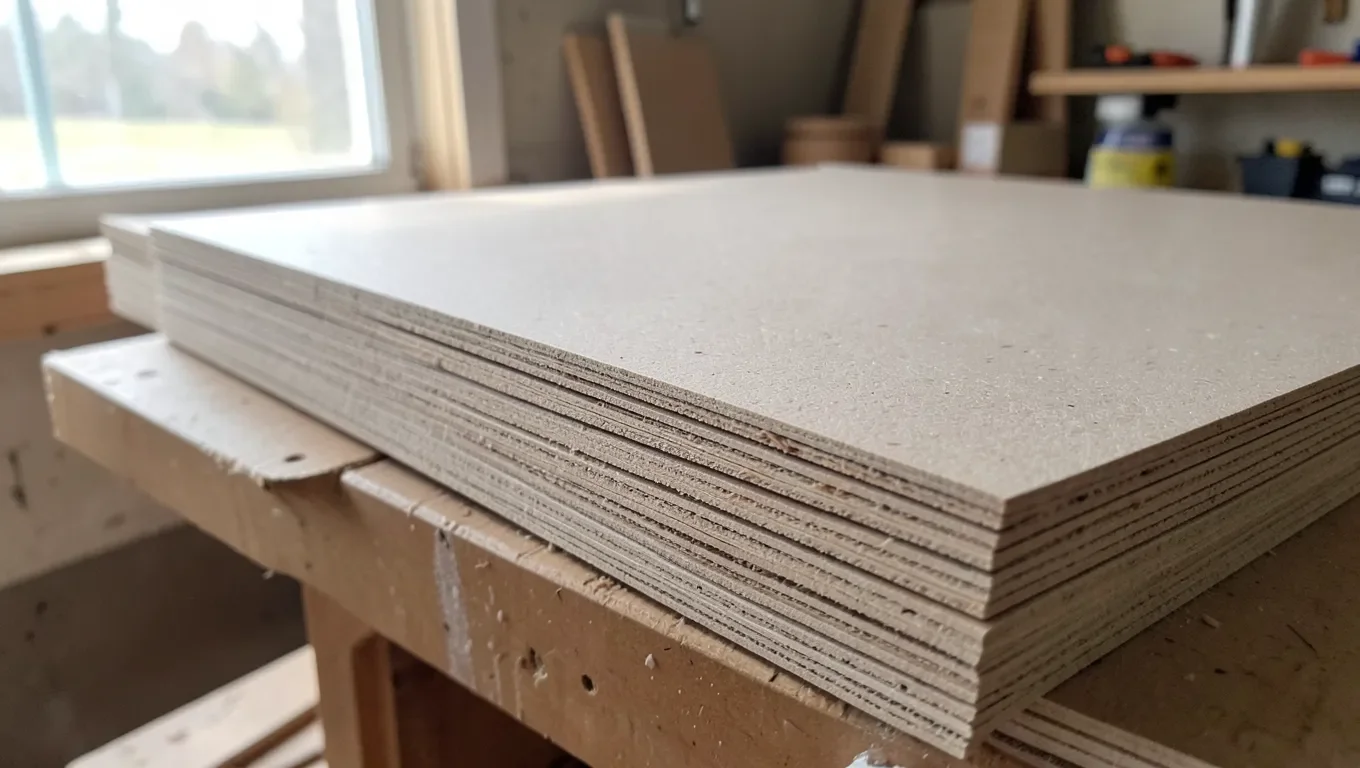
Does MDF Expand and Contract With Humidity? Here’s How Much
Yes, MDF expands and contracts with changes in humidity — it absorbs and releases moisture through its wood fibers just like solid wood does, but because it has no grain to resist that movement, it’s actually more prone to swelling and edge damage than plywood or solid lumber. Under normal indoor humidity, a sealed MDF panel typically moves by only a few thousandths of an inch. The real risk is a raw, unsealed edge left exposed to damp air or standing water, where swelling can be dramatic and permanent.
A lot of guides oversimplify this into “MDF doesn’t move like real wood,” which isn’t quite right. MDF absolutely moves — the myth is that it moves the same predictable way solid wood does. It doesn’t. Here’s what’s actually happening inside the board, how much movement to expect, and exactly how to stop it before it ruins a project.
Does MDF Expand and Contract? The Short Answer
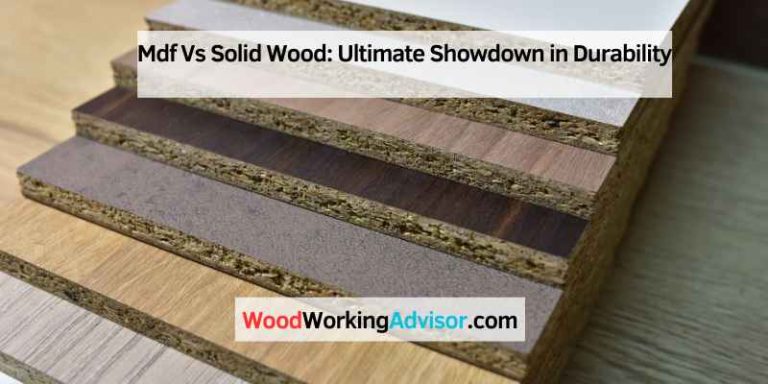
MDF (medium-density fiberboard) is made from wood fibers, wax, and resin, pressed under heat into a dense, uniform panel with no grain direction. That lack of grain is why MDF doesn’t warp or cup the way a solid wood board can — but it’s also why MDF has nothing to resist moisture once it gets in. Every fiber in the board can absorb water, so instead of moving mainly in one direction like solid wood, MDF swells in whichever direction is weakest, which is almost always at a cut or drilled edge that isn’t sealed. Before installing MDF anywhere that sees temperature or humidity swings, sealing every exposed edge is the single step that prevents most of the problems below.
Best Primer For Sealing MDF Edges
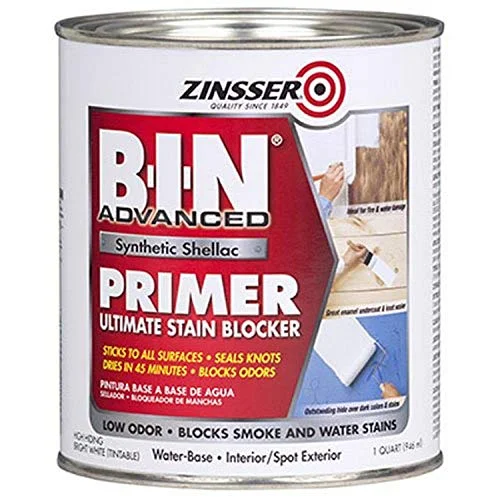 |
Zinsser B-I-N Shellac-Base Primer – $23.98 A shellac-base primer soaks into raw MDF fibers and seals them off from moisture, which is exactly what stops the swelling this article covers.
|
Why MDF Moves: What’s Actually Happening Inside the Board
Solid wood is made of long fiber cells that all run the same direction, so it swells and shrinks mostly across the grain and barely at all along its length. MDF is different: it’s manufactured by breaking wood down into loose fibers, coating them in resin, and pressing them flat under heat, which scrambles the fiber direction completely. That’s what gives MDF its smooth, grain-free surface, but it also means there’s no “weak direction” the way there is in solid lumber — every fiber, in every direction, can pull in moisture. When humidity rises, water vapor works into the resin-coated fibers and makes them swell; when the air dries out, the fibers give that moisture back up and shrink again. On a sealed, painted, or laminated face, this happens slowly and evenly. On a bare cut edge, it happens fast, because raw fiber ends are directly exposed to the air with nothing blocking them.
How Much Does MDF Actually Expand?
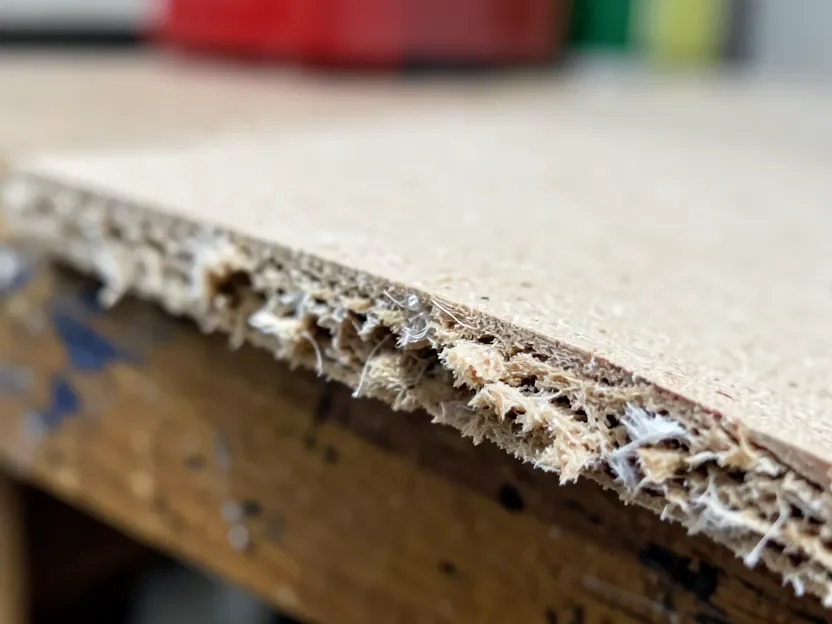
For everyday indoor humidity swings, sealed standard MDF typically changes dimension by roughly 0.3% to 0.5%. On a 3/4-inch-thick panel, that works out to a few thousandths of an inch — small enough that you won’t see it on the flat face of a painted cabinet door. MDF manufacturers generally recommend keeping the material in the 35% to 55% relative humidity range, which covers most climate-controlled homes for most of the year. The numbers change fast once you’re talking about an unsealed edge instead of a sealed face: raw MDF edges left in prolonged damp conditions can pull in moisture equal to several percent of their own weight, and unlike the even swelling on a sealed panel, that shows up as visible bulging, a fuzzy or crumbling texture, and permanent deformation that sanding won’t fix.
Why the Edges Move More Than the Face
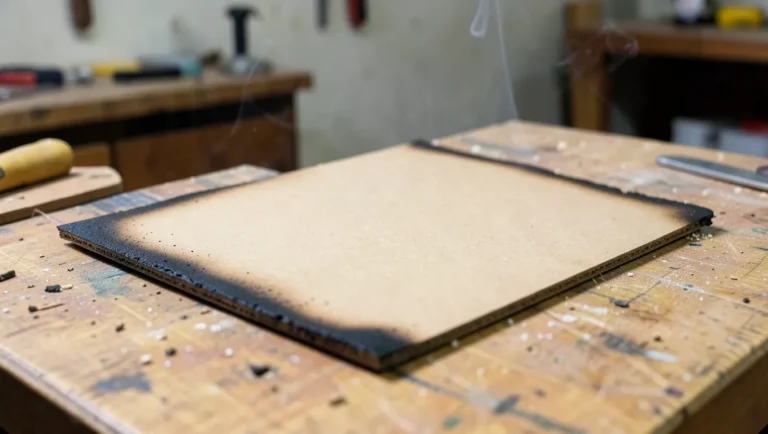
Every factory-made sheet of MDF already has its two flat faces smoothed and partially sealed during manufacturing, which slows moisture absorption there significantly. The moment you cut, rout, or drill into that sheet, you expose raw fiber ends that have none of that protection — think of it like the difference between painted drywall and the crumbly gypsum core you’d expose by snapping it in half. That’s why the same board can sit in a room for years with no visible problem on its face while a single unsealed cut edge swells within weeks of sitting near a leaky pipe or a humid bathroom. It’s also why painting MDF the right way always starts with sealing the edges first, not just rolling primer over the face — skip that step and the edges will telegraph swelling through the paint even if the rest of the panel looks fine.
MDF vs. Plywood vs. Solid Wood: Which Moves More
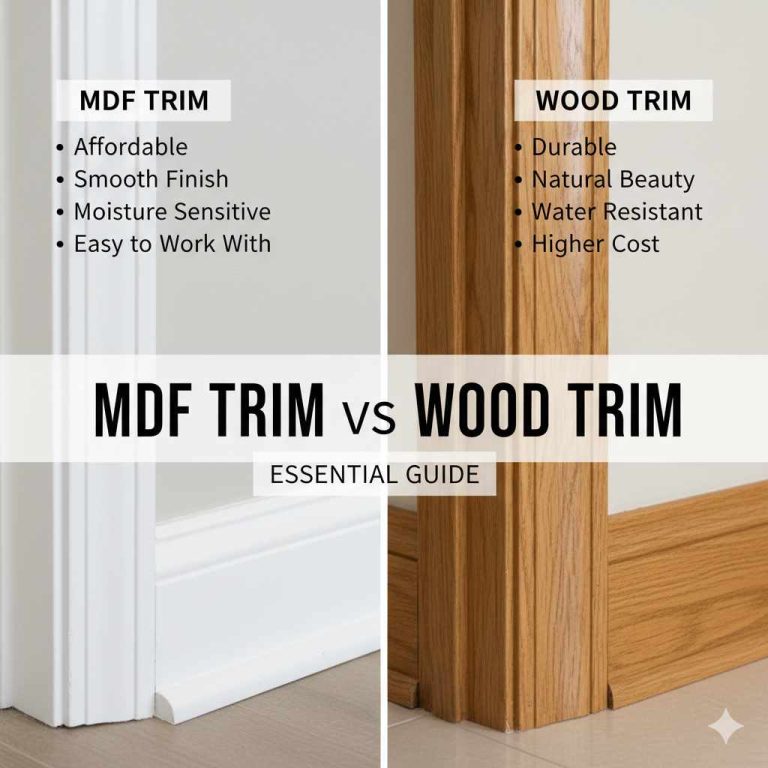
Plywood is the most dimensionally stable of the three for humidity swings, because its cross-laminated layers run in alternating grain directions, and each layer resists the movement of the one next to it. Solid wood moves the most predictably — it consistently expands and contracts across the grain with the seasons, which is why furniture makers build in wood movement gaps as a matter of course. MDF sits in an unusual spot: its overall dimensional change is often smaller than solid wood’s seasonal swing, but because it has no grain to organize that movement, the little bit it does move is more likely to show up as permanent damage — swelling, crumbling, or delamination — rather than the reversible expansion and contraction solid wood is built to handle. In short, MDF moves less overall but recovers worse.
Standard MDF vs. Moisture-Resistant MDF
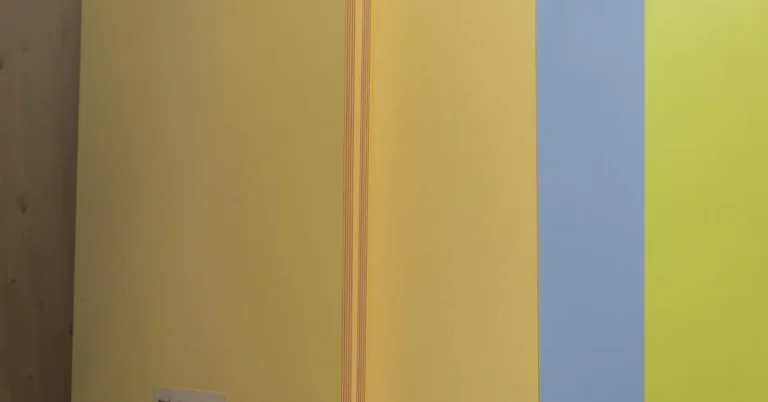
Moisture-resistant MDF, often sold as MR-MDF or green-core MDF (it’s usually tinted green or blue to distinguish it at the lumber yard), uses wax sizing and different resin formulations to slow how fast the fibers take on water. It’s a real improvement over standard MDF and is the right call for bathroom vanities, kitchen cabinet interiors, or anywhere that sees regular humidity or occasional splashes. It is not waterproof, though — standing water or constant soaking will eventually swell MR-MDF too, and its edges still need the same sealing standard MDF does. Treat MR-MDF as buying you more margin for error, not as a reason to skip sealing altogether.
How to Seal MDF So It Stops Moving
Sealing every exposed edge is what actually prevents the swelling described above, and it matters more than sealing the faces since the faces already have some factory protection. A shellac-base primer works better here than a standard latex primer because it soaks into the porous cut fibers rather than sitting on top of them, giving a denser moisture barrier in a single coat. Apply it generously to every raw edge, including screw holes and any spots where you’ve routed a profile, let it dry fully, then lightly sand and follow with your regular paint or finish. For faces and edges that will see real humidity, such as a bathroom cabinet, two coats of sealer plus a quality top coat is worth the extra time. Keep the finished piece within a stable indoor humidity range afterward — sealing slows moisture absorption, it doesn’t stop it completely if the board sits in standing water or a consistently damp room.
Where MDF Should Never Go Unsealed
Skip unsealed MDF entirely in any spot with direct water exposure or sustained high humidity: under sinks without a moisture barrier, exterior applications of any kind, near dishwashers or washing machines, and anywhere it could sit on a damp concrete floor. Even moisture-resistant MDF is a poor fit for permanently wet locations like shower surrounds. For those spots, solid wood, marine-grade plywood, or a fully waterproofed substrate will hold up far better than any grade of MDF, sealed or not.
Frequently Asked Questions
Does MDF expand when it absorbs water?
Yes. MDF is made of compressed wood fibers with no grain direction to resist moisture, so when it absorbs water the fibers swell in every direction at once. Unlike solid wood, which mainly moves across the grain, MDF has no stable direction, so soaked MDF often bulges, delaminates at the surface, or crumbles at the edges instead of just changing size evenly.
How much does MDF actually expand from humidity?
Under normal indoor humidity swings, standard interior MDF typically moves in the range of 0.3% to 0.5% in thickness, which is a few thousandths of an inch on a 3/4-inch panel and usually not visible on the flat faces. The real damage shows up at unsealed cut edges, which can absorb several times more moisture by weight than the sealed faces and swell by a visible fraction of an inch after prolonged damp exposure.
What temperature can MDF handle?
Standard MDF holds up fine at normal room temperatures and is generally rated for continuous use up to around 150 to 175 degrees Fahrenheit before the resin binding the fibers starts to break down. Temperature swings by themselves cause far less movement than humidity does; the bigger risk with heat is usually a nearby source, like a radiator or a car interior, driving off moisture unevenly and causing the board to cup or crack rather than swell.
Does moisture-resistant MDF still expand?
Moisture-resistant MDF (often labeled MR-MDF or green-core MDF) uses wax additives and different resins to slow water absorption, but it is not waterproof and will still expand if it stays wet or humid for long enough. It buys time and resists everyday humidity and light splashes far better than standard MDF, which is why it’s the right choice for kitchens and bathrooms, but the edges still need sealing the same as standard MDF.
Conclusion
MDF does expand and contract with humidity, and it’s more vulnerable to that movement than plywood or solid wood because it has no grain to organize how it swells. Under normal indoor conditions the change is small and mostly invisible, but an unsealed edge is a different story — that’s where real damage happens. Seal every cut edge before finishing, choose moisture-resistant MDF for kitchens and bathrooms, and keep it away from standing water and constantly damp spots, and dimensional movement stops being a problem worth worrying about.
Sponsored / affiliate links. As an Amazon Associate I earn from qualifying purchases. I may earn additional commission from eligible campaigns.
 MECCANIXITY MDF Wood Board for Crafts,3/18"(4mm) Thick Medium Density Fiberboard Unfinished Wood for DIY Projects, Art Classes, Carpentry, Painting (12 x 16 in,2Pcs)
 MECCANIXITY MDF Wood Board for Crafts,1/12"(2mm) Thick Medium Density Fiberboard Unfinished Wood for DIY Projects, Art Classes, Carpentry, Painting (12 x 8 in,2Pcs)