Can You Put Epoxy Resin Over Polyurethane? Prep Guide
You can sometimes apply epoxy resin over polyurethane, but it is not an automatic yes. The polyurethane must be fully cured, firmly bonded, clean, and uniformly deglossed—and the epoxy manufacturer must allow the combination. Some tabletop-epoxy brands accept a tested polyurethane seal coat; others specifically warn against water-based polyurethane.
If you cannot identify the existing finish or verify compatibility, stripping to sound wood or using a complete coating system from one manufacturer is safer than trusting a large pour to an unknown layer.
The Compatibility Gate: Check Before You Pour
Start with the exact product labels. “Polyurethane” can mean an oil-modified wood finish, a water-based clear coat, or a two-component industrial coating; they do not behave the same. TotalBoat says a tested clear polyurethane seal coat can work under its TableTop Epoxy, while PrimaLoc warns against applying its epoxy directly over water-based polyurethane. Those two manufacturer positions show why a generic yes/no answer is unreliable.
Tabletop Epoxy Kits to Compare

Why it fits: TotalBoat publishes separate guidance about using its TableTop Epoxy over a tested clear polyurethane seal coat, so readers can check one named system instead of guessing.
Main drawback: A 1-gallon kit is excessive for a tiny test, and the polyurethane combination still requires manufacturer approval.


| Surface condition | Decision |
|---|---|
| Unknown, soft, waxed, oily, or peeling finish | Do not pour; remove the weak or contaminated layer |
| Water-based polyurethane | High compatibility risk; require written epoxy-maker approval and a test |
| Fully cured, sound oil-based polyurethane | Possible for some systems after cleaning, abrasion, and testing |
| Bare, dry wood | Use the epoxy maker’s recommended seal coat and flood-coat process |
How to Prepare Polyurethane for Epoxy
- Identify both products. Record the polyurethane type, application date, full-cure requirement, epoxy model, pour depth, and temperature range.
- Check adhesion of the old finish. If tape, a scraper at a damaged edge, or normal sanding lifts the polyurethane, the epoxy will only be bonded to a failing layer.
- Remove wax, silicone polish, grease, and residue with a cleaner approved by both manufacturers. Do not substitute an oily solvent that can leave a film.
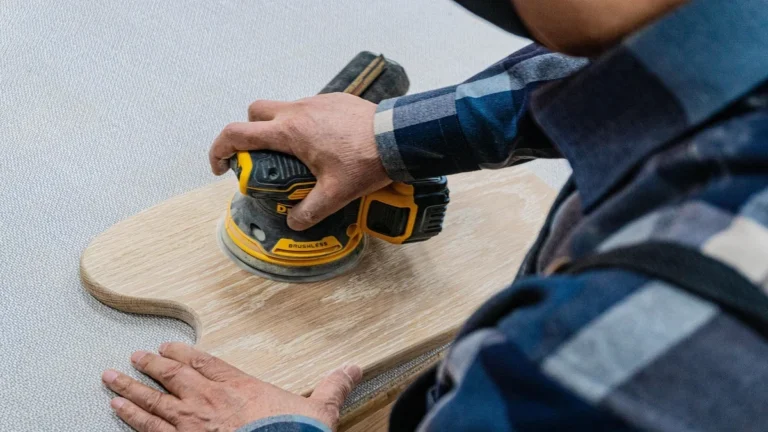
- Abrade the entire glossy surface to an even matte appearance using the grit specified by the epoxy maker. Do not leave shiny islands around edges or profiles.
- Remove sanding dust using the approved vacuum-and-wipe method and allow any cleaner to evaporate fully.
- Make a test panel with the same wood, polyurethane coats, cure time, sanding, epoxy batch, depth, and room conditions.
- After full epoxy cure, inspect for fisheyes, wrinkles, soft spots, cloudiness, and edge lifting. Perform an adhesion check before committing to the project.
Why Epoxy Fails Over an Existing Finish
The polyurethane was not fully cured
Dry-to-touch is not full cure. Solvent, water, or coalescing agents still leaving the film can interfere with epoxy wetting or be trapped under the pour. Follow the full-cure time and extend it when conditions were cool, humid, or coats were heavy.
The surface stayed glossy or contaminated
Cured coatings need a sound mechanical key unless the manufacturer specifies a chemical recoat window. Wax, furniture polish, silicone, oil, and skin contamination can make epoxy pull into fisheyes.
Heat and pour depth exceeded the system
Epoxy cures exothermically. A pour deeper than the product limit can overheat, yellow, crack, or damage an underlying finish. Use the correct casting or tabletop system and obey batch-size and depth limits.
Seal Coat or Full Removal?
A compatible thin seal coat can reduce bubbles from porous wood, but it does not repair a weak polyurethane layer. If the old finish is peeling, flexible, cloudy, wax-contaminated, or unknown, removal is the better foundation. TotalBoat notes that its own thin epoxy seal coat creates a stronger bond to bare wood than relying on polyurethane.
See TotalBoat’s polyurethane seal-coat guidance and PrimaLoc’s water-based polyurethane warning. For bare wood preparation, use our guide on sealing wood before epoxy.
Safety and Cure Control
Read both SDS documents. Wear the glove material and eye protection they specify, provide ventilation, keep the work within the stated temperature range, and measure resin and hardener accurately. Do not use a torch near solvent vapors or overheat the polyurethane below the epoxy.
Bottom Line
Epoxy over polyurethane is a system-specific repair or finishing choice, not a universal shortcut. Written compatibility, full cure, sound adhesion, complete deglossing, a clean surface, and a representative test panel are the minimum gates. If any gate fails, remove the polyurethane or return to one manufacturer’s approved coating system.
Frequently Asked Questions
Will epoxy stick to polyurethane?
Sometimes. A fully cured, clean, compatible polyurethane that has been uniformly deglossed may accept epoxy, but manufacturers disagree across systems. Check both product instructions and run a complete test panel before coating the project.
Do I need to sand polyurethane before epoxy?
Unless the epoxy maker explicitly approves a chemical recoat window, cured polyurethane should be deglossed for mechanical adhesion. Use the grit and cleaning method specified by the coating manufacturers.
Can epoxy go over water-based polyurethane?
Do not assume it can. Some epoxy manufacturers warn that their product may wrinkle, soften, fisheye, or bond poorly over water-based polyurethane. A brand-specific compatibility check is required.
How long should polyurethane cure before epoxy?
Use the polyurethane label’s full-cure time, not its dry-to-touch or recoat time. Temperature, humidity, film thickness, and number of coats can extend the cure.
What is the safest alternative?
For bare wood, many epoxy makers prefer a thin seal coat of their own epoxy system before the flood coat. This avoids relying on an unknown polyurethane-to-epoxy bond.
Sponsored / affiliate links. As an Amazon Associate I earn from qualifying purchases. I may earn additional commission from eligible campaigns.