Can You Wipe On Polycrylic? What the Minwax Label Actually Says
Yes, you can wipe on a water-based Minwax finish, but you need the right can. The label on the standard Minwax Polycrylic Protective Finish tells you to apply it with a high-quality synthetic bristle brush and never mentions a cloth, while Minwax sells a separate Water Based Wipe-On Poly that is written for a lint-free cloth. The bottle itself reads "Wipe-On Polycrylic."
That difference matters because most pages on this topic quietly treat the two products as one. Below is what the manufacturer pages actually say (I read the Polycrylic and Water Based Wipe-On Poly directions on September 30, 2026), a side-by-side comparison, and a step-by-step wipe-on routine that follows the label. I have not personally tested either product for this article, so everything below is label guidance plus general finishing practice, and I say which is which.
The Short Answer: Wipe On the Wipe-On Version
| BEST WIPE-ON PICK | |
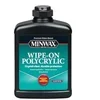 |
Minwax Water Based Wipe-On Poly, Clear Satin, 1 Pint
|
| View Our Pick on Amazon | |
If you want to rub a clear water-based finish on with a rag, buy the product Minwax made for that. Its directions say to put a liberal amount on a clean, soft, lint-free cloth and rub it into the wood, let it dry at least 2 to 3 hours, sand lightly with very fine (220 grit) sandpaper, remove the dust, and repeat.
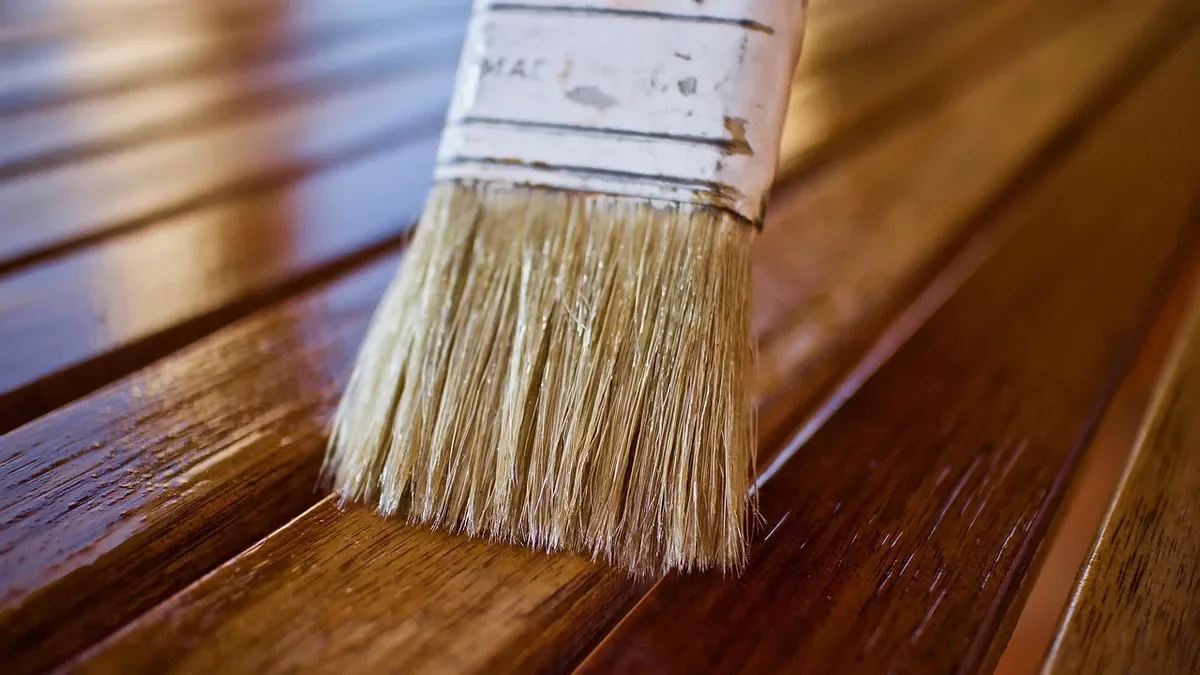
If you already own a can of regular Polycrylic, the label’s method is a thin coat with a synthetic bristle brush, applied in the direction of the grain without over-brushing. Wiping it on is not what that label describes, so if you try it anyway you are off the printed directions. For a brushed application, our guide to how to apply Minwax Polycrylic covers it in detail.
What the Minwax Labels Actually Say
Minwax sells three products people mix up when they ask whether you can wipe on Polycrylic. Here is what each page lists for application and drying.
| Detail | Polycrylic Protective Finish | Water Based Wipe-On Poly | Oil-Based Wipe-On Poly |
|---|---|---|---|
| Applicator on the label | High-quality synthetic bristle brush | Clean, soft, lint-free cloth | Clean, soft, lint-free cloth |
| Before use | Stir well, do not shake | No stir or shake instruction on the page | Shake before and during use |
| Wait before sanding | At least 2 hours | At least 2 to 3 hours | 2 to 3 hours |
| Sanding between coats | Very fine, 220 grit; no steel wool | Very fine, 220 grit | Fine, 220 grit |
| Coats | Three recommended | Second coat, third recommended | Second coat, third optional |
| Final dry time | 3 hours light handling, 24 hours normal use | 24 hours before normal use | 24 hours before light use |
| Sizes listed | 11.5 oz, 1/2 pint, 1 quart, 1 gallon | 1 pint (and a 275-gallon tote) | 1 pint, 1 quart |
| Cleanup | Water | Water | Regionally compliant cleaner |
| Rag fire warning | Not on the page | Not on the page | Yes: soaked rags may spontaneously catch fire |
The row that matters most is the last one. The oil-based Wipe-On Poly label carries a DANGER warning that rags, steel wool and sanding residue soaked with the product may spontaneously catch fire if improperly discarded, and tells you to seal them in a water-filled metal container. That warning is written for the oil-based product. I did not find it in the Polycrylic or Water Based Wipe-On Poly directions I read, which is a real reason to keep the two products straight. If you do use oil-based Wipe-On Poly instead, follow its warning exactly.
Two other label limits apply to Polycrylic in any form. Minwax says it should not go over red mahogany stains (use Fast-Drying Polyurethane or Water Based Oil-Modified Polyurethane instead), and it is not recommended for floors because high-traffic areas would need more frequent recoating.
How to Wipe On Water Based Wipe-On Poly, Step by Step
These steps follow the Minwax label for the Water Based Wipe-On Poly. Items marked as general practice are my additions, not label text.
- Prepare the surface. The label wants it dry and free of paint, wax, grease, polish and failing old finish. Sand to a smooth, uniform surface and remove all dust.
- Stain first if you want color. The label says to follow the stain’s own directions for application and dry times. The Polycrylic page specifically says to wait at least 24 hours before finishing over Minwax Wood Finish stain.
- Load the cloth. Use a clean, soft, lint-free cloth. Put a liberal amount of finish on the cloth, then rub it into the wood.
- Wait. Let it dry at least 2 to 3 hours.
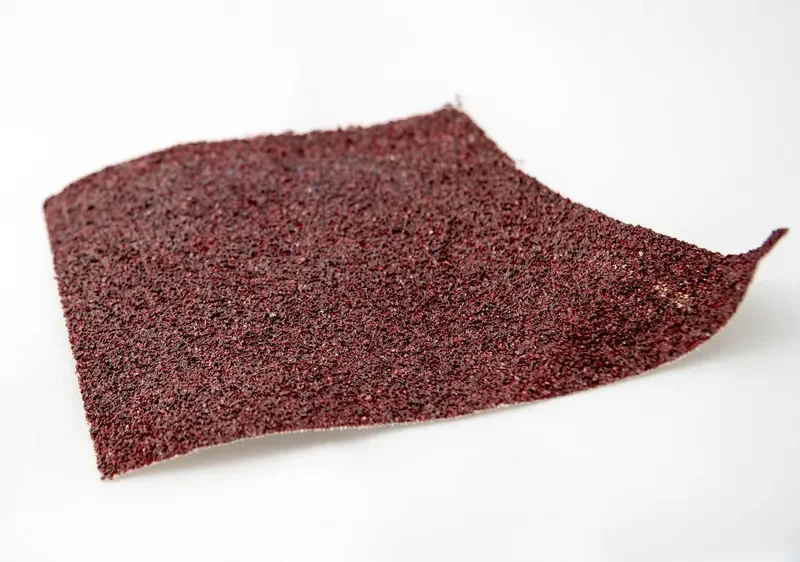
- Sand lightly. Use very fine sandpaper, 220 grit, over the entire surface, then remove all sanding dust.
- Second coat. Apply it the same way as the first. A third coat is recommended on the label.
- Let it cure. Allow the final coat to dry 24 hours before normal use.
General practice, not label text: work with the grain, keep a fresh section of cloth ready so you are not pushing old finish and dust around, and check the surface under a raking light before you walk away, because wiped coats can look even while wet and show missed spots once dry. Pour only what you need into a disposable cup. The label says not to transfer contents to other containers for storage, so do not pour leftovers back or keep them in the cup.
Wipe-On or Brush-On: Which Fits Your Project
The labels do not rank the two methods, so this table is my own reading of them.
| Project | Sensible choice | Why |
|---|---|---|
| Chair spindles, turned legs, small trim | Wipe-on version | A cloth reaches curves and small parts without a brush to load and clean |
| Picture frames and craft pieces | Wipe-on version | Small surface, and a pint container is plenty |
| Large flat tabletop or shelf | Polycrylic with a synthetic brush | The Polycrylic label is written for a brush and sold in quarts and gallons |
| Wood floor | Neither | Minwax says Polycrylic is not recommended for floors and points to polyurethane |
| Over red mahogany stain | Neither | Minwax says to use Fast-Drying Polyurethane or Water Based Oil-Modified Polyurethane |
| Piece that will see heavy wear | Read our comparison first | See Polycrylic vs polyurethane before choosing |
If you would rather spray, that is a third route with its own rules, covered in can you spray Minwax Polycrylic and Polycrylic spray vs brush.
Common Mistakes When Wiping On a Water-Based Finish
- Grabbing the wrong can. Standard Polycrylic and Wipe-On Poly are different products with different directions.
- Shaking the can. The Polycrylic label says to stir, do not shake, and notes the finish looks milky in the can but dries crystal clear.
- Skipping the sanding step. Both labels put a 220 grit sanding between coats, for an even finish and proper adhesion. Do not use steel wool on Polycrylic.
- Rushing the wait. The labels give 2 to 3 hours before sanding and 24 hours before normal use. See how long between coats of Polycrylic and wipe-on poly drying times for more.
- Mixing up rag safety. The spontaneous-combustion warning belongs to the oil-based product’s label. Treat any oil-soaked rags as that label directs.
- Poor ventilation. Both water-based labels say to use only with adequate ventilation and to increase fresh air or leave the area if you get watering eyes, headaches or dizziness.
Frequently Asked Questions
Can you wipe on regular Minwax Polycrylic with a cloth?
The Polycrylic label directs a thin coat with a high-quality synthetic bristle brush and does not describe cloth application. If you want to use a cloth, Minwax makes a Water Based Wipe-On Poly whose directions call for a clean, soft, lint-free cloth.
Is Wipe-On Poly the same as Polycrylic?
Not on Minwax’s site. They are listed as separate products with separate directions, although the Water Based Wipe-On Poly bottle is labeled Wipe-On Polycrylic. Check the product name and the directions on the can you are holding.
How many coats of wipe-on water-based finish do I need?
The Water Based Wipe-On Poly directions call for a second coat applied the same way as the first and recommend a third. Standard Polycrylic recommends three coats.
How long does wipe-on polycrylic take to dry?
Wait at least 2 to 3 hours before sanding and recoating, and allow 24 hours after the final coat before normal use, per the Water Based Wipe-On Poly directions.
Conclusion
You can wipe on a water-based Minwax finish as long as it is the wipe-on product. Buy the Water Based Wipe-On Poly for cloth work, keep standard Polycrylic for brushing, and follow the label’s sand-between-coats and dry-time steps. For related guidance, see how many coats of Polycrylic you need.
Sponsored / affiliate links. As an Amazon Associate I earn from qualifying purchases. I may earn additional commission from eligible campaigns.