Can You Put Laminate Over Hardwood? Yes, If It Passes 3 Checks
Yes, you can put laminate flooring over hardwood, as long as the hardwood is structurally sound, flat, and dry. Laminate is a floating floor, so it never gets nailed or glued to the wood underneath it – which means the hardwood mainly needs to pass three checks: no rot or loose boards, no more than 3/16 inch of height variation over any 10-foot span, and a moisture content under 12%. Skip any one of those checks and the new floor can cup, gap at the seams, or fail at the joints within a year.
Most guides stop at “make sure it’s flat and clean.” Below is the actual flatness tolerance installers measure to, the moisture threshold that matters more than people think, and the two problems – door threshold height and sound – that show up after installation, not during it.
Check These Three Things Before You Buy Laminate
Best Moisture Barrier For This Job
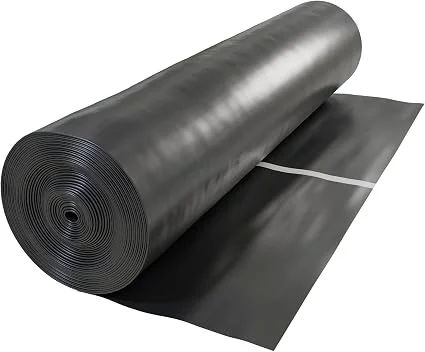 |
Roberts 70-118 Moisture Barricade, 6 mil – $94.95 A 6 mil poly film vapor barrier that goes down before your underlayment – the extra step most laminate-over-hardwood failures skip.
|
1. Flatness – 3/16 inch per 10 feet, no more. Lay a 10-foot straightedge across the hardwood in the direction you’ll install the planks, and slide a tape measure under it at the worst gap you see. Most laminate manufacturers, and ASTM F-710, put the limit at 3/16 inch of deviation over that 10-foot run. Go past it and click-lock laminate joints work loose at the high and low spots, even with a good underlayment underneath.
2. Moisture content – under 12%. A pin-type moisture meter (they run $30–$50) pressed into the hardwood should read below 12%. Hardwood over a basement, a crawlspace, or a slab is the case worth testing carefully – those subfloors trap moisture that hardwood absorbs and later releases into the laminate core, causing it to swell at the seams.
3. Structural condition. Loose, cupped, or rotted boards need to be re-nailed, sanded flat, or replaced before you cover them – laminate doesn’t add rigidity, it just sits on top of whatever’s there. For general prep, our guide on reading hardwood floor condition and sheen covers how to spot wear that needs fixing first.
What Underlayment and Vapor Barrier You Actually Need
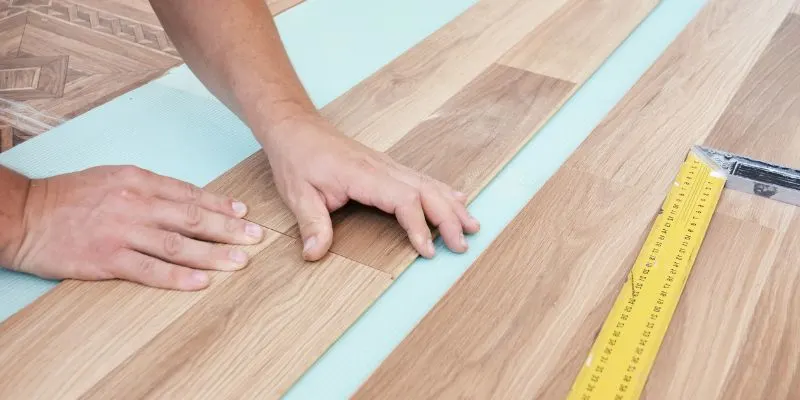
Underlayment isn’t optional, and it does two separate jobs: cushioning/sound dampening, and moisture protection. Some laminate comes with a thin foam pad pre-attached to the bottom of each plank – that only handles cushioning. If the hardwood sits over a slab, a crawlspace, or a room that runs humid, add a standalone 6 mil polyethylene vapor barrier underneath the underlayment, taped at the seams. Skipping the separate vapor barrier because the planks already have “attached underlayment” is one of the more common reasons laminate over hardwood swells at the seams within the first year.
For the laminate flooring underlayment itself – thickness, foam vs. cork, and how it affects sound – see our full breakdown in choosing the right laminate underlayment.
The Expansion Gap: Why 1/4 Inch Matters More Than It Looks
Laminate is a floating floor – it’s never fastened down – so it needs room to expand and contract with humidity. Leave a 1/4 to 3/8 inch gap between the laminate and every wall, cabinet base, and fixed object around the room’s perimeter. Spacers (usually included in laminate flooring kits) hold this gap while you install, and it gets hidden afterward by baseboard, quarter-round, or a door threshold transition strip.
Skip the gap and the floor has nowhere to go when it expands in humid months – the classic result is buckling, where a row of planks pops upward because they’re pressed against a wall with no room to move. This is also where doorway transitions get missed: adding laminate over hardwood changes the finished floor height by the thickness of the underlayment plus the plank (often 3/8 to 1/2 inch total), which can leave a noticeable lip at a doorway threshold unless you plan for a reducer strip or T-molding there.
Step-by-Step Installation Over Hardwood
Once the hardwood passes the flatness, moisture, and condition checks above, the installation itself is straightforward:
- Clean the hardwood completely – vacuum, then wipe with a barely damp cloth so no grit is left to telegraph through the underlayment.
- Roll out the vapor barrier if the room needs one (see above), taping seams with the manufacturer’s seam tape.
- Add the underlayment on top, running it perpendicular to the direction the laminate will run, and tape the seams.
- Let the laminate planks acclimate in the room, still boxed, for 48 hours before opening – this lets them adjust to the room’s temperature and humidity so they don’t shrink or swell right after installation.
- Start the first row along the longest wall, using spacers to hold the 1/4 to 3/8 inch expansion gap.
- Stagger the end joints between rows by at least 8 inches so you’re not lining up seams row after row.
- Install a threshold transition strip at doorways where the new laminate height meets an adjoining floor.
- Remove the spacers once the floor is in, then install baseboard or quarter-round to cover the gap.
Tools and Materials You’ll Need
Beyond the laminate itself, plan on: an underlayment (foam, cork, or combination, sized to the room), a 6 mil vapor barrier if the room needs one, spacers for the expansion gap, a tapping block and pull bar for fitting planks tight without damaging the edges, a jigsaw or laminate cutter for door jambs and irregular cuts, and a utility knife for trimming underlayment. A moisture meter and a 10-foot straightedge aren’t strictly “installation” tools, but skipping them is how the flatness and moisture problems above go unnoticed until the floor is already down.
| Item | Typical Cost | Why It Matters |
|---|---|---|
| Laminate flooring | $1–$5 per sq. ft. | Wear layer thickness (AC3–AC5) drives durability and price |
| Underlayment | $0.30–$0.80 per sq. ft. | Cushioning and sound dampening |
| 6 mil vapor barrier | $0.05–$0.10 per sq. ft. | Needed over slabs, crawlspaces, or humid rooms |
| Moisture meter | $30–$50 (one-time) | Confirms the hardwood is under 12% moisture before you buy materials |
| Transition strips | $15–$30 each | Covers the height change at doorways |
Laminate Over Hardwood: Pros and Cons
Pros: Laminate is faster to install than refinishing or replacing hardwood, costs $1–$5 per square foot compared to $5–$15 for solid hardwood, resists scratches and everyday stains, and doesn’t require the sanding, staining, and downtime of a hardwood refinish.
Cons: You’re covering, not restoring, whatever is underneath – if the hardwood has real damage, laminate hides it rather than fixing it. Laminate also can’t be refinished the way hardwood can, so when it wears out (typically 15–25 years), it gets replaced, not sanded down. And unlike hardwood, standing water at the seams can cause the laminate core to swell permanently.
Does Covering Hardwood With Laminate Hurt Resale Value?
It can, in a specific way: because laminate over hardwood is a floating, removable floor, it’s usually a neutral-to-mildly-positive selling point rather than a permanent downgrade – a future owner can pull it up and refinish the original hardwood underneath if they want it back. Real estate listings that highlight “original hardwood underneath” as a selling point are describing exactly this situation. Where it can hurt value is if the hardwood underneath was in bad shape to begin with, since a buyer’s inspector may ask what condition it’s actually in.
Frequently Asked Questions
Can you install laminate flooring over hardwood?
Yes. The hardwood needs to be flat to within 3/16 inch over a 10-foot span, have a moisture content under 12%, and be free of rot or loose boards. Laminate floats on top of an underlayment and never attaches to the hardwood beneath it.
Do you need a vapor barrier if the laminate already has attached underlayment?
Often yes. Pre-attached underlayment on laminate planks handles cushioning and sound, not moisture protection. If the hardwood sits over a slab, crawlspace, or humid room, add a separate 6 mil polyethylene vapor barrier underneath the underlayment.
Will laminate damage the hardwood underneath?
Not if it’s installed correctly. Because laminate floats and never gets nailed or glued to the hardwood, removing it later leaves the original floor intact. The main risk to the hardwood is trapped moisture, which is why the vapor barrier and moisture-content check matter.
How big should the expansion gap be around the edges?
Leave 1/4 to 3/8 inch between the laminate and every wall, cabinet, and fixed object. Spacers hold this gap during installation, and baseboard or quarter-round covers it once the floor is finished.
Conclusion
Laminate over hardwood works well as long as you check flatness, moisture, and condition before you buy materials – not after the planks are already cut. Add a real vapor barrier when the room calls for one, leave the expansion gap, and plan for the doorway height change, and the floor should perform for its full 15–25 year lifespan without the seam or buckling problems that skipped prep usually causes.
Sponsored / affiliate links. As an Amazon Associate I earn from qualifying purchases. I may earn additional commission from eligible campaigns.