The Most Durable Hardwood Flooring: Janka Ratings Compared
Brazilian Walnut, sold under the name Ipe, is the most durable hardwood flooring species by Janka hardness rating — 3,680 lbf, roughly double Hickory’s 1,820 lbf and nearly three times Red Oak’s 1,290 lbf. The Janka test measures the force needed to embed a small steel ball halfway into a wood sample, and it’s the standard, genuinely comparable number for judging how well a species resists dents and wear — but hardness alone doesn’t decide everything about how a floor holds up, which is where a lot of “most durable” lists stop short.
Janka Hardness Ratings, Most to Least Durable
The Finish Matters as Much as the Species
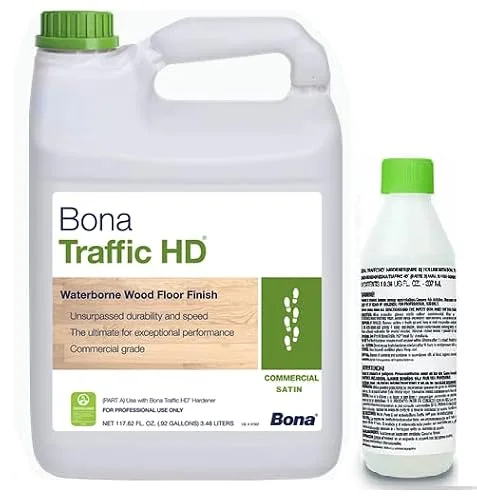 |
Bona Traffic HD Commercial Floor Finish – $170.99 A commercial-grade finish rated for the highest-traffic floors — even a hard species scratches and dulls faster under a weaker topcoat.
|
| Species | Janka Rating (lbf) | Notes |
|---|---|---|
| Brazilian Walnut (Ipe) | 3,680 | Exotic; very hard to work with hand tools |
| Brazilian Cherry (Jatoba) | 2,350 | Exotic; deep reddish-brown tone |
| Santos Mahogany | 2,200 | Exotic; fine, tight grain |
| Hickory | 1,820 | Hardest common domestic species |
| Hard Maple | 1,450 | Popular for gyms and high-traffic commercial floors |
| White Oak | 1,360 | Domestic standard; hides scratches well due to grain pattern |
| Red Oak | 1,290 | Most common domestic flooring species; moderate durability |
Why Hardness Isn’t the Whole Story
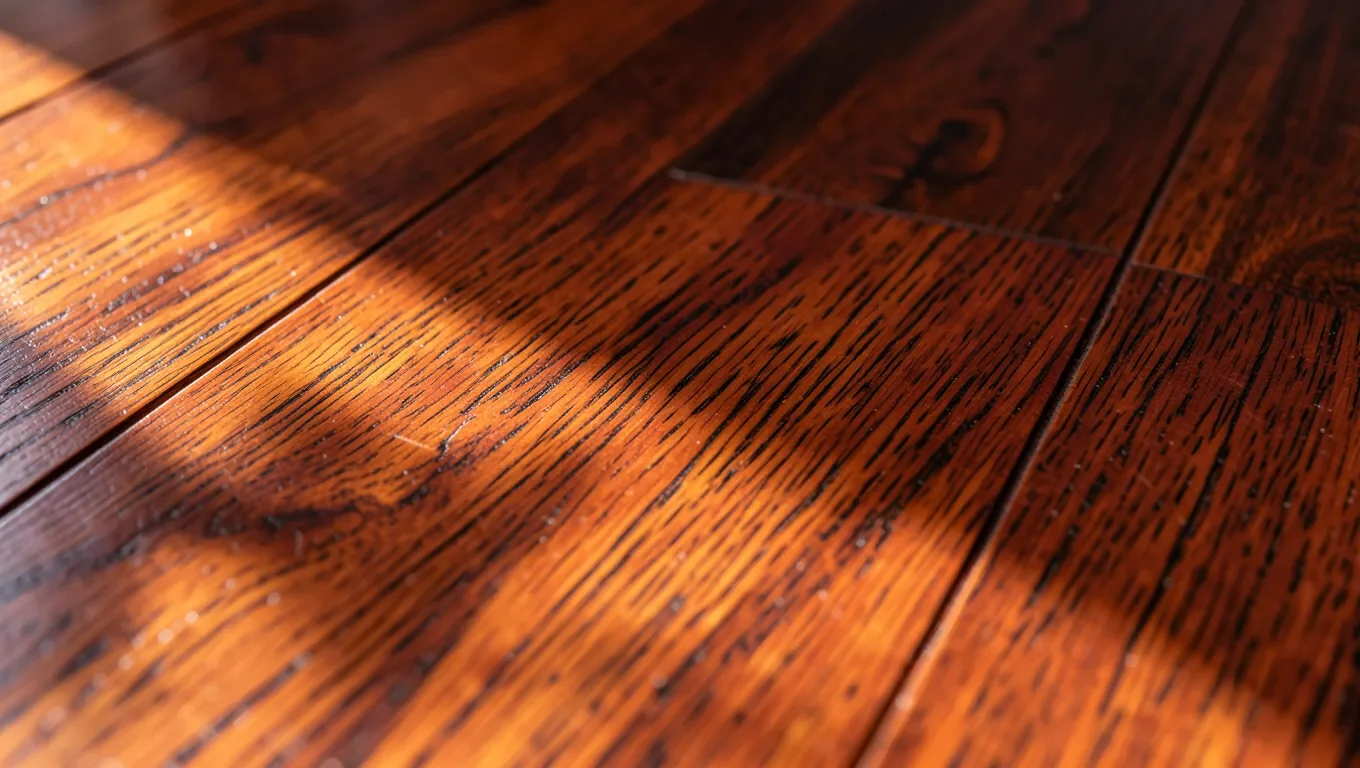
A higher Janka number means better dent and wear resistance, but it also means the wood is harder to install, nail, and finish — exotic species like Ipe often need pre-drilling for every fastener and dull standard blades faster, which is why they cost more to install, not just more to buy per board foot. Hardness also has nothing to do with how well a species hides the scratches and dents it does eventually get: White Oak’s wild, varied grain pattern camouflages minor wear far better than a smooth, tight-grained species at a similar or even higher Janka rating, which is part of why white oak stays a top real-world recommendation despite a lower number than hickory or the exotics.
Solid vs. Engineered: Durability Isn’t Only About Species
Engineered hardwood’s durability depends heavily on its wear layer thickness, not just the species veneer on top — a thin wear layer limits how many times it can ever be sanded and refinished, regardless of how hard the species is. Solid hardwood in any of the species above can typically be refinished multiple times over decades, which is a real durability advantage engineered flooring in the same species doesn’t automatically share. If long-term refinishability matters as much as day-to-day scratch resistance, factor construction type into the decision alongside the Janka number, not instead of it.
The Finish Affects Durability as Much as the Wood
A basic single-coat polyurethane finish will scratch and dull noticeably faster than a commercial-grade, multi-coat aluminum-oxide or high-durability waterborne finish — on the same species, at the same Janka hardness. This is why a well-finished Red Oak floor in a busy household can outlast a poorly finished, higher-Janka exotic species in visible condition, even though the wood itself is objectively softer. Choosing a durable species is only half the decision; specifying (or refinishing with) a genuinely high-durability commercial-grade finish is the other half, and it’s the part most buying guides skip past.
“Hardwood” Doesn’t Always Mean Harder Than “Softwood”
Hardwood and softwood are botanical categories, not a hardness ranking — hardwoods come from deciduous (broadleaf) trees and softwoods from conifers, and the terms describe the tree’s reproductive structure, not how hard the resulting wood actually is. This is why the comparison isn’t as clean as the names suggest: Douglas Fir, a softwood, has a Janka rating around 660 lbf, while Balsa, technically a hardwood, is one of the softest woods that exists at around 70 lbf. For flooring purposes, always check the actual Janka number rather than assuming “hardwood” automatically means harder than any softwood alternative — the category name is a botanical classification, not a durability guarantee.
Climate and Wood Movement Affect Perceived Durability
A floor’s real-world durability isn’t only about resisting dents — seasonal humidity swings cause any solid wood species to expand and contract, and in extreme or poorly controlled climates that movement can show up as cupping, gapping between boards, or cracking regardless of how hard the species is. Species with higher dimensional stability (a separate wood property from Janka hardness) hold their shape better through humidity swings; White Oak and most engineered constructions generally handle this better than solid exotic hardwoods, which can be more prone to movement issues in climates with big seasonal humidity shifts. A hard, dent-resistant species installed without acclimating it to the room’s humidity first, or in a home without reasonably consistent indoor humidity control, can still develop real problems that have nothing to do with its Janka rating.
Cost vs. Durability: What the Hardest Species Actually Cost
The exotic species at the top of the Janka chart come at a real price premium — Brazilian Walnut and Brazilian Cherry typically run well above domestic Red Oak or White Oak per square foot, before even factoring in the higher installation labor cost from pre-drilling and faster blade wear. For most homes, that premium buys dent resistance most households will never actually stress-test in daily use; a domestic species like Hickory or White Oak, properly finished, handles normal foot traffic, furniture, and pet claws without issue at a fraction of the material cost. The exotic hardness numbers matter more in genuinely high-abuse commercial settings — restaurants, retail floors, gyms — than in a typical residential living room.
Matching Durability to the Room
Entryways, kitchens, and hallways see the most concentrated foot traffic and grit tracked in from outside, making them the rooms where a harder species and a commercial-grade finish earn their keep. Bedrooms and formal living spaces see far less abuse, which is where a softer, more affordable domestic species like Red Oak performs perfectly well for decades. Rather than picking one species for an entire home, matching hardness to each room’s actual traffic level is a more cost-effective way to apply the Janka numbers than defaulting to the hardest available option everywhere.
What Actually Damages a Hardwood Floor Day to Day
Grit tracked in on shoes is the single biggest cause of surface scratching on any species — small stone and sand particles act like sandpaper under foot traffic, and a doormat at every entry point does more for long-term appearance than upgrading to a harder species. Pet claws are the next major factor, and no domestic species short of the hardest exotics fully resists them — keeping nails trimmed matters more than the wood choice for households with dogs. Dragging furniture rather than lifting it causes deep gouges regardless of Janka rating, which is why felt pads under furniture legs are a cheap, effective habit on any hardwood floor, hard or soft. None of these factors show up in a Janka comparison chart, but they account for most of the visible wear a typical floor actually accumulates over the years.
Frequently Asked Questions
What is the most durable hardwood flooring species?
Brazilian Walnut (Ipe), with a Janka hardness rating of 3,680 lbf — roughly double Hickory (1,820 lbf), the hardest commonly available domestic species.
Is a higher Janka rating always better for flooring?
Not entirely. Higher-Janka species resist dents better but are harder to install and finish, and hardness doesn’t affect how well a species hides minor scratches, which depends more on grain pattern.
Does engineered hardwood last as long as solid hardwood?
It depends on wear layer thickness. Engineered flooring can typically be refinished fewer times than solid hardwood of the same species, which is a real durability difference separate from Janka hardness.
What causes the most everyday wear on a hardwood floor?
Grit tracked in from outside is the biggest cause of surface scratching on any species. Pet claws and dragged furniture are the next most common causes, and none of these are affected by choosing a harder wood species.
Conclusion
Brazilian Walnut leads the Janka chart, but the most durable floor in practice combines a reasonably hard species, a forgiving grain pattern like White Oak’s, solid (not thin-wear-layer engineered) construction, and a genuinely high-durability finish. Any one of those factors alone won’t make or break a floor’s real-world lifespan — it’s the combination, plus basic daily habits like doormats and felt furniture pads, that actually determines how a floor looks ten or twenty years down the line.
Sponsored / affiliate links. As an Amazon Associate I earn from qualifying purchases. I may earn additional commission from eligible campaigns.