Is There a Black Stain for Wood? Yes, But Pick Gel or Dye
Yes, black wood stain exists — Minwax Ebony and Varathane’s Fast Dry Ebony are both real oil-based options, but pigment stains like these often dry to a dark charcoal-brown rather than true black on low-tannin woods like pine or maple. Gel stain or a black wood dye holds a truer, more even black on any species. This guide covers which type actually looks black on your wood, plus a traditional method that needs no product at all.
Does Black Wood Stain Actually Exist?
Best Black Stain for an Even, Fast Finish
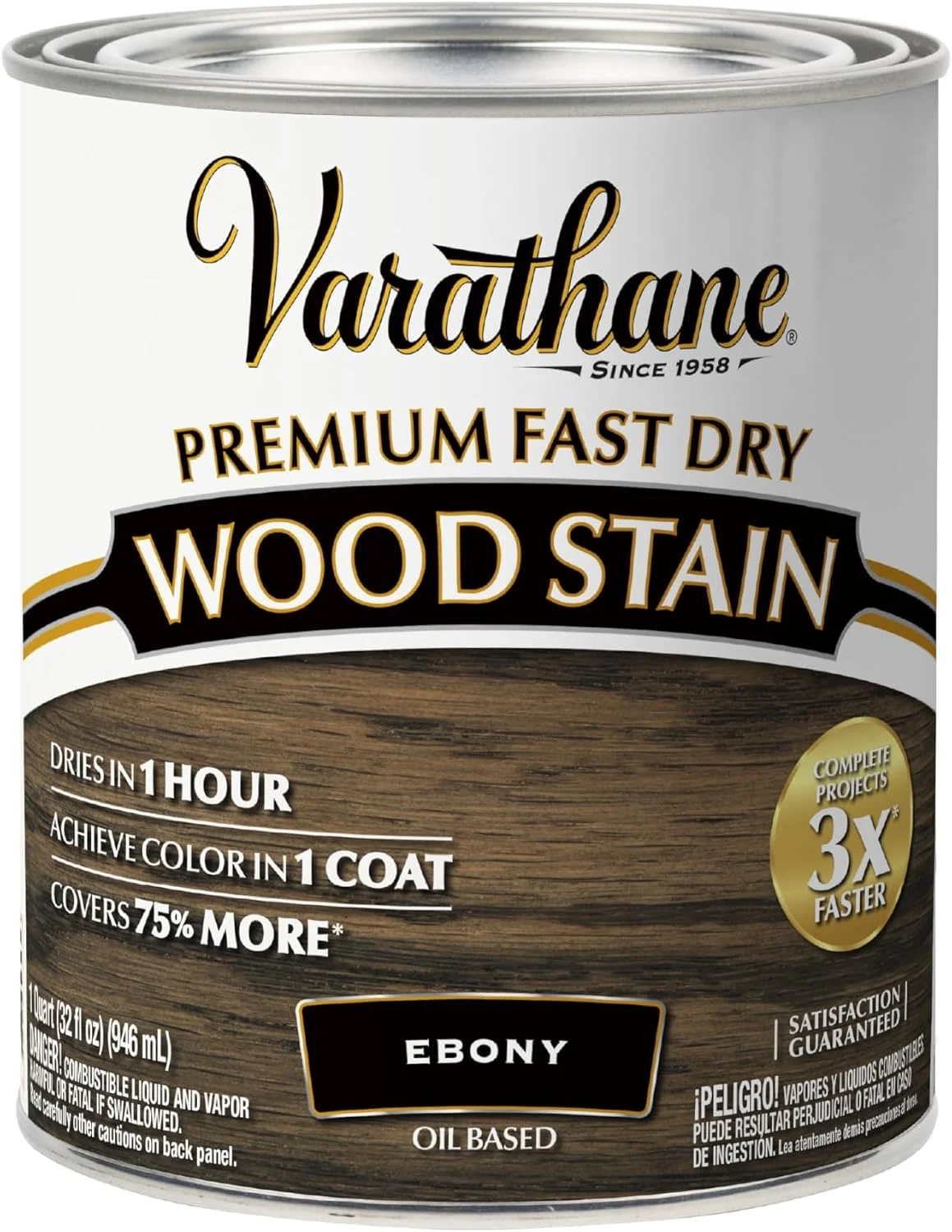 |
Varathane Premium Fast Dry Ebony Wood Stain, Quart – $14.87 This is a pigment oil stain, so it still follows the tannin rule this guide covers below — it lays down a rich near-black on oak or walnut in one coat, but a pre-stain conditioner helps it read truer black on pine or maple.
|
Yes — black and “ebony” labeled stains are a standard product category, sold as oil-based pigment stains, water-based stains, gel stains, and dye stains. The real question isn’t whether black stain exists, it’s whether a given type will actually look black on your specific wood, which depends heavily on the wood’s natural tannin content — our dye vs. stain comparison covers that penetration difference in more depth.
📊 Pigment oil stains partly rely on a wood’s natural tannins to read as true black — high-tannin woods like oak and walnut go darkest, while low-tannin woods like pine and maple often dry to a charcoal-brown instead. — Source: Minwax
Why Some “Black” Stains Look More Brown or Gray
A pigment stain works by depositing tiny color particles into the wood’s open pores and grain lines — it doesn’t chemically bond with the wood the way a dye or an ebonizing reaction does. On oak or walnut, with naturally large pores and higher tannin content, that pigment sits deep and dark. On pine, maple, or birch, the tighter, low-tannin grain doesn’t hold as much pigment, so the same can of “ebony” stain can dry to a warm charcoal-brown instead of true black.
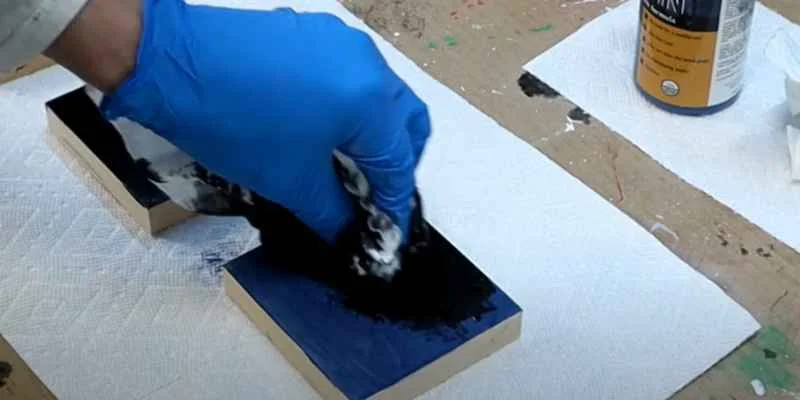
Pigment Stain vs. Gel Stain vs. Dye for True Black
| Type | How It Gets Black | Best For |
|---|---|---|
| Pigment oil stain | Color particles settle into open grain and pores | Oak, walnut, and other high-tannin woods |
| Gel stain | Thick gel sits more evenly on the surface instead of soaking in unevenly | Pine, maple, and blotch-prone woods |
| Dye stain | Dissolved dye molecules penetrate evenly regardless of tannin content | Any species where a true, consistent black matters most |
If you’re working with pine, maple, or another low-tannin wood and need a true black rather than a dark brown, a gel stain or a dye stain will get you there more reliably than a standard pigment stain — with or without a pre-stain conditioner. See our full step-by-step guide to staining wood black without blotching for the complete process.
The No-Product Method: Ebonizing With Vinegar and Steel Wool
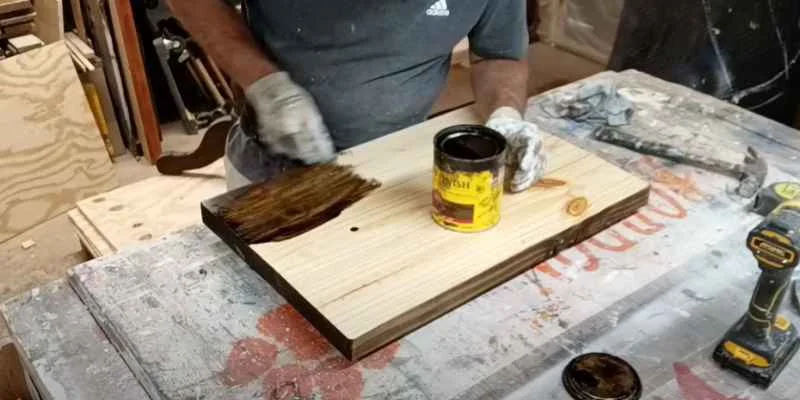
Ebonizing is a centuries-old technique that turns wood black through a chemical reaction instead of a coating. Soak fine steel wool in white vinegar for 2-3 days to create an iron acetate solution, then wipe or brush it onto bare wood. The iron reacts with the wood’s natural tannins and turns the surface black from the inside out — no commercial stain required.
This works best on high-tannin woods like oak, walnut, or chestnut, where there’s enough natural tannin for the reaction to darken fully. Low-tannin woods like pine won’t ebonize well on their own; brewing strong black tea onto the wood first adds extra tannin so the reaction has something to react with.
 ” loading=”lazy”/>
How to Apply Black Stain for an Even Finish
- Sand evenly: Work up to 220 grit so the surface absorbs stain uniformly — uneven sanding is the most common cause of blotchy black stain.
- Condition low-tannin wood first: Apply a pre-stain conditioner on pine, maple, or birch before the stain to prevent blotching.
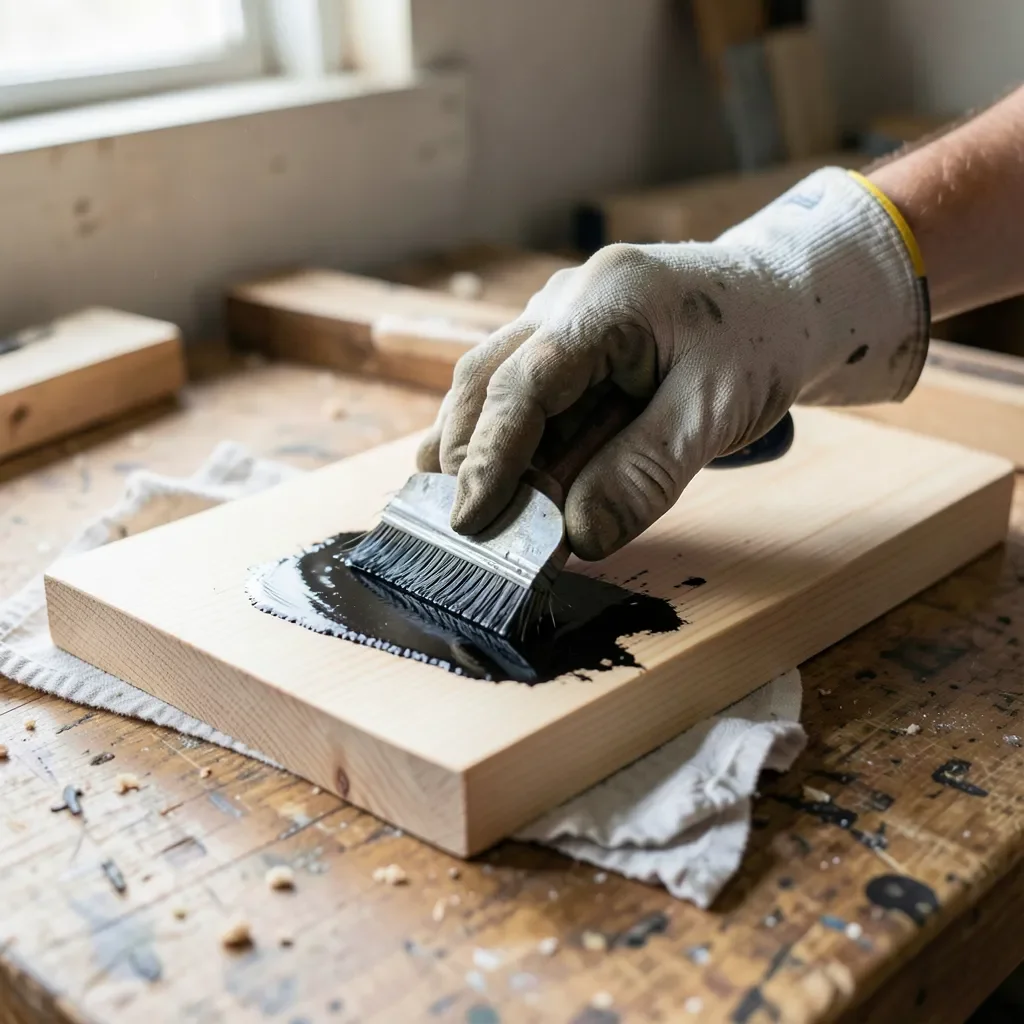
- Apply with a brush, rag, or foam applicator: Work in the direction of the grain and keep a wet edge to avoid lap marks.
- Wipe off excess: Remove excess stain within the time window on the can — leaving it too long can create a sticky, uneven film instead of a clean color.
- Add a second coat if needed: Let the first coat dry fully, then recoat for a deeper black if the first pass reads more gray or brown than you want — our Varathane color chart shows how Ebony compares to their other dark tones.
Frequently Asked Questions
Does black wood stain actually exist?
Yes. Minwax Wood Finish Ebony and Varathane Fast Dry Ebony are both real oil-based pigment stains sold specifically as black. Gel stains and black wood dyes are also widely available and hold a truer, more even black than pigment oil stains on some woods.
Why does my black stain look brown or gray instead of black?
Pigment oil stains rely partly on the wood’s own tannins to read as true black — low-tannin woods like pine, maple, and birch often dry to a dark charcoal-brown instead. A pre-stain wood conditioner, a gel stain, or a black dye stain all get closer to true black on those species.
Can you stain pine or maple black?
Yes, but pigment oil stains blotch and lean brown on pine and maple because both woods are low in tannin and absorb stain unevenly. Use a pre-stain conditioner with a pigment stain, or switch to a gel stain or dye stain, which sit more evenly regardless of tannin content.
What is the darkest stain for wood?
Ebony-labeled oil stains, gel stains, and black dye stains are all sold as the darkest standard options. Of the three, dye stains and gel stains generally achieve the truest, most consistent black across different wood species.
Can you make wood black without buying stain?
Yes — ebonizing is a traditional method that uses steel wool soaked in vinegar for a few days to make an iron acetate solution, which reacts with a wood’s natural tannins to turn it black. It works best on high-tannin woods like oak or walnut and needs no commercial stain at all.
Conclusion
Black wood stain is a real, widely available product — the part that actually matters is matching the type to your wood. Oak and walnut take a pigment “ebony” stain dark and even; pine and maple need a conditioner, a gel stain, or a dye stain to avoid drying brown instead of black. For a chemical-free option on high-tannin wood, vinegar-and-steel-wool ebonizing still works exactly as it has for centuries.
Sponsored / affiliate links. As an Amazon Associate I earn from qualifying purchases. I may earn additional commission from eligible campaigns.